
The NZ Astronomy Calendar 2025 highlights key celestial events visible from Aotearoa, including the return of Matariki in June, the Eta Aquariids meteor shower in May, and prime viewing windows for the Aurora Australis. It integrates the Maramataka lunar phases with major planetary alignments, offering stargazers a comprehensive guide for the southern skies.
New Zealand is widely recognized as one of the premier stargazing destinations on Earth. With its vast Dark Sky Sanctuaries, low light pollution, and unique position in the Southern Hemisphere, Aotearoa offers a front-row seat to the cosmos. As we approach 2025, astronomers and enthusiasts alike are preparing for a year defined by the peak of the solar cycle, promising vibrant auroras, and significant planetary conjunctions.
Whether you are an astrophotographer chasing the perfect shot of the Galactic Core or a casual observer hoping to spot the Southern Cross, understanding the celestial schedule is essential. This guide provides a detailed itinerary of what to look for, when to look, and the cultural significance of the stars in the New Zealand sky.
Monthly Sky Highlights 2025
The southern sky changes dramatically throughout the year. While the Southern Cross (Crux) and the Pointers (Centaurus) remain circumpolar—visible year-round—other constellations and planets drift in and out of view. 2025 is particularly special as it coincides with the Solar Maximum, meaning the sun is at its most active phase in its 11-year cycle.
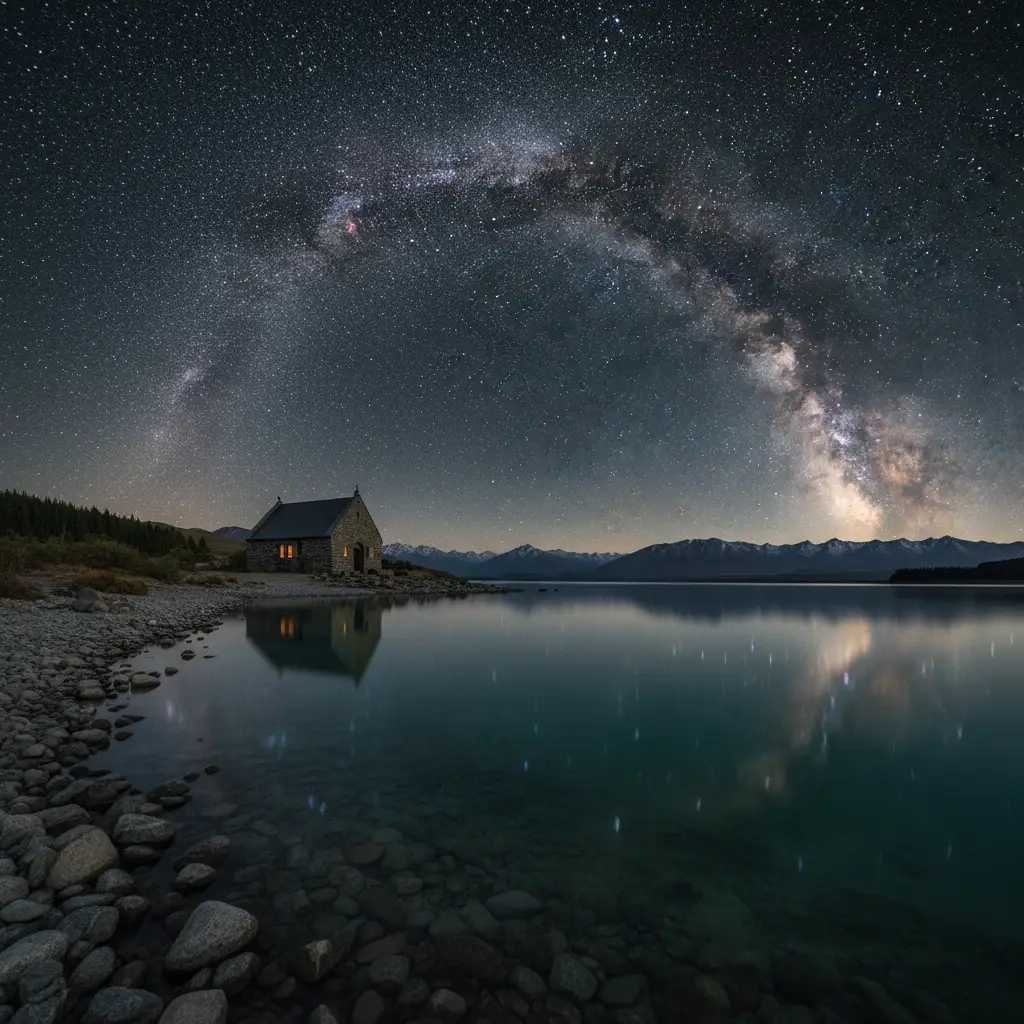
Quarter 1: Summer Stargazing (January – March)
The year begins with warm nights, making it the most comfortable time for casual observation. In January, the constellation Orion is prominent in the northern sky (appearing upside down compared to the Northern Hemisphere view). This is the best time to view the Great Orion Nebula (M42) with binoculars.
- January: Earth is at perihelion (closest to the sun), though this does not dictate the seasons. Look for the brilliant star Sirius, the brightest in the night sky, high overhead.
- February: The Milky Way begins to rise earlier in the southeast later in the night. Alpha Centauri and Beta Centauri point clearly to the Southern Cross.
- March: The Autumnal Equinox occurs on March 20, balancing day and night. This month often brings stable atmospheric conditions, ideal for planetary observation.
Quarter 2: The Core Rises (April – June)
As temperatures drop, the clarity of the sky improves. This is the beginning of the “Core Season,” where the brightest part of the Milky Way—the Galactic Core—becomes visible in the evening sky.
- April: The Lyrids meteor shower makes a minor appearance, but the focus is on the rising Scorpion (Scorpius) in the east.
- May: The Eta Aquariids meteor shower peaks. This is arguably the best shower for New Zealand observers.
- June: The Winter Solstice occurs on June 21. This period marks the longest nights of the year, providing maximum darkness for deep-sky imaging. It is also the season of Matariki.
Quarter 3: Deep Winter & Aurora (July – September)
Winter in New Zealand offers the most spectacular views of the cosmos, provided you can brave the cold. The Galactic Core is directly overhead in the early evening.
- July: Matariki celebrations continue. The Magellanic Clouds (dwarf galaxies orbiting the Milky Way) are high and easily visible to the naked eye in dark locations.
- August: Saturn reaches opposition, making it the brightest and largest it will appear all year. A small telescope will reveal its rings.
- September: The Spring Equinox occurs on September 23. Zodiacal light (a faint cone of light caused by interplanetary dust) is often visible in the west after sunset.
Quarter 4: Spring Galaxies (October – December)
As the Milky Way core sets earlier, the sky opens up to reveal distant galaxies that are usually obscured by our own galaxy’s dust lanes.
- October: Andromeda Galaxy (M31) can sometimes be glimpsed low in the north, a rare treat for southern observers.
- November: The Leonid meteor shower occurs, though usually modest.
- December: The Geminids meteor shower peaks mid-month. While the radiant is low in NZ, the meteors are often bright and slow-moving.
Maramataka and Matariki 2025
Astronomy in Aotearoa is deeply intertwined with the Maramataka, the Māori lunar calendar. Unlike the solar Gregorian calendar, the Maramataka relies on the phases of the moon and the appearance of specific stars to regulate planting, fishing, and harvesting.
When is Matariki 2025?
Matariki 2025 will be celebrated with a public holiday on Friday, June 20, 2025.
The rising of the star cluster Matariki (Pleiades) in the pre-dawn sky during the lunar phase of Tangaroa (last quarter) marks the Māori New Year. In 2025, the heliacal rising is expected in late June. To view Matariki:
- Look to the northeast horizon between 5:30 AM and 6:30 AM.
- Find the distinct row of three stars in Orion’s Belt (Tautoru).
- Follow the line of the belt to the left (north) to find a bright triangular cluster (Hyades/Te Kokotā).
- Continue that line further left to find the tight grouping of stars that is Matariki.
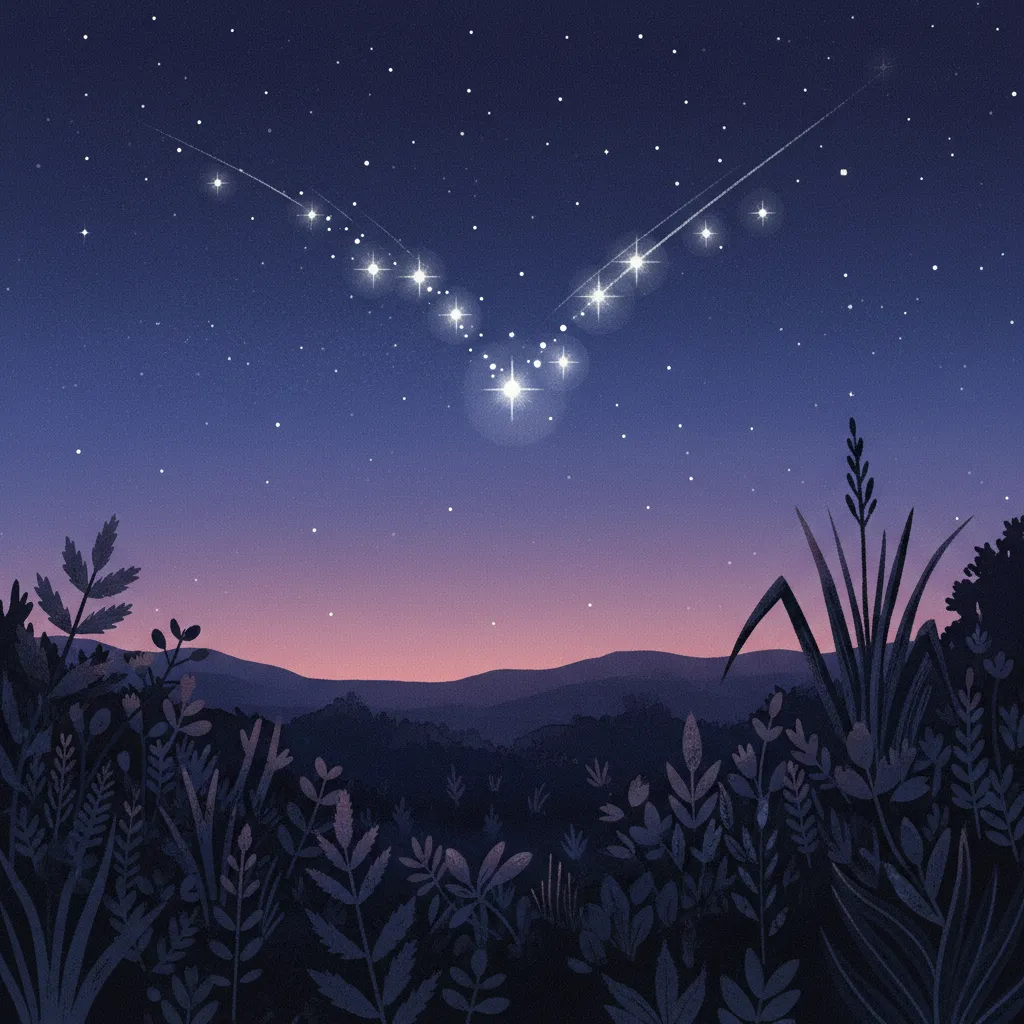
Puanga (Rigel) is also significant for iwi (tribes) in the West Coast and far North, where Matariki is less visible due to geography. In these regions, the rising of Puanga signals the New Year.
Major Meteor Showers in NZ
While the Northern Hemisphere boasts the Perseids, New Zealand has its own spectacular displays. To see meteor showers, you must find a location away from city lights, allow 20 minutes for your eyes to dark-adapt, and look generally toward the radiant point, though meteors can appear anywhere in the sky.
The Eta Aquariids (May 6-7, 2025)
This is the premier meteor shower for the Southern Hemisphere. Derived from debris left by Halley’s Comet, the Eta Aquariids are known for their speed and persistent trains.
- Peak: Early morning hours of May 7.
- Rate: Up to 50 meteors per hour under perfect conditions.
- Moon Phase: The moon will be in a waxing gibbous phase, so the best viewing will be in the early pre-dawn hours after the moon has set.
The Geminids (December 14-15, 2025)
The Geminids are unique because they originate from an asteroid (3200 Phaethon) rather than a comet, resulting in denser, multicolored meteors.
- Viewing in NZ: The radiant (Gemini) stays low on the northern horizon. While we don’t see the high rates of the north (120/hr), the meteors we do see are often “earthgrazers”—long, bright streaks that skim the atmosphere.
Planetary Alignments & Eclipses
2025 offers several opportunities to view our solar system neighbors in high definition. Planetary oppositions occur when Earth passes directly between the sun and an outer planet, making the planet appear at its brightest and largest.
Total Lunar Eclipse (March 14, 2025)
New Zealand is perfectly positioned to view the Total Lunar Eclipse on March 14, 2025. During this event, the moon will pass into Earth’s shadow, turning a deep blood-red hue.
- Timing: The eclipse will be visible in the evening, making it a family-friendly event.
- Visibility: Visible throughout all of New Zealand, weather permitting. No special equipment is needed, though binoculars enhance the view of the color changes.
Total Lunar Eclipse (September 7, 2025)
A second total lunar eclipse occurs later in the year. This event will also be visible from New Zealand, providing a rare double-header of blood moons for the region in a single year.
Planetary Oppositions
- Jupiter Opposition (January 2025): Carrying over from late 2024, Jupiter will dominate the evening sky in early 2025.
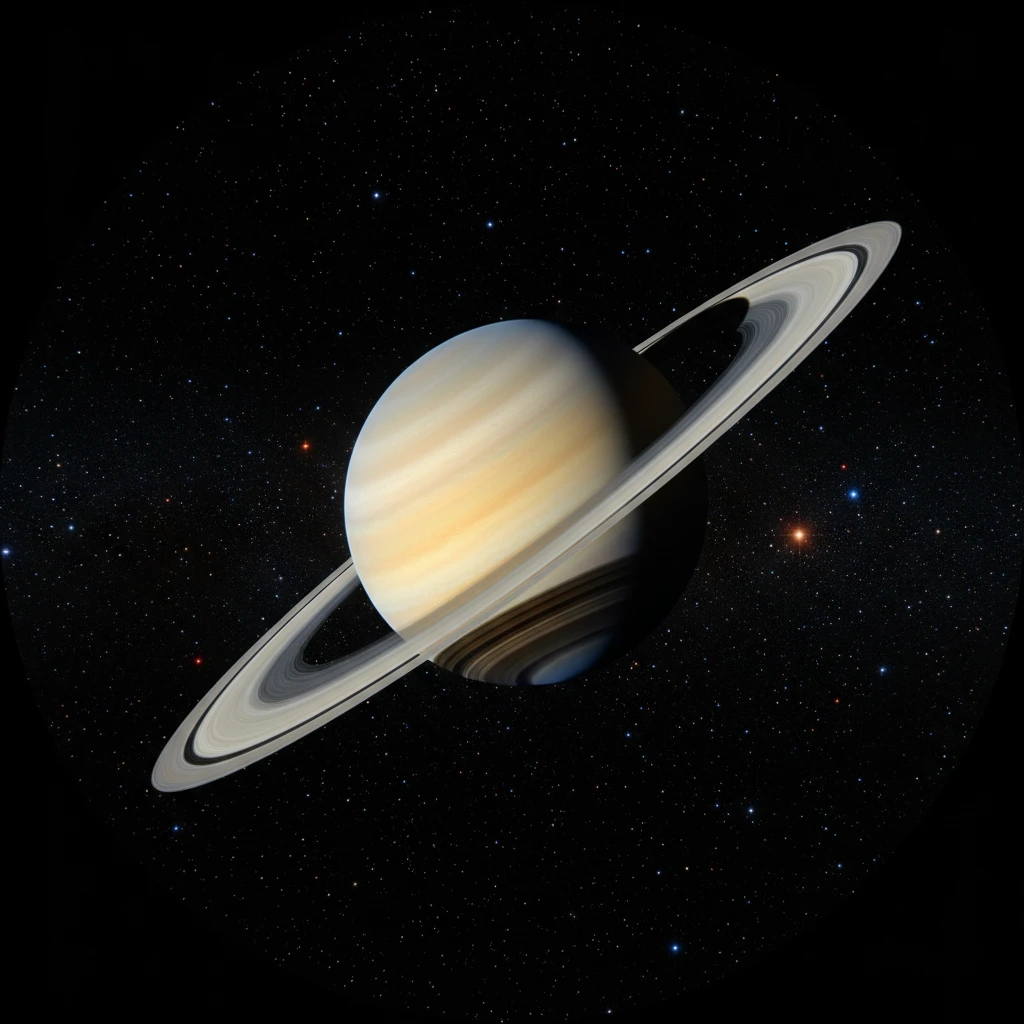
- Saturn Opposition (September 25, 2025): The ringed planet will be visible all night. Due to the tilt of Saturn’s rings relative to Earth, they are narrowing, appearing almost edge-on, which presents a unique observational challenge for amateur astronomers.
Aurora Australis Forecast & Tourism
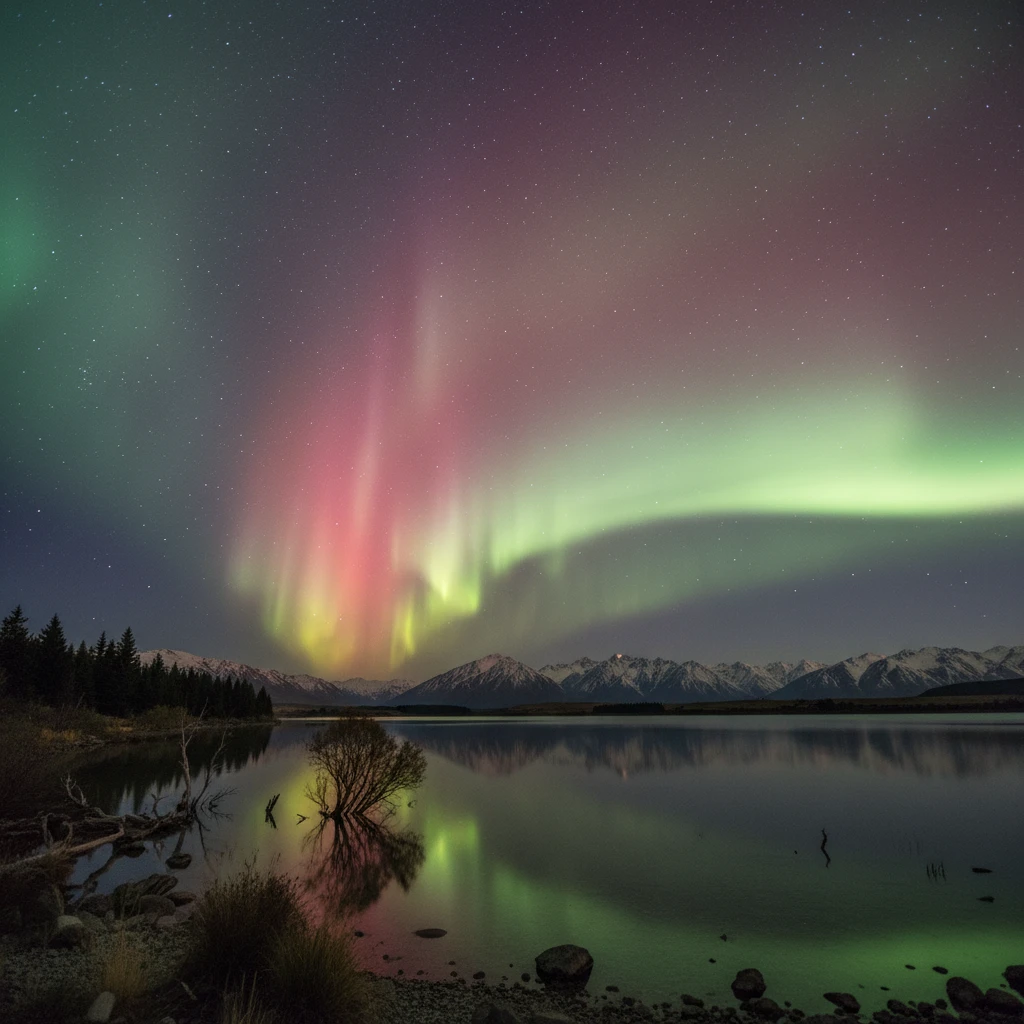
The Aurora Australis, or Southern Lights, is one of nature’s most elusive and magical displays. Unlike the Aurora Borealis, which has a wide landmass to view from, the Southern Lights are best viewed from the lower South Island of New Zealand.
Why 2025 is a Peak Year
The sun follows an 11-year cycle of activity. Scientists predict that Solar Cycle 25 will peak in 2025 (Solar Maximum). This means an increase in sunspots and Coronal Mass Ejections (CMEs), which send charged particles toward Earth, interacting with our magnetic field to create auroras.
Best Locations for Viewing
- Stewart Island / Rakiura: An International Dark Sky Sanctuary and the southernmost populated spot in NZ.
- The Catlins: Coastal areas away from Dunedin’s city lights offer clear southern horizons.
- Lake Tekapo & Aoraki/Mt Cook: High altitude and dark skies make this a prime spot, though mountains can sometimes block the lower southern horizon.
- Hoopers Inlet (Otago Peninsula): A favorite for local astrophotographers.
Interpreting the KP Index
To predict an aurora, astronomers use the KP Index (0-9). For New Zealand:
- KP 4: Faint photographic aurora visible on the horizon in the deep south.
- KP 5-6: Visible beams to the naked eye in Southland/Otago; photographic in Canterbury.
- KP 7-9: Major storm. Visible naked eye as far north as Wellington or Auckland.
Interactive Tools for Stargazers
To make the most of the NZ astronomy calendar 2025, utilizing technology is highly recommended. Modern apps allow you to overlay star maps on the real sky using augmented reality.
Recommended Apps & Resources
- Stellarium Mobile: The gold standard for planetarium software. It allows you to simulate the sky from any location in NZ at any time in the future.
- PhotoPills: Essential for photographers. It allows you to plan alignments, such as calculating exactly when the Milky Way core will align with a specific landmark like Nugget Point Lighthouse.
- Glendale App: A specialized web-based tool widely used by the NZ aurora chasing community for real-time solar wind data.
- MetService: Never underestimate a standard weather app. Cloud cover is the enemy of astronomy. Look for the “Cloud Cover” maps rather than just the rain forecast.
By combining these tools with the schedule of events outlined above, you are well-equipped to explore the wonders of the Aotearoa skies in 2025. Whether it is the cultural resonance of Matariki or the scientific marvel of a Total Lunar Eclipse, the year ahead promises to be stellar.
When is the best time to see the Milky Way core in NZ?
The galactic core is most visible during the winter months. From late February, it rises in the early morning. By June and July, it is visible as soon as darkness falls and remains high in the sky throughout the night. By October, it sets shortly after sunset.
What is the date for Matariki 2025?
Matariki will be celebrated as a national public holiday in New Zealand on Friday, June 20, 2025. The period of celebration typically begins when the star cluster rises in mid-June.
Can I see the Aurora Australis from Auckland?
It is rare but possible during extreme geomagnetic storms (KP 8 or 9). However, for regular viewing, you need to be in the lower South Island (Southland, Otago, or the Mackenzie Basin) during dark, clear nights.
What planets will be visible in NZ in 2025?
Venus will be a bright morning or evening star at various times. Jupiter and Mars are prominent early in the year. Saturn reaches opposition in September 2025, making it an excellent target for telescopes in the spring sky.
Are there any eclipses in New Zealand in 2025?
Yes, New Zealand will witness two Total Lunar Eclipses in 2025. The first is on March 14, 2025, and the second is on September 7, 2025. Both will be visible as “blood moons.”
What is the best dark sky reserve in New Zealand?
The Aoraki Mackenzie International Dark Sky Reserve (including Lake Tekapo and Mt Cook) is the most famous. However, the Wairarapa Dark Sky Reserve, Stewart Island/Rakiura, and Great Barrier Island/Aotea are also world-class sanctuaries.