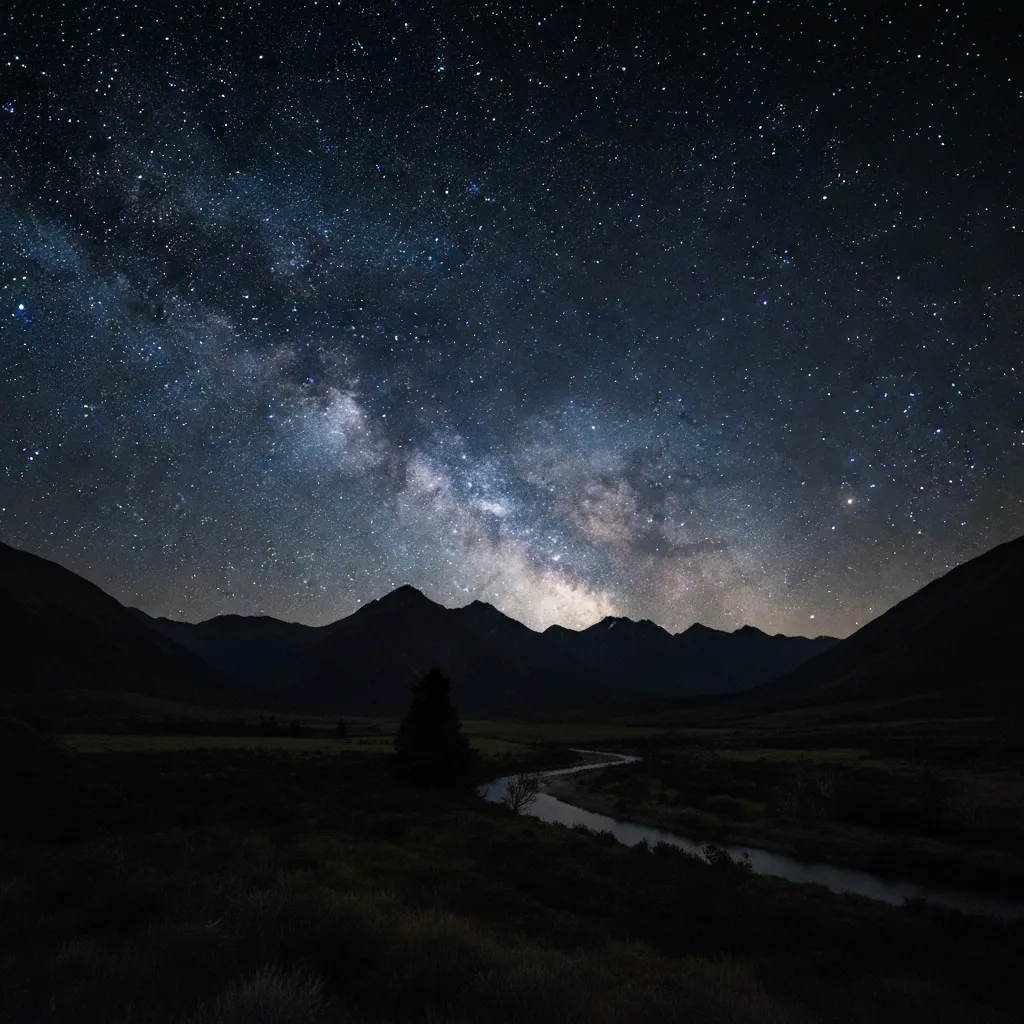
Matariki stories for primary students center on the legend of Ngā Mata o te Ariki Tāwhirimātea (The Eyes of the God Tāwhirimātea) and the distinct roles of the nine stars in the cluster. These narratives are essential for teaching tamariki about environmental connection, whakapapa (genealogy), and the seasonal cycle, effectively bridging Māori mythology with science and social studies in the New Zealand curriculum.
The Significance of Matariki Storytelling in Education
Storytelling, or pūrākau, is the traditional method by which Māori history, knowledge, and values are transmitted through generations. For primary students in Aotearoa New Zealand, engaging with Matariki stories is more than a literacy exercise; it is an act of cultural participation and identity building. When we select Matariki stories for primary students, we are looking for narratives that explain the natural world while instilling values of kaitiakitanga (guardianship) and whanaungatanga (kinship).
The resurgence of Matariki as a public holiday has provided educators with a unique opportunity to deepen their students’ understanding of the maramataka (Māori lunar calendar). The stories surrounding this star cluster offer rich imagery and complex characters that captivate young minds, making abstract concepts like navigation, harvest, and mourning tangible and relatable.

Script: The Eyes of the God (Ngā Mata o te Ariki)
The most widely accepted origin story of the Matariki cluster involves the atua (gods) and the separation of Ranginui (Sky Father) and Papatūānuku (Earth Mother). Below is a scripted version tailored for primary-aged listeners. It softens the violence slightly while retaining the emotional core of the legend.
Introduction to the Story
Teacher Note: Before beginning, explain that this story happened at the very beginning of the world, when the sky and earth were pushed apart to let the light in.
The Story Script
“Long, long ago, before the sun shone bright and the birds sang their morning songs, the world was wrapped in darkness. Ranginui, the Sky Father, and Papatūānuku, the Earth Mother, held each other in a tight embrace. They loved each other so much that they never wanted to be apart.
But their children—the gods of the forest, the sea, the wild foods, and the weather—were cramped in the darkness between their parents. They longed for light. They longed for space to run, to grow, and to breathe.
‘We must separate them,’ said Tāne Mahuta, the god of the forests. After many attempts by his brothers, Tāne placed his strong shoulders against his mother the Earth and his feet against his father the Sky. With a mighty push that lasted for aeons, he forced them apart. Rumble! Crack! Whoosh! Suddenly, Te Ao Mārama—the world of light—flooded in.
Most of the brothers were happy. They could see the world! But one brother was not happy. His name was Tāwhirimātea, the god of the wind and storms. He looked at his parents, now far apart, and he heard their sadness. The rain was the tears of Ranginui crying for his wife, and the mist was the sigh of Papatūānuku longing for her husband.
Tāwhirimātea was furious. ‘How could you do this?’ he roared at his brothers. In his anger, he flew up into the sky to be with his father. He spun around, creating hurricanes, gales, and thunderstorms to punish his brothers below.
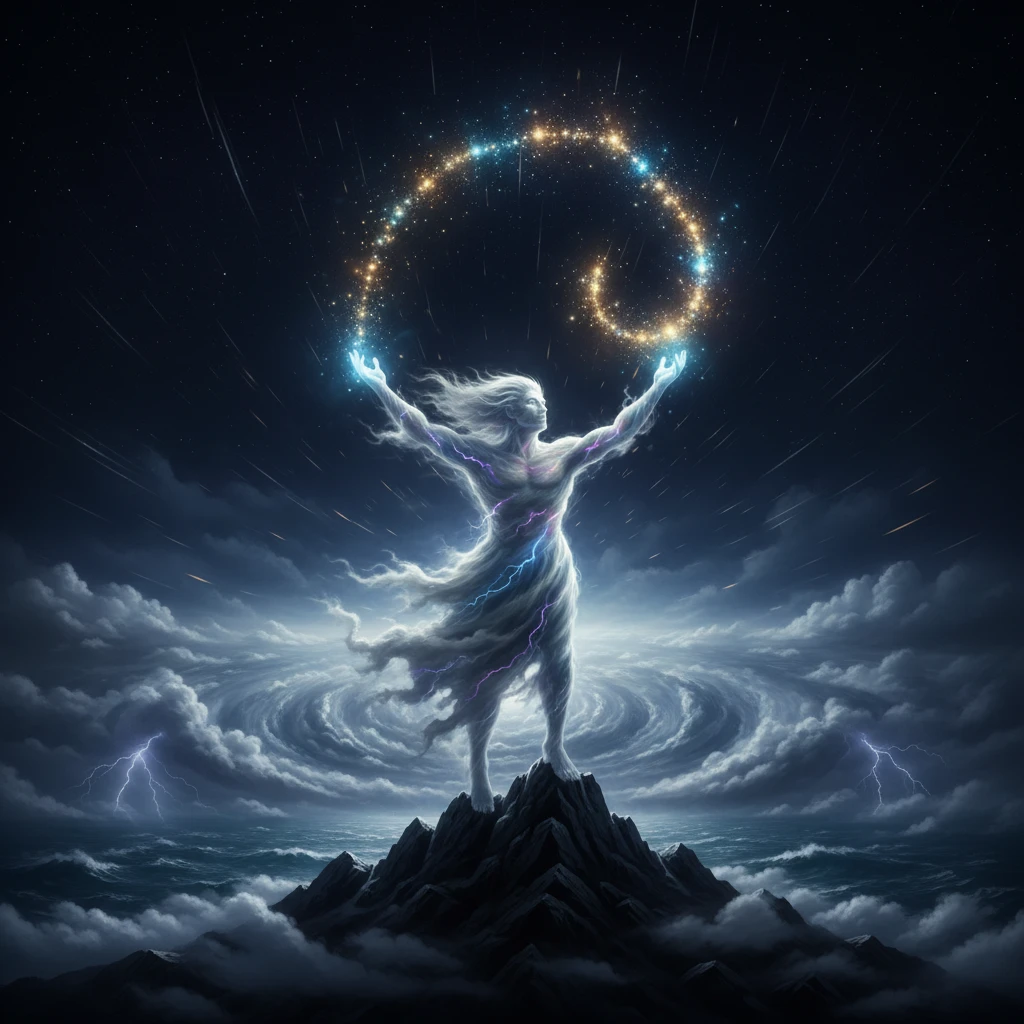
But his anger turned to deep sadness. He was so heartbroken for his father that he cried out in pain. In a moment of overwhelming grief, Tāwhirimātea did something unimaginable. He grasped his own eyes—his lightning-bright eyes—and crushed them in his hands. With a mighty throw, he cast the fragments of his eyes deep into the chest of the sky.
Those fragments stuck to the cloak of Ranginui. They did not fade. Instead, they began to glow. They became Ngā Mata o te Ariki Tāwhirimātea—The Eyes of the God Tāwhirimātea. Over time, we shortened this name to Matariki.
Now, every winter, Tāwhirimātea’s eyes rise in the dawn sky. They remind us of the past, they signal the time to rest, and they watch over the year to come.”
Meeting the Whānau: The Journey of the 9 Stars
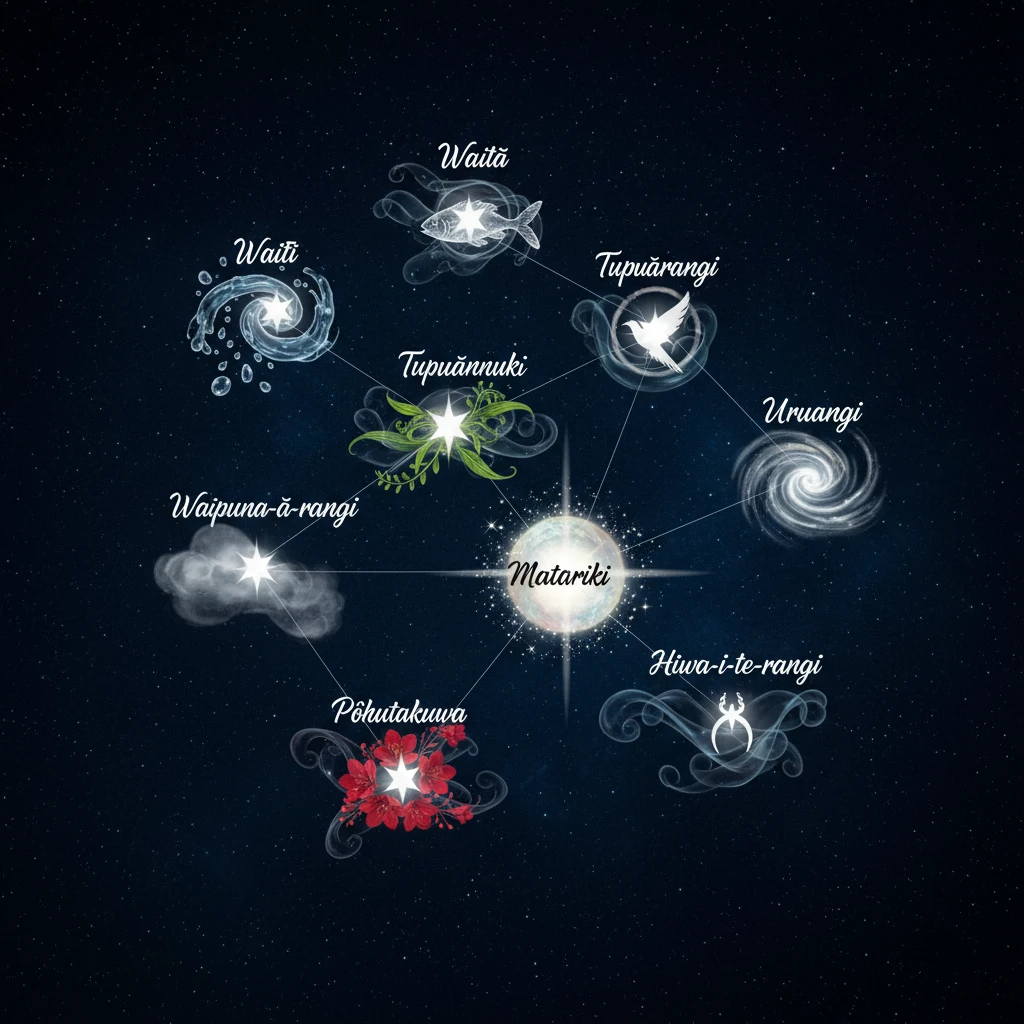
While the origin story explains how the cluster arrived, the stories of the individual stars explain what they bring to us. Teaching the specific domains of the nine stars (Te Iwa o Matariki) allows students to connect the legend to environmental science.
1. Matariki (The Mother)
Matariki is the mother star who gathers the others around her. Her story is one of health and wellbeing. She encourages us to check on our friends and family to ensure everyone is healthy and happy.
2. Pōhutukawa ( The Star of Remembrance)
Pōhutukawa connects Matariki to the dead. She is the star that carries our loved ones who have passed away in the last year across the sky. This story helps children process grief gently, teaching them that their ancestors become stars.
3. Tupuānuku (Food from the Earth)
This star is tied to everything that grows in the soil—kūmara, potatoes, and carrots. Her story is about the harvest. When she shines brightly, the story goes that the harvest will be plentiful.
4. Tupuārangi (Food from the Sky)
Tupuārangi watches over the forests. His stories involve the birds (manu) and berries. He reminds students of the importance of protecting our native trees.
5. Waipuna-ā-rangi (Water from the Sky)
She is the mother of the rains. Her stories explain the water cycle. If she is invisible, it might be a dry year; if she is bright, the rains will be healthy.
6. Waitī (Fresh Water)
Waitī watches over the rivers, lakes, and the creatures within them, like eels (tuna). Her story emphasizes the importance of clean water.
7. Waitā (Salt Water)
The twin of Waitī, Waitā represents the ocean and kaimoana (seafood). He teaches us to respect the tides and the bounty of the sea.
8. Ururangi (The Winds)
Ururangi is close friends with Tāwhirimātea. His story is about the mood of the winds—whether they will be gentle breezes or wild storms.
9. Hiwa-i-te-rangi (The Wishing Star)
This is the youngest star, the one to whom we send our wishes. Her story is about hope and setting goals for the New Year. She is often the favorite among primary students.
Reading-Aloud Tips for Engagement
Delivering Matariki stories for primary students requires more than just reading text; it requires performance. To truly capture the imagination of the classroom, consider these strategies.
Use Te Reo Māori Pronunciation
Ensure you practice the pronunciation of the stars’ names before the session. Correct pronunciation shows respect (mana) for the culture. Use simple phrases like “Titiro ki ngā whetū” (Look at the stars) to immerse students.
Visual and Tactile Props
Matariki is a physical event as much as a spiritual one. Use props to anchor the story:
- String Games (Whai): Learn a simple string figure to demonstrate the stars.
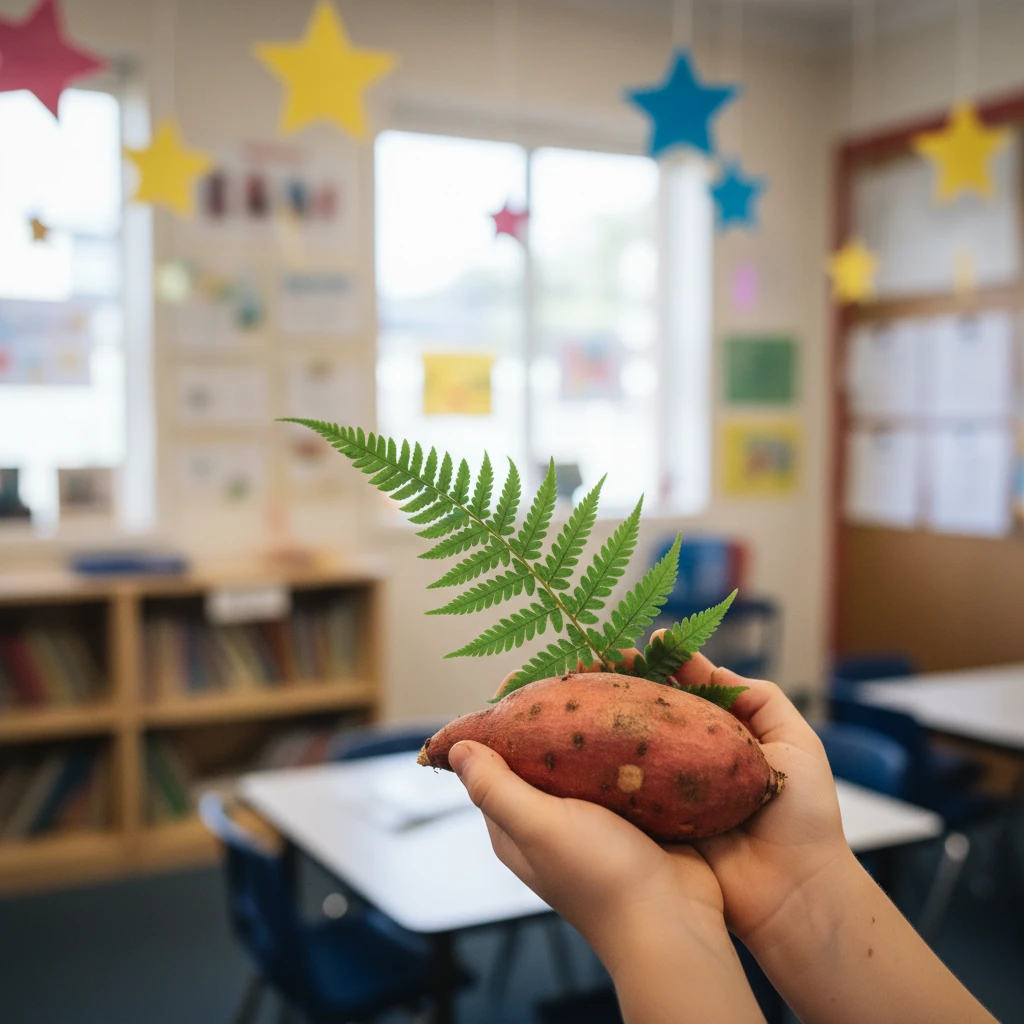
- Natural Objects: Pass around a kūmara (for Tupuānuku), a bowl of water (for Waitī), or a feather (for Tupuārangi) as you introduce each star.
- Lighting: If possible, dim the classroom lights and use a projector or fairy lights to simulate the night sky.
Interactive Call and Response
Turn the story into a dialogue. When mentioning Tāwhirimātea’s wind, ask the students to make wind sounds. When discussing Hiwa-i-te-rangi, pause and ask the students to close their eyes and think of a secret wish.
Follow-Up Comprehension Questions
To ensure the students have absorbed the significance of the Matariki stories, use a mix of literal and inferential questions. These can be used for class discussion or written reflection.
Lower Primary (Years 1-3)
- Recall: How many stars are in the Matariki family? (Answer: 9)
- Connection: Which star looks after the wish you made? (Answer: Hiwa-i-te-rangi)
- Creative: If you could be one of the stars, which one would you be and why?
Upper Primary (Years 4-6)
- Analysis: Why was Tāwhirimātea angry at his brothers? Do you think his reaction was fair?
- Application: Tupuānuku and Tupuārangi look after food. How can our class help look after the garden or trees at our school?
- Synthesis: Matariki is a time to remember the past and plan for the future. What is one thing you learned this year that you want to get better at next year?
People Also Ask
What is the simple story of Matariki?
The simple story of Matariki is that the god of wind, Tāwhirimātea, became angry when his parents, the Sky and Earth, were separated. In his grief, he crushed his own eyes and threw them into the sky, where they became the cluster of stars known as Matariki (The Eyes of the God).
How do you explain Matariki to a child?
Matariki is the Māori New Year. It is a special group of stars that rises in mid-winter. When we see them, it is time to remember the people we love who have passed away, celebrate the food we have harvested, and make wishes for the year ahead.
What are the 7 stars of Matariki story?
While many recognize 9 stars today, traditionally some iwi focused on 7. The 7 stars generally exclude Pōhutukawa and Hiwa-i-te-rangi, focusing instead on the mother (Matariki) and her six daughters who bring food and weather. However, the 9-star version is now the standard for education in NZ.
What is the myth of the seven sisters Matariki?
In Greek mythology, the Pleiades are the “Seven Sisters,” but in Māori pūrākau, Matariki is often the mother surrounded by her daughters. They travel the sky to visit their grandmother Papatūānuku, bringing gifts of food and weather to the people.
What is the theme of Matariki 2024 or 2025?
The overarching theme of Matariki is always Matariki hunga nui (Matariki of the many people). It focuses on remembrance, celebrating the present, and looking to the future. Specific annual themes may vary by region or iwi organization.
What activities can students do for Matariki?
Students can engage in weaving (raranga) stars from flax or paper, planting trees (kaitiakitanga), learning a Matariki waiata (song), preparing a shared kai (feast), or writing wishes to hang on a ‘wishing tree’ for Hiwa-i-te-rangi.