
Luxury dark sky accommodation in NZ refers to premium lodgings located within or near International Dark Sky Reserves, specifically architected to maximize celestial viewing. These high-end properties, ranging from glass-roofed purepods to exclusive lodges, offer specialized amenities such as in-room telescopes, outdoor baths, and private astronomy guides, blending 5-star comfort with world-class astrotourism.
New Zealand, or Aotearoa (The Land of the Long White Cloud), is rapidly becoming known by another name after sunset: The Land of the Long Dark Night. As light pollution erases the cosmos from urban centers globally, travelers are seeking sanctuary in the world’s darkest places. This has given rise to a specific, high-value niche in the tourism market: luxury dark sky accommodation nz.
This isn’t merely about camping under the stars; it is about immersing oneself in the cosmos while enjoying the pinnacle of architectural design, fine dining, and absolute privacy. With the rising significance of Matariki (the Māori New Year) and the expansion of the Aoraki Mackenzie International Dark Sky Reserve, New Zealand offers a stargazing infrastructure that is unrivaled globally.
The Rise of Purpose-Built Stargazing Stays
In the last decade, the concept of luxury travel in New Zealand has shifted from purely landscape-focused (mountains and fjords) to skyscape-focused. This evolution is driven by the realization that the night sky is a vanishing natural resource. The International Dark-Sky Association (IDA) has recognized several locations in New Zealand as Gold Status reserves, prompting hoteliers and architects to rethink how accommodation is built.
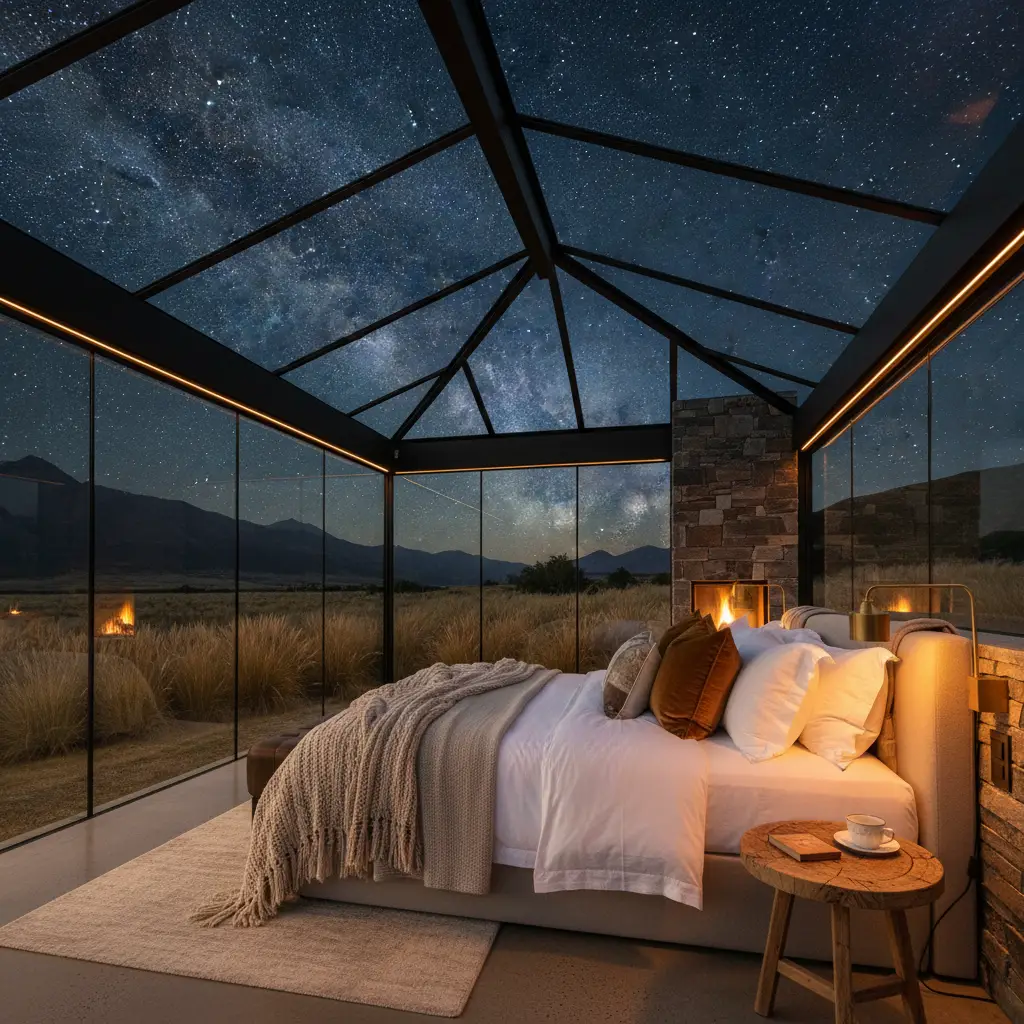
Purpose-built stargazing stays are designed to minimize light spill while maximizing the field of view. Unlike traditional hotels where windows are vertical, these properties often feature angled glass walls, skylights directly above king-sized beds, and outdoor living spaces that remain pitch black yet safe and comfortable. The integration of the stay with the environment is seamless.
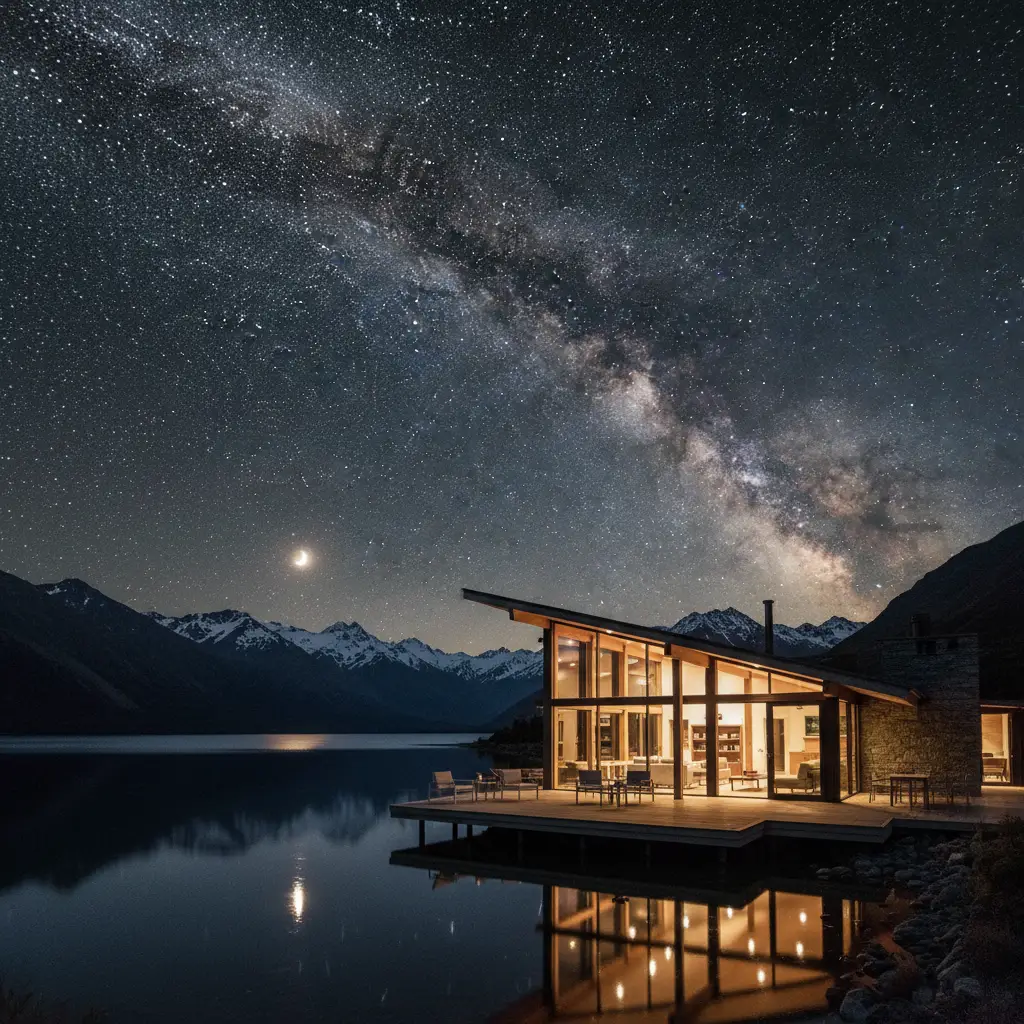
Furthermore, the cultural resurgence of Matariki has added a layer of spiritual depth to these stays. Many luxury providers now partner with local Iwi (tribes) to offer storytelling sessions that explain the celestial navigation history of Polynesian voyagers, turning a visual experience into a cultural journey.
Glass Pods vs. Luxury Lodges: Choosing Your Experience
When searching for luxury dark sky accommodation nz, travelers generally encounter two distinct categories: the secluded glass pod and the full-service luxury lodge. Understanding the difference is crucial for satisfying your specific travel needs.
The Glass Pod Experience
Glass pods, such as the renowned PurePods or the SkyScape units, offer total immersion. These are often off-grid (though powered by high-tech solar arrays) and located in remote paddocks or hillsides.
- Pros: Uninterrupted 360-degree views (floor, ceiling, and walls are often glass), absolute isolation, and a futuristic feeling of floating in the landscape.
- Cons: Limited service (often self-catering or hamper-style dining), smaller square footage.
- Best For: Couples seeking romance, introverts, and hardcore astronomy enthusiasts who want to sleep literally under the stars without a roof blocking the view.
The Luxury Lodge Experience
Lodges like The Lindis or Mt Cook Lakeside Retreat offer a more traditional 5-star hotel structure but with dark-sky modifications. The focus here is on hospitality combined with viewing.
- Pros: On-site chefs, wine cellars, spa facilities, concierge services, and often on-site observatories with professional-grade telescopes.
- Cons: Less “exposed” than a glass pod; you may have to step out onto a terrace to get the full 360-degree effect.
- Best For: Travelers who refuse to compromise on amenities, groups, and those who want a guided educational experience alongside their accommodation.
What to Expect: Amenities, Privacy, and Technology
True luxury dark sky accommodation goes beyond a window. The top-tier providers curate the environment to ensure your eyes adapt to the dark and your comfort is maintained despite the often chilly New Zealand nights.
Red Light Integration
Human eyes take approximately 20 to 30 minutes to fully adapt to the dark. White light (from phones or bathroom switches) destroys this adaptation instantly. Premium stargazing stays utilize red-light technology in their control panels and path lighting. This allows guests to navigate their suites without ruining their night vision.
Private Observatories and Optics
While many tourists flock to public observatories like Mt John, luxury guests expect exclusivity. Properties such as Mt Cook Lakeside Retreat feature their own private observatories (wine cellar observatories are a growing trend). Other lodges provide high-end Celestron telescopes in the suite, complete with iPad integration for star mapping.
Thermal Comfort
The clearest skies in New Zealand often occur during winter (June–August) when temperatures in the Mackenzie Basin can drop below freezing. Luxury accommodations mitigate this with:
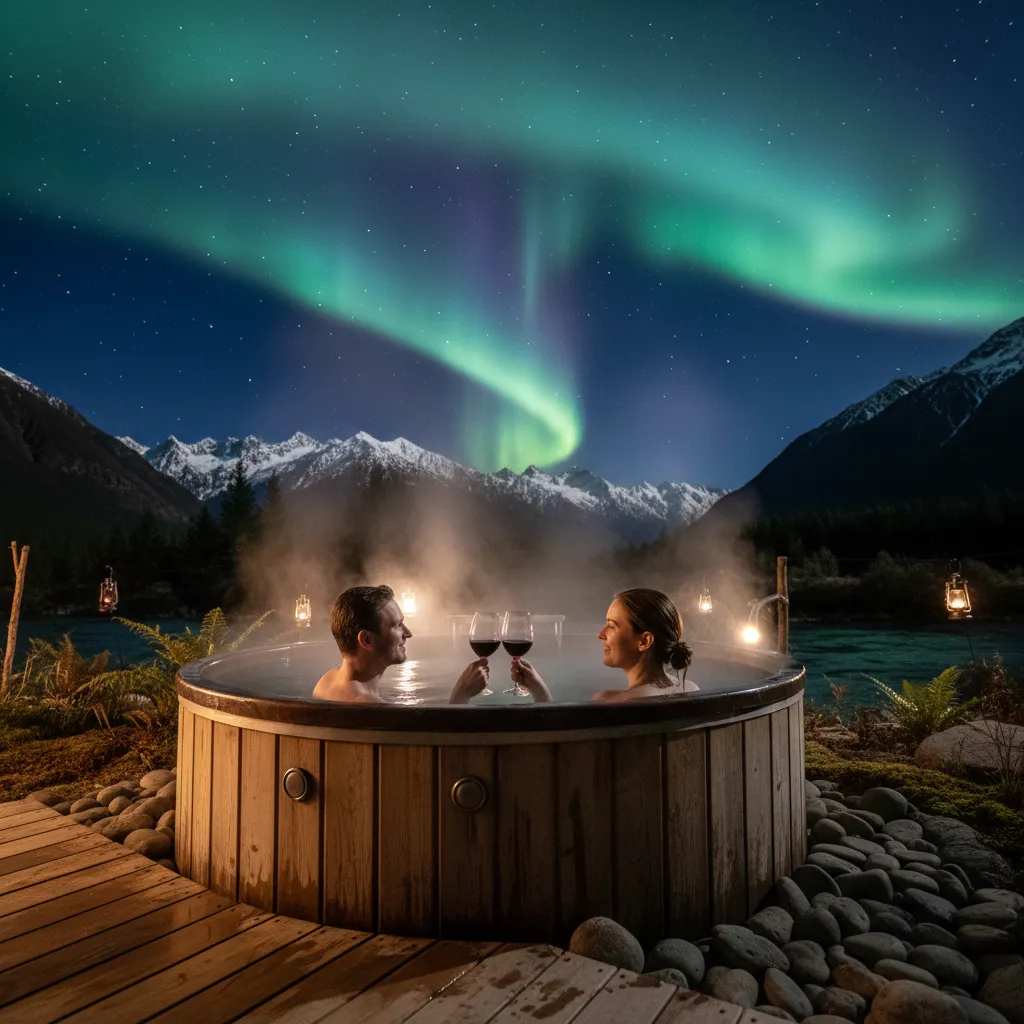
- Outdoor Baths: Cedar hot tubs or stainless steel baths positioned for stargazing.
- Radiant Heating: Underfloor heating that keeps the room warm without drying the air.
- Fireplaces: Gas or wood fires that add ambience without creating light pollution smoke haze.
The Mackenzie Basin: The Heart of the Dark Sky
The Aoraki Mackenzie International Dark Sky Reserve is the gold standard for stargazing in the Southern Hemisphere. Here are the top-rated luxury accommodations in this specific zone.
The Lindis (Ahuriri Valley)
Perhaps the most architecturally significant lodge in the country, The Lindis features a roofline that mimics the undulating landscape. Their “Pods” are separate from the main lodge, offering mirrored glass walls that make the structure disappear into the tussock. The lack of light pollution here is absolute.
Mt Cook Lakeside Retreat
Located on the shores of Lake Pukaki, this retreat is famous for its Pukaki Wine Cellar and Observatory. Guests can enjoy a six-course degustation dinner followed by a private viewing of the Saturn rings or the Jewel Box cluster in the adjoining observatory, guided by an astronomer.
SkyScape (Twizel)
SkyScape is a purpose-built structure made almost entirely of glass, nestled in the tussocks near Twizel. It is designed specifically for lying in bed and watching the Milky Way rotate overhead. The thermal glass ensures you remain warm while feeling completely exposed to the elements.
Beyond Tekapo: Dark Sky Gems Across NZ
While the Mackenzie Basin is the most famous, other regions in New Zealand have achieved Dark Sky Sanctuary status and offer incredible luxury experiences.
Hapuku Lodge + Tree Houses (Kaikoura)
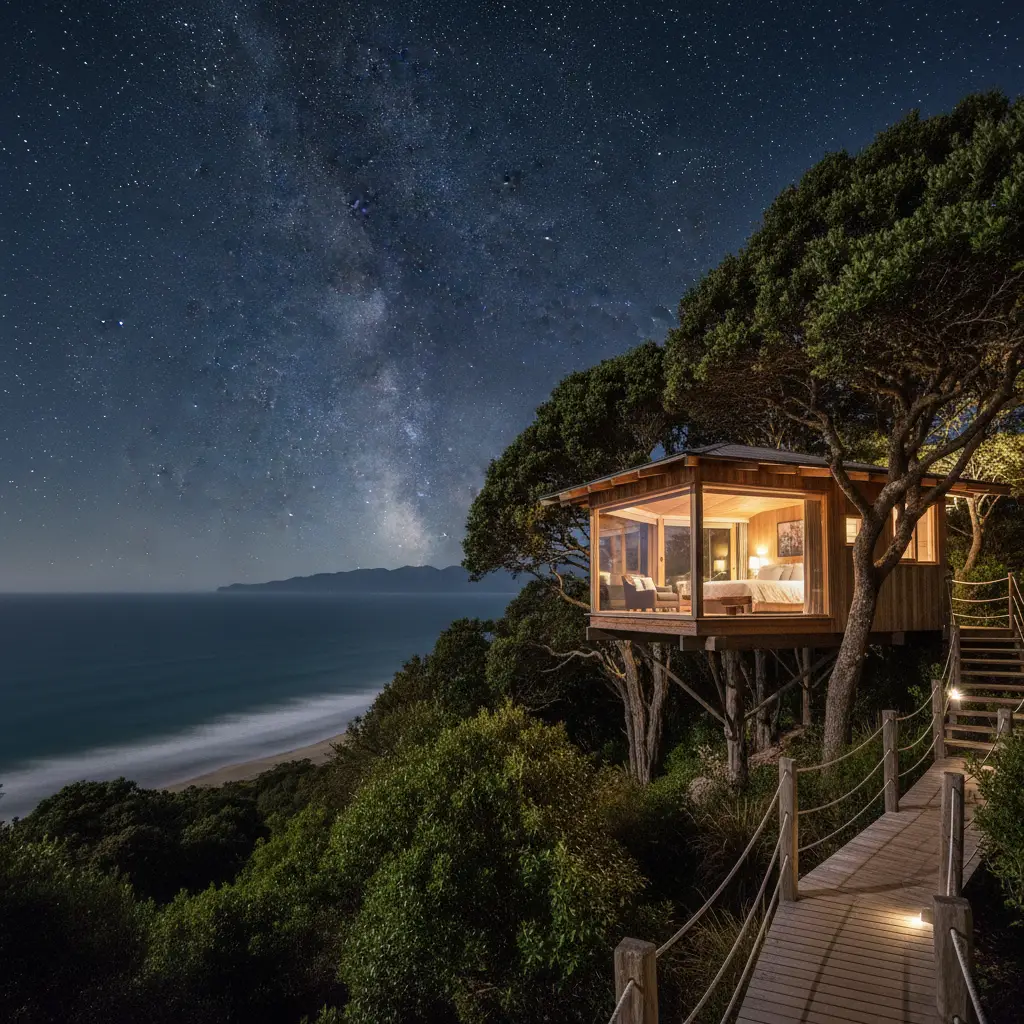
Located further north on the South Island, Kaikoura is famous for whales, but its night skies are equally impressive. The Tree Houses at Hapuku Lodge sit 10 meters above the ground in a native Kanuka grove. The elevation puts you above the low-lying mist, offering crystal clear views of the Pacific ocean and the stars above.
Great Barrier Island (Aotea)
As the first island in the world to be designated an International Dark Sky Sanctuary, Great Barrier Island is for the eco-luxury traveler. Accommodation here is off-grid but opulent. Look for properties that offer private decks facing the ocean, where the lack of electricity on the island guarantees zero light spill.
Observation Rock Lodge (Stewart Island / Rakiura)
Rakiura translates to “The Land of Glowing Skies,” a reference to the Aurora Australis. Being the southernmost populated island, this is the best place to hunt the Southern Lights. Observation Rock Lodge offers premium hosting with a deck specifically built for 270-degree views of the southern horizon.
Planning Your Astrotourism Itinerary
Booking luxury dark sky accommodation nz requires strategic timing. The experience varies drastically depending on the season and the lunar cycle.
Seasonality: Winter vs. Summer
Winter (May to August): This is the prime viewing season. The galactic center of the Milky Way is directly overhead, and the nights are long (sunset is around 5:00 PM). It is also the best time to see the Aurora Australis. However, it is cold, and roads can be icy.
Summer (December to February): The weather is warm, allowing for long periods outside in light clothing. However, the sun doesn’t set until nearly 10:00 PM, and true darkness doesn’t occur until midnight, leaving a shorter window for viewing.
The Lunar Phase Factor
For deep sky objects (nebulae and galaxies), you must book during the New Moon phase (the week surrounding the new moon). A Full Moon acts as a giant streetlamp in the sky, washing out the fainter stars. However, if you enjoy moon gazing, the crater detail visible through the high-end telescopes at these lodges is spectacular during the first quarter phase.
By aligning your stay with the lunar calendar and choosing a property that prioritizes light management, you ensure that your investment in luxury accommodation yields a celestial return that is truly out of this world.
Where is the best place to stargaze in New Zealand?
The Mackenzie Basin (including Lake Tekapo, Twizel, and Mt Cook) is widely considered the best location due to its status as an International Dark Sky Reserve, high altitude, and clear air. Great Barrier Island and Stewart Island are also top-tier Dark Sky Sanctuaries.
How much does luxury dark sky accommodation cost in NZ?
Prices vary significantly by season and exclusivity. Luxury glass pods typically range from NZD $400 to $800 per night, while high-end luxury lodges with private observatories and full board can range from NZD $2,500 to $6,000+ per night.
What is the difference between a Dark Sky Reserve and a Sanctuary?
A Dark Sky Reserve is a dark core zone surrounded by a populated periphery where lighting controls are enacted to protect the core. A Dark Sky Sanctuary is typically more remote, with very little to no nearby population, offering the most fragile and pristine dark skies.
Can you see the Southern Lights (Aurora Australis) from New Zealand hotels?
Yes, but it depends on latitude and solar activity. Stays in the lower South Island (Queenstown, Mackenzie Basin) and Stewart Island offer the best chances. Unlike the Northern Lights, the Aurora Australis is elusive and requires high solar activity (Kp index) to be visible to the naked eye.
Is Matariki a good time for stargazing holidays?
Yes, Matariki (usually June or July) coincides with New Zealand’s winter, which offers the longest nights and often the clearest skies. It is a culturally significant time to visit, with many lodges offering special indigenous astronomy packages.
What should I pack for a dark sky luxury stay?
Even in luxury lodges, stargazing requires stepping outside or staying still. Pack thermal layers, a high-quality beanie, gloves, and a DSLR or mirrorless camera with a tripod if you intend to do astrophotography. Most lodges provide heavy coats, but personal layers are essential.