
Māori star chart posters are educational and decorative visual resources that map the southern night sky according to tātai arorangi (Māori astronomy). These charts typically feature the Matariki cluster, Puanga, and distinct constellations, often utilizing bilingual labels in Te Reo Māori and English to facilitate cultural learning in New Zealand classrooms, tourism hubs, and homes.
As the recognition of Matariki as a public holiday deepens across Aotearoa, the demand for high-quality, culturally accurate resources has surged. Whether you are a kaiako (teacher) looking to enrich your classroom environment, a tourism operator explaining navigation to international guests, or a homeowner seeking meaningful art, selecting the right Māori star chart poster requires an understanding of design, dialectal variation, and material quality. This guide explores the best options available on the market today.

Visual Aids for the Classroom Walls
In the context of the New Zealand Curriculum (Te Marautanga o Aotearoa), visual aids act as silent teachers. Māori star chart posters are not merely decorative; they serve as critical reference points for teaching navigation, seasonal cycles, and mythology. When selecting a poster for an educational setting, clarity and information density are paramount.
Enhancing Spatial Awareness and Navigation
Traditional Polynesian navigation relies heavily on the position of celestial bodies. A high-quality star chart for the classroom should clearly delineate the horizon, the zenith, and the cardinal directions. Posters that illustrate the waka (canoe) star compass provide students with a geometric understanding of how ancestors navigated the Pacific Ocean. By visualizing the relationship between the stars and the horizon, students grasp the practical application of astronomy beyond abstract theory.
Curriculum Alignment
Effective posters align with specific learning outcomes. For primary schools, posters often focus on the narrative of the nine stars of Matariki, using bright illustrations to represent the domain of each star (e.g., Tupuānuku for food from the ground). For secondary education, posters should offer more astronomical precision, showing the ecliptic line, the magnitude of stars, and the seasonal shifts of the night sky.
Bilingual Star Charts: Bridging Language and Science
One of the most significant features of modern Māori star chart posters is their bilingual nature. These resources play a pivotal role in language revitalization by normalizing Te Reo Māori in scientific contexts.
The Importance of Dual Labelling
Posters that feature prominent Te Reo Māori labels alongside English translations (or astronomical Latin names) help bridge the gap between indigenous knowledge and Western science. For example, a chart might label the Southern Cross as both “Crux” and “Mahutonga.” This dual labelling reinforces the validity of Māori science and expands the vocabulary of the viewer. When purchasing, look for charts where the Māori nomenclature is given equal or greater visual weight than the English text, reflecting a commitment to biculturalism.
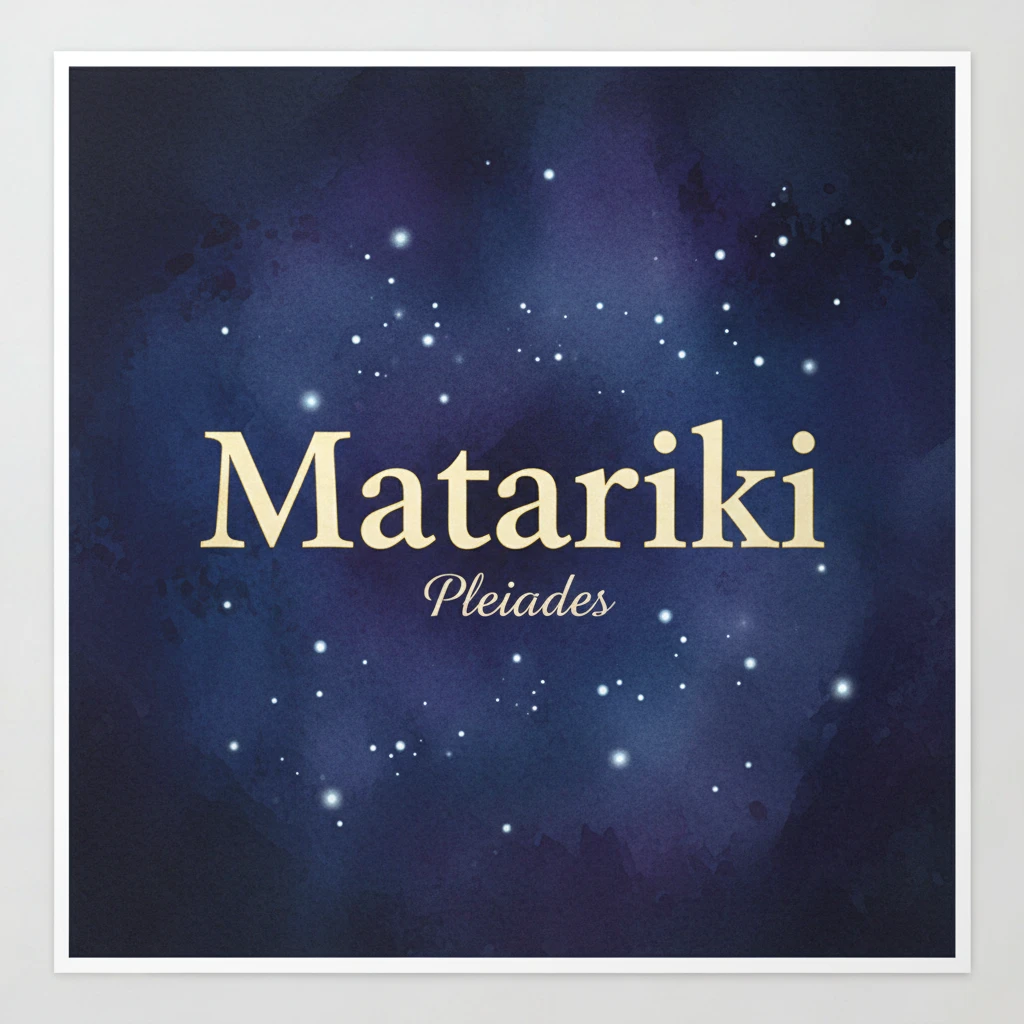
Dialectal Variations
Buyers must be aware that Te Reo Māori varies by region (iwi). Some star charts are designed specifically for certain dialects. For instance, in the South Island (Te Waipounamu), the ‘ng’ is often replaced with ‘k’. A generic poster might not satisfy the specific cultural requirements of a local kura (school). Commercial buyers for regional tourism boards should ensure the posters they display reflect the dialect of the local mana whenua to ensure cultural safety and respect.
Artistic Interpretations: Puanga vs. Matariki
A critical distinction in Māori astronomy—and consequently in the market for star chart posters—is the variation between Matariki and Puanga. While Matariki marks the New Year for many, it is not visible everywhere in Aotearoa due to geography.
The Significance of Puanga Posters
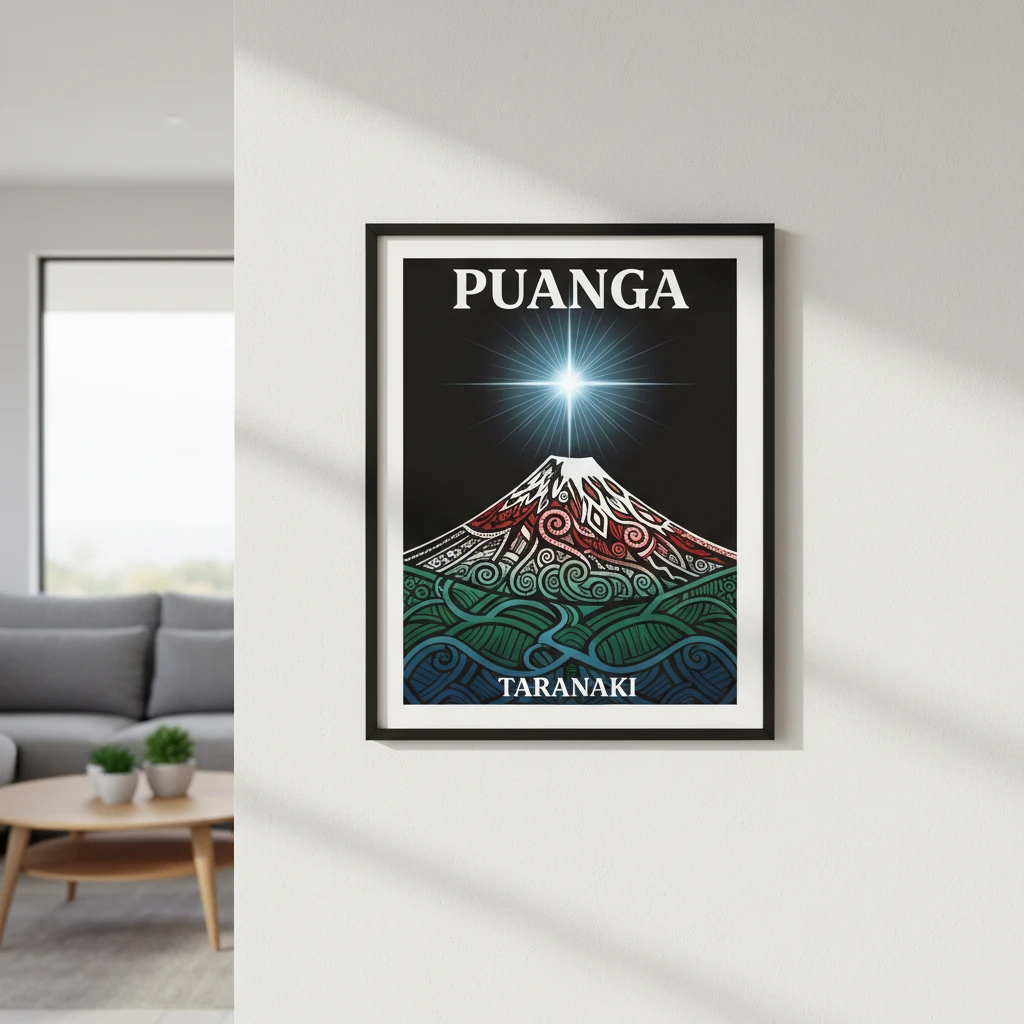
For tribes in the West Coast, Taranaki, and Whanganui regions, the star Puanga (Rigel) is the herald of the New Year because the Matariki cluster is often obscured by mountain ranges. Consequently, a “Matariki” poster may be culturally inaccurate for schools or businesses in these areas.
Designers have responded to this by creating specific Puanga star charts. These posters often feature Puanga as the central visual anchor, located above the three stars of Tautoru (Orion’s Belt). When sourcing inventory for a shop or resources for a school, checking the geographical relevance of the star chart is a crucial step in the purchasing process.
Artistic Styles: Traditional vs. Contemporary
The aesthetic appeal of these posters varies widely:
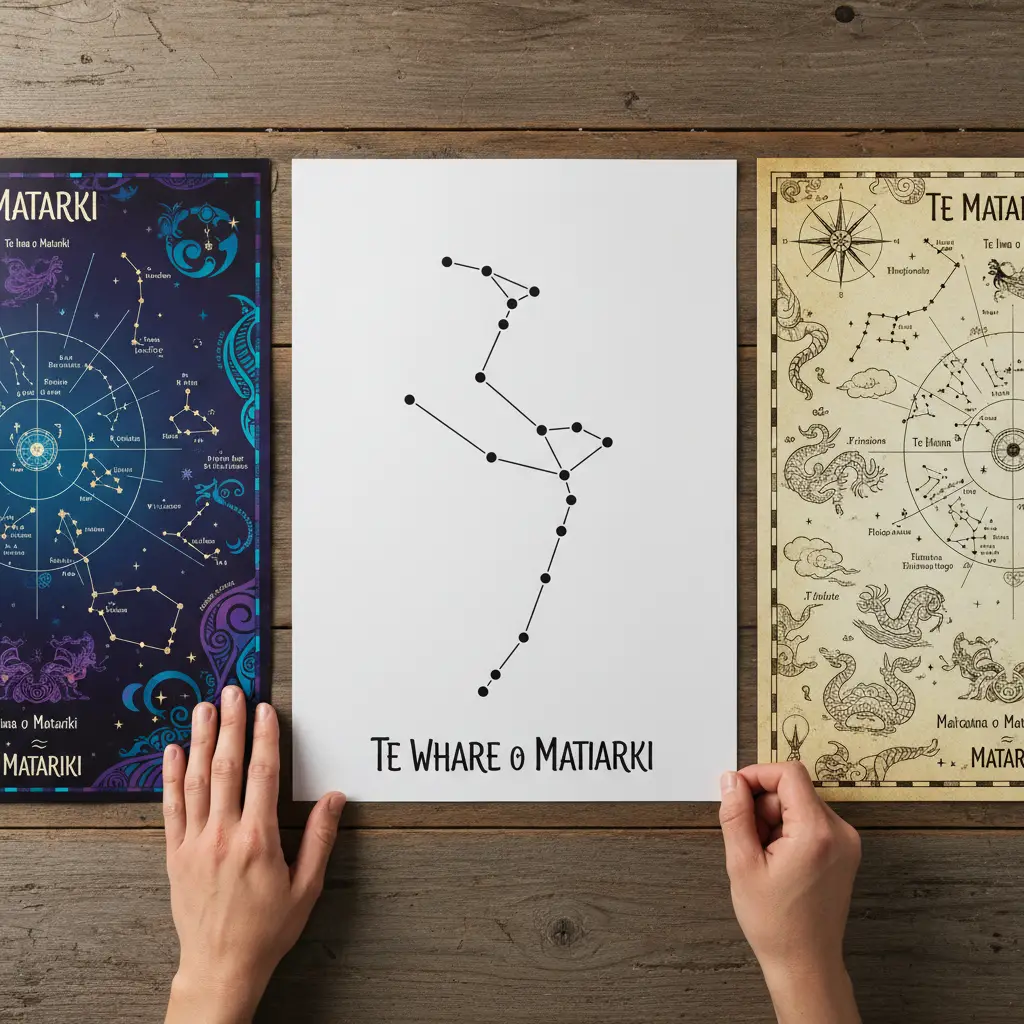
- Traditional Kowhaiwhai: Some charts incorporate traditional patterns to represent the Milky Way (Te Ika-a-Rangi), grounding the astronomical data in Māori art history.
- Modern Minimalist: Aimed at the home decor market, these posters use clean lines, dark navy backgrounds, and gold foil to create a sophisticated look suitable for living rooms.
- Illustrative Narrative: These feature character designs for each star, often used in early childhood education to help children personify and remember the function of each star.
Size and Material Options for Longevity
The intended use of the star chart dictates the necessary material specifications. Commercial buyers and educators have different requirements regarding durability and finish.
Classroom Durability (Laminated & Synthetic)
For high-traffic areas like classrooms or hallways, durability is non-negotiable.
- Lamination: A standard paper poster must be encapsulated in at least 75-micron lamination to withstand handling, blue tack, and sunlight fading.
- Synthetic Paper: Premium classroom charts are now printed on tear-resistant synthetic stocks (like Tyvek or polypropylene). These are waterproof and can be wiped down, making them ideal for interactive learning where students might touch the chart.
Aesthetic Quality (Giclée & Canvas)
For libraries, staff rooms, or home offices, the focus shifts to archival quality.
- Giclée Prints: High-end posters use archival inks on acid-free cotton rag paper. These provide the deepest blacks—essential for star charts—and prevent the image from yellowing over time.
- Canvas Wraps: Some vendors offer star charts printed directly onto canvas. This eliminates the need for glass framing (which can cause glare) and adds a tactile, artistic texture to the piece.
Sizing Standards
Standard sizes in New Zealand generally follow the A-series:
- A3 (297 x 420mm): Best for individual student desks or small home spaces.
- A2 (420 x 594mm): The standard size for home decor posters.
- A1 (594 x 841mm): The minimum recommended size for a classroom wall to ensure text is legible from the back of the room.
Vendor Comparisons: Where to Buy Authentic Charts
Supporting indigenous commerce is a vital aspect of purchasing Māori resources. Here is a comparison of the types of vendors available in the market.
1. Educational Specialists (e.g., The Reo Project, TeacherTalk)
Pros: These vendors design specifically for the curriculum. Their posters often come with accompanying teacher notes, lesson plans, or magnetic components. The information is vetted for educational accuracy.
Cons: The design is often functional rather than artistic; they may look “school-like” and be less suitable for home decor.
2. Cultural Institutions (e.g., Te Papa Store, Auckland Museum)
Pros: Products sold here are usually developed in consultation with experts and iwi. Proceeds often support the institution. They offer high-quality reproduction of historical charts.
Cons: Price points can be higher due to the premium nature of museum-grade merchandise.
3. Independent Māori Artists (e.g., via Etsy, Felt, or Instagram)
Pros: Buying directly from artists ensures the money goes to the creator. You get unique, stylized interpretations that you won’t see in every classroom. Many offer custom dialect options.
Cons: Stock levels can be inconsistent. You may need to frame the prints yourself as they often ship in tubes.
How to Choose the Right Poster for Your Space
To finalize your decision, consider the “Rule of Three” for star chart selection:
- Legibility: Stand three meters back. Can you read the names of the stars? If it is for a classroom, bold, high-contrast text is essential. Dark blue backgrounds with white text are generally more readable than busy illustrative backgrounds.
- Accuracy: Does the chart reflect the correct season? Matariki appears in the mid-winter morning sky. Ensure the chart isn’t depicting a summer sky configuration unless it is a general all-year map.
- Provenance: Who designed it? Look for accreditation to Māori astronomers or designers. Authentic resources usually acknowledge the source of the mātauranga (knowledge).
By investing in a high-quality Māori star chart poster, you are doing more than decorating a wall; you are upholding a lineage of celestial knowledge that has guided navigators and planters for centuries. Whether for the classroom or the living room, these charts serve as a daily reminder of our connection to the cosmos and the rich cultural heritage of Aotearoa.
What are the 9 stars of Matariki usually shown on posters?
Most educational posters feature the nine stars: Matariki (the mother), Pōhutukawa, Tupuānuku, Tupuārangi, Waitī, Waitā, Waipuna-ā-rangi, Ururangi, and Hiwa-i-te-rangi. Each star governs a specific domain, such as fresh water, salt water, winds, or food from the sky.
Where is the best place to hang a star chart poster?
In a classroom, hang the poster on a South-facing wall if possible, or near windows where the sky is visible, to help students connect the chart to the actual environment. In a home, place it in a study or hallway where it can be viewed up close for detailed reading.
Can I buy digital download Māori star charts?
Yes, many independent Māori artists on platforms like Etsy offer high-resolution digital downloads. This is a cost-effective option that allows you to print the chart at your preferred local printer in the size that suits your space best.
What is the difference between Matariki and Puanga posters?
Matariki posters focus on the Pleiades cluster, which signals the New Year for most of NZ. Puanga posters focus on the star Rigel. Puanga is celebrated by iwi in regions like Taranaki and Whanganui where Matariki is less visible due to the landscape.
Are there magnetic Māori star chart posters available?
Yes, several educational suppliers offer magnetic star charts or posters with magnetic overlays. These are excellent for interactive teaching, allowing students to move star magnets to match their positions in the night sky.
How do I ensure the poster I buy is culturally appropriate?
Look for products created by or in collaboration with Māori designers and astronomers. Reputable vendors will often list the iwi affiliations of the artist or cite the sources of their astronomical information.