
Maramataka is the traditional Māori lunar calendar used to track time based on the movements of the moon and stars. Unlike the solar Gregorian calendar, it aligns daily activities—such as fishing, gardening, and resting—with specific lunar phases to maximize productivity, environmental harmony, and personal well-being.
For centuries, the indigenous people of Aotearoa (New Zealand) have relied on the Maramataka not merely as a method of counting days, but as a sophisticated ecological almanac. By understanding Maramataka, we gain insight into an ancestral system of knowledge that synchronizes human activity with the natural rhythms of the earth and sky. It is a guide to survival, prosperity, and hauora (health).
What is the Difference Between Solar and Lunar Calendars?
To truly begin understanding Maramataka, one must first distinguish it from the timekeeping system most of the Western world uses today: the Gregorian calendar.
The Gregorian calendar is a solar calendar. It is calculated based on the earth’s revolution around the sun, lasting approximately 365.25 days. Its primary function is to align the calendar year with the tropical year to keep seasons consistent. However, it is largely detached from the subtle environmental cues that occur on a daily basis.
In contrast, the Maramataka (literally translating to “The Moon Turning” or “The Moon Rotating”) is a lunar-stellar calendar. It is based principally on the cycles of the moon (marama), consisting of 29.5 days per month, with an intercalary system involving the rising of stars (such as Matariki or Puanga) to recalibrate the year.
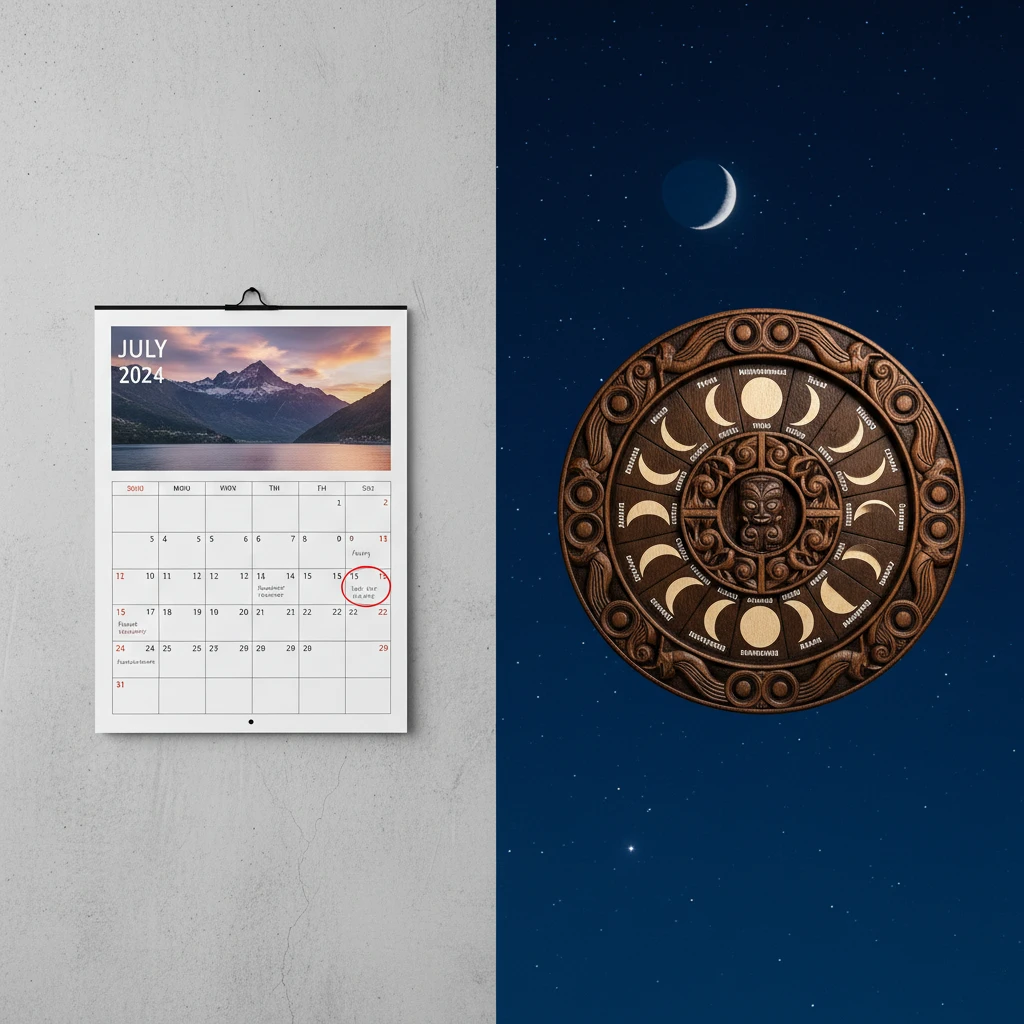
While the solar calendar tells you the date, the lunar calendar tells you the state of the environment. The gravitational pull of the moon affects not only the tides but also the water table in the soil, the sap flow in trees, and arguably, the energy levels of human beings. The Maramataka divides the year into 12 or 13 lunar months, beginning with the new moon (Whiro). Because a lunar year is shorter than a solar year (approx. 354 days), the Maramataka is fluid, requiring observation of the stars to mark the start of the New Year.
How Do the Phases of the Moon Dictate Daily Life?
The core utility of the Maramataka lies in its predictive power regarding energy. For the Māori ancestor, efficiency was key to survival. One did not waste energy planting kumara (sweet potato) when the soil moisture was low, nor did one risk a voyage on the ocean during turbulent lunar phases.
The Maramataka assigns specific characteristics to every night of the lunar month. These characteristics dictate the “energy” of the day, categorizing them generally into times for high activity, times for moderate activity, and times for rest.
The High Energy Phases
During the full moon phases, light is abundant, and the gravitational pull is strong. In traditional life, these were days for communal gathering, high-intensity gardening, and action. The sap in trees is drawn upward, making it an excellent time for planting crops that grow above ground.
The Low Energy Phases
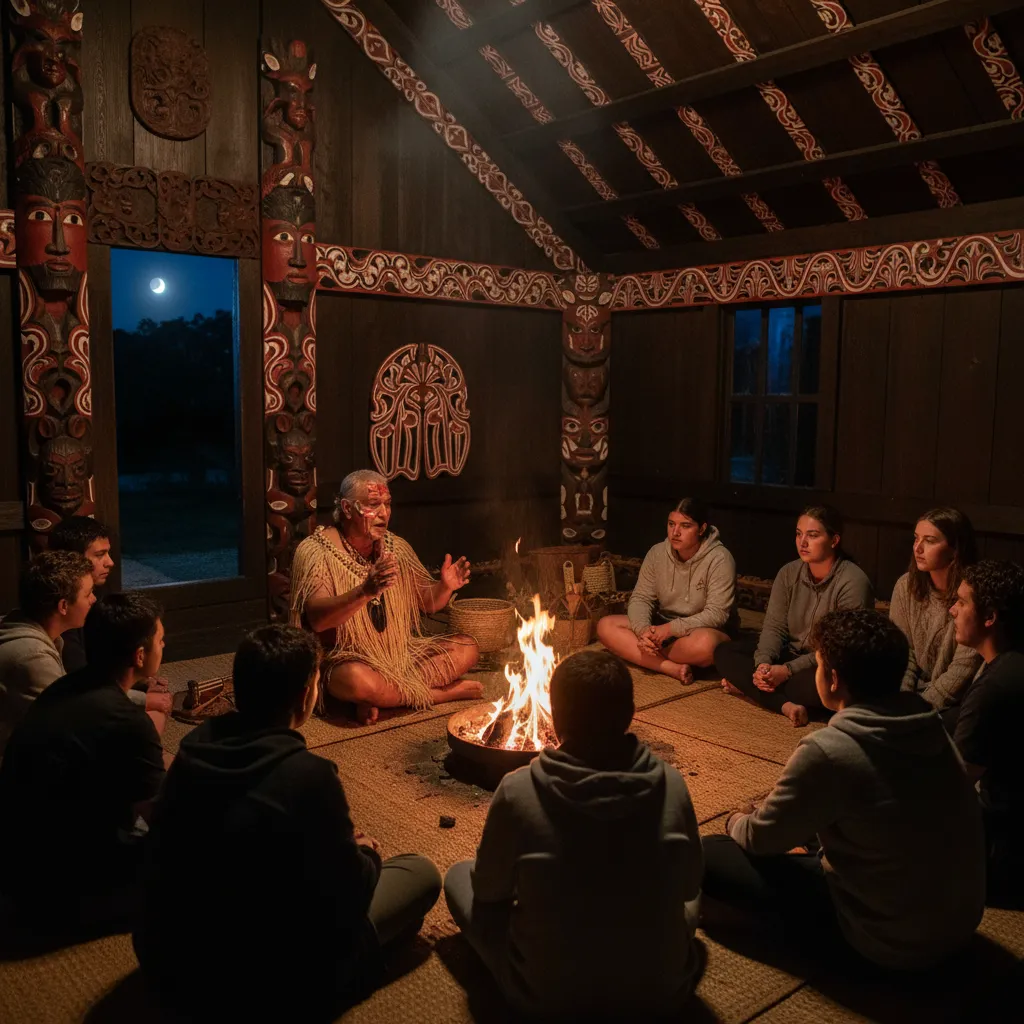
Conversely, the darker phases of the moon (the New Moon period) are known as Whiro. Whiro is often associated with lower energy, introspection, and planning. It is traditionally viewed as a poor time for planting or fishing but an excellent time for wānanga (learning), holding meetings, or resting to conserve energy for the coming cycle.
Decoding the Nights: A Guide to Energy Levels
To deepen your understanding of Maramataka, it is helpful to look at specific groupings of nights. While dialects and names vary between Iwi (tribes), the general flow of the month remains consistent.
1. Whiro (The New Moon)
The first night of the cycle. The moon is invisible. This is a time of negative energy for food gathering. The phrase “Whiro does not sleep” implies that pests and bad omens are active. It is a time to stay close to home, plan, and rest.
2. The Tamatea Phases
Usually occurring around the first quarter, the Tamatea nights are associated with unpredictable weather—wind and swelling seas. The energy here is volatile. It is generally advised to be cautious on the water. Emotional energy in humans can also be unpredictable during Tamatea nights.
3. The Korekore Phases
Kore means “nil” or “nothing.” These days typically precede the full moon. As the name suggests, these are not productive days for fishing or eeling. The returns on effort will be low. Instead, these days are utilized for tasks on land, repairing nets, or weeding gardens.
4. The Tangaroa Phases
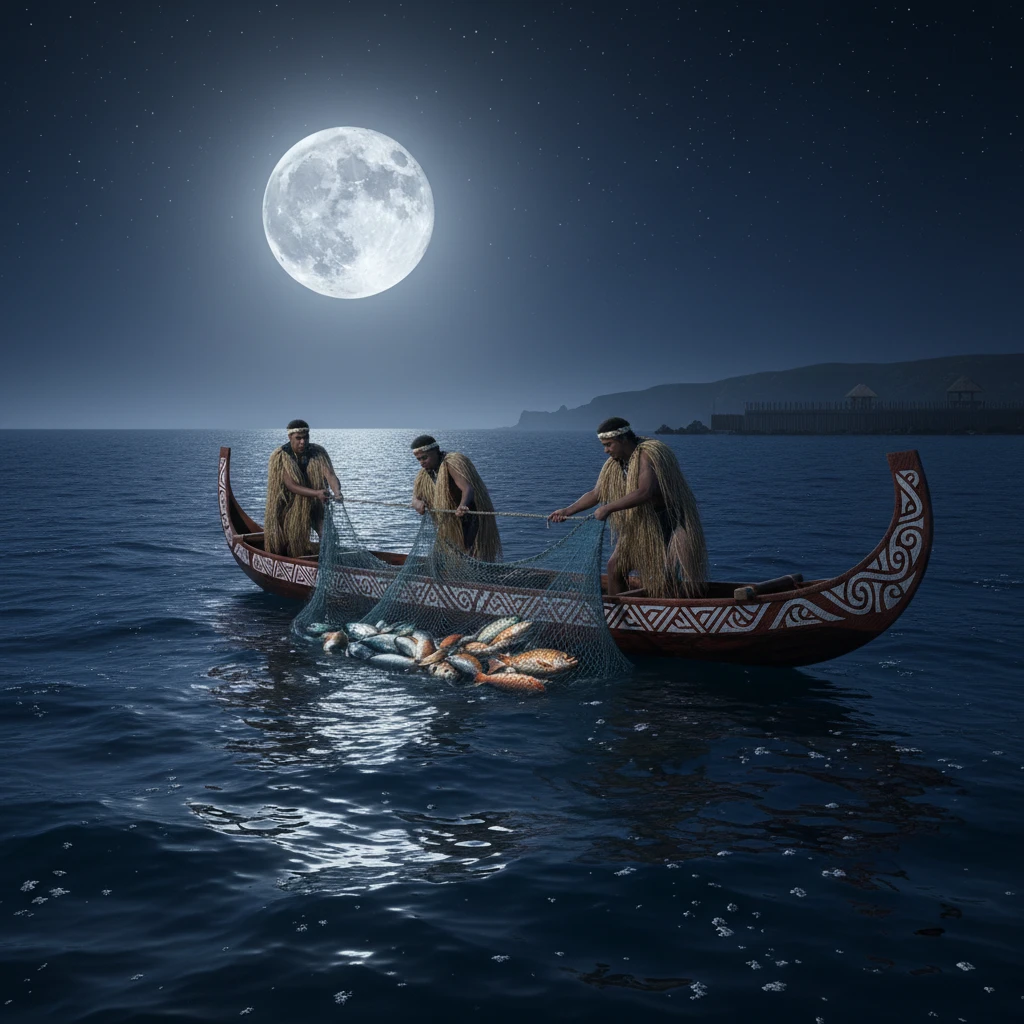
Tangaroa is the god of the sea. These nights, leading up to and including the full moon, are the premier times for fishing. The tides are significant, and fish activity is high. It is a time of productivity and abundance. If you are looking to launch a project or go fishing, the Tangaroa phases are the “green light” in the Maramataka.
The Connection Between Matariki and the Maramataka
Matariki is the Māori name for the star cluster known as the Pleiades. Its appearance in the pre-dawn sky in mid-winter marks the beginning of the Māori New Year. However, Matariki cannot be understood in isolation; it is the anchor of the Maramataka.
Because the lunar year is shorter than the solar year, the calendar would drift out of sync with the seasons without a reset mechanism. Matariki serves as that reset. When Matariki rises (heliacal rising) during the lunar phase of Tangaroa (in the lunar month of Pipiri), the New Year begins.
The visibility of the stars within the Matariki cluster was also used to predict the productivity of the coming year. If the stars appeared bright and clear, a warm and bountiful season was expected. If they were hazy and shimmering, it foretold a cold winter and potential crop failure. This connection highlights that Maramataka is a broad environmental science, combining lunar cycles with astronomy to guide long-term survival strategies.
The Revival of Maramataka in Modern Aotearoa
For a significant period following European colonization, the use of Maramataka declined. The Tohunga Suppression Act of 1907, which outlawed the practices of traditional experts, drove this knowledge underground. However, the last two decades have seen a powerful resurgence in understanding Maramataka, driven by a desire to reconnect with the environment and improve mental health.
Application in Health and Well-being
Modern health practitioners in New Zealand are increasingly using Maramataka to help people manage mental health. By understanding that energy levels naturally wax and wane with the moon, individuals learn to stop fighting against their natural rhythms. For example, recognizing a “low energy” Whiro day allows a person to accept their fatigue as natural rather than viewing it as a symptom of depression or laziness.
Environmental Management
Conservation groups and agricultural businesses are returning to the Maramataka for planting schedules. Known as “biodynamics” in Western agriculture, planting by the moon has been proven to affect root growth and yield. Māori land trusts are utilizing this ancient wisdom to manage fisheries and forests sustainably, ensuring that resources are taken only when they are most abundant and resilient.
How to Start Observing Maramataka
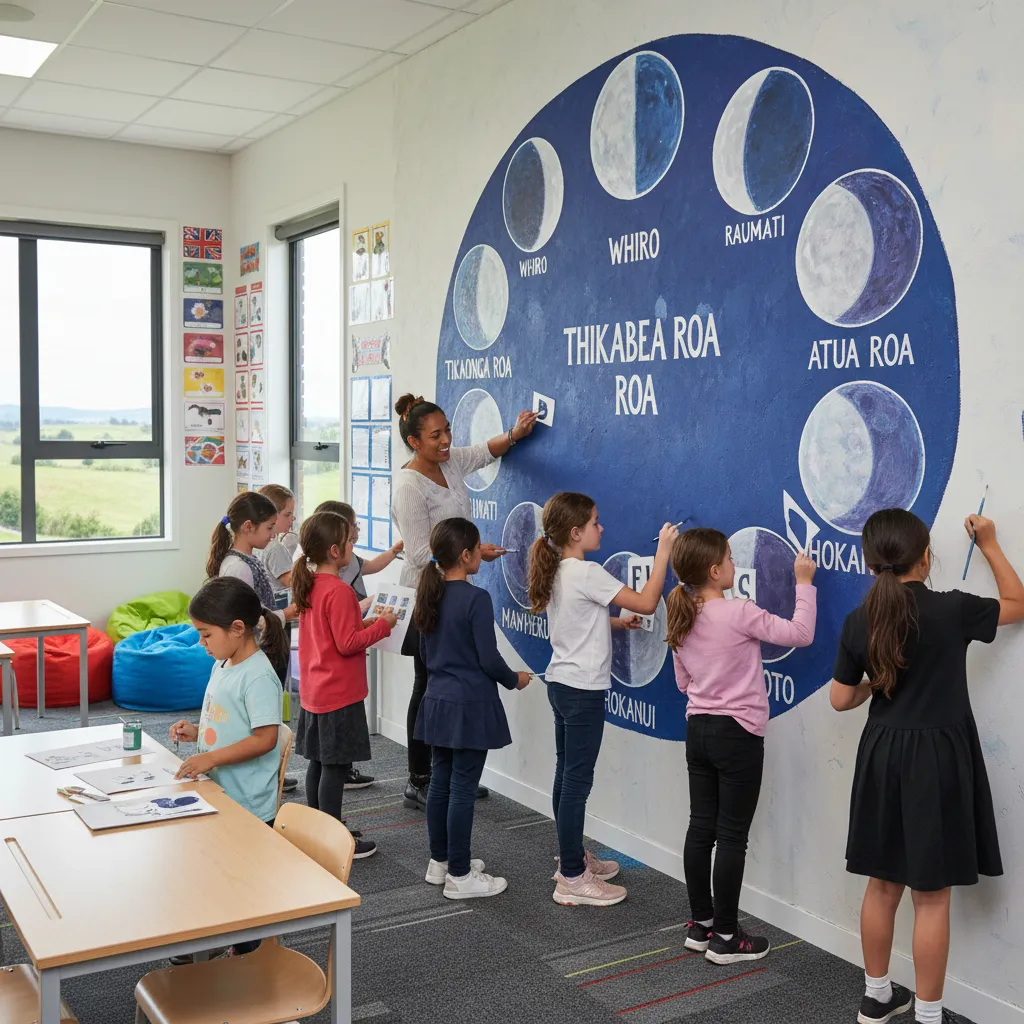
You do not need to be an expert to begin using the Maramataka. Start with simple observation:
- Look Up: Note the shape of the moon each night. Is it growing (waxing) or shrinking (waning)?
- Journal: Record your energy levels, your sleep quality, and your mood alongside the moon phase. Over three months, you will likely see a pattern emerge.
- Connect Locally: Remember that Maramataka is localized. The best fishing times in the Far North may differ slightly from the South Island due to latitude and local geography. Connect with local Marae or Iwi resources to find the specific calendar for your region.
People Also Ask
Is the Maramataka the same for all Māori tribes?
No, there are tribal variations. While the core principles remain the same, different Iwi (tribes) have different names for the moon phases and may start their lunar months at slightly different times depending on their local environment and geography.
When does the Māori year start?
The Māori New Year starts with the first new moon following the rising of the Matariki star cluster (or Puanga for some tribes) in the mid-winter sky, typically occurring in June or July.
What are the best days for fishing in the Maramataka?
The best fishing days are generally during the Tangaroa phases (productive days) which occur around the full moon. The gravitational pull is stronger, creating bigger tides and more fish activity.
How many days are in a Maramataka month?
A standard lunar month in the Maramataka is 29.5 days. This reflects the time it takes for the moon to complete one full cycle from new moon to new moon.
What is the difference between Matariki and Maramataka?
Maramataka is the system of timekeeping (the calendar) itself. Matariki is a specific star cluster (Pleiades) whose appearance marks the beginning of the New Year within the Maramataka system.
Can I use Maramataka for gardening?
Yes, Maramataka is excellent for gardening. It guides when to plant above-ground crops (during high energy/rising sap phases) and root vegetables (during waning phases), as well as when to weed or let the soil rest.