
What are Matariki activities for schools?
Matariki activities for schools are educational experiences designed to celebrate the Māori New Year within the New Zealand Curriculum. These activities integrate the nine stars of Matariki through pūrākau (storytelling), toi (arts), and taiao (environmental) studies, fostering cultural understanding, remembrance, and future goal-setting for students from ECE to Primary levels.
The Significance of Matariki in 2025
As we approach the Matariki season for 2025, understanding the deep cultural and astronomical significance of this event is paramount for educators in Aotearoa. Matariki is the Māori name for the star cluster known as the Pleiades. Its rising in mid-winter marks the beginning of the Māori New Year. In 2025, the public holiday will be observed on Friday, 20 June, but the period of celebration typically extends for weeks before and after this date.
For schools, this is not merely a date on the calendar; it is a vital opportunity to engage with mātauranga Māori (Māori knowledge). The celebration is underpinned by three major themes: remembering those who have passed (remembrance), celebrating the present with whānau and friends (celebrating), and planning for the future (aspirations). By centering your classroom activities around these themes, you move beyond superficial engagement and into deep, meaningful cultural appreciation.

Integrating Matariki into the NZ Curriculum
Integrating Matariki activities for schools requires a strategic approach that aligns with the refreshed New Zealand Curriculum. It is no longer sufficient to treat Matariki as an isolated art project. Instead, it should be woven into the fabric of literacy, science, social sciences, and the arts.
Te Ao Tangata | Social Sciences
Under the Aotearoa New Zealand’s Histories curriculum, students can explore how Matariki has been observed over time and how different iwi may celebrate it differently (for example, some iwi look to Puanga rather than Matariki). This fulfills the “Understand, Know, Do” framework by encouraging students to understand how the past shapes our present identity.
Science and the Natural World
Matariki is intrinsically linked to the environment. The stars were used as indicators for the year ahead regarding planting, harvesting, and weather patterns. This provides a perfect segue into environmental science, astronomy, and biology. Teachers can utilize this time to focus on the “Planet Earth and Beyond” strand, investigating star formations, the lunar calendar (Maramataka), and seasonal changes.
Activities Based on the 9 Stars (Ngā Whetū)
A robust educational strategy involves breaking down activities by the specific domains of the nine stars. This ensures variety and depth in your lesson planning.
1. Matariki (The Mother Star)
Focus: Wellbeing and health.
Activity: Hauora Check-in. Have students create a “Hauora Plan” for the upcoming term. They can draw a star and, on each point, write a goal related to their physical, mental, social, or spiritual health. This connects directly to Te Whare Tapa Whā.
2. Pōhutukawa (Remembrance)
Focus: Those who have passed on.
Activity: Memory Wall. Create a respectful space in the classroom where students can post photos or write names of ancestors or famous New Zealanders who have passed away. Use this as a prompt for writing biographies or sharing oral histories.
3. Tupuānuku (Food from the Earth)
Focus: Gardens and soil.
Activity: Winter Planting. This is the ideal time to teach students about kumara or winter vegetables. Even without a school garden, you can plant seeds in egg cartons on the windowsill. Discuss the importance of soil health and composting.
4. Tupuārangi (Food from the Sky)
Focus: Birds and berries.
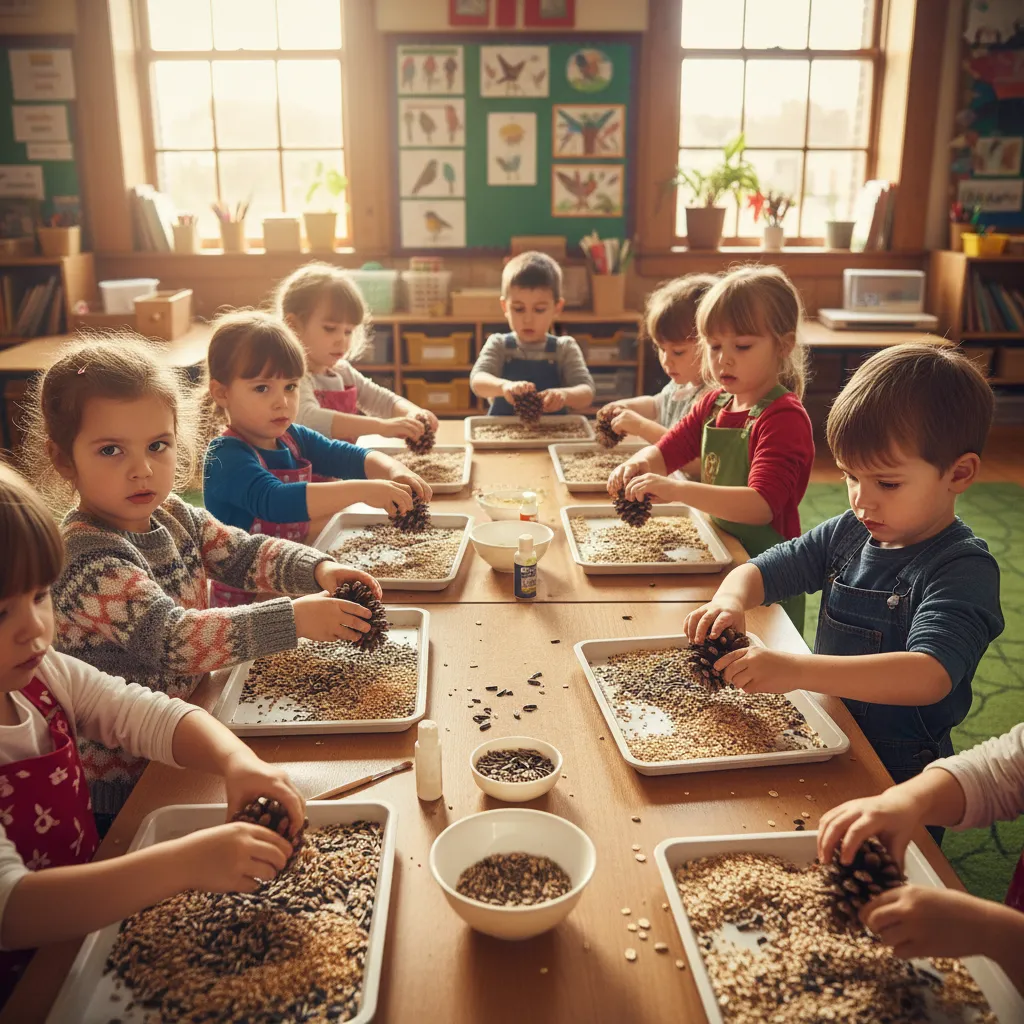
Activity: Bird Feeder Construction. Using pinecones, lard, and seeds, have students create bird feeders to hang in the school grounds. This supports local biodiversity during the harsh winter months and teaches students about native bird species like the Kererū.
5. Waipuna-ā-rangi (Rain)
Focus: Water cycles and weather.
Activity: Rain Gauges. Build simple rain gauges using recycled plastic bottles. Students can track rainfall over the Matariki period, graphing the data in their mathematics books. This combines measurement, statistics, and environmental science.
6. Waitī (Freshwater)
Focus: Eels, rivers, and lakes.
Activity: Stream Study or Tuna (Eel) Art. If possible, visit a local stream to test water quality. Alternatively, create collaborative murals focusing on the lifecycle of the Tuna (Longfin eel), discussing their migration and threats to their habitat.
7. Waitā (Saltwater)
Focus: Oceans and kaimoana.
Activity: Ocean Clean-up Simulation. Use a sensory bin with water and “pollutants” (plastic bits, oil). Have students engineer ways to clean the water. Discuss the impact of plastic on marine life.
8. Ururangi (Winds)
Focus: Wind and speed.
Activity: Manu Tukutuku (Kite) Making. Kites were traditionally flown to connect the heavens and the earth. Use natural materials like raupō or flax (harakeke) if available, or paper and dowel. Test the kites and measure flight distance or duration.
9. Hiwa-i-te-rangi (The Wishing Star)
Focus: Aspirations and future goals.
Activity: Time Capsule. Students write a letter to their future selves about what they hope to achieve by the next Matariki. Seal these in a container to be opened in one year.
Classroom Gamification & Low-Prep Ideas
Gamification is an excellent way to engage students without requiring hours of preparation. By turning learning into a game, you increase motivation and retention regarding Matariki concepts.
Matariki Amazing Race
Create a scavenger hunt around the school grounds. Hide nine “stars” (printed cards), each containing a fact about a specific star and a code letter. Students must find all nine, record the facts, and unscramble the code word to win a prize. This gets students moving and encourages teamwork.
Star Cluster Bingo
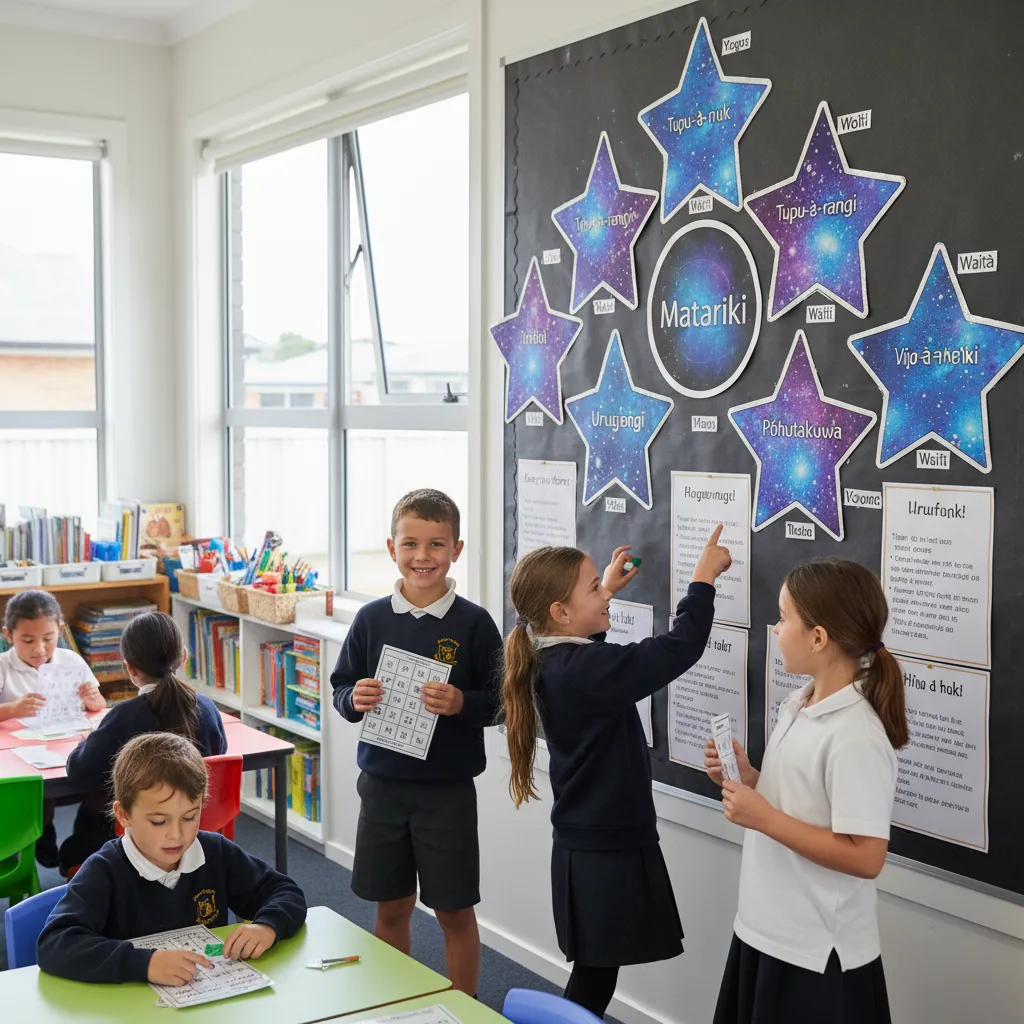
Create bingo cards with terms related to Matariki (e.g., Hāngī, Whetū, Maramataka, Harvest, Kite). Read out the definitions, and students must mark the corresponding word. This is a high-engagement, low-prep activity suitable for rainy winter afternoons.
Age-Appropriate Activities (ECE to Primary)
Differentiation is key when planning Matariki activities for schools. What works for a 4-year-old will not engage a Year 6 student.
Early Childhood Education (ECE)
For the youngest learners, focus on sensory experiences and simple repetition.
Activity: Star Weaving. Use paper plates with slits cut in the edges and wool. Tamariki can weave patterns to create “stars.”
Activity: Waiata and Action Songs. Teach simple songs about the stars (e.g., “Tirama Tirama Ngā Whetū” – Twinkle Twinkle Little Star in Māori) with hand actions.
Lower Primary (Years 1-3)
Focus on storytelling and basic recognition.
Activity: Pūrākau Dramatization. Read the legend of Matariki and the six sisters (or nine stars). Have students dress up and act out the story. This builds oral language skills and confidence.
Activity: Silhouette Art. Use pastels to create a night sky background and black paper to cut out silhouettes of mountains and trees.
Upper Primary (Years 4-6)
Focus on research, inquiry, and complex creation.
Activity: Inquiry Project. Assign small groups one of the nine stars. They must research its domain and present a 3-minute presentation or digital slide deck to the class.
Activity: Geometry in Stars. Explore the geometry of weaving (raranga). Use grid paper to design Tukutuku patterns, discussing symmetry, translation, and rotation.
Offline Resources for Active Learning
In a digital age, offline resources offer a tactile and often more memorable learning experience. Using physical resources aligns well with the “hands-on” nature of traditional Māori learning methods.
Shared Kai (Food)
Hosting a shared breakfast or soup day is one of the most culturally responsive ways to celebrate. Matariki is a time of harvest and feasting. Have students contribute a vegetable for a “Stone Soup” (class soup). The preparation—peeling, chopping (with supervision), and cooking—teaches practical life skills and the value of manaakitanga (hospitality).
Visiting the Local Marae
Nothing replaces the experience of visiting a marae. Reach out to your local iwi or marae committee well in advance. A visit can contextualize the stories told in the classroom and strengthen the relationship between the school and the community.

Frequently Asked Questions
When is Matariki 2025 celebrated in schools?
The official public holiday is Friday, 20 June 2025. However, schools typically celebrate throughout the month of June and early July, often culminating in the week leading up to the holiday.
What are the 9 stars of Matariki?
The nine stars are Matariki, Pōhutukawa, Tupuānuku, Tupuārangi, Waipuna-ā-rangi, Ururangi, Hiwa-i-te-rangi, Waitī, and Waitā. Each star holds dominion over a specific environmental or spiritual aspect.
How can I celebrate Matariki without a budget?
Focus on nature-based activities. Star gazing homework, storytelling (pūrākau), singing waiata, and weeding the school gardens are all free and culturally significant ways to participate.
Is Matariki suitable for non-Māori students?
Absolutely. Matariki is a celebration for all people of Aotearoa New Zealand. It focuses on universal themes of remembrance, gratitude, and environmental stewardship that apply to every culture.
What is a simple Matariki art activity for juniors?
Wax resist art is very effective. Have students draw stars and koru patterns with white crayon on white paper, then paint over it with dark blue or purple dye to reveal the “stars” in the night sky.
How does Matariki link to the science curriculum?
It connects directly to the Planet Earth and Beyond strand (astronomy, seasons) and the Living World strand (ecology, life cycles of plants and animals associated with the stars like Tupuānuku and Tupuārangi).