
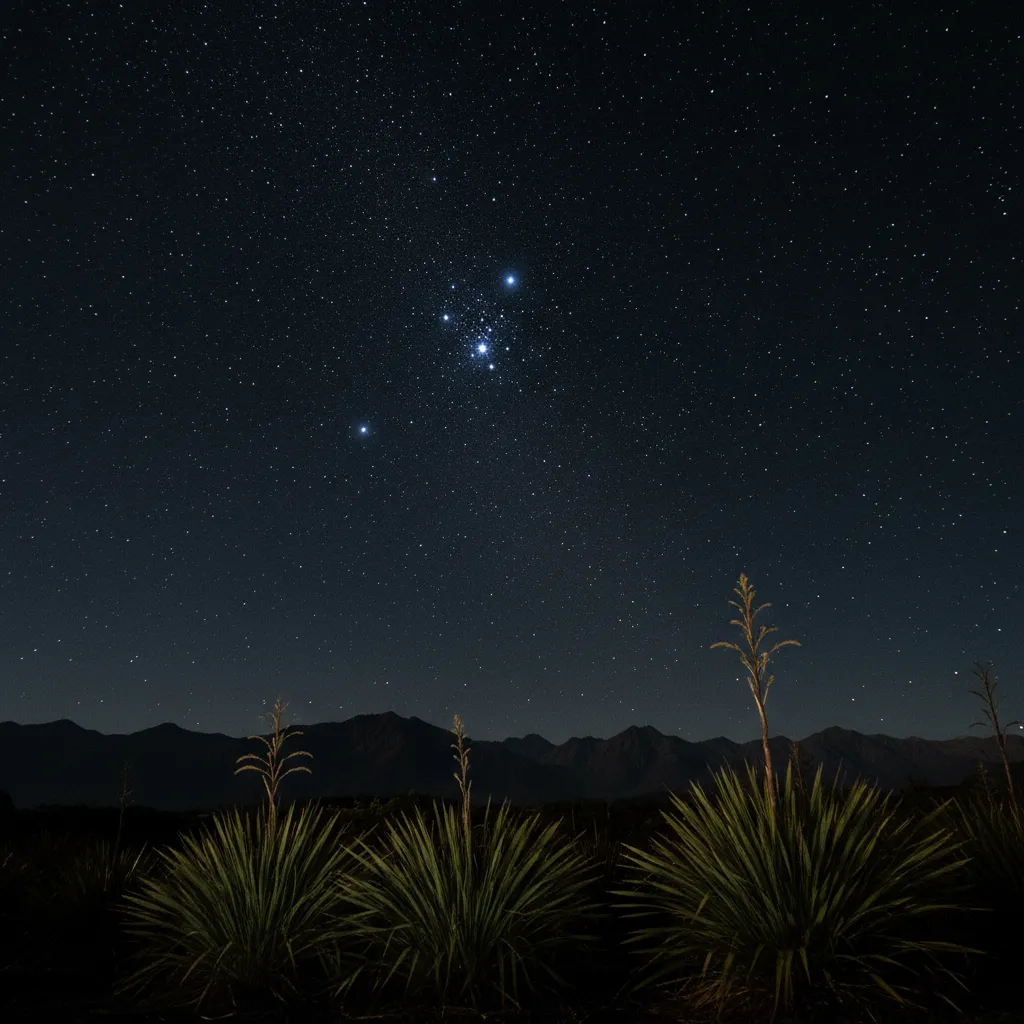
Matariki is the Māori name for the Pleiades star cluster and signifies the celebration of the Māori New Year in New Zealand. Marking the mid-winter appearance of these stars, it is a culturally significant time for remembering those who have passed, celebrating the present with whānau (family), and planning for the future harvest.
What is Matariki and Why is it Celebrated?
Matariki is an abbreviation of “Ngā Mata o te Ariki Tāwhirimātea” (The eyes of the god Tāwhirimātea). In Māori astronomy, this star cluster—known elsewhere as the Pleiades, the Seven Sisters, or Subaru—heralds the beginning of the new year. However, unlike the Gregorian calendar which marks the new year on January 1st, the Māori New Year follows the Maramataka (the Māori lunar calendar).
The rise of Matariki in the pre-dawn sky during mid-winter (typically late June or early July) signals a shift in seasons. Historically, this was a critical time for Māori ancestors. It marked the end of the harvest; food storehouses (pātaka) were full, and the land was left to rest. Because the hard work of the harvest was complete, it became the optimum time for communities to gather, reflect, and learn.
The Three Major Principles of Matariki
To fully understand Matariki New Zealand celebrations, one must recognize the three interconnected themes that underpin the festival:
- Remembrance (Mauri Mate): We take time to honor those who have passed away since the last rising of Matariki. It is believed that as the stars rise, they carry the spirits of the deceased into the heavens to become stars themselves.
- Celebrating the Present (Mauri Ora): We gather with whānau (family) and friends to share kai (food), sing, and express gratitude for the blessings we have today.
- Looking to the Future (Mauri Noho): We look ahead to the new year, setting goals, planning gardens, and hoping for a bountiful future.
The Significance of the Matariki Public Holiday in NZ
In 2022, New Zealand reached a historic milestone with the passing of the Te Kāhui o Matariki Public Holiday Act. This legislation made Matariki the first public holiday in Aotearoa dedicated to Indigenous principles. It is a distinct moment in the nation’s identity, separating New Zealand from colonial traditions and embracing a uniquely Pacific rhythm of time.
The date of the holiday shifts every year. This is because it is determined by the Maramataka rather than the solar Gregorian calendar. A panel of experts, the Matariki Advisory Committee, advises the government on the exact dates for future decades based on the position of the stars and the moon phases.
Why the Date Changes
The holiday is celebrated on the Friday closest to the Tangaroa lunar phase during the rising of Matariki. This ensures the holiday aligns with the environmental cues that Māori ancestors used for navigation and agriculture. For international visitors and locals alike, checking the official date for the specific year is essential for planning participation in festivals and events.
Te Iwa o Matariki: Overview of the Nine Stars
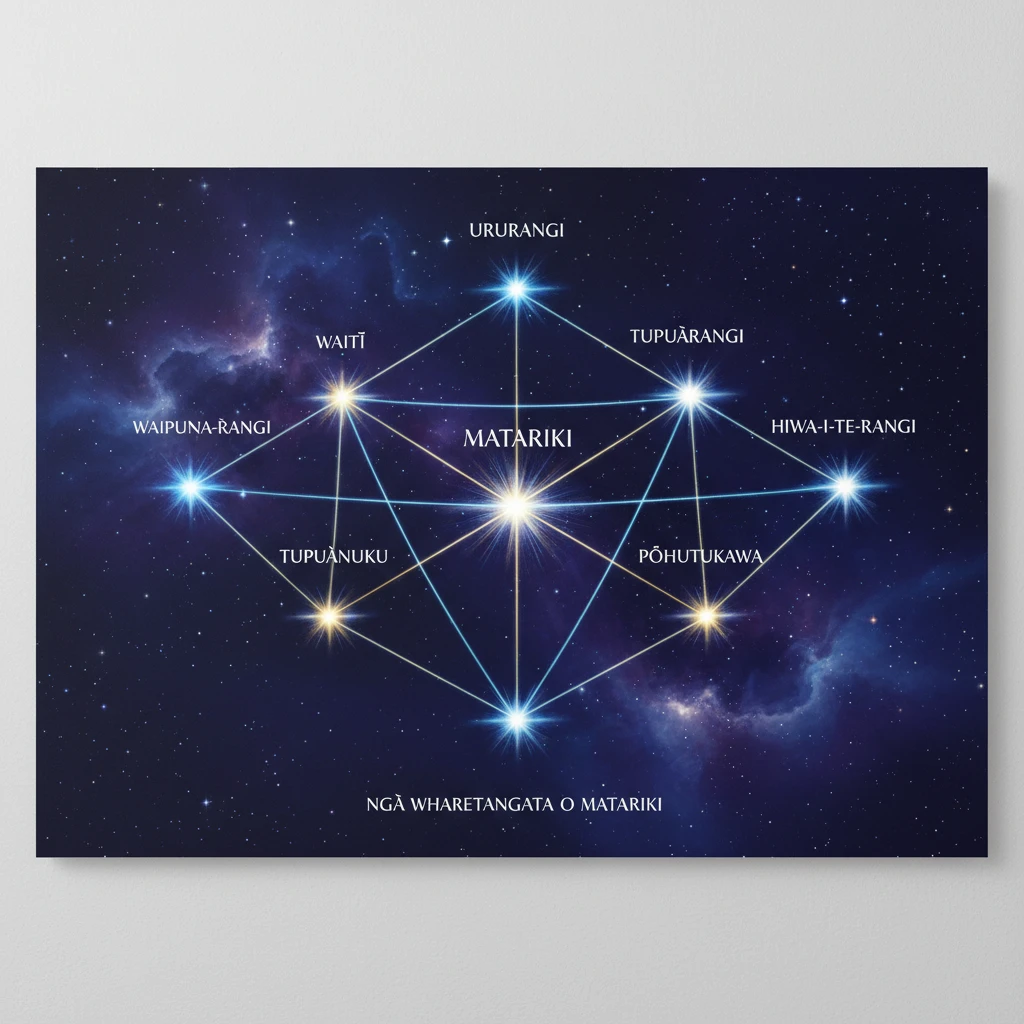
While many cultures identify seven stars in the Pleiades, Māori tradition recognizes nine distinct stars in the cluster, known as Te Iwa o Matariki. Each star holds a specific dominion over the environment and human wellbeing. Understanding these stars provides deep insight into the ecological wisdom embedded in Māori culture.
1. Matariki (The Mother)
The star Matariki is the mother of the other eight stars in the cluster. She is connected to health and wellbeing. When Matariki appears bright and clear, it is a sign of good health and good fortune for the coming year. She encourages us to check in on the wellness of our people.
2. Pōhutukawa
This star is connected to those who have passed on. Pōhutukawa reminds us to cherish the memories of our loved ones. It is the star that connects the living with the dead, serving as a reminder of our whakapapa (genealogy) and legacy.
3. Tupuānuku
Tupu means ‘to grow’ and nuku refers to ‘Papatūānuku’ (the Earth Mother). This star is associated with everything that grows within the soil to be harvested for food, such as kūmara (sweet potato) and rēwena. A bright Tupuānuku signals a productive growing season ahead.
4. Tupuārangi
Contrasting with Tupuānuku, this star governs things that grow in the sky or above the ground. This includes fruits, berries from trees, and birds (manu). It emphasizes the importance of our forests and ecosystems.
5. Waipuna-ā-rangi
Translated as “Water that pools in the sky,” this star is connected to rain, hail, and snow. It serves as a hydrological indicator. If visible and distinct, it predicts a year of beneficial rainfall; if hazy, it may signal drought or floods.
6. Waitī
This star watches over all fresh water bodies—lakes, rivers, and streams—and the food sources within them, such as eels (tuna) and trout. It reminds us of the vital importance of protecting our freshwater quality.
7. Waitā
Waitā represents the ocean and salt water. It is associated with the vast food resources of the sea (kai moana). This star highlights our connection to the Pacific Ocean and the need for sustainable fishing practices.
8. Ururangi
Ururangi is connected to the winds. The nature of the wind determines the climate for the year. This star encourages us to be adaptable and resilient, much like the changing winds.
9. Hiwa-i-te-rangi
The youngest star, Hiwa-i-te-rangi, is the wishing star. It is to this star that you send your dreams and aspirations for the new year. It is similar to the western concept of “wishing upon a star,” holding our hopes for a prosperous future.
How to Celebrate: Events, Traditions, and Kai
Celebrations of Matariki New Zealand have evolved from strictly traditional observances to nationwide festivals that welcome all cultures to participate. Whether you are a local or a tourist, there are respectful ways to engage with the holiday.

The Hautapu Ceremony
The most traditional observance is the Hautapu. This involves cooking food in a ceremonial earth oven (hāngī) before dawn. The steam from the cooked food is released into the sky as an offering to the stars. The tohunga (expert/priest) observes the appearance of the stars to predict the bounty of the coming year. While this is often a private iwi (tribal) event, televised national ceremonies now allow the public to witness this sacred tradition.
Matariki Kai (Food)
Food is central to Matariki. Because it occurs in mid-winter, warm, hearty comfort foods are preferred. Sharing a meal is the physical embodiment of Mauri Ora (celebrating the present). Traditional foods include:
- Kūmara: Roasted or mashed sweet potato.
- Ika: Fresh fish, honoring Waitā.
- Rēwena Bread: Traditional Māori sourdough potato bread.
- Hāngī: Meat and vegetables slow-cooked in an earth oven.
Festivals and Light Displays
Across Auckland, Wellington, Christchurch, and smaller regions, Matariki festivals light up the winter nights. “Matariki Ahi Kā” in Wellington and the “Matariki Festival” in Auckland feature massive light installations, projection art, and cultural performances (kapa haka). These events are family-friendly and focus on storytelling.
Navigation to Educational and Corporate Resources
As Matariki becomes embedded in the national consciousness, schools and workplaces are increasingly looking for authentic ways to mark the occasion. Avoiding commercialization is key; the focus should remain on education, service, and reflection.

For Schools and Educators
The Ministry of Education provides extensive resources aligned with the Te Whāriki and New Zealand Curriculum. Teachers are encouraged to focus on:
- Astronomy: Teaching children how to locate the cluster in the sky.
- Environmental Science: Using the stars (Waitī/Waitā) to discuss water conservation.
- Arts: Creating kites (manu tukutuku), which were traditionally flown to connect the earth and heavens.
For Workplaces
Businesses are encouraged to treat Matariki not just as a day off, but as a reset point for the fiscal or organizational year. Appropriate corporate activities include:
- Charity Days: Volunteering at community gardens or food banks (honoring Tupuānuku).
- Strategic Reflection: Holding “wishing” sessions for company goals (honoring Hiwa-i-te-rangi).
- Shared Lunches: A potluck style meal to build team cohesion.
By engaging with Matariki authentically, we deepen our understanding of Aotearoa’s bicultural heritage and align our lives more closely with the natural rhythms of the environment.
People Also Ask
When is the best time to see the Matariki stars?
The best time to view Matariki is in the early morning, just before dawn, typically between 5:30 AM and 6:30 AM. You should look towards the northeast horizon. The cluster is most visible from late June through July.
Is Matariki the same as the Seven Sisters?
Yes and no. Astronomically, they refer to the same star cluster (the Pleiades). However, the “Seven Sisters” is a Greek narrative. In Māori tradition, there are nine visible stars, and the cultural stories, names, and meanings attached to them are entirely unique to New Zealand.
What do you say to wish someone a Happy Matariki?
You can say “Mānawatia a Matariki,” which translates to “Celebrate Matariki” or “Welcome Matariki.” It is a respectful and common greeting used during the holiday period.
Can anyone celebrate Matariki?
Absolutely. While it is a Māori tradition, the values of remembrance, celebrating the present, and planning for the future are universal. Non-Māori are encouraged to participate, learn, and attend public events.
Why does the date of Matariki change every year?
The date changes because it follows the Māori lunar calendar (Maramataka) rather than the solar Gregorian calendar. The holiday is timed to align with the rising of the stars during a specific lunar phase in mid-winter.
What happens if you can’t see the stars due to bad weather?
Historically, if the stars were obscured by bad weather during the rising period, it was sometimes interpreted as a sign that the coming year might be difficult or that the weather would be challenging. However, celebrations and the holiday proceed regardless of visibility.