Matariki events NZ 2024 revolve around the official public holiday on Friday, June 28, with festivities spanning from mid-June to mid-July. Key celebrations include the Matariki Festival in Auckland, the Ahi Kā light shows in Wellington, and Tīrama Mai in Christchurch. Events feature dawn ceremonies (Hautapu), cultural performances, light installations, and community feasts (hākari).
The rise of the Matariki star cluster signals the Māori New Year, a time of renewal, remembrance, and celebration in Aotearoa New Zealand. As the country embraces this indigenous holiday, the calendar for 2024 is packed with culturally rich events designed to educate, entertain, and unite communities. From the harbor lights of Auckland to the winter festivals of the South Island, this guide provides a comprehensive schedule for navigating the season.
Matariki Festival Auckland Schedule
Tāmaki Makaurau (Auckland) hosts one of the most extensive festival lineups in the country. The 2024 Matariki Festival runs primarily from June 15 to July 13, transforming the city into a hub of light, sound, and storytelling. The events here are designed to be accessible to families, tourists, and locals alike.
What are the key events in Auckland for Matariki 2024?
The flagship event is the Matariki Festival Day, often held at the Auckland Domain or a central waterfront location. For 2024, the schedule emphasizes the connection to the environment (taiao) and remembrance of those who have passed.
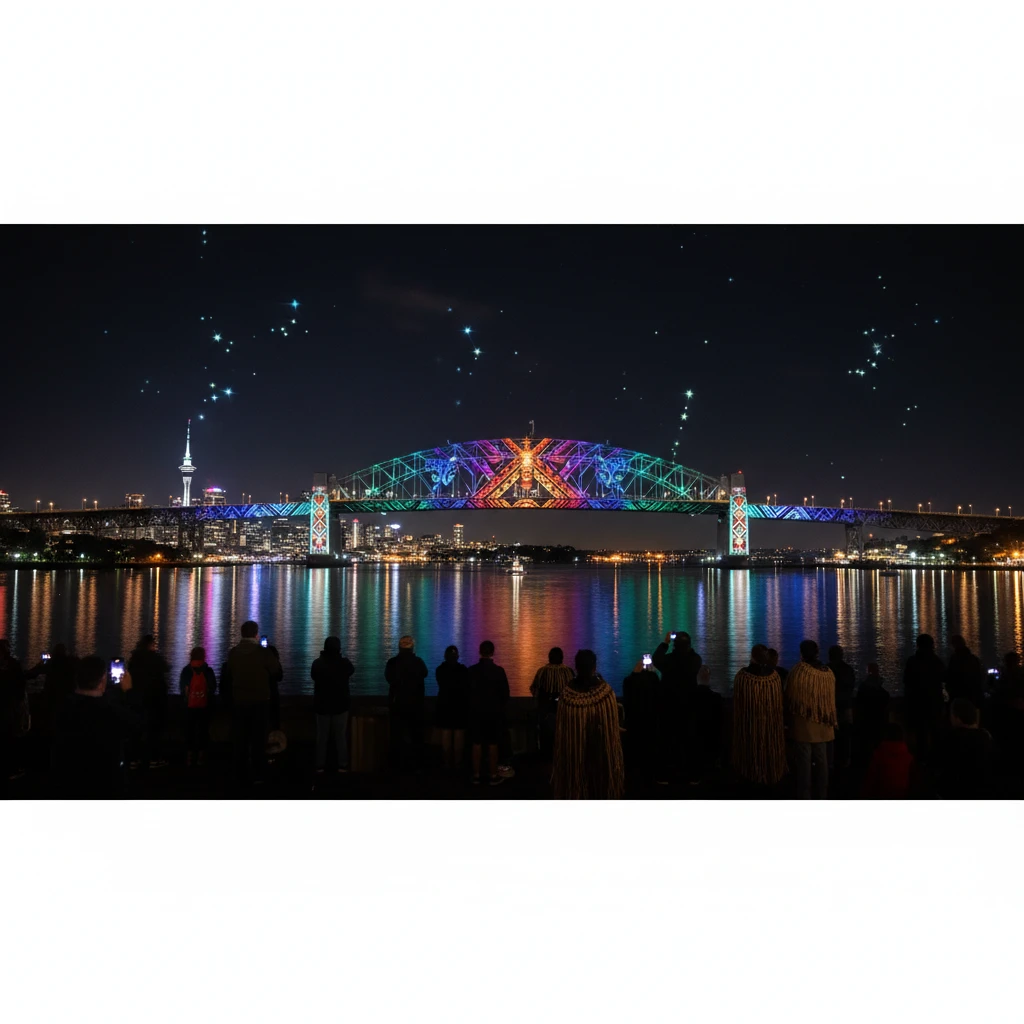
- Matariki on the Waterfront: Located at Silo Park and the Viaduct Harbour, this series of events features large-scale light installations representing the nine stars of Matariki. Visitors can expect food trucks serving traditional kai (food), such as hāngī, alongside modern cuisine.
- Te Karanga a Hape: A vibrant street party on Karangahape Road. This event typically takes place the evening before the public holiday. It merges contemporary music, drag performances, and traditional kapa haka, showcasing the diversity of Auckland’s culture under the umbrella of Matariki.
- Tūrama Light Trail: Held in Queen Street and various suburbs, these light installations illuminate the long winter nights. Local artists create sculptures that tell the stories of Māori mythology and navigation.
How to attend a Hautapu ceremony in Auckland?
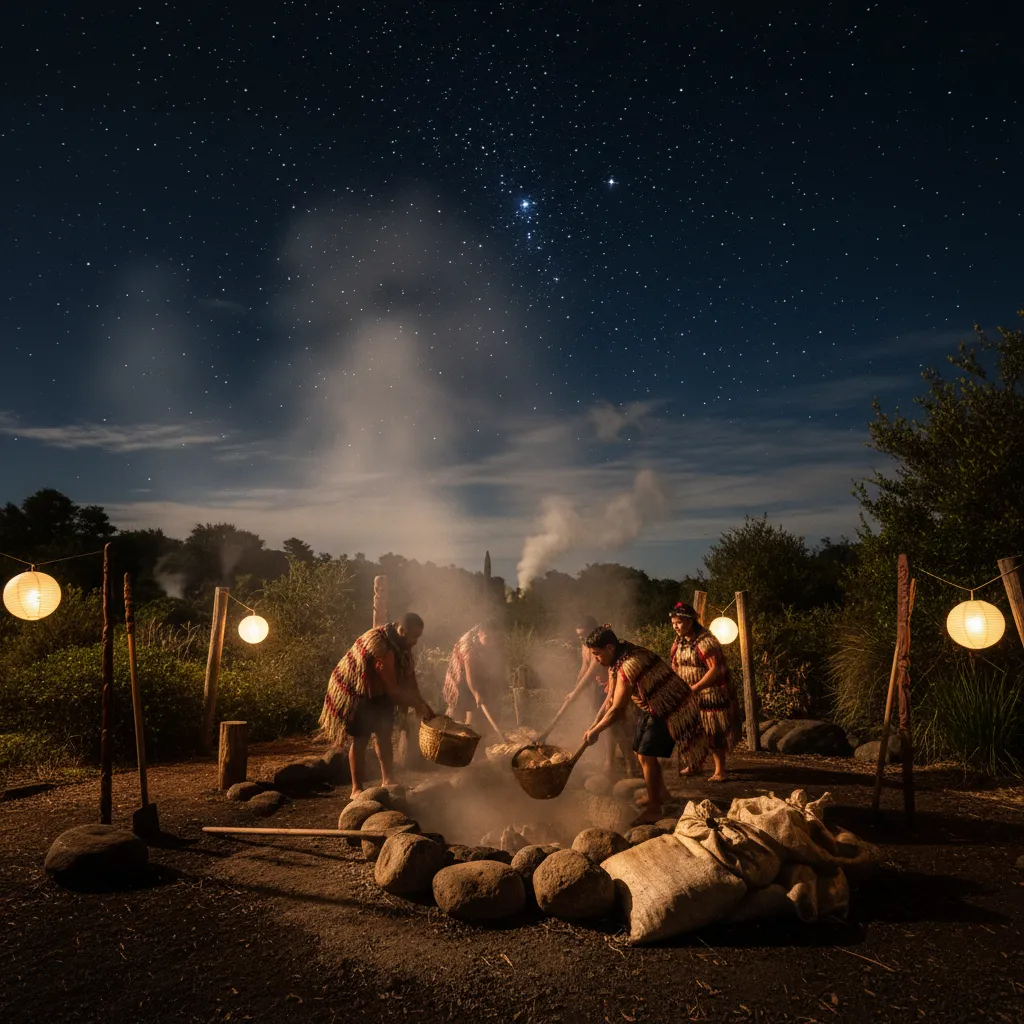
The Hautapu is the sacred dawn ceremony where stars are observed, and food is cooked to send steam to the sky as an offering. While the national broadcast usually rotates locations, Auckland hosts several public Hautapu events. Major locations often include Bastion Point (Takaparawhau) and various local marae. Attendees are advised to arrive by 5:00 AM and dress warmly, as these events occur before sunrise.
Wellington Matariki Fireworks and Light Shows
In Te Whanganui-a-Tara (Wellington), the capital city embraces the winter elements with spectacular visual displays. The windy city utilizes its waterfront promenade to create immersive experiences that celebrate the season.
What is Matariki Ahi Kā?
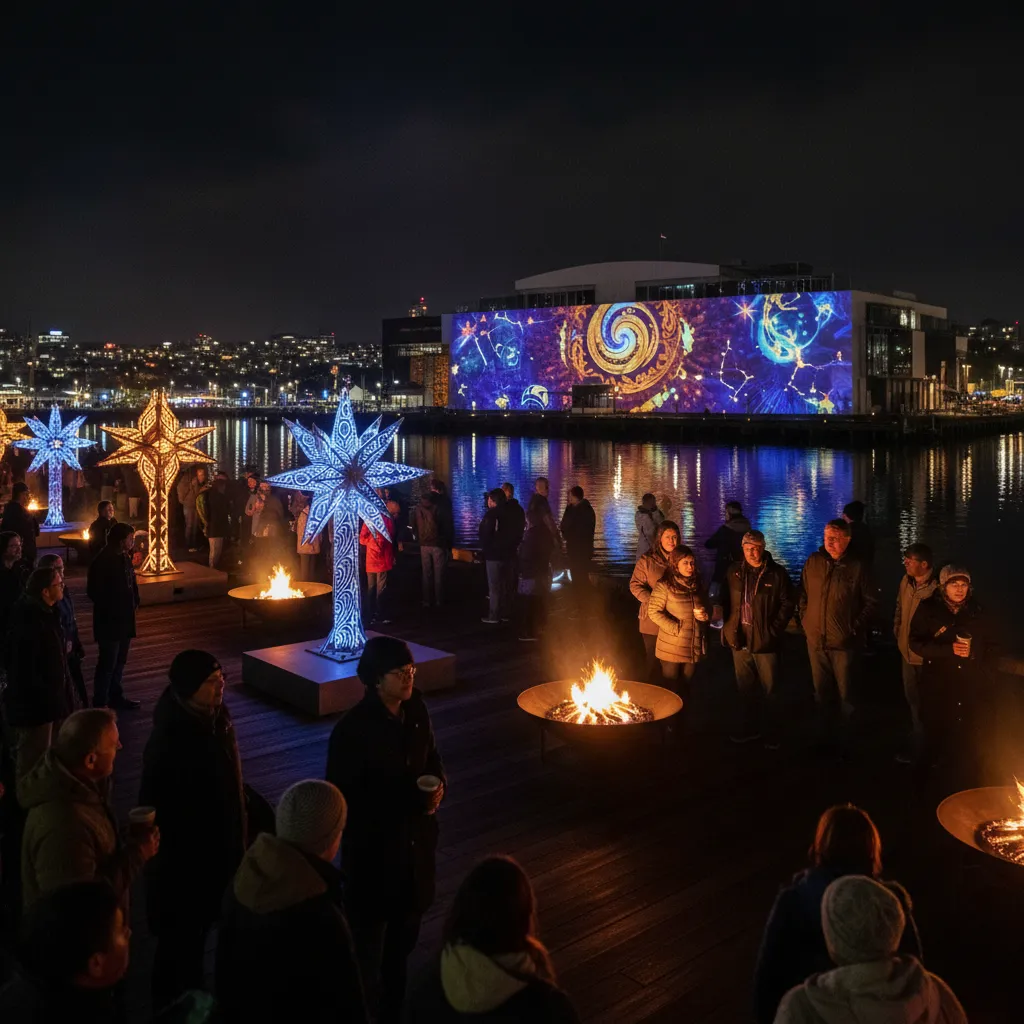
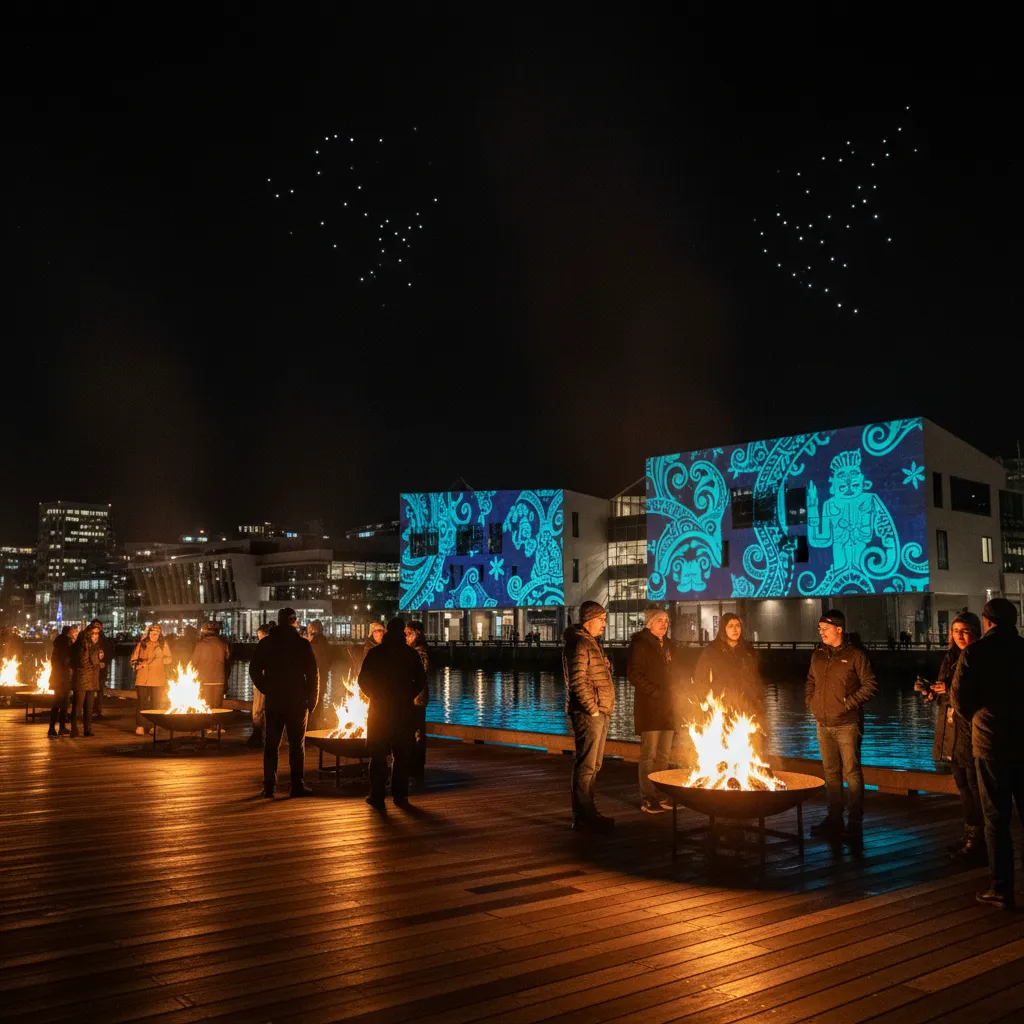
Matariki Ahi Kā is Wellington’s premier celebration, typically held on the waterfront near Te Papa Tongarewa. “Ahi Kā” refers to the burning fires of occupation, symbolizing warmth and continuity. This free, walk-through experience runs over the long weekend (June 27–30, 2024).
The event features massive projections on the sides of buildings, fire pits where people can gather to keep warm, and performers wandering through the crowds. A major highlight is the Mana Moana projection series, where indigenous films and art are projected onto a screen of water spray in the harbor, creating a ghostly, ethereal effect.
When are the Wellington Matariki fireworks?
Historically, Wellington celebrated Guy Fawkes, but the city has shifted its major fireworks display to Matariki to better align with New Zealand’s cultural identity. For 2024, the Matariki Sky Show is scheduled for Saturday, June 29 (weather permitting). The fireworks are synchronized to a soundtrack of Māori music and narration, often broadcast on local radio stations. The best vantage points are along the waterfront from Queens Wharf to Oriental Bay, though Mount Victoria offers a panoramic view for those willing to hike up in the dark.
Te Papa Matariki Exhibition Schedule
Te Papa Tongarewa, the Museum of New Zealand, serves as the educational heart of the Matariki celebrations. Their program is less about spectacle and more about deep cultural immersion and learning.
What exhibitions are at Te Papa for Matariki 2024?
Te Papa’s schedule for June and July 2024 focuses on the theme of “Matariki Hunga Nui” (The many people of Matariki). The museum offers a mix of free and ticketed events:
- Matauranga Māori Sessions: Daily talks led by curators explaining the astronomical science behind the star cluster and its ecological indicators.
- Interactive Star Domes: A pop-up planetarium experience within the museum, allowing visitors to learn how to navigate by the stars and identify the Matariki cluster in the night sky. You can use the Interactive Night Sky Map Tool: Locate Matariki Now to prepare for your visit.
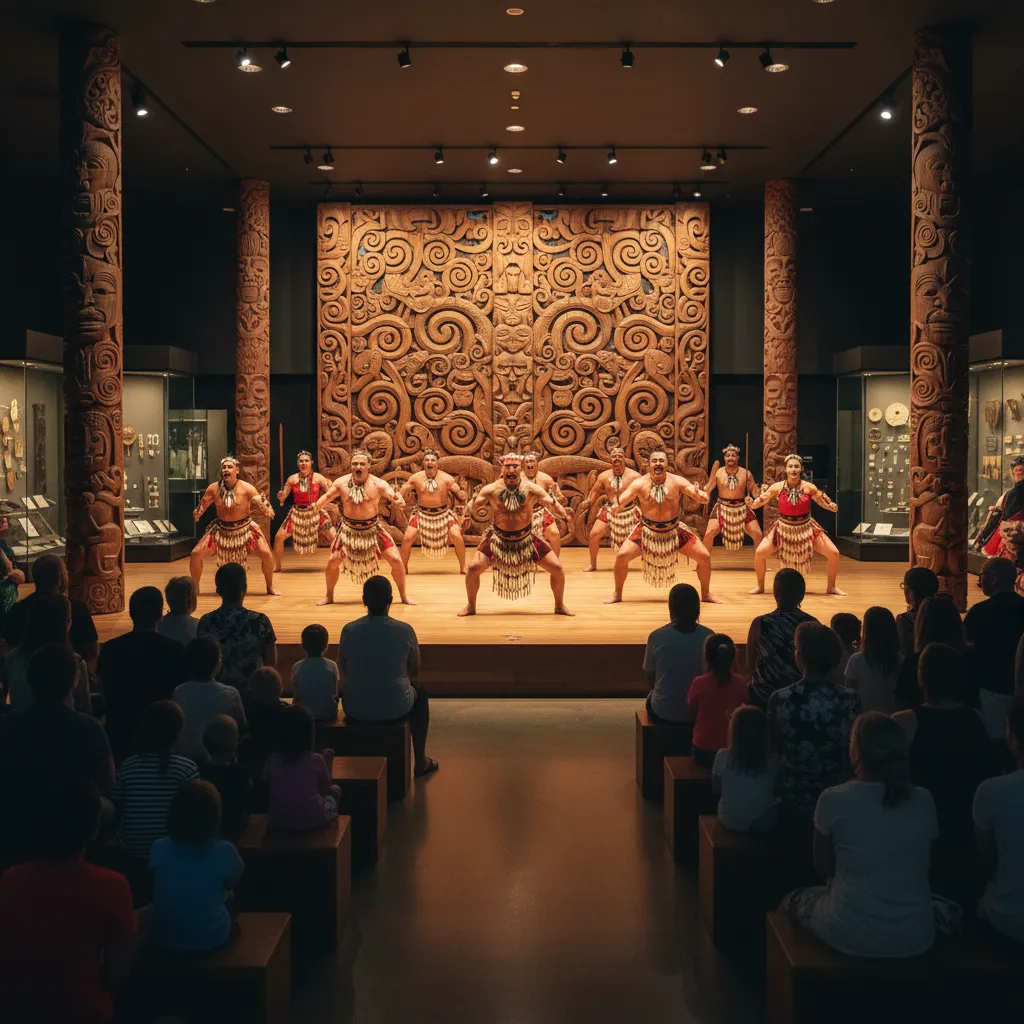
- Kapa Haka Performances: Throughout the long weekend, top Kapa Haka groups from around the region perform in the main foyer, filling the museum with the sounds of waiata (songs) and haka.
- Whānau Craft Zones: Dedicated areas for children to engage in weaving (raranga) and kite making (manu tukutuku), traditionally flown during Matariki to connect the earth and sky.
Christchurch and South Island Events
In the South Island (Te Waipounamu), the celebrations take on a distinct character due to the colder climate and clear, starry skies. Christchurch (Ōtautahi) leads the festivities with events that embrace the winter solstice.
What is Tīrama Mai?
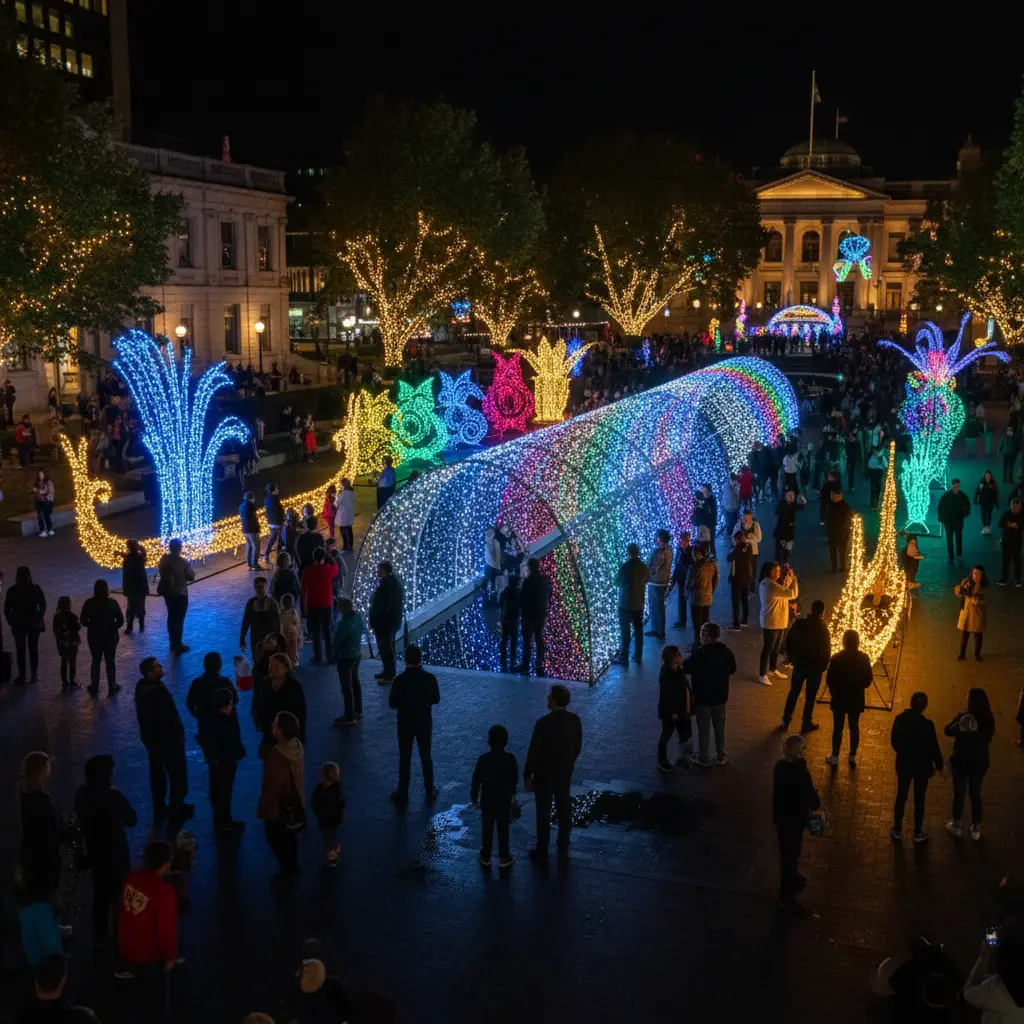
Tīrama Mai is Christchurch’s answer to the Matariki celebrations, translating to “Bring the Light.” Running from late June through early July, this festival lights up the central city, particularly around Victoria Square and the Avon River precinct.
The 2024 iteration of Tīrama Mai features a series of illuminated sculptures and light trails. Unlike the high-energy fireworks of Wellington, Tīrama Mai is often more contemplative and artistic. It includes storytelling panels that explain the Ngāi Tahu (local tribe) narratives regarding the stars. A major draw is the opening weekend concert, featuring local musicians and a community sing-along.
Are there Matariki events in Queenstown and Dunedin?
Yes, the lower South Island offers unique experiences:
- Dunedin (Ōtepoti): The Matariki Ahuka usually takes place in the Octagon. It is known for the “Mana Wāhine” projections and a distinct focus on the arts. The Dunedin Public Art Gallery often hosts aligned exhibitions.
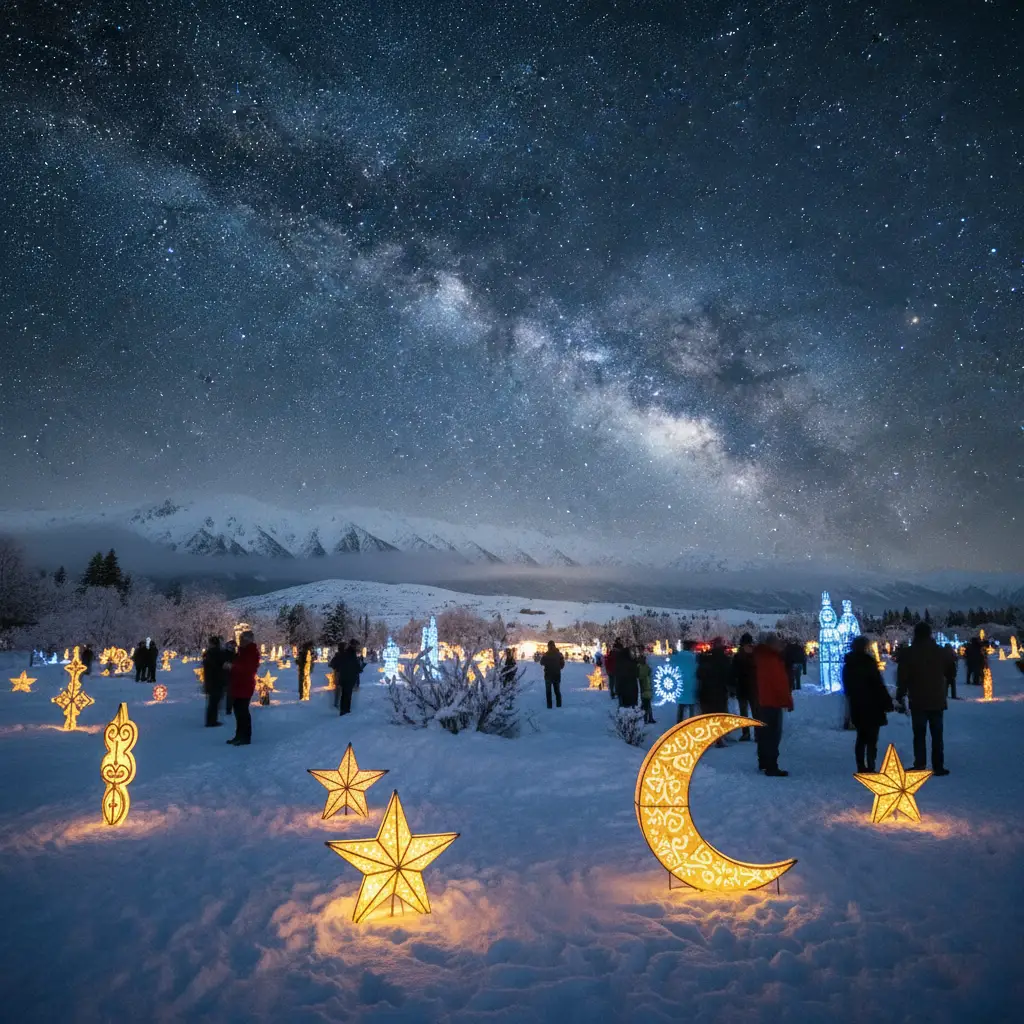
- Queenstown (Tāhuna): Celebrating amidst the snow-capped mountains, Queenstown hosts the Winter Festival, which now heavily integrates Matariki themes. Events include lakeside hāngī, torchlight processions, and stargazing tours at the Skyline Gondola, which offers some of the clearest views of the Matariki cluster in the world due to low light pollution.
- Arrowtown: The Matariki Arrowtown Lights is a one-night event featuring light displays along the historic Buckingham Street, combining the gold rush history with Māori astronomy.
Understanding the Cultural Context
To truly appreciate the events listed above, it is vital to understand what they represent. Matariki is not merely a “Māori Christmas”; it is a distinct physiological and spiritual period.
The Matariki cluster (Pleiades) disappears from the sky in April/May and reappears in June/July. This return marks the New Year. Each of the nine visible stars holds dominion over a specific environmental domain:
- Matariki: The mother star, signifying reflection and hope.
- Pōhutukawa: Connects to those who have passed away.
- Tupuānuku: Food grown in the ground (kumara, potatoes).
- Tupuārangi: Food from the sky (birds, fruit).
- Waitī: Freshwater bodies and food sources (eels).
- Waitā: The ocean and saltwater food.
- Waipuna-ā-rangi: Rain and weather patterns.
- Ururangi: The winds.
- Hiwa-i-te-rangi: The wishing star, to whom you send your dreams for the year.
When attending events, you will often see references to these specific stars. For example, a food festival might honor Tupuānuku and Tupuārangi, while a memorial service will focus on Pōhutukawa. For deeper reading on these narratives, explore the Academic & Cultural Texts on Matariki.
Travel Tips for Winter Events in NZ
Navigating New Zealand during Matariki requires preparation, as it falls in the middle of winter.
What should I wear to Matariki events?
Most major events are outdoors to facilitate stargazing. Dress in layers. Thermal underlayers are essential, followed by fleece or wool, and a windproof/waterproof outer shell. Beanie, gloves, and warm socks are non-negotiable, especially for dawn ceremonies or evening light shows in Wellington and the South Island.
Is public transport available?
During the Matariki public holiday and festival weekends, cities like Auckland and Wellington often provide additional public transport services. However, buses and trains can be crowded. In Auckland, the City Rail Link construction may affect routes, so check the Auckland Transport (AT) app. In Wellington, Metlink offers special fares for family groups during event nights.
Do I need tickets?
The majority of community Matariki events, including the Ahi Kā in Wellington and Tīrama Mai in Christchurch, are free. However, specific theater performances, the Te Papa planetarium shows, or special hākari (feasts) at restaurants will require advance booking. As Matariki grows in popularity, these ticketed events sell out weeks in advance. Many of these feasts will feature traditional Harvest Foods.
Frequently Asked Questions
When is the Matariki public holiday in 2024?
The Matariki public holiday in New Zealand for 2024 is Friday, June 28. This date shifts annually as it is based on the lunar calendar (Maramataka) and the sighting of the star cluster.
Are shops open during Matariki in NZ?
Yes, trading restrictions do not apply to Matariki in the same way they do for Easter or Christmas. Most shops, malls, and supermarkets will be open, though some small businesses may choose to close or operate on holiday hours.
What is the best place to see the Matariki stars?
The best viewing spots are areas with low light pollution looking towards the northeast horizon before sunrise. Dark Sky Sanctuaries like Lake Tekapo or Great Barrier Island offer the best views, but local lookouts like Mount Victoria (Wellington) or Mount Eden (Auckland) are also popular.
Is Matariki celebrated the same way everywhere in NZ?
No, different iwi (tribes) celebrate differently. Some iwi in the West Coast or Whanganui celebrate Puanga (the star Rigel) rather than Matariki, because the Matariki cluster is harder to see from their geography. However, the public holiday applies nationwide.
Can tourists attend a Hautapu ceremony?
Yes, many Hautapu ceremonies are public. However, they are sacred events. Tourists are welcome but should observe protocols: remain quiet, do not use flash photography during the solemn parts of the ceremony, and wait to eat until the ceremony concludes.
What food is traditionally eaten during Matariki?
Traditional foods include kumara (sweet potato), fish, eel, birds (historically), and rewena bread. The Hāngī (earth oven cooking) is the most iconic method of preparing a Matariki feast, symbolizing the bringing together of food from the earth.