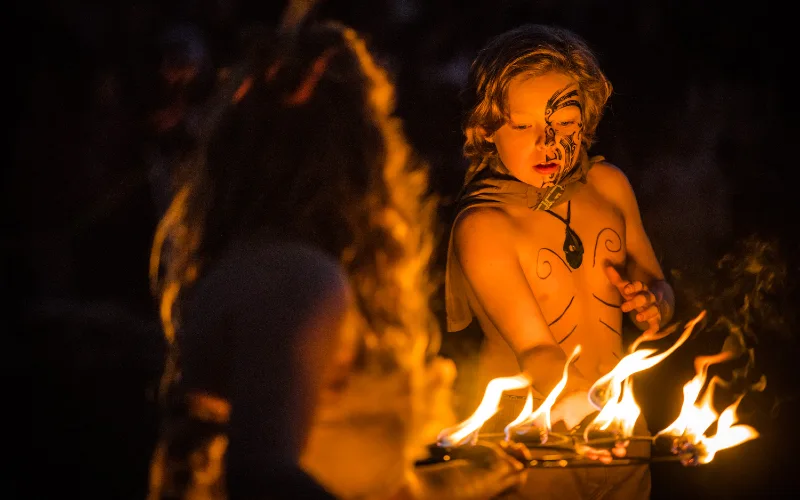
Celebrating Matariki at work in NZ requires acknowledging the Māori New Year through three core pillars: remembering those who have passed, celebrating the present community with shared kai (food), and planning for the future. Authentic observance involves prioritizing tikanga (protocols) over commercialization, engaging in educational workshops, and fostering whakawhanaungatanga (relationship building) within the team.
Understanding the Significance of Matariki
Before implementing any activities, it is crucial for organizations to understand what they are observing. Matariki is the Māori name for the star cluster known as the Pleiades. Its rising in mid-winter marks the beginning of the Māori New Year. To locate the cluster, use an Interactive Night Sky Map Tool: Locate Matariki Now. However, it is far more than an astronomical event; it is a period deeply rooted in environmental awareness, harvest, and communal reflection.
For New Zealand workplaces and schools, Matariki offers a unique opportunity to align organizational values with indigenous wisdom. Unlike many Western holidays that focus on production or consumption, Matariki is a time to pause. It invites us to look backward to honor our ancestors and the year that has passed, look inward to celebrate who we are today, and look forward to set intentions for the year ahead.

The Three Major Principles
To celebrate correctly, your workplace initiatives should align with at least one of these three themes:
- Remembrance: Honoring those who have passed away since the last rising of Matariki. In a work context, this might mean acknowledging former colleagues or the legacy of the company’s founders.
- Celebrating the Present: Gathering together to give thanks for what we have. This is often centered around food and community.
- Looking to the Future: Looking to the star Hiwa-i-te-rangi (the wishing star) to set goals, aspirations, and strategic visions for the new year.
Appropriate Ways to Acknowledge the Holiday
When considering celebrating Matariki at work NZ, the focus should be on participation and education rather than decoration. The goal is to deepen the cultural competency of your staff while respecting the solemnity of the occasion.
Educational Workshops and Reo Māori
One of the most respectful ways to acknowledge Matariki is to commit to learning. Hosting a workshop on correct pronunciation of Māori words, specifically the names of the nine stars of Matariki and their meanings, demonstrates a genuine commitment to the culture. This moves the observance from a passive holiday to an active engagement with Te Ao Māori (The Māori World).
Environmental Stewardship
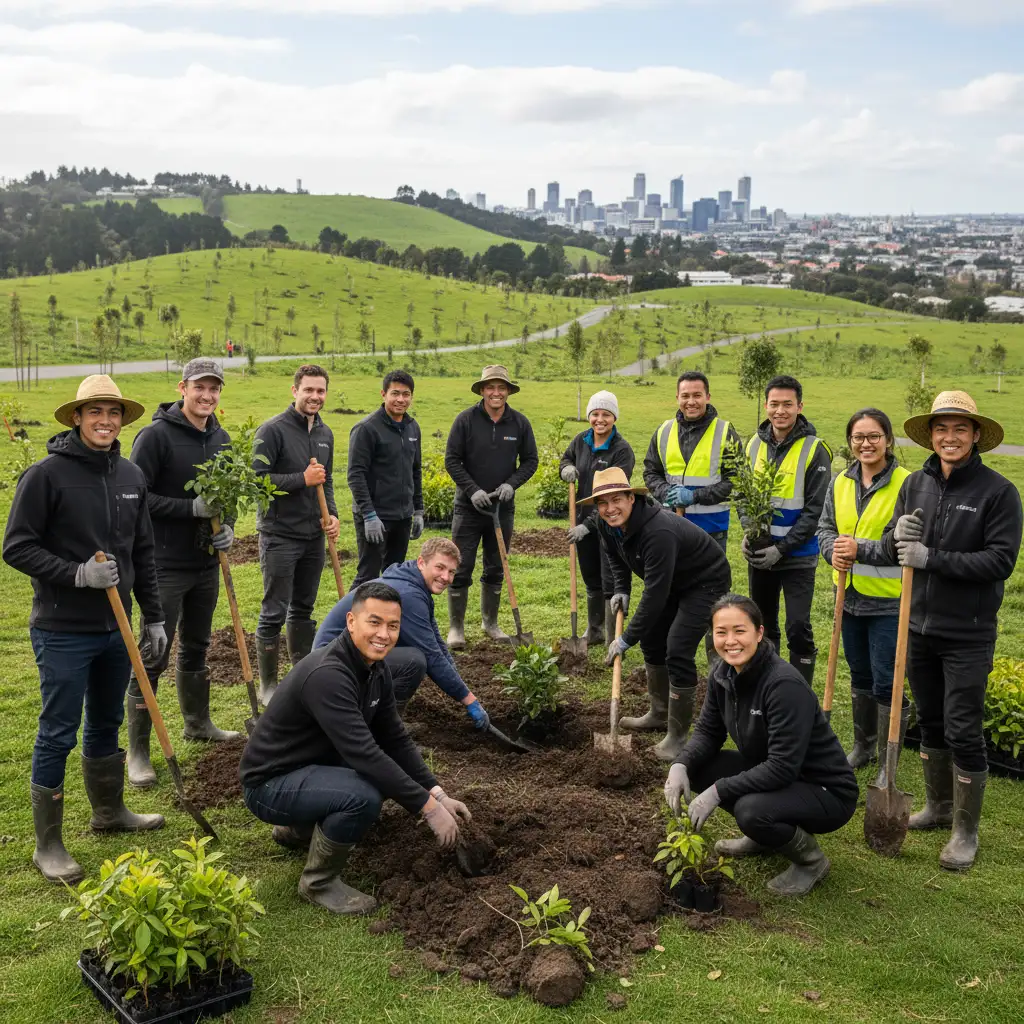
Matariki is intrinsically linked to the environment. The stars Pōhutukawa (connected to the dead) and Hiwa-i-te-rangi (connected to wishes) are balanced by stars representing food sources, such as Tupu-ā-nuku (food from the earth) and Waitī (freshwater). Therefore, an appropriate workplace activity is an environmental service day. This could involve tree planting, cleaning up a local waterway, or launching a new sustainability initiative within the office. This aligns perfectly with the kaupapa (purpose) of the season and the Importance of Kaitiakitanga (Guardianship) in Matariki Celebrations.
Avoiding Commercialization and Cultural Appropriation
As Matariki has become a public holiday, there is a risk of it being commodified in the same way as Christmas or Easter. For businesses, navigating the line between celebration and appropriation is critical.
Matariki is Not a “Sale” Event
Using Matariki solely as a vehicle to drive sales is generally considered culturally insensitive. Avoid slapping Māori motifs on products merely to discount them. If you are creating products or marketing campaigns around Matariki, ask yourself: Does this benefit Māori? Does this educate? Or does it merely extract value from the culture?
Consultation is Key
If your organization plans a significant public-facing event, consult with local Mana Whenua or Māori cultural advisors. This ensures that your protocols are correct for your specific region (rohe), as narratives regarding Matariki can vary between iwi (tribes). For example, some iwi celebrate Puanga rather than Matariki due to their geographical location. Educational resources like Printable Puanga Activity Sheets can help explain these distinctions.
Visual Respect
Be careful with the use of Māori imagery. Kowhaiwhai patterns and moko designs have specific meanings and whakapapa (genealogy). Using them as generic background borders for a corporate flyer without understanding their meaning can be offensive. Stick to neutral imagery of the stars, the night sky, or nature unless you have commissioned specific artwork from a Māori artist.
Ideas for Morning Tea and Shared Kai
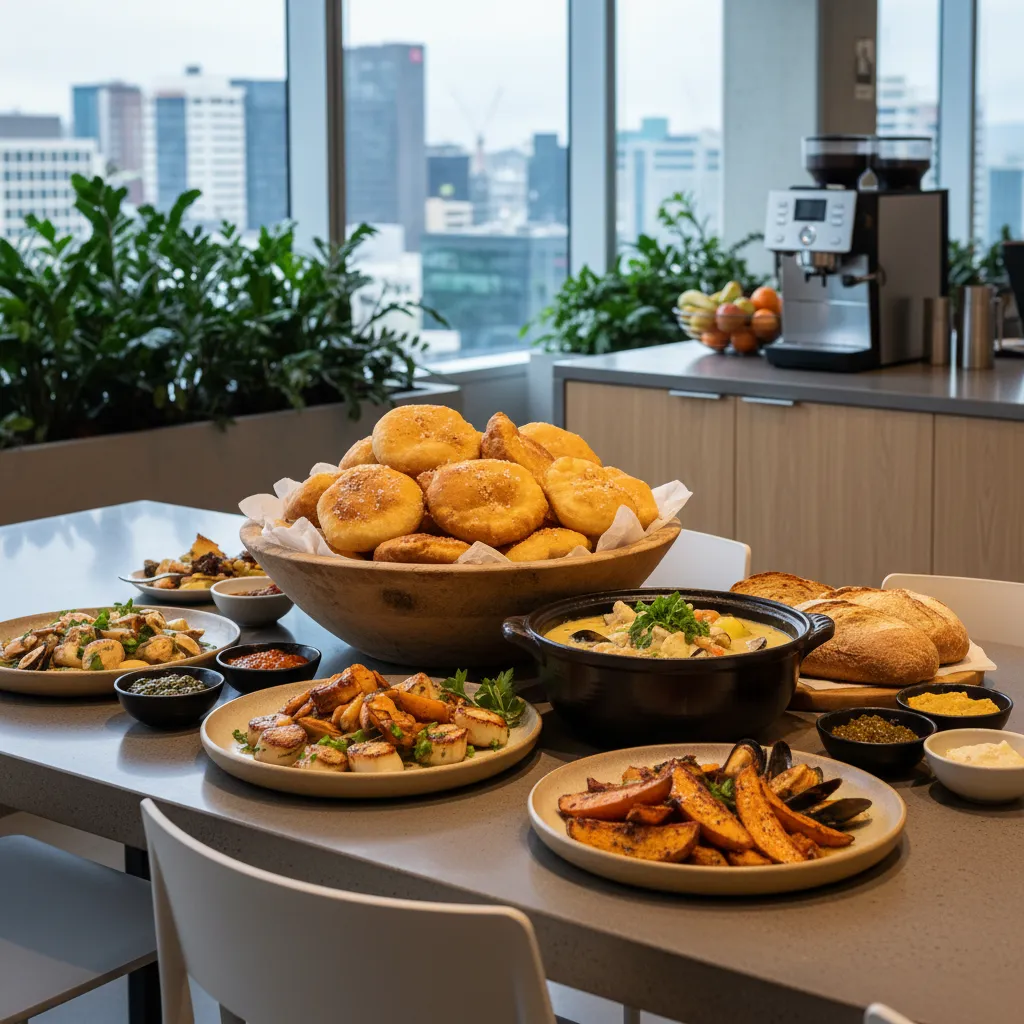
Food is central to whakawhanaungatanga (the process of establishing relationships). In the context of Matariki, sharing kai is about bringing the results of the harvest to the table and sharing the bounty with the community. This is often the most accessible way for workplaces to engage.
The Hākari (Feast) Approach
Move beyond the standard packet of biscuits. A Matariki morning tea should reflect the stars associated with food:
- Tupu-ā-nuku (Food from the earth): Include dishes made from kumara (sweet potato), pumpkin, or potato. A warm kumara soup or rewena bread is culturally appropriate and comforting in winter.
- Tupu-ā-rangi (Food from the sky): This traditionally refers to birds, but in a modern context, it can include fruits and berries.
- Waitī (Freshwater) and Waitā (Saltwater): Incorporate seafood like smoked fish, mussels, or whitebait fritters if the budget allows.
Zero Waste Protocols
Because Matariki is about environmental respect, ensure your shared kai is zero waste. Avoid single-use plastics. Using real crockery and cutlery aligns with the values of protecting Papatūānuku (Earth Mother).
Respecting Spiritual Aspects in a Secular Setting
Matariki is a spiritual time, but New Zealand workplaces are largely secular. Navigating this balance requires sensitivity to the beliefs of all employees while honoring the traditions of the holiday.
Karakia (Incantations/Prayer)
Opening a meeting or a meal with a karakia is standard tikanga. However, in a diverse workplace, some may feel this is religious. It is important to clarify that many karakia are not religious prayers to a deity but are affirmations of nature and focus. You can choose secular karakia that focus on unity, the environment, and the task at hand.
Example of a simple, secular opening for food:
“Nau mai e ngā hua
o te wao,
o te ngakī,
o te wai.
Nā Tāne
Nā Rongo
Nā Tangaroa
Nā Maru
Ko Ranginui e tū iho nei
Ko Papatūānuku e takoto nei
Tūturu o whiti
Whakamaua kia tina! TINA!
Hui e! TĀIKI E!”
(Welcome the gifts of the forest, the cultivated gardens, the water. From Tāne, Rongo, Tangaroa, Maru. Sky Father above, Earth Mother below. Let the agreement be realized. United! As one!)
Creating Space for Reflection
You do not need to hold a religious ceremony to respect the spiritual aspect of remembrance. Simply creating a quiet space or a “remembrance wall” where staff can pin the names of loved ones they have lost in the past year allows for spiritual acknowledgement without enforcing a specific religious doctrine.

Specific Protocols for Schools and Education
Schools play a pivotal role in normalizing Matariki for the next generation. The protocols here differ slightly from corporate environments as the focus is on curriculum and whānau (family) engagement.
Involving the Community
Schools should aim to involve the wider community. A pre-dawn ceremony (Hautapu) is traditional, but if that is logistically difficult, an evening event where students share their learning about the stars with parents is excellent. This reinforces the concept of passing knowledge (mātauranga) from one generation to another.
Curriculum Integration
Matariki should not be an isolated art project. It offers cross-curricular opportunities:
- Science: Astronomy and the phases of the moon (Maramataka).
- Social Studies: The history of navigation and migration.
- Math: Geometry in weaving (raranga) or patterns (tukutuku).
- Health: Discussing the harvesting and nutritional value of winter crops.
Conclusion
Celebrating Matariki at work in NZ is a journey of cultural enrichment. By focusing on the core values of remembrance, celebrating the present, and planning for the future, organizations can participate in a way that is respectful, authentic, and devoid of tokenism. Whether through a shared hākari, a commitment to environmental sustainability, or simply taking the time to learn the names of the stars, your workplace can contribute to the revitalization of this unique indigenous celebration.
People Also Ask
What is the best way to greet someone for Matariki?
The most common greeting is “Mānawatia a Matariki,” which translates to “Celebrate Matariki” or “Welcome Matariki.” It is a respectful phrase suitable for both spoken greetings and email sign-offs during the festive period.
Can non-Māori celebrate Matariki?
Yes, absolutely. Matariki is a celebration for all people living in Aotearoa New Zealand. It is an invitation to connect with the environment, the community, and the nation’s history. Non-Māori are encouraged to participate respectfully by learning about the traditions and joining in community events.
What food is traditionally eaten on Matariki?
Traditional foods include kumara (sweet potato), fish, eel, birds (historically), and preserved foods. The food corresponds to the stars Tupu-ā-nuku (grown in the ground), Tupu-ā-rangi (from the sky), Waitī (freshwater), and Waitā (saltwater). A hāngī (earth oven) is a traditional way to cook these feasts.
What are the 9 stars of Matariki?
The nine stars are Matariki (the mother), Pōhutukawa, Tupu-ā-nuku, Tupu-ā-rangi, Waitī, Waitā, Waipunarangi, Ururangi, and Hiwa-i-te-rangi. Each star holds dominion over a specific environmental domain, such as rain, wind, food sources, or human aspirations.
Is Matariki a public holiday in New Zealand?
Yes, Matariki is an official public holiday in New Zealand. The date shifts every year as it follows the Maramataka (Māori lunar calendar), usually falling in June or July. It was first observed as a public holiday in 2022.
How can workplaces avoid cultural appropriation during Matariki?
Workplaces can avoid appropriation by focusing on education and connection rather than commercial sales. Avoid using sacred patterns for decoration without understanding them, consult with local Māori advisors, and ensure that activities give back to the community or environment rather than just taking from the culture.