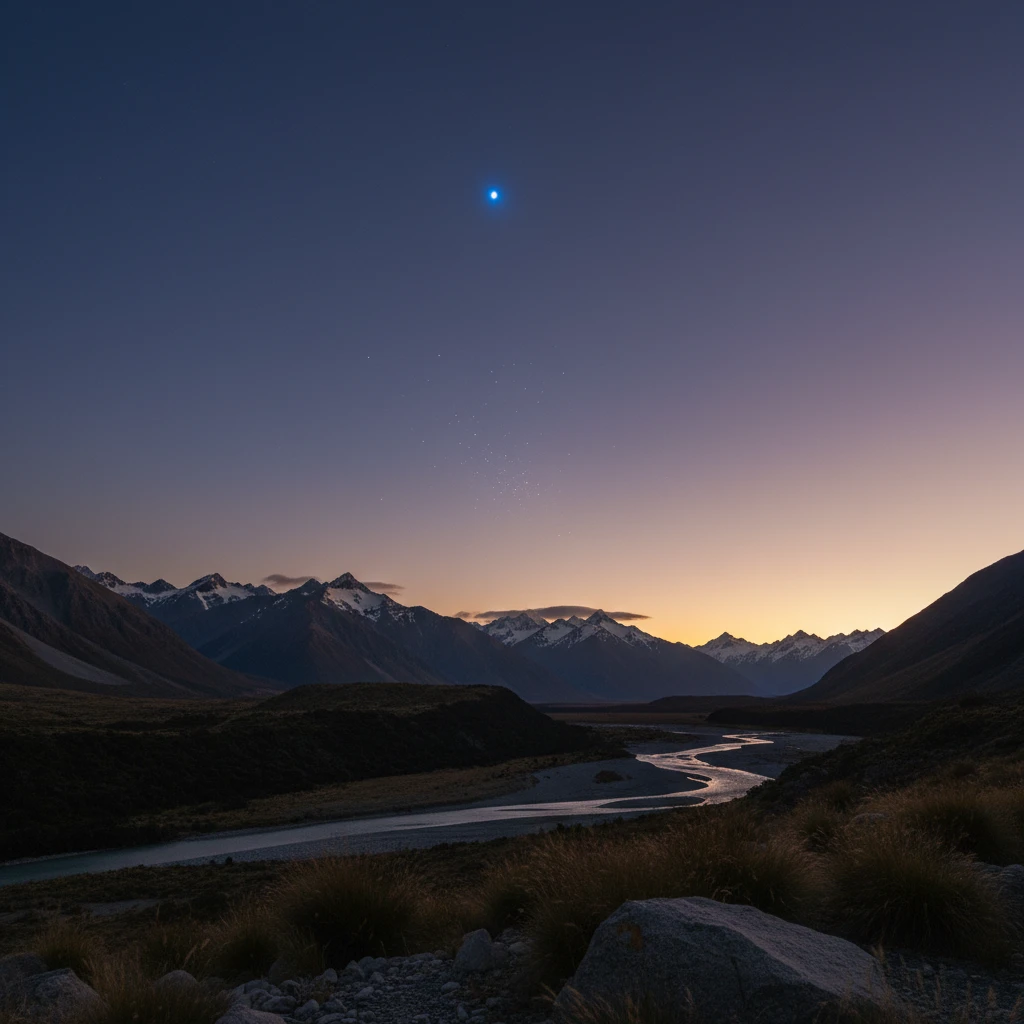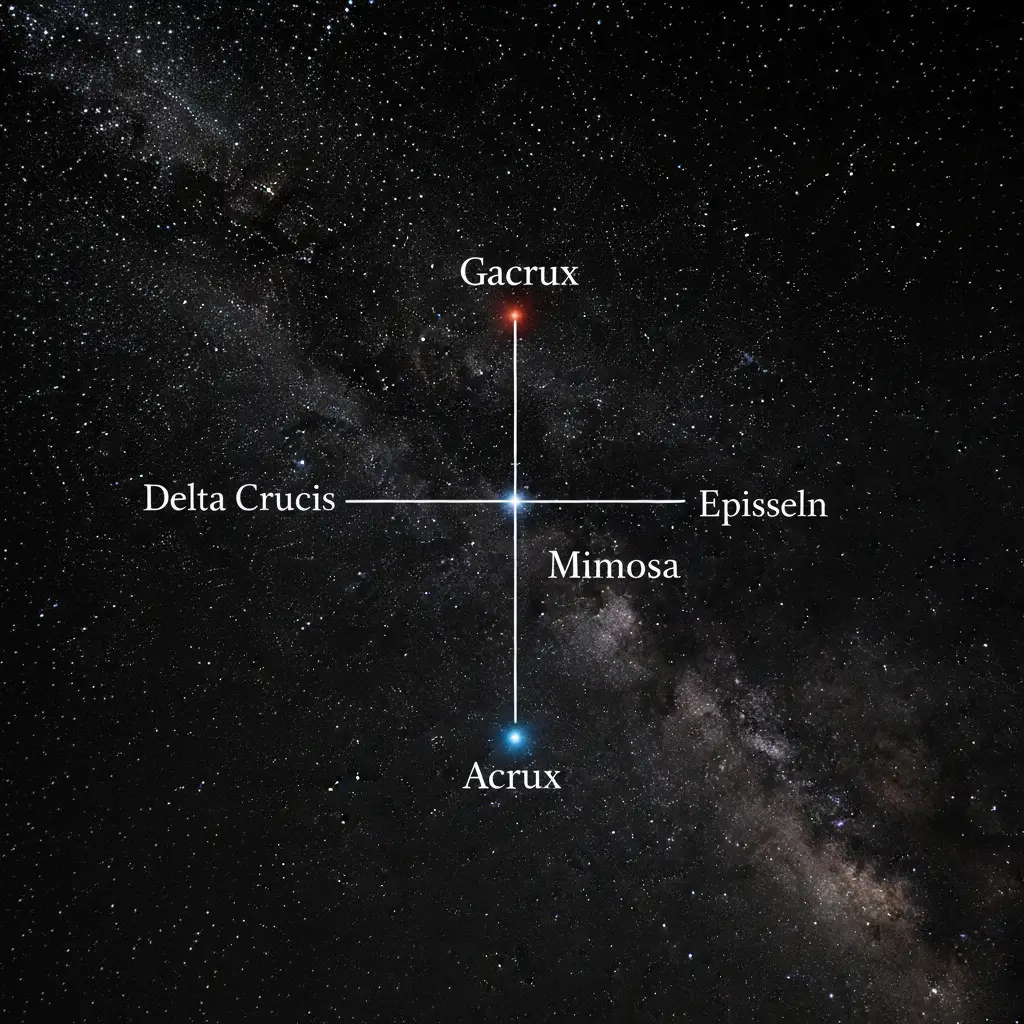
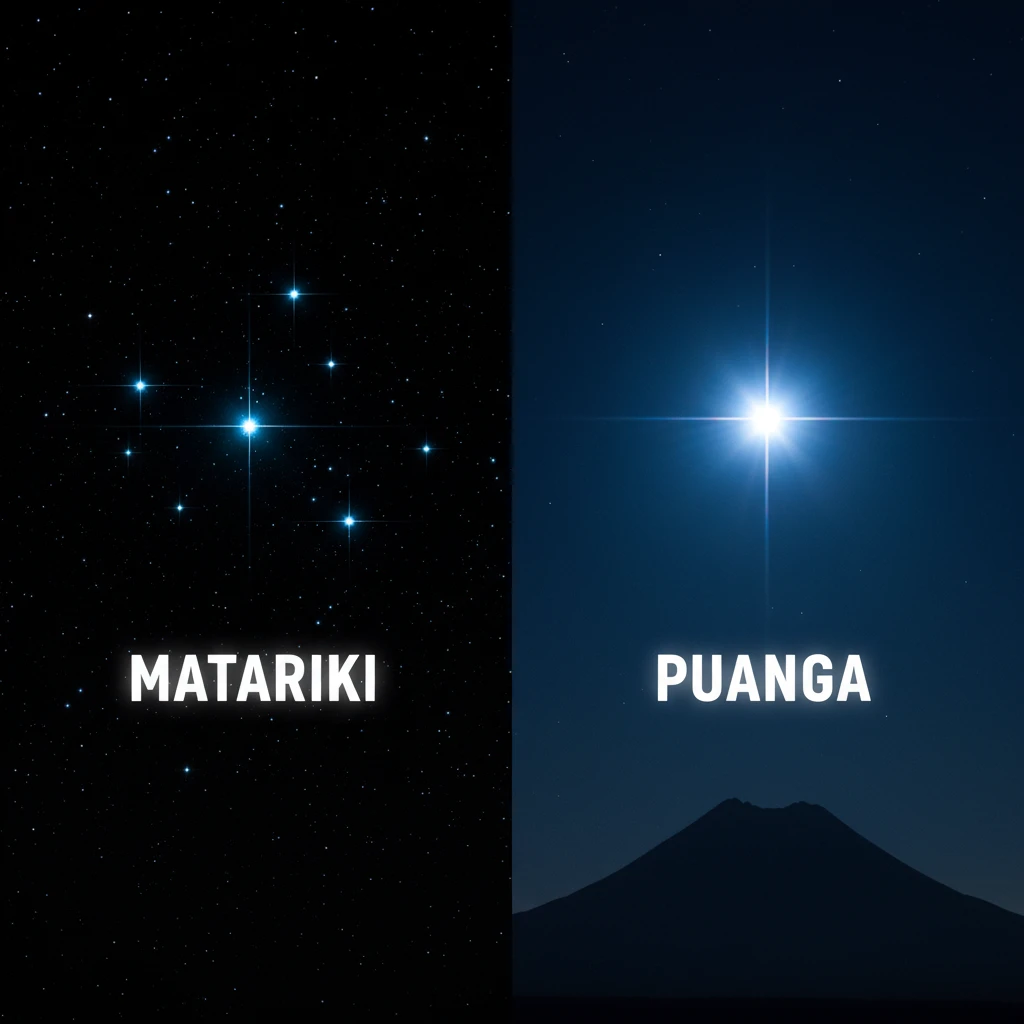
Identifying Puanga vs Matariki involves understanding regional visibility and astronomical alignment. While Matariki (the Pleiades cluster) marks the New Year for most of New Zealand, tribes in the West and Far North often cannot see it due to mountain ranges. Instead, they celebrate Puanga (Rigel), the bright star in Orion, as the harbinger of the new seasonal cycle.
Identifying Puanga vs Matariki: The Core Differences
The resurgence of the Māori New Year has brought national attention to the celestial bodies that govern the indigenous calendar (Maramataka). However, a common point of confusion for both locals and international astro-tourists is the distinction between Matariki and Puanga. Understanding this distinction is vital for anyone engaging with New Zealand’s cultural astronomy.
Matariki is an open star cluster, known internationally as the Pleiades or the Seven Sisters (Messier 45). Located in the constellation Taurus, it contains hundreds of stars, though only nine are typically identified in Māori cosmology. In contrast, Puanga is a single star—Rigel—the brightest star in the constellation Orion. It is a blue-white supergiant that burns with intense luminosity, making it one of the most visible objects in the winter night sky.
The primary reason for the variation in celebration—identifying Puanga vs Matariki as the signifier—is strictly geographical. For Iwi (tribes) located in Taranaki, Whanganui, parts of the Far North, and the West Coast of the South Island, the landscape presents a challenge. High mountain ranges to the east often block the view of the low-rising Matariki cluster during the crucial pre-dawn phase in mid-winter. Puanga, which rises higher and slightly earlier in the northern sky, became the reliable marker for these regions.
The 9 Stars of Matariki and Their Domains
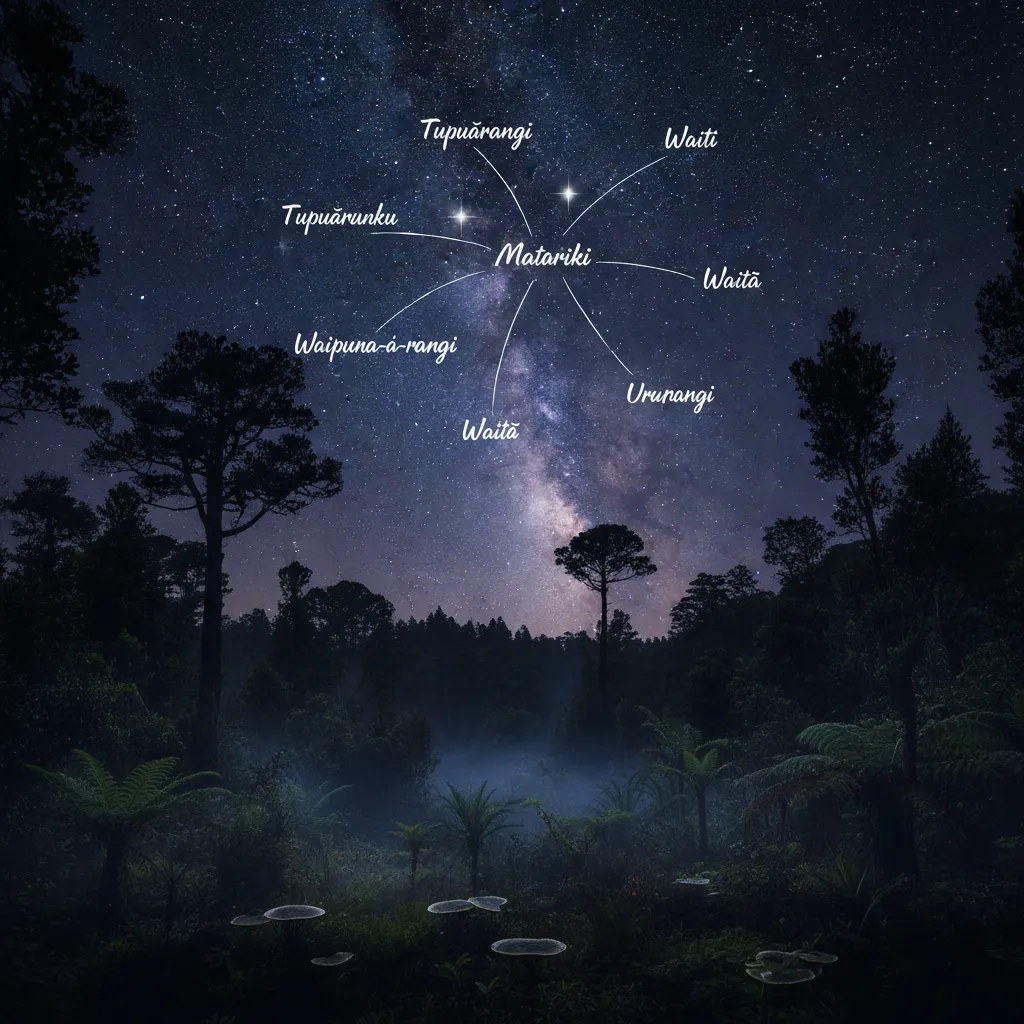
While the Greek tradition counts seven sisters, Māori astronomy identifies nine distinct stars within the Matariki cluster. Each star holds dominion over a specific aspect of the environment and human wellbeing. For those involved in the Maramataka (Māori lunar calendar) or agriculture, observing the brightness and clarity of each individual star can predict the prosperity of the coming season.
1. Matariki (Alcyone)
The mother of the other stars in the cluster. Her domain is the health and wellbeing of people. When she appears bright and clear, it is interpreted as a sign of good health and good fortune for the community in the coming year. She is the conductor of the ensemble, gathering the others together.
2. Pōhutukawa (Sterope)
This star connects Matariki to the dead. It carries the spirits of those who have passed away since the last rising of Matariki. During the New Year ceremonies, names of the deceased are called out to Pōhutukawa to guide them into the afterlife. It serves as a reminder to cherish memories of ancestors.
3. Tupuānuku (Pleione)
Tupuānuku is associated with food grown in the ground (soil). This includes kūmara (sweet potato) and other root vegetables. Gardeners and horticulturalists look to this star to determine the quality of the soil and the success of the harvest. A dim Tupuānuku might suggest a lean year for crops, prompting careful rationing.
4. Tupuārangi (Atlas)
This star governs food that comes from the sky and above the ground. This includes birds, fruit from trees, and berries. In traditional times, the clarity of Tupuārangi would indicate the abundance of kererū (wood pigeon) and other forest resources essential for winter survival.
5. Waipunarangi (Electra)
Waipunarangi watches over the rain. The name translates roughly to “water that pools in the sky.” The appearance of this star predicts rainfall patterns for the coming year—whether there will be droughts or floods, which is critical information for agriculture and flood management.
6. Waitī (Maia)
Waitī watches over fresh water environments: lakes, rivers, and streams. It is specifically linked to the food sources within them, such as tuna (eels) and kōura (crayfish). The brightness of Waitī signals the health of the waterways and the abundance of freshwater species.
7. Waitā (Taygeta)
Waitā represents the ocean and salt water. It governs the tides and the myriad of life forms within the sea. Fishermen observe Waitā to predict the upcoming fishing season. As Matariki sits low on the horizon near the ocean, this connection is physically tangible in the pre-dawn sky.
8. Ururangi (Merope)
Ururangi is the star of the winds. It determines the nature of the winds for the year—whether they will be gentle breezes or destructive gales. This star is crucial for navigation and understanding weather volatility.
9. Hiwa-i-te-rangi (Celaeno)
The youngest star, Hiwa-i-te-rangi, is the wishing star. It is to this star that people send their dreams and aspirations for the new year. It represents the potential for growth and the realization of goals.
Why Some Iwi Celebrate Puanga
The celebration of Puanga is not a rejection of Matariki, but rather an adaptation to local astronomy and geography. In the Taranaki and Whanganui regions, the emphasis on Puanga is profound. The proverb “Puanga kai rau” (Puanga of the abundant harvest) highlights the star’s role in signaling the time to store food for winter.
Puanga is often viewed as the older sibling or cousin of Matariki. In some tribal narratives, there is a playful rivalry between the two. Because Puanga is brighter and rises earlier, it is seen as the herald that announces the coming of Matariki. In areas where Matariki is visible but Puanga is preferred, it is often because the brightness of Rigel makes it a more reliable navigation and timing tool during the often cloudy winter mornings.
For visitors interested in cultural tourism, understanding this distinction allows for a deeper connection with local hosts. If you are visiting the West Coast or Taranaki during June or July, greeting locals with “Mānawatia a Puanga” (Welcome/Celebrate Puanga) shows a high level of cultural competency and respect for local traditions.
How to Spot the Cluster and Puanga in Winter
For astro-tourists and amateur astronomers, the pre-dawn sky in June and July offers a spectacular viewing opportunity. To successfully identify Puanga vs Matariki, you need to wake up early—typically between 5:30 AM and 6:30 AM, just before the sun begins to lighten the horizon.
Step-by-Step Observation Guide
- Find the Direction: Look towards the Northeast horizon. You need a clear view, away from city light pollution if possible.
- Locate Tautoru (The Belt of Orion): The easiest anchor point is “The Pot” or Orion’s Belt. This is a straight line of three distinctive bright stars.
- Find Puanga (Rigel): Look directly above Orion’s Belt (from a Southern Hemisphere perspective). The bright, blue-white star is Puanga. It is significantly brighter than the stars in the belt.
- Find Matariki: From Orion’s Belt, follow the line to the left (North). You will pass a bright orange star in a V-shape formation. This is Taumata-kuku (Aldebaran) in the Hyades cluster (the face of the Bull). Keep moving left in that same line, and you will see a twinkling cluster of tiny stars. That is Matariki.
If you have binoculars, Matariki transforms from a fuzzy patch of light into a stunning collection of diamond-like jewels. Puanga, through binoculars, reveals its intense supergiant nature.

Maramataka and Dark Sky Tourism
New Zealand is rapidly becoming a world leader in “Dark Sky” tourism, a niche that dovetails perfectly with the rising interest in Maramataka (the Māori lunar calendar). The Maramataka is not just a calendar of dates but a system of environmental observations driven by the phases of the moon and the position of stars like Matariki and Puanga.
Regions such as the Aoraki Mackenzie International Dark Sky Reserve and the Great Barrier Island (Aotea) Dark Sky Sanctuary are prime locations for observing these celestial events. Tourism operators in these areas are increasingly incorporating Māori astronomy into their tours. Visitors can experience the night sky not just through the lens of Western science (identifying gas giants and nebulas) but through the narrative lens of Māori mythology and navigation.
This fusion offers a unique value proposition: it grounds the abstract beauty of the cosmos in practical, terrestrial meaning. Knowing that a star cluster signals the time to harvest kumara or rest the soil adds a layer of human history to the astronomical experience.
Rituals for Hautapu: Feeding the Stars
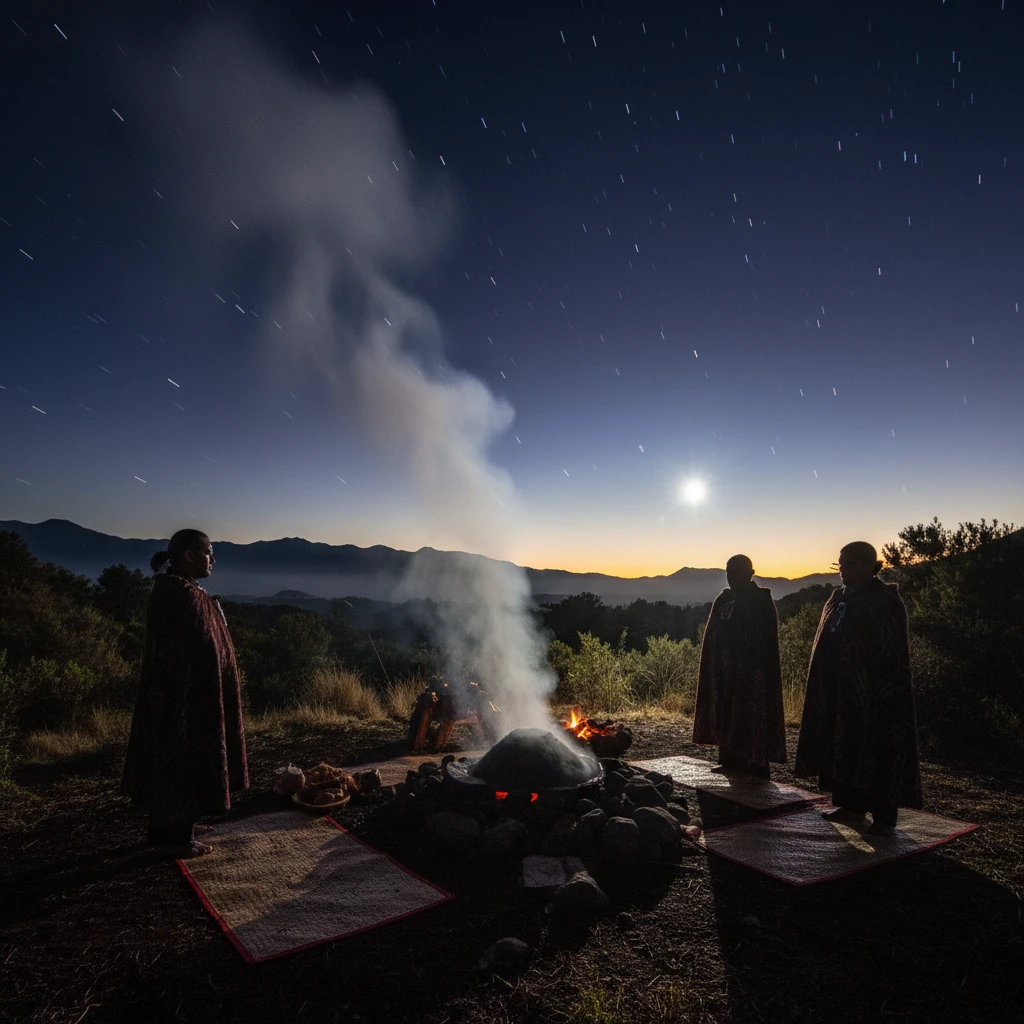
The most significant ritual associated with the Māori New Year is the Hautapu. This ceremony involves the cooking of food as an offering to the stars. The term roughly translates to “sacred wind” or “feeding the stars with the essence of food.”
The Umu Kohukohu Whetū
The ritual centers around the umu kohukohu whetū (steaming earth oven of the stars). Traditionally, different foods associated with the domains of the stars are gathered:
- Root vegetables (kumara) for Tupuānuku.
- Bird or forest food for Tupuārangi.
- Fish for Waitī and Waitā.
These foods are cooked in a hāngī (earth oven). When the stars rise in the pre-dawn sky, the earth covering is removed, releasing the steam. The tohunga (priest or expert) performs karakia (incantations), and the steam rises into the sky to “feed” Matariki. It is believed that if the stars are fed and satisfied, they will bestow abundance upon the people for the coming year.
In modern times, this ritual has been revitalized across New Zealand. Communities gather before dawn to cook food, share stories, remember loved ones who have passed (acknowledging Pōhutukawa), and plan for the future (Hiwa-i-te-rangi). It is a solemn yet celebratory time that reinforces the connection between the people, the land, and the cosmos.
Frequently Asked Questions
When is the best time to view Matariki in New Zealand?
The best time to view Matariki is in mid-winter, specifically during the months of June and July. You must look to the northeast horizon in the pre-dawn hours, typically between 5:30 AM and 6:30 AM, before the sun rises.
Why can’t I see Matariki from the West Coast?
The Southern Alps and other mountain ranges often block the view of the eastern horizon where Matariki rises. Because Matariki sits low on the horizon, these geographical barriers make it difficult to spot, leading West Coast tribes to prioritize Puanga (Rigel), which rises higher.
Is Puanga a cluster of stars like Matariki?
No, Puanga is a single star. It is known in Western astronomy as Rigel, the brightest star in the Orion constellation. Matariki is an open star cluster containing hundreds of stars.
What does the Matariki public holiday celebrate?
The Matariki public holiday celebrates the Māori New Year. It is a time for remembrance (honoring those who have died), celebrating the present (gathering with whānau/family), and looking to the future (planning and making wishes).
How do I find Puanga in the sky?
Look for the three bright stars that form Orion’s Belt (The Pot). Puanga is the very bright, blue-white star located directly above the belt in the New Zealand winter sky.
What is the meaning of Hautapu?
Hautapu is a ceremonial offering. In the context of Matariki, it involves cooking food in an earth oven and releasing the steam to “feed” the stars, ensuring a prosperous year ahead.