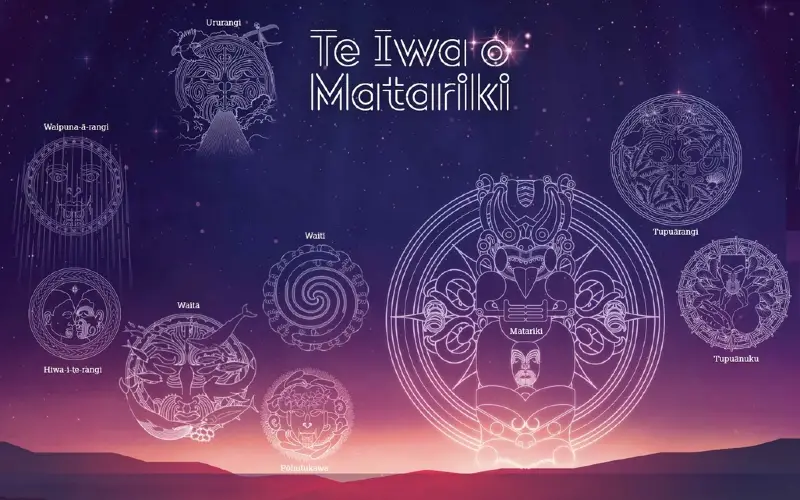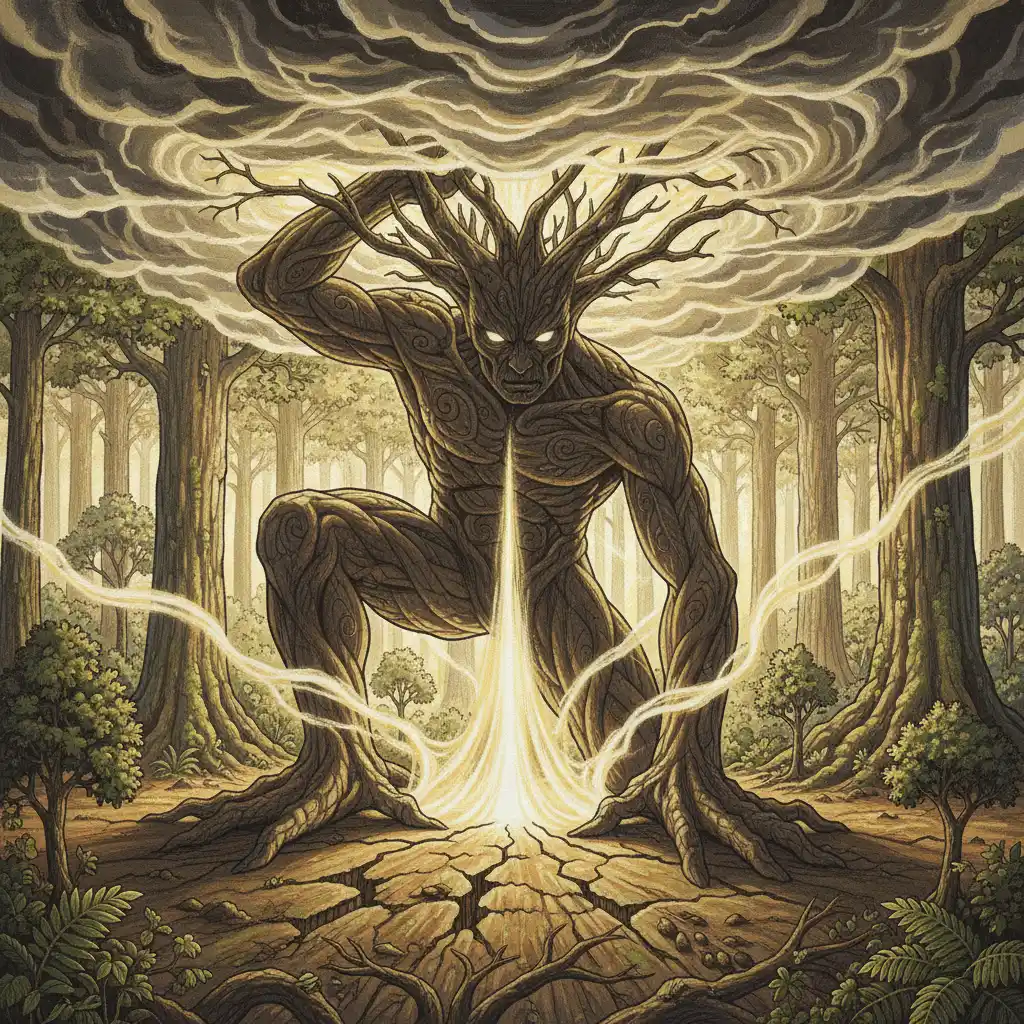
Matariki is the central star and mother of the Pleiades cluster in Māori tradition, often referred to as the Matariki star mother. She signifies reflection, hope, and the gathering of people. Together with Rehua (the star Antares), she watches over her eight star children, each representing a specific environmental domain.
Who is the Matariki Star Mother?
In the rich tapestry of Māori astronomy and mythology, Matariki holds a position of supreme nurturing and guidance. While the term “Matariki” is often used to describe the entire cluster of stars known internationally as the Pleiades, it specifically refers to the central, brightest star of the group. She is the Matariki star mother, the matriarch who gathers her children around her to bring tidings of the New Year.
The name Matariki can be translated in two distinct ways, each offering insight into her significance. The first is Ngā Mata o the Ariki, meaning “The Eyes of the God” (specifically Tāwhirimātea, the god of wind and weather). The second, and perhaps more endearing translation in the context of the family unit, is “Little Eyes.” As the mother, Matariki is viewed as a provider and a guardian who signifies the health and wellbeing of the people.

Unlike other deities who may represent war or aggression, Matariki is intrinsically linked to peace, clarity, and reflection. Her appearance in the pre-dawn sky in mid-winter signals the Māori New Year, a time to honor the dead, celebrate the present, and plan for the future. As a mother figure, she is believed to encourage the gathering of whānau (family) and communities to share kai (food), songs, and stories.
Her role is not merely symbolic; it is functional. In traditional navigation and agriculture, the brightness and clarity of the mother star and her children were read as predictors of the coming season’s bounty. If the stars were clear and bright, it foretold a warm, productive season. If they were hazy and shimmering, it warned of a cold winter and potential crop failure, prompting the community to ration supplies.
Rehua: The Father and Paramount Chief
While Matariki is the celebrated mother, her counterpart in this celestial family is Rehua. In Māori astronomy, Rehua is identified as the star Antares, the brilliant red giant in the constellation of Scorpius. Rehua is a figure of immense mana (spiritual power) and authority, often regarded as the paramount chief of the heavens.
Rehua resides in the highest of the twelve heavens, known as Te Toi-o-ngā-rangi. He is associated with the heat of summer, healing, and knowledge. Because he dwells in the highest heaven, he is considered tapu (sacred) and untouched by death. This makes him a complementary force to Matariki; while she appears in the cold of winter to signal renewal, Rehua reigns over the summer, bringing the heat that ripens crops and energizes the land.
There is a well-known Māori proverb (whakataukī) associated with Rehua: “Kua whati te tuarā o Rehua.” This translates to “The back of Rehua is broken.” It is used to describe the end of summer when the heat begins to dissipate, and the days grow cooler, signalling that the chief is weary and the season is changing.
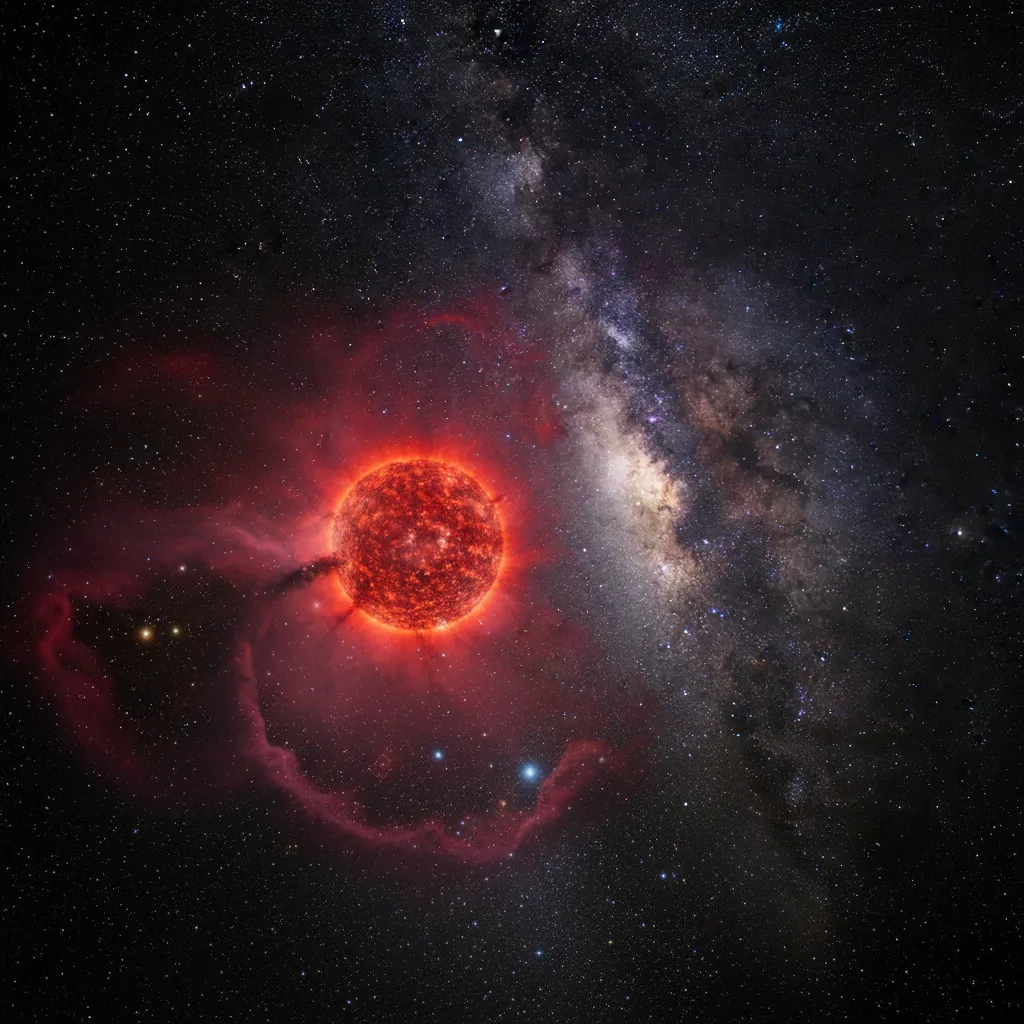
Rehua is not just a husband but a healer. In mythology, birds were believed to feed on the lice in Rehua’s hair, which were actually berries and fruits of the forest. This allegorical connection ties the star directly to the abundance of the forest and the ecosystem’s health. His role as the father figure provides the necessary balance to the cluster, representing the masculine energy of the sun and summer that complements the feminine, wintry energy of Matariki.
The Union of Matariki and Rehua
The relationship between Matariki and Rehua is a poetic depiction of astronomical mechanics and seasonal cycles. While they are the parents of the other stars in the cluster, they are rarely seen together in the sky. This separation is significant.
When Matariki rises in the mid-winter morning sky (June/July), Rehua (Antares) is setting or is located in a different part of the celestial sphere. This celestial dance represents the changing of the guard between seasons. Matariki brings the moisture and the cool reflection of winter, while Rehua brings the fire and intensity of summer.
Their union produced the other stars within the Matariki cluster. According to leading Māori astronomer Dr. Rangi Mātāmua, the inclusion of Rehua as the father clarifies the genealogy of the cluster. It establishes a complete family unit that governs the various domains of the natural world—earth, sky, water, and wind. This family structure mirrors the importance of whakapapa (genealogy) in Māori culture, where knowing one’s lineage is essential to understanding one’s identity and purpose.
The Eight Children of the Cluster
To fully understand the role of the Matariki star mother, one must look at the children she cares for. Each of the eight children has a specific responsibility, overseeing a particular aspect of the environment. Matariki’s role is to coordinate these diverse elements to ensure the wellbeing of the world.
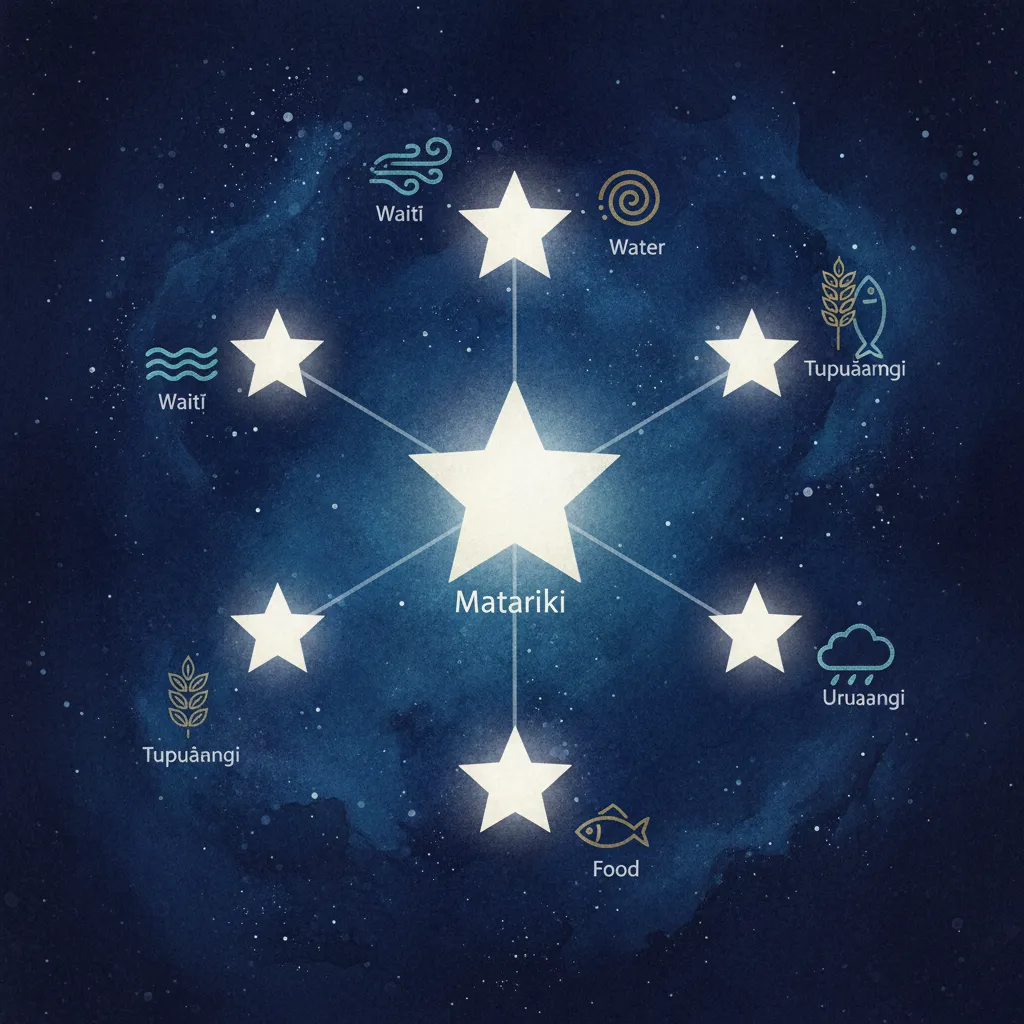
1. Tupu-ā-nuku
This star is connected to food that grows within the soil (harvested from the earth). This includes kūmara (sweet potato) and other root vegetables. Tupu-ā-nuku ensures the soil is fertile.
2. Tupu-ā-rangi
This star is associated with food that comes from the sky. This includes birds, fruit, and berries from trees. It represents the bounty of the forests.
3. Waipunarangi
Connected to the rain. Waipunarangi translates to “water that pools in the sky.” This star predicts rainfall patterns, which are crucial for the coming planting season.
4. Waitī
This star watches over fresh water bodies—lakes, rivers, and streams—and the food sources within them, such as eels (tuna) and freshwater crayfish (kōura).
5. Waitā
Waitā is associated with the ocean and the food harvested from it. It represents the vast salt waters and the tides.
6. Ururangi
This star is connected to the winds. The nature of the winds for the coming year—whether they will be gentle or destructive—is divined from Ururangi.
7. Pohutukawa
Perhaps the most poignant of the children, Pohutukawa connects Matariki to the dead. This star carries the spirits of those who have passed away in the previous year up to the heavens.
8. Hiwa-i-te-rangi
The youngest star, Hiwa-i-te-rangi, is the wishing star. It is to this star that people send their dreams and aspirations for the year ahead.
Matariki as a Sign of Health and Wellbeing
The Matariki star mother is inextricably linked to Hauora, or holistic health and wellbeing. In traditional Māori society, the visibility of the cluster was not just a calendar event; it was a medical diagnostic tool for the community’s spiritual and physical health.
When the cluster rose, tohunga kōkōrangi (expert astronomers) would carefully observe the brightness and distance between the stars. If the stars appeared distinct and brilliant, it was interpreted as a sign of a healthy year ahead, free from major pestilence or famine. Conversely, if the stars appeared merged, hazy, or dim, it was a warning to prepare for sickness or hardship.
This connection to health extends beyond the physical. The period of Matariki is a time for mental and emotional reset. It is a time to:
- Release the past: Through the star Pohutukawa, grief is processed and loved ones are remembered, allowing the living to move forward without the heavy burden of sorrow.
- Celebrate the present: Gathering to eat and share stories reinforces social bonds, which is a key determinant of mental health.
- Plan the future: Setting intentions with Hiwa-i-te-rangi gives individuals a sense of purpose and hope, vital components of psychological wellbeing.
Leadership in the Night Sky
Matariki and Rehua demonstrate a dual form of leadership that was emulated by human chiefs on earth. Rehua represents the mana of the high chief—distant, sacred, and powerful. Matariki represents the mana of the matriarch—accessible, nurturing, and community-focused.
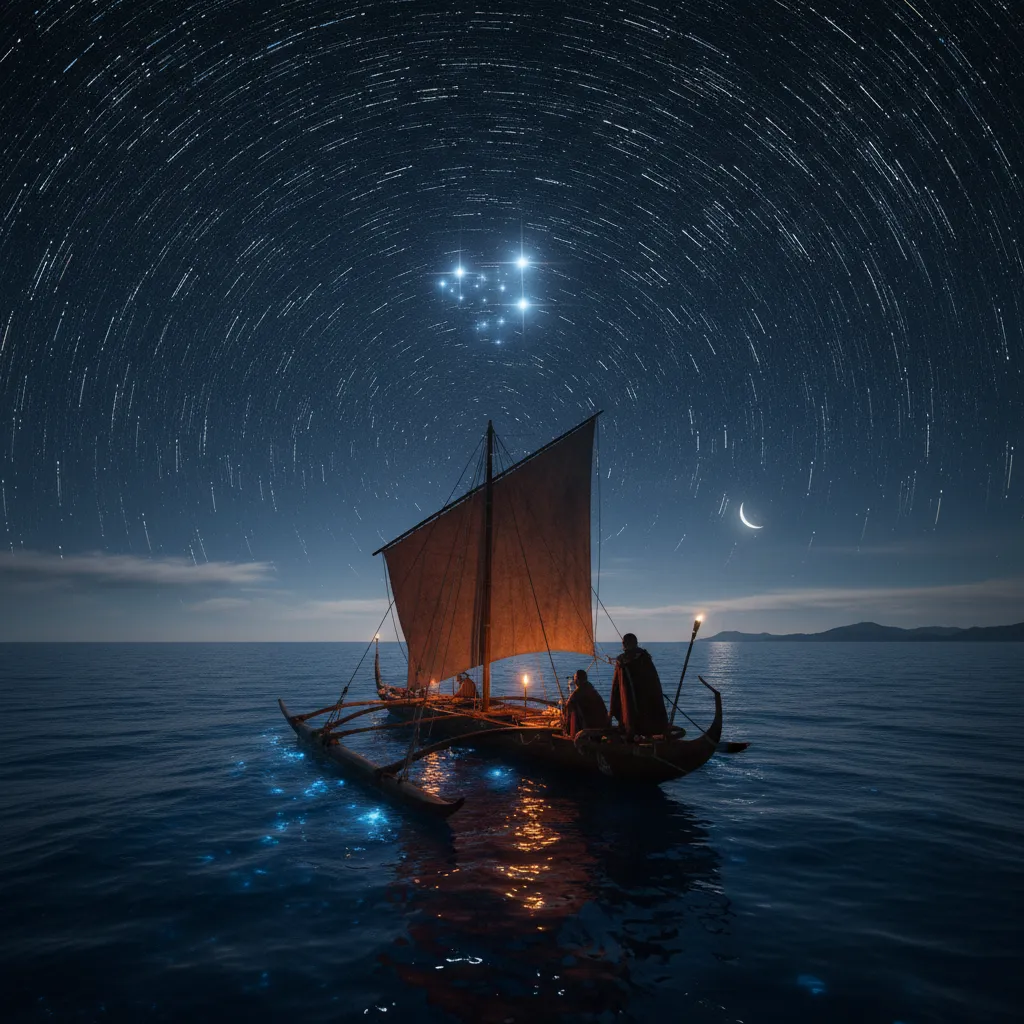
For oceanic voyagers, these stars were critical navigational beacons. The rising of Matariki marked a specific position on the celestial compass. Navigators knew that when Matariki was visible, the ocean currents and wind patterns would behave in specific ways. She was a leader in the sense that she provided direction. Without the guidance of the Matariki star mother and the seasonal markers of Rehua, survival in the vast Pacific Ocean would have been significantly more perilous.
Today, this leadership continues as Matariki has been reclaimed as a national holiday in Aotearoa New Zealand. The star mother once again leads the nation, not just in an agricultural sense, but in a cultural renaissance, guiding a modern society back to indigenous wisdom and a deeper respect for the rhythms of the natural world.
Frequently Asked Questions
What does the Matariki star mother represent?
Matariki represents the mother of the Pleiades cluster. She symbolizes health, wellbeing, the gathering of people, and the reflection on the past year. She acts as the conductor for her children, who govern different environmental domains.
Is Rehua part of the Matariki cluster?
Physically, no. Rehua is the star Antares in the constellation Scorpius. However, mythologically, he is the husband of Matariki and the father of the other stars in the cluster, representing summer and high heavenly rank.
How many stars are in the Matariki family?
While many people can see seven stars with the naked eye, Māori astronomy typically identifies nine distinct stars in the narrative: The mother (Matariki) and her eight children (Tupu-ā-nuku, Tupu-ā-rangi, Waipunarangi, Waitī, Waitā, Ururangi, Pohutukawa, and Hiwa-i-te-rangi).
When can you see Matariki?
Matariki appears in the pre-dawn sky in mid-winter (in the Southern Hemisphere), usually around late June or early July. The specific dates shift slightly each year based on the lunar calendar (Maramataka).
Why is Matariki called the “Little Eyes”?
One translation of Matariki is “Mata riki,” which means “Little Eyes.” Another translation is “Ngā Mata o the Ariki” (The Eyes of the God). The “Little Eyes” translation often refers to the stars watching over the earth and its people.
What is the connection between Matariki and harvest?
Matariki appears after the harvesting of crops is complete. It signals the time to store food for winter. The brightness of the stars was also used to predict the success of the next planting season.