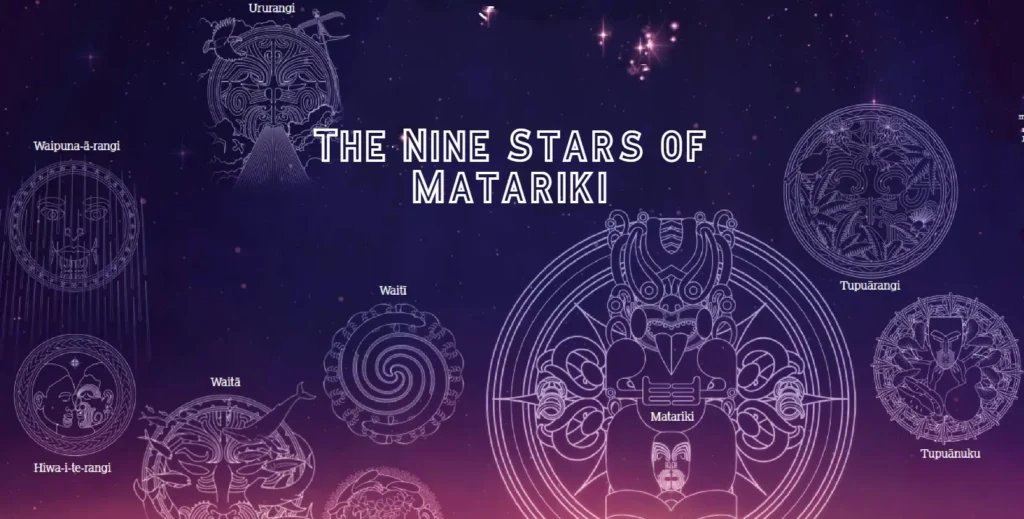
The names of Matariki stars and meanings represent specific environmental domains within Te Ao Māori. Matariki signifies health and reflection, Pōhutukawa honors the dead, Tupu-ā-nuku and Tupu-ā-rangi govern food sources, Waitī and Waitā protect fresh and salt water, Waipuna-ā-rangi controls rainfall, Ururangi dictates wind patterns, and Hiwa-i-te-rangi embodies future aspirations.
What are the Names of Matariki Stars and Meanings?
Matariki is the Māori name for the star cluster known internationally as the Pleiades or the Seven Sisters. While historically, some iwi (tribes) recognized seven stars, modern renaissance and research championed by experts like Dr. Rangi Matamua have solidified the recognition of nine distinct stars in the cluster. Each star holds a specific domain, influencing the environment, weather patterns, and human life for the coming year.
The rising of this cluster in mid-winter marks the Māori New Year, a time of renewal, remembrance, and celebration. Understanding the names of Matariki stars and meanings provides a blueprint for how pre-European Māori viewed the interconnectedness of the natural world. It was not merely astronomy; it was a system of survival, agriculture, and spiritual orientation. To track these celestial cycles, many refer to Downloadable Maramataka PDFs & Charts.

When the cluster rises, tohunga (experts) would look closely at the brightness and distinctness of each star. If a specific star was hazy or shimmering, it predicted a difficult season for that star’s domain. If it was clear and bright, it signaled abundance. Below is the complete profile of these celestial guardians.
Matariki (The Mother): Signifying Health and Wellbeing
Name Meaning: “Ngā Mata o the Ariki” (The Eyes of the God) or simply “Little Eyes.”
Matariki is the central and brightest star in the cluster. She is viewed as the mother, surrounded by her eight daughters (in the nine-star tradition). Her specific domain is the health and wellbeing of the people.
When Matariki is observed rising in the pre-dawn sky, her appearance is taken as a signifier of the community’s fortune for the coming year. If the star appears bright and clear, it is believed that the people will enjoy good health and vitality. Conversely, if the star appears dim or hazy, it is interpreted as an omen of sickness or hardship.
Culturally, this star encourages us to check in on our wellbeing and that of our whānau (family). It is the conductor of the ensemble, ensuring that the balance between the other elements—earth, sky, water, and wind—is maintained to support human life. During the New Year celebrations, Matariki reminds us to rest, rejuvenate, and prepare our bodies and minds for the seasons ahead.
Pōhutukawa: Connecting with Those Who Have Passed
Name Meaning: Closely associated with the Pōhutukawa tree, often called the New Zealand Christmas tree, which holds spiritual significance regarding the spirits of the dead.
Pōhutukawa is the star connected to those who have passed away since the last rising of Matariki. It sits close to the mother star and serves as the conduit for the dead. In Māori mythology, when individuals die, their spirits travel to Te Rerenga Wairua (the leaping place of spirits) at the top of the North Island, descend the roots of an ancient Pōhutukawa tree into the underworld, and eventually ascend to the heavens to become stars.
This star reminds us that Matariki is not just a celebration of the future, but a solemn remembrance of the past. It is the time to cry for those lost (wehi), to call out their names, and to release the grief held during the year. Once the weeping is done, the focus shifts to celebration.
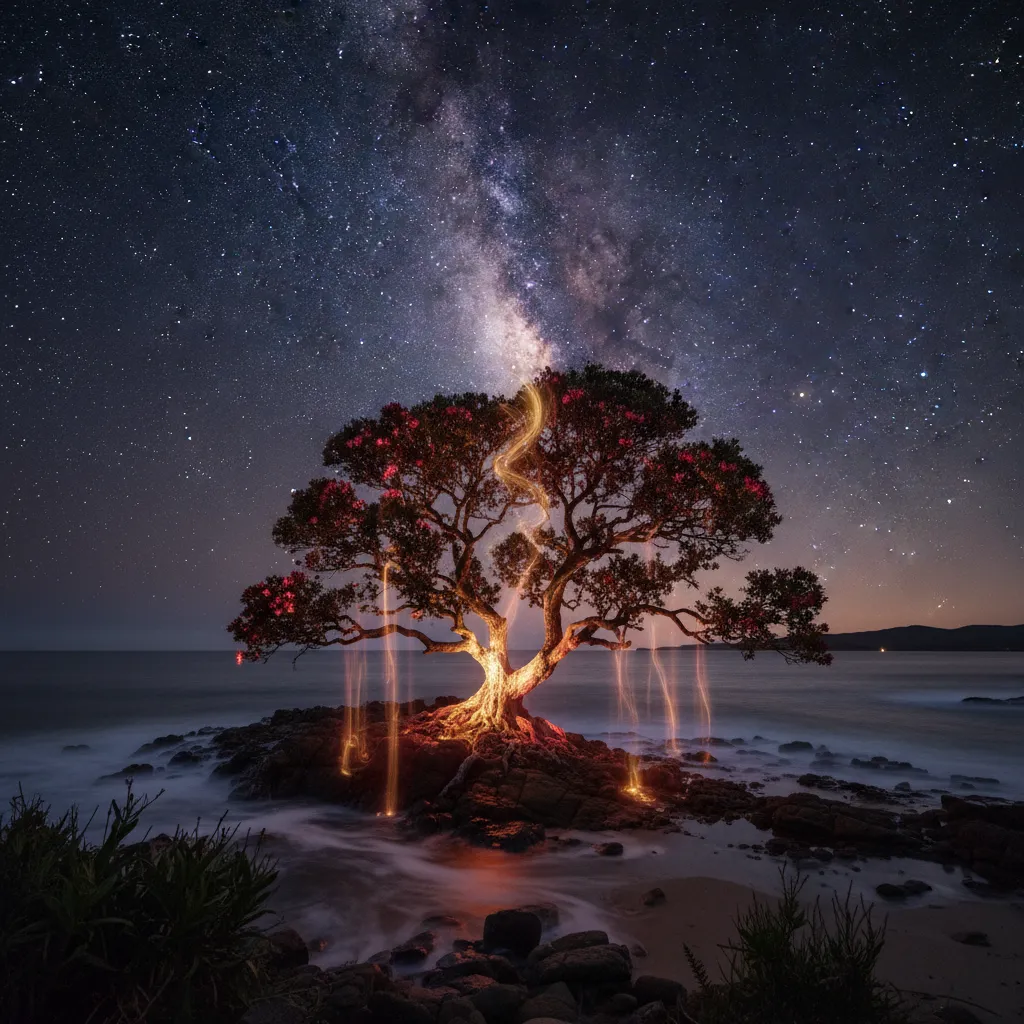
Pōhutukawa encourages us to treasure the memories of our ancestors and loved ones. By acknowledging this star, we ensure that those who have left us are carried into the night sky to become part of the celestial realm, watching over us for eternity. This spiritual connection is part of Whakamahara: Remembering Loved Ones.
Tupu-ā-nuku & Tupu-ā-rangi: Food from Earth and Sky
The next two stars form a pair dedicated to sustenance. They represent the vertical axis of the environment: the ground beneath our feet and the canopy above our heads.
Tupu-ā-nuku: The Star of Cultivated Food
Name Meaning: “Tupu” means to grow, and “Nuku” is short for Papatūānuku (Earth Mother). Literally, “Growth in the Earth.”
Tupu-ā-nuku is the guardian of everything that grows within the soil to be harvested for food. This includes kūmara (sweet potato), rīwai (potatoes), and other root vegetables. This star was critical for agriculture. If Tupu-ā-nuku appeared bright and distinct, tohunga knew the coming growing season would be fruitful, and planting would yield a bumper crop. A hazy appearance warned of pests, rot, or poor soil conditions.
This star teaches the value of grounding and diligence. It reminds us that sustenance requires preparation of the soil and patience. In a modern context, it connects to gardening, farming, and the importance of healthy soil ecosystems.
Tupu-ā-rangi: The Star of Forests and Birds
Name Meaning: “Growth in the Sky” or “Growth of the Heavens.”
Tupu-ā-rangi is associated with food sources that come from above the ground. This includes fruits, berries, and birds (manu). Historically, this star signaled the abundance of kererū (wood pigeon) and other forest resources. The forests were the supermarkets of pre-European Māori, and Tupu-ā-rangi was the store manager.
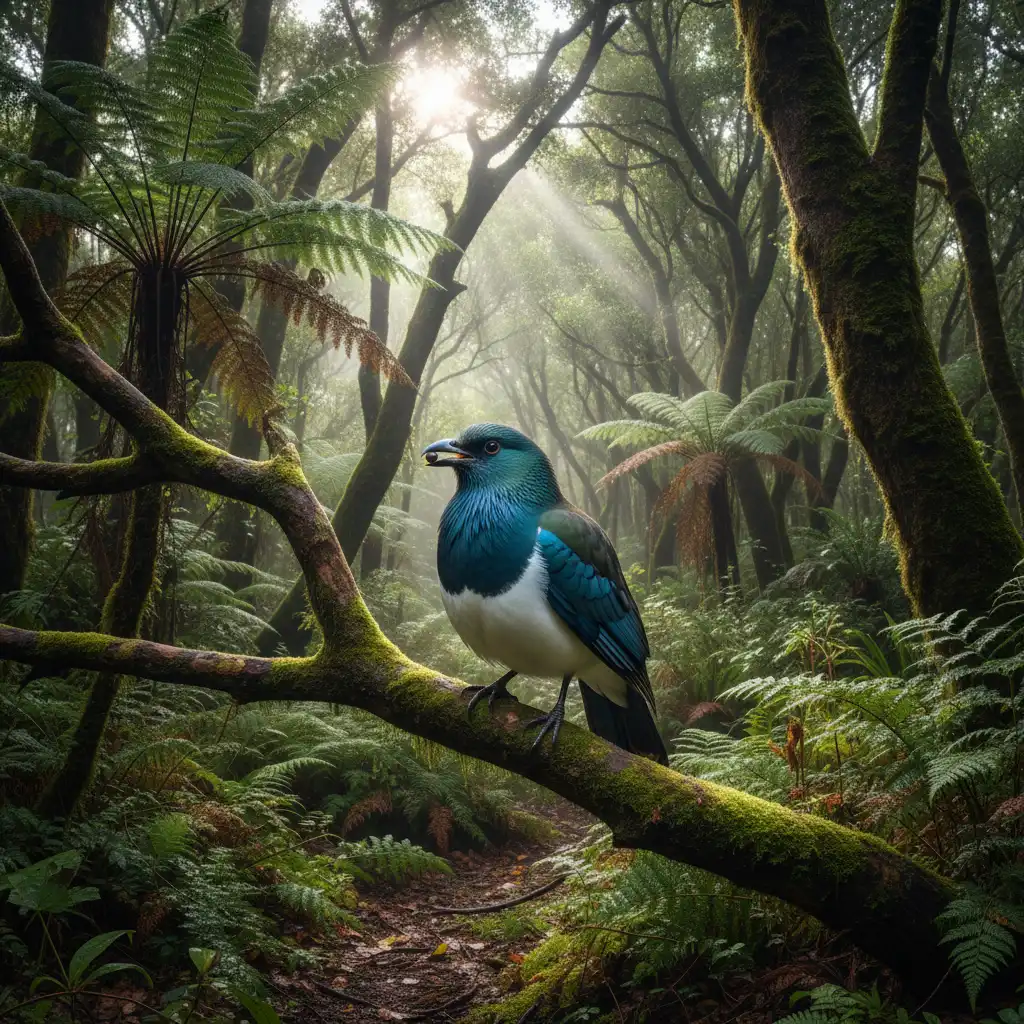
This star also connects to our own “internal forests”—our mental state and higher thoughts. Just as the birds soar high, Tupu-ā-rangi encourages us to elevate our perspective. It emphasizes the protection of our native bush and the biodiversity that sustains the ecosystem.
Waitī & Waitā: Guardians of Fresh and Salt Water
Water is the lifeblood of the environment, and Matariki dedicates two distinct stars to the different bodies of water that sustain life in Aotearoa.
Waitī: The Star of Fresh Water
Name Meaning: “Sweet Water” or “Fresh Water.”
Waitī watches over all freshwater bodies: lakes, rivers, streams, and springs. It is inextricably linked to the creatures that inhabit these waters, particularly the tuna (eels) and kōura (freshwater crayfish). The health of this star reflects the health of the waterways. A clear Waitī signals clean, flowing rivers and abundant freshwater catches.
In today’s climate, Waitī serves as a poignant reminder of the importance of water conservation and the battle against pollution in our rivers. It asks us to consider how our actions upstream affect the water quality downstream.
Waitā: The Star of Salt Water
Name Meaning: “Salt Water” or “The Ocean.”
Waitā represents the vast ocean (Moana-nui-a-Kiwa) and the kaimoana (seafood) harvested from it. This star is associated with the tides, the currents, and the abundance of fish, shellfish, and marine life. Māori were master navigators and fishermen, making Waitā a crucial guide for safety and sustenance at sea.
Waitā is unique among the stars because it is said to also represent the biodiversity of the ocean. It encourages respect for the sea—taking only what you need and ensuring the ocean remains a sustainable food basket for future generations.
Waipuna-ā-rangi & Ururangi: Rain and Wind
The weather in New Zealand is volatile and dictates the success of harvest and travel. These two stars are the meteorologists of the cluster.
Waipuna-ā-rangi: The Star of Rain
Name Meaning: “Water that pools in the sky.”
Waipuna-ā-rangi is responsible for the rain, hail, and snow. While often associated with the gloom of winter, this star is vital because without rain, the rivers (Waitī) would dry up, and the crops (Tupu-ā-nuku) would fail. It represents the hydrological cycle—evaporation, condensation, and precipitation.
When Waipuna-ā-rangi is visible and clear, it suggests a balanced amount of rainfall for the year—enough to nourish, but not enough to flood. It teaches us to appreciate the rain as a life-giving force rather than an inconvenience.
Ururangi: The Star of Wind
Name Meaning: “The Winds of the Sky.”
Ururangi determines the nature of the winds for the coming year. In New Zealand, the prevailing westerlies or the cold southerlies can make or break a season. Ururangi is associated with Hanhau-o-te-rangi (the breath of heaven).
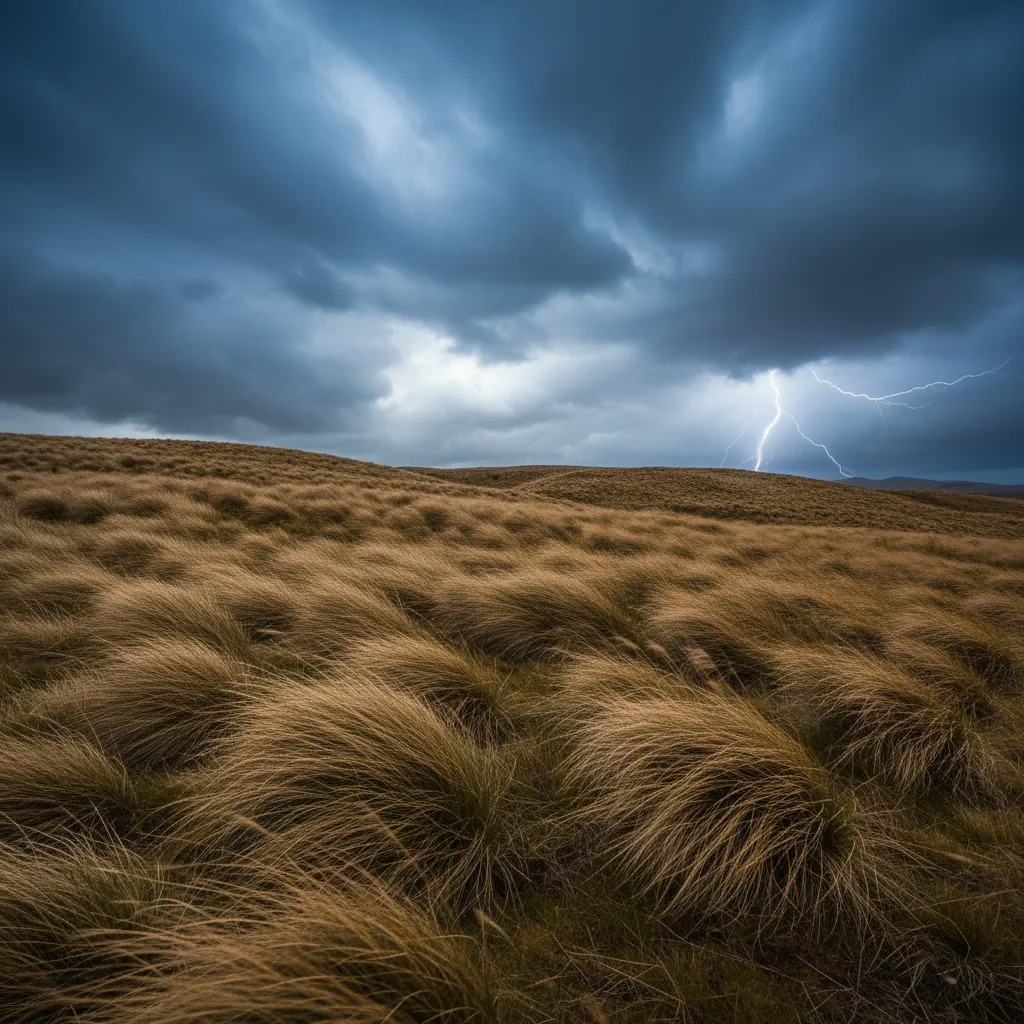
This star is often linked to attitude and agility. Just as the wind changes direction, Ururangi reminds us to be adaptable and resilient in the face of life’s storms. A clear Ururangi predicts favorable winds for sailing and stable weather patterns.
Hiwa-i-te-rangi: The Star of Aspirations
Name Meaning: “Hiwa in the Sky” or the “Wishing Star.”
To provide a truly complete list of the names of Matariki stars and meanings, we must include the ninth star, Hiwa-i-te-rangi. While the other stars govern the environment and the present, Hiwa-i-te-rangi is the star of the future.
This is the star to which you send your wishes, dreams, and aspirations for the coming year. It is similar to the Western concept of “wishing upon a star.” During Matariki, it is customary to set goals and release them to Hiwa-i-te-rangi, hoping that they will be realized as the cluster travels across the sky throughout the year.
Hiwa-i-te-rangi represents potential. It is the star of growth, personal development, and the promise that the new year brings opportunities to improve our lives and our communities.
Frequently Asked Questions
What are the 9 stars of Matariki?
The nine stars are Matariki (the mother), Pōhutukawa, Tupu-ā-nuku, Tupu-ā-rangi, Waitī, Waitā, Waipuna-ā-rangi, Ururangi, and Hiwa-i-te-rangi. Collectively, they govern health, remembrance, food, water, weather, and future wishes.
Why are there sometimes 7 and sometimes 9 stars in Matariki?
Historically, visibility depended on the location and the eyesight of the observer. Some iwi recorded seven stars, while others saw nine. Modern research by Dr. Rangi Matamua has standardized the nine-star narrative to include Pōhutukawa and Hiwa-i-te-rangi, which were sometimes omitted in the seven-star count.
What is the spiritual meaning of Matariki?
Spiritually, Matariki is a time of transition. It is about acknowledging the cycle of life and death (through Pōhutukawa), celebrating the harvest and abundance of the earth, and setting intentions for the future. It connects the physical environment with the spiritual realm of ancestors.
How do you find the Matariki cluster in the sky?
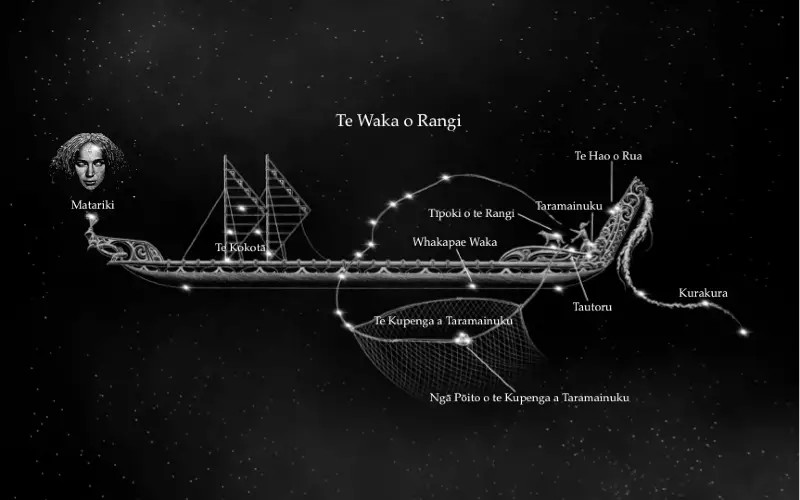
To find Matariki, look towards the northeast horizon before dawn in mid-winter. Find the row of three stars in Orion’s Belt (Tautoru). Follow the line of the belt to the left to find a triangular cluster (Te Kokotā). Continue that line to the left, and you will see the bright cluster of Matariki. To assist your search, you can use our Interactive Night Sky Map Tool: Locate Matariki Now.
What does the star Waitī represent?
Waitī represents all freshwater bodies, including rivers, lakes, and streams. It is the guardian of the creatures living within them, such as eels (tuna) and crayfish (kōura). Its brightness predicts the health of the waterways for the year.
Is Matariki the same as the Pleiades?
Yes, Matariki is the Māori name for the Pleiades star cluster. It is also known as Subaru in Japan, the Seven Sisters in Greece, and Krittika in India. Different cultures have different stories and seasonal associations for this cluster.