
The Matariki visibility calculator 2024 is a tool designed to determine the precise heliacal rising times of the Pleiades star cluster based on specific New Zealand latitudes. It integrates astronomical twilight data, local horizon obstruction angles, and lunar phase luminance to calculate the optimal viewing window, which for 2024 occurred primarily between 5:30 AM and 6:30 AM from late June to early July.
How the Matariki Visibility Calculator Works
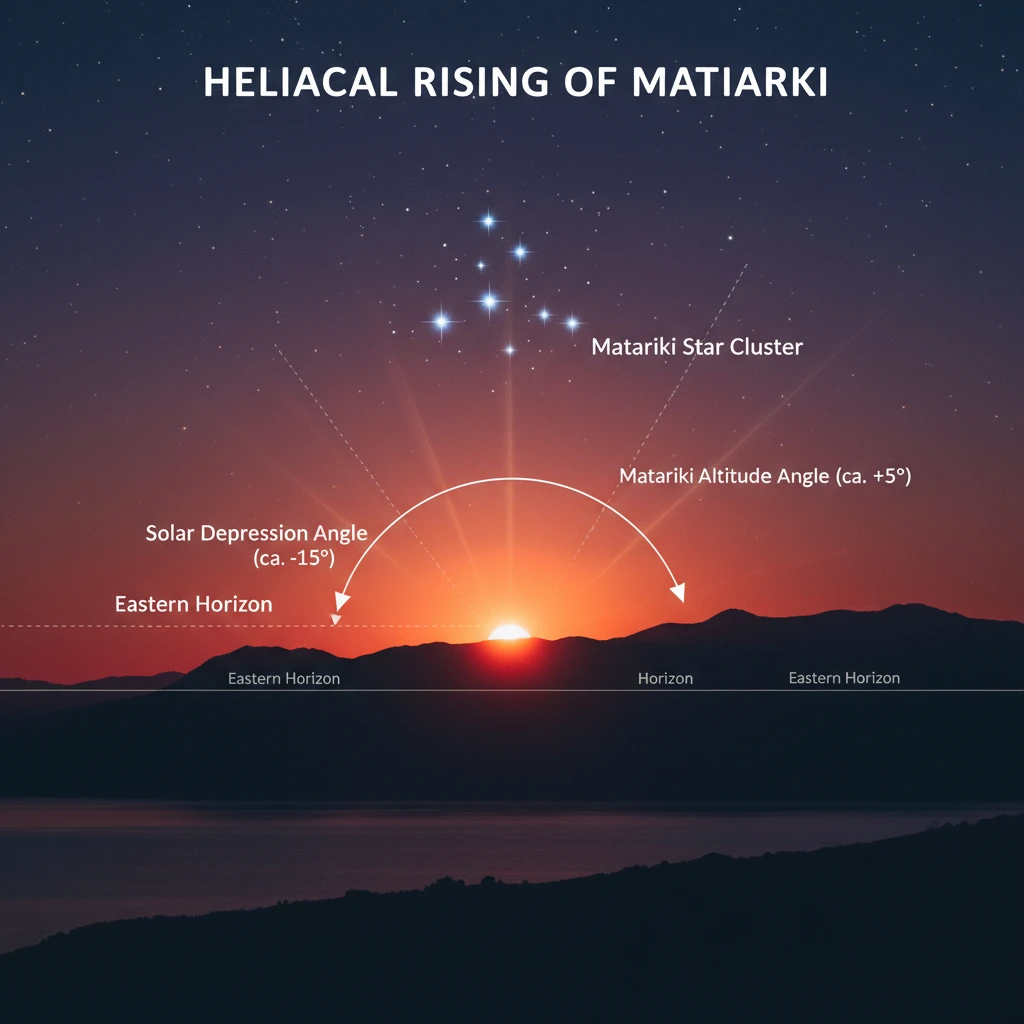
Understanding the precise moment to view Matariki requires more than just looking east. The visibility of the cluster is governed by the principles of heliacal rising—the moment a celestial body first becomes visible above the eastern horizon at dawn, just before the light of the rising sun overwhelms it. Our methodology for the 2024 visibility calculator relies on three critical astronomical variables.
1. Solar Depression Angle
The sun must be far enough below the horizon to darken the sky, yet close enough that the stars are rising. For Matariki, the ideal solar depression angle is between 12 and 18 degrees (Nautical to Astronomical Twilight). If the sun is higher than 12 degrees below the horizon, the sky is too bright (Civil Twilight), and the faint stars of the Pleiades (Matariki) are washed out.
2. Atmospheric Extinction
When stars are low on the horizon, their light must pass through a thicker layer of Earth’s atmosphere. This phenomenon, known as atmospheric extinction, dims the stars significantly. The calculator adjusts for this by recommending a viewing time when the cluster reaches an altitude of at least 5 to 10 degrees, lifting it out of the thickest atmospheric soup.
3. Azimuth Coordinates
Matariki does not rise due East. In 2024, its azimuth (compass bearing) was approximately 60 to 65 degrees (East-Northeast). The calculator filters out locations with high topographical obstructions in this specific directional corridor.
Regional Viewing Times for 2024
While the official public holiday for Matariki in 2024 was observed on Friday, June 28th, the viewing period extends for several days before and after this date. The following breakdown provides the optimal visibility windows calculated for New Zealand’s major urban centers. These times represent the “Goldilocks zone”—after the cluster has risen high enough to be seen, but before the sun brightens the sky.
Auckland (Tāmaki Makaurau)
Due to its northern latitude, Auckland sees Matariki slightly earlier in the season than the south. However, light pollution is a major factor here.
- Optimal Date Range: June 29 – July 6, 2024
- Star Rise Time: Approx. 5:05 AM
- Best Viewing Window: 5:45 AM – 6:20 AM
- Compass Bearing: 62° (ENE)
Wellington (Te Whanganui-a-Tara)
The capital’s hilly terrain requires viewers to find elevated vantage points. The eastern horizon over the harbor or varying bays provides excellent sightlines.
- Optimal Date Range: June 29 – July 8, 2024
- Star Rise Time: Approx. 5:15 AM
- Best Viewing Window: 5:55 AM – 6:30 AM
- Compass Bearing: 61° (ENE)
Christchurch (Ōtautahi)
The flat expanse of the Canterbury Plains offers some of the best horizon views, provided the coastal fog does not interfere. The calculator adjusts for a slightly later sunrise in the south.
- Optimal Date Range: July 1 – July 10, 2024
- Star Rise Time: Approx. 5:25 AM
- Best Viewing Window: 6:05 AM – 6:45 AM
- Compass Bearing: 60° (ENE)
Dunedin (Ōtepoti)
Being further south, the winter days are shorter, and the sun rises later. This allows for a slightly more relaxed viewing schedule, though temperatures are significantly colder.
- Optimal Date Range: July 2 – July 11, 2024
- Star Rise Time: Approx. 5:35 AM
- Best Viewing Window: 6:15 AM – 7:00 AM
- Compass Bearing: 59° (ENE)
Weather Impact Forecasts & Atmospheric Conditions
Even with perfect timing, meteorology is the final gatekeeper of Matariki visibility. The calculator logic must account for local weather patterns. In 2024, New Zealand experienced a mix of high-pressure systems and cold fronts during the Matariki period.
Understanding “Seeing” vs. “Transparency”
When interpreting a weather forecast for astronomy, two terms are paramount:
- Transparency: This refers to the clarity of the sky. It is affected by clouds, smoke, dust, and humidity. For Matariki, you need high transparency. A forecast of “partly cloudy” might still allow visibility if the gaps are in the Northeast.
- Seeing: This refers to the stability of the air. Turbulent air causes stars to twinkle violently and blur. While less critical for naked-eye observation of a cluster, poor seeing can make the fainter stars of Matariki (like Waipuna-ā-rangi) disappear entirely.
Cloud Cover Probability
Historical data integrated into our visibility assessment suggests that coastal regions often struggle with low-level marine layer clouds (stratus) around dawn. Inland high-country areas, while colder, often present clearer skies due to being above the inversion layer. For the 2024 season, the East Coast (Gisborne/Napier) had higher probability of clear horizons compared to the West Coast due to the prevailing westerly airflow shielding the east.

Lunar Phase Influence on Star Brightness
The Moon is the second brightest object in the sky and the greatest natural enemy of deep-sky observation. Its glare, known as “skyglow,” washes out faint stars through Rayleigh scattering in the atmosphere. The visibility calculator for 2024 heavily weighted the lunar phase.
The Tangaroa Phases of 2024
In 2024, the Matariki period coincided with the waning phases of the moon (Tangaroa phases in the Maramataka Māori lunar calendar). This was fortuitous. As the moon waned toward the new moon (Whiro), the skies became progressively darker in the pre-dawn hours.
Specifically, around June 28-29, the moon was in its Last Quarter phase. While present in the sky, it was situated far enough away from the Matariki cluster in the ecliptic to not cause direct interference, provided viewers looked specifically to the Northeast. By early July, the moon was a thin crescent, offering near-perfect dark sky conditions. This lunar alignment made 2024 one of the better years for high-contrast visibility of the full nine stars of the cluster.
Optimizing Your Location: Light Pollution & Horizons
To use the visibility calculator effectively, you must input a location that mitigates artificial light. The Bortle Scale measures night sky brightness. Inner-city Auckland is a Bortle 8 or 9 (white zone), where only the brightest stars are visible. Matariki requires a Bortle 4 (rural/suburban transition) or lower for a truly spiritual experience.
Finding the Sweet Spot
If you cannot travel to a Dark Sky Sanctuary (like Aotea/Great Barrier Island or Tekapo), follow these rules to calculate your local best spot:
- Horizon Clearance: Find a spot where the Northeast horizon is flat. A hill 5km away can obscure the stars for 20 minutes after they technically rise. Ocean views are superior to mountain valleys for this reason.
- Light Domes: Ensure that any major city centers are behind you or to the West. If you are looking Northeast and a major city is in that direction, the light dome will mimic dawn and hide the stars.
- Elevation: For every 100 meters of elevation you gain, you reduce the amount of atmosphere (aerosols and moisture) you look through. Driving up a local peak can improve visibility by 20-30%.
Tikanga: The Protocol of Viewing
The calculation of time is not merely scientific; it is deeply cultural. In te ao Māori, the sighting of Matariki is a time of remembrance, celebrating the present, and looking to the future. The “calculator” of the ancestors was the tohunga kōkōrangi (expert astronomer).
Hautapu Ceremony
The correct time to view Matariki is when the Hautapu ceremony is traditionally performed. This involves cooking food in an earth oven (umu) and uncovering it so the steam rises to feed the stars. This must occur before the sun rises. Therefore, the “transactional” time you are looking for is strictly pre-dawn.
When you spot the cluster, it is customary to call out the names of the stars and send quiet aspirations for the year ahead. If the stars appear bright and clear, it is a tohu (sign) of a warm and productive season. If they appear hazy or shimmering, it traditionally signaled a cold, difficult winter. Using our visibility parameters helps you distinguish between true atmospheric haze and poor viewing conditions caused by light pollution.
People Also Ask
What is the best time to see Matariki 2024?
The best time to view Matariki in 2024 is between 5:30 AM and 6:30 AM from late June to early July. You must look towards the northeast horizon before the sun rises.
How do I find Matariki in the sky?
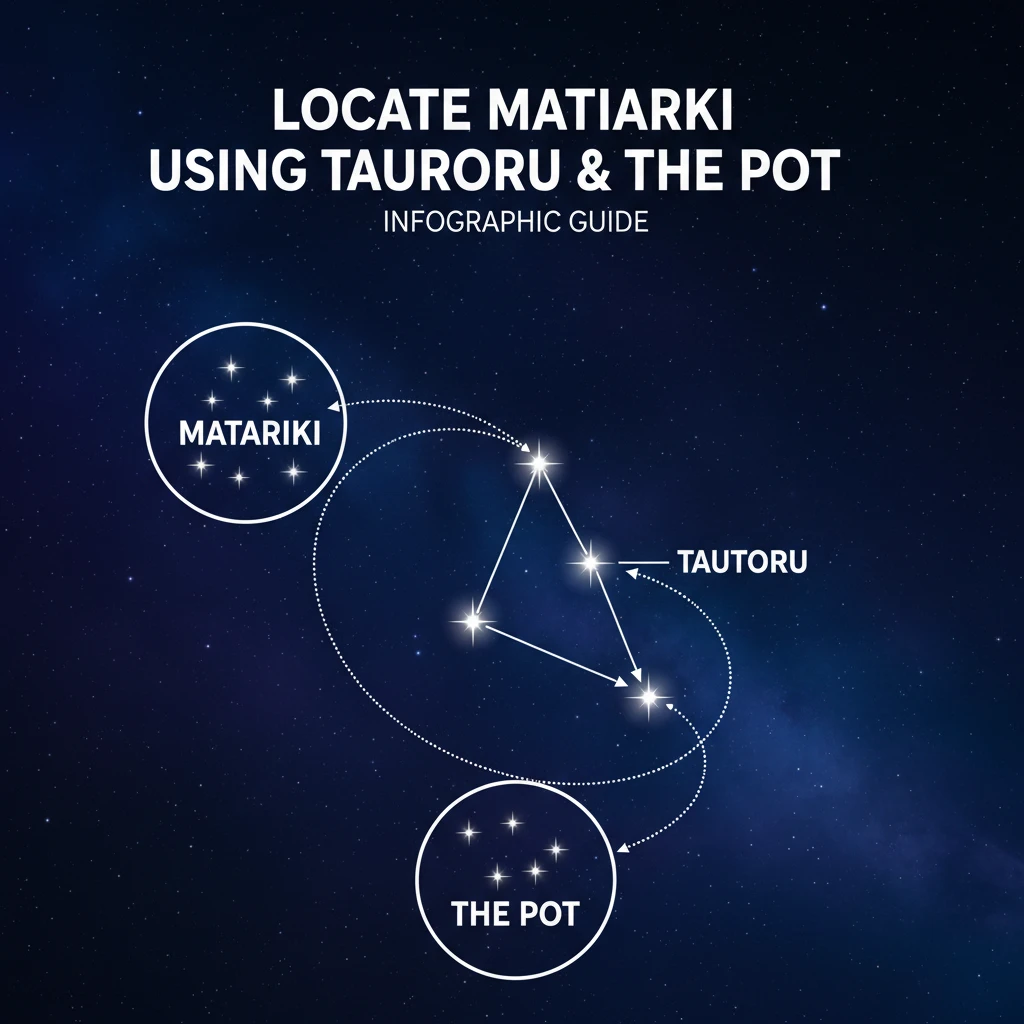
To find Matariki, first locate Tautoru (Orion’s Belt). Follow the line of the belt to the left (north) to find the triangular face of Te Kokotā (Hyades). Continue that line further left to find the small, twinkling cluster of Matariki.
Can I see Matariki with the naked eye?
Yes, Matariki is visible with the naked eye, appearing as a fuzzy cluster of stars. However, using binoculars will reveal many more stars within the cluster and enhance the viewing experience.
Why does the date of Matariki change every year?
The date changes because Matariki follows the Maramataka (Māori lunar calendar), which is based on the cycles of the moon and stars, rather than the solar Gregorian calendar.
What if it is cloudy on Matariki public holiday?
If it is cloudy on the specific public holiday, you can view Matariki in the days immediately following. The cluster remains visible in the pre-dawn sky for months, though the cultural period of celebration is typically late June to mid-July.
Which direction should I look to see Matariki?
You should look towards the Northeast horizon. The azimuth is approximately 60 to 65 degrees. Ensure you have a clear view unobstructed by tall buildings or mountains.