
Matariki legends stories are foundational narratives in Māori cosmology that explain the origins of the Pleiades star cluster. The most prominent tale describes the god of wind, Tāwhirimātea, crushing his eyes in grief over the separation of his parents, Ranginui and Papatūānuku, and casting them into the heavens to become the ‘Eyes of the God’ (Ngā Mata o te Ariki).
These ancient narratives, known as pūrākau, act as far more than simple myths; they are vessels of history, environmental science, and ethical guidance passed down through generations. By understanding these stories, we gain insight into how early Māori navigators and tohunga (experts) interpreted the cosmos to survive and thrive in Aotearoa.
The Vital Role of Oral History in Māori Culture
To fully appreciate Matariki legends stories, one must first understand the medium through which they have survived: oral tradition. In Te Ao Māori (the Māori world), history was not written in books but carved into wood, woven into tukutuku panels, and, most importantly, embedded in the memory through pūrākau (stories), waiata (songs), and whakapapa (genealogy).
Pūrākau are often mistranslated as “myths” or “legends” in a Western context, implying they are fictional. However, for Māori, these narratives represent a codified form of knowledge. They encapsulate geological events, astronomical movements, and moral codes. When an elder recounts the story of Matariki, they are not merely entertaining a crowd; they are transmitting data about the seasonal cycle, weather prediction, and resource management.
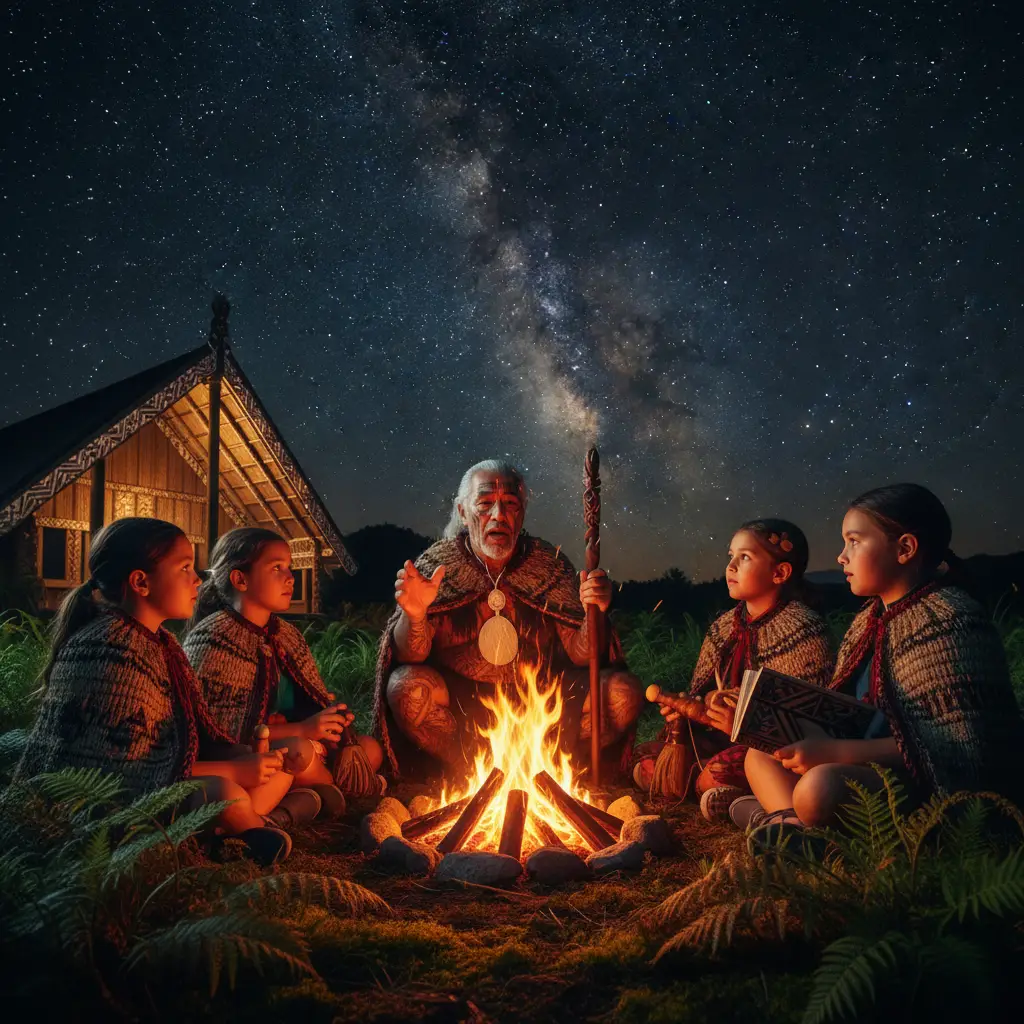
The reliability of this oral history was paramount. The survival of the tribe depended on the accurate prediction of the seasons, which was locked within these stories. Therefore, the sanctity of the narrative was strictly guarded, ensuring that the Matariki legends stories we hear today remain faithful to those told hundreds of years ago.
The Separation of Ranginui and Papatūānuku
The origins of Matariki are deeply intertwined with the Māori creation story—the separation of Ranginui (the Sky Father) and Papatūānuku (the Earth Mother). In the beginning, these primal parents were locked in a tight embrace, leaving their children to exist in cramped darkness between them.
The children, who were the atua (gods) of the natural world, longed for light and space. After much debate, Tāne Mahuta (god of the forest) successfully pushed his parents apart. He planted his head on his mother and thrust his feet against his father, tearing them asunder and allowing Te Ao Mārama (the world of light) to flood in.
This act of separation caused immense grief for the parents, manifested as rain (the tears of Ranginui) and mist (the sighs of Papatūānuku). However, the reaction of one specific brother, Tāwhirimātea, would lead directly to the creation of the Matariki cluster.
What is the Story of Tāwhirimātea and His Eyes?
The most widely known of the Matariki legends stories concerns Tāwhirimātea, the god of winds and weather. Unlike his brothers, Tāwhirimātea opposed the separation of his parents. He viewed the act as cruel and treacherous. Consumed by rage and sorrow at seeing his parents torn apart, he vowed to wage war against his brothers.
Tāwhirimātea attacked the forests of Tāne, the oceans of Tangaroa, and the crops of Rongo-mā-tāne and Haumia-tiketike. His fury was unmatched, manifesting as hurricanes, storms, and gales. However, his ultimate act of defiance and grief was directed toward the sky.
In a moment of anguish, Tāwhirimātea plucked out his own eyes. He crushed them within his hands and threw the fragments into the heavens, sticking them onto the chest of his father, Ranginui. These shards of divine vision became the star cluster we know today.
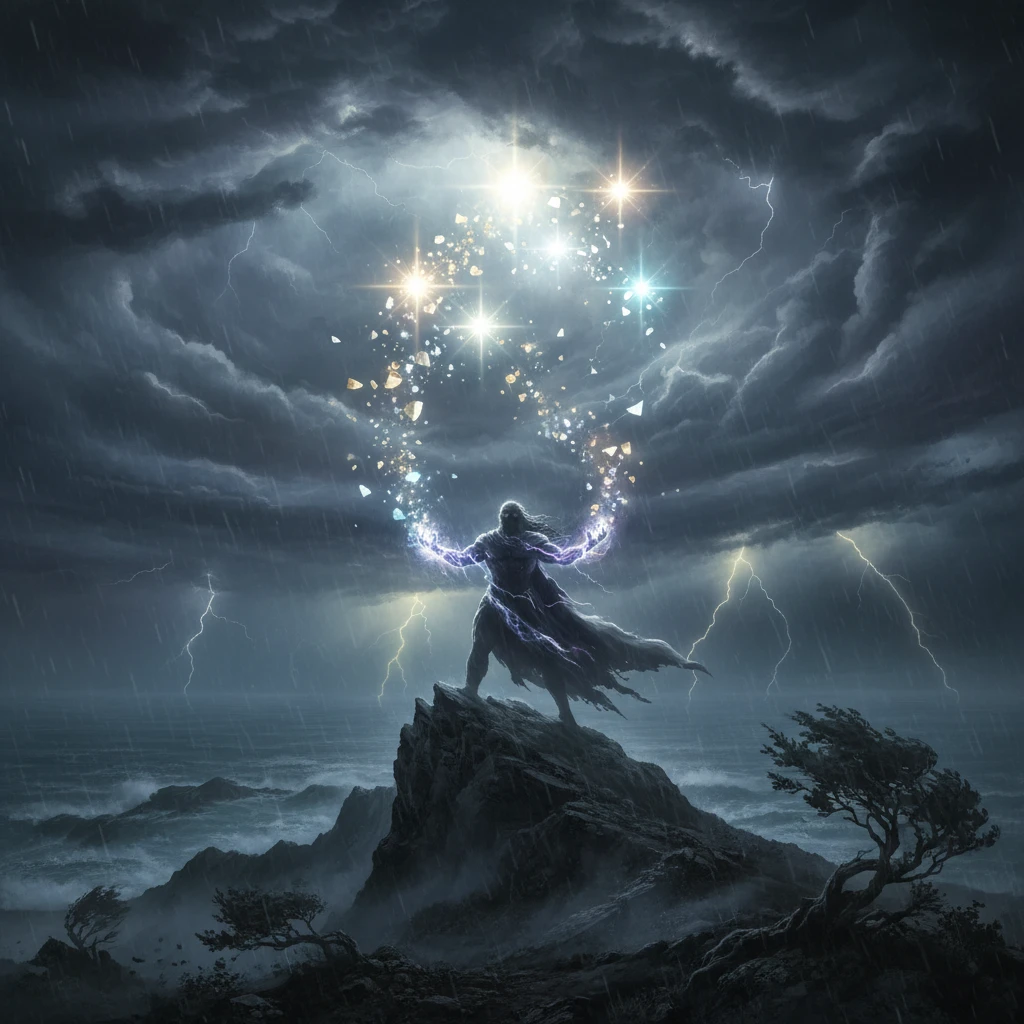
The name “Matariki” is often considered a contraction of Ngā Mata o te Ariki o Tāwhirimātea, which translates to “The Eyes of the God Tāwhirimātea.” This origin story serves as a poignant reminder of the weather’s volatility during the Māori New Year. When Matariki rises in mid-winter, the winds are often strong and the weather unpredictable—a physical manifestation of Tāwhirimātea’s blindness and lingering anger.
Matariki as the Mother and Her Children
While the story of Tāwhirimātea focuses on the creation of the cluster, another prevailing narrative focuses on the personification of the stars themselves. In many iwi (tribes), Matariki is viewed as a female entity, a mother surrounded by her daughters (or children). This perspective shifts the tone from the violence of creation to the nurturing aspect of the new year.
In this version of Matariki legends stories, the mother star, Matariki, travels across the sky with her children. Each child star has a specific domain and purpose, overseeing different aspects of the environment and human life. The brightness and clarity of each star upon their heliacal rising are read by tohunga to predict the productivity of the coming season.
The Domains of the Matariki Stars
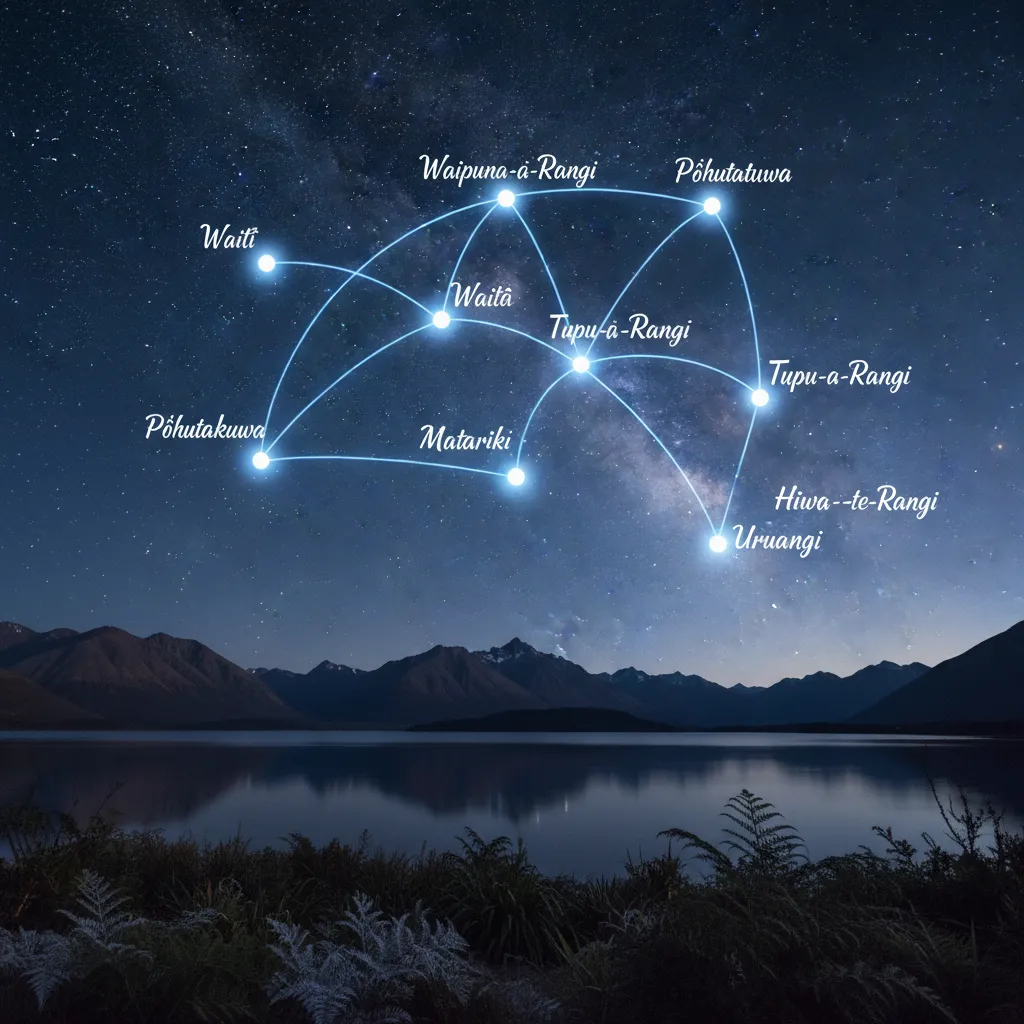
To fully understand the legends, one must know the characters involved. While some accounts list seven stars, modern revitalization of mātauranga Māori often identifies nine distinct stars in the cluster. Each star carries its own story and responsibility:
- Matariki: The mother star who signifies reflection, hope, and the health of the people. She gathers the others together.
- Pōhutukawa: Connects to those who have passed away. She carries the dead across the year, reminding us to honor our ancestors.
- Tupu-ā-nuku: Associated with everything that grows within the soil to be harvested or gathered for food.
- Tupu-ā-rangi: Associated with everything that grows up in the trees: fruits, berries, and birds.
- Waitī: Ties to fresh water bodies and the food sources within them (eels, koura).
- Waitā: Represents the ocean and salt water food sources.
- Waipunarangi: Connected to the rain.
- Ururangi: Associated with the winds.
- Hiwa-i-te-rangi: The wishing star. This is the star to which you send your dreams and desires for the coming year.
Regional Variations in Matariki Storytelling
One of the most fascinating aspects of Matariki legends stories is that they are not homogenous across all of New Zealand. The geography of Aotearoa influenced how different tribes viewed the stars.
The Seven vs. Nine Stars Debate
For many years, it was common to hear of the “Seven Sisters,” a concept likely influenced by the Greek Pleiades myth. However, many iwi have always recognized nine stars. The visibility of the stars depends heavily on local atmospheric conditions and the observer’s eyesight. In areas with pristine dark skies, nine stars were recorded. In others, only seven were clearly distinct.
Puanga vs. Matariki
In some regions, particularly in the West Coast of the North Island (Taranaki and Whanganui) and parts of the South Island, the geography makes it difficult to see Matariki clearly on the horizon at the time of the New Year. For these iwi, the star Puanga (Rigel) is the primary signal for the New Year. While they acknowledge Matariki legends stories, their primary celebrations and narratives center around Puanga, who is seen as a herald of Matariki.
How Do Myths Connect to Astronomical Facts?
The genius of Māori oral tradition lies in its scientific utility. The legends were not arbitrary; they were mnemonic devices for astronomy. The story of Tāwhirimātea’s eyes rising explains the heliacal rising of the Pleiades—the time when the cluster becomes visible on the eastern horizon just before dawn.
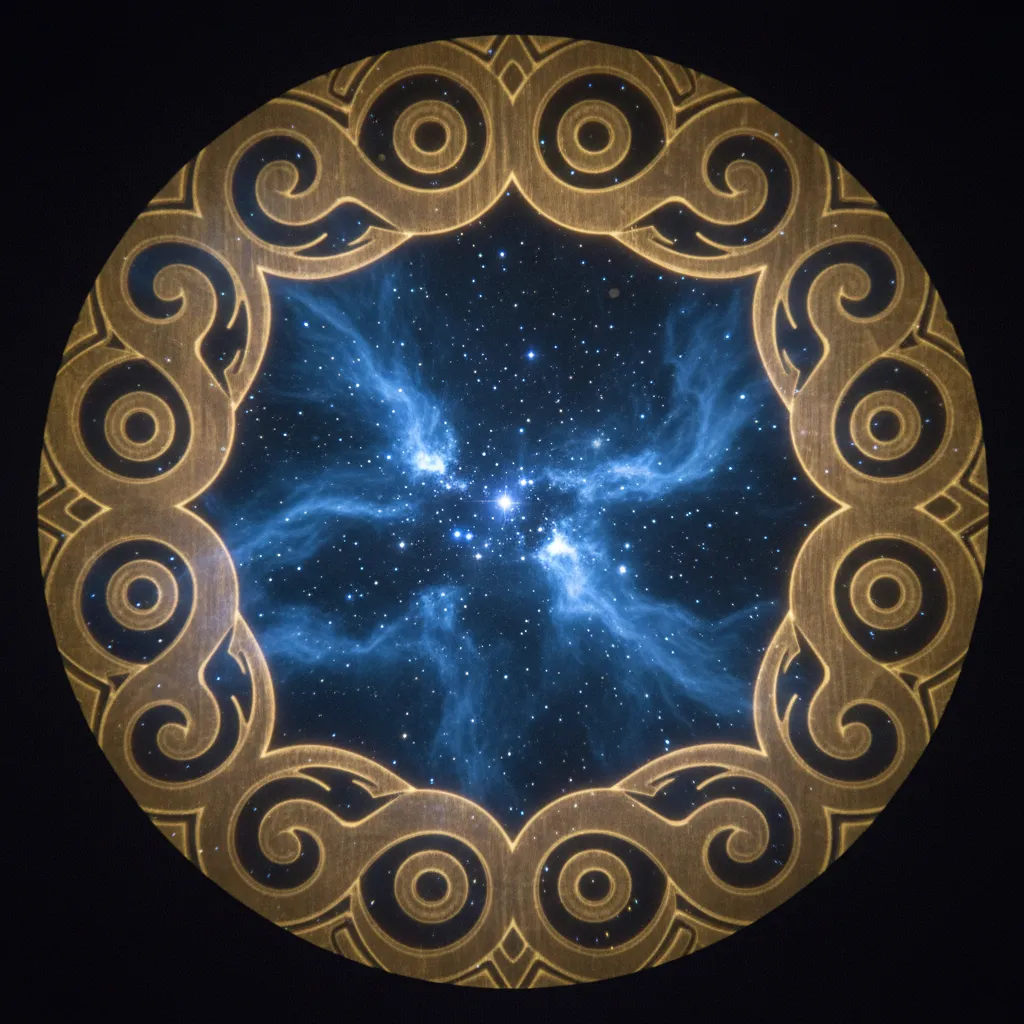
Astronomically, this occurs in mid-winter in the Southern Hemisphere. The “hazy” or “shimmering” appearance of the cluster, described in legends as the crushed fragments of eyes, corresponds to the actual visual nature of this open star cluster. The Pleiades contains hot, blue luminous stars surrounded by reflection nebulae, giving them a distinct, misty glow.
Furthermore, the attributes given to the children of Matariki align with environmental cues. For example, if the star Waipunarangi (associated with rain) appeared brighter than usual, tohunga would predict a wet winter. If Tupu-ā-nuku was dim, it might signal a poor kumara harvest, prompting the tribe to ration food supplies. Thus, the legend was the interface for a sophisticated system of environmental monitoring.
Conclusion
Matariki legends stories are a bridge between the spiritual and the physical, the past and the future. From the violent grief of Tāwhirimātea creating the “Eyes of the God” to the nurturing mother watching over the harvest, these narratives provide a rich cultural framework for the Māori New Year.
As Matariki is reclaimed and celebrated as a public holiday in Aotearoa, understanding these pūrākau ensures that the observance is not just superficial, but rooted in the deep, ancestral wisdom that guided Māori for centuries. Whether viewed as divine eyes or a family of stars, Matariki remains a beacon of remembrance, celebration, and renewal.
People Also Ask
What is the main legend behind Matariki?
The primary legend involves the god of wind, Tāwhirimātea. In his grief over the separation of his parents, Ranginui and Papatūānuku, he plucked out his own eyes, crushed them, and threw them into the sky, creating the star cluster known as Ngā Mata o te Ariki (The Eyes of the God).
Why are there sometimes 7 and sometimes 9 stars in Matariki stories?
This variation is often due to visibility and regional differences. While the Greek tradition and some Māori accounts mention seven stars (Seven Sisters), many iwi with clear views of the horizon identify nine distinct stars, each with a specific name and environmental domain.
Who is Hiwa-i-te-rangi in the Matariki legends?
Hiwa-i-te-rangi is the youngest star in the cluster, known as the “wishing star.” In Māori tradition, this is the star to which people send their aspirations, dreams, and wishes for the year ahead.
How do the Matariki legends relate to the harvest?
The legends assign specific stars to food sources (e.g., Tupu-ā-nuku for soil crops, Waitī for freshwater food). The brightness or haziness of these individual stars during the heliacal rising was interpreted as a forecast for the abundance of those specific resources in the coming season.
What role does Pōhutukawa play in the Matariki story?
Pōhutukawa is the star associated with the dead. She connects Matariki to the past, carrying the spirits of those who have died since the last rising of Matariki into the night sky, transforming them into stars.
Why is oral history considered accurate in Māori culture?
Oral history was essential for survival. Knowledge regarding navigation, food gathering, and seasonal cycles had to be preserved perfectly to ensure the tribe’s safety. Therefore, pūrākau (stories) were taught with extreme rigour and were considered sacred vessels of truth.