
Stargazing planning NZ requires a strategic approach combining location selection within International Dark Sky Sanctuaries, careful analysis of lunar phases to avoid light pollution, and preparation for volatile maritime weather. Successful astrotourism involves packing high-performance thermal layers, utilizing cloud-forecasting apps, and booking flexible itineraries during the optimal winter months for the clearest views of the Southern Cross and Galactic Core.
New Zealand is widely recognized as one of the premier astrotourism destinations on the planet. With vast swathes of the country designated as International Dark Sky Reserves, Sanctuaries, and Parks, Aotearoa offers unparalleled access to the celestial sphere. However, the very geography that creates these dramatic landscapes—an isolated island nation in the Roaring Forties—presents unique challenges for astronomers and casual stargazers alike.
To capture the Aurora Australis or witness the rise of Matariki, you cannot simply show up and look up. It requires deliberate preparation. This comprehensive guide covers the essential logistics of stargazing planning in NZ, ensuring your nocturnal adventures are safe, comfortable, and visually spectacular.
Mitigating Weather Risks in NZ
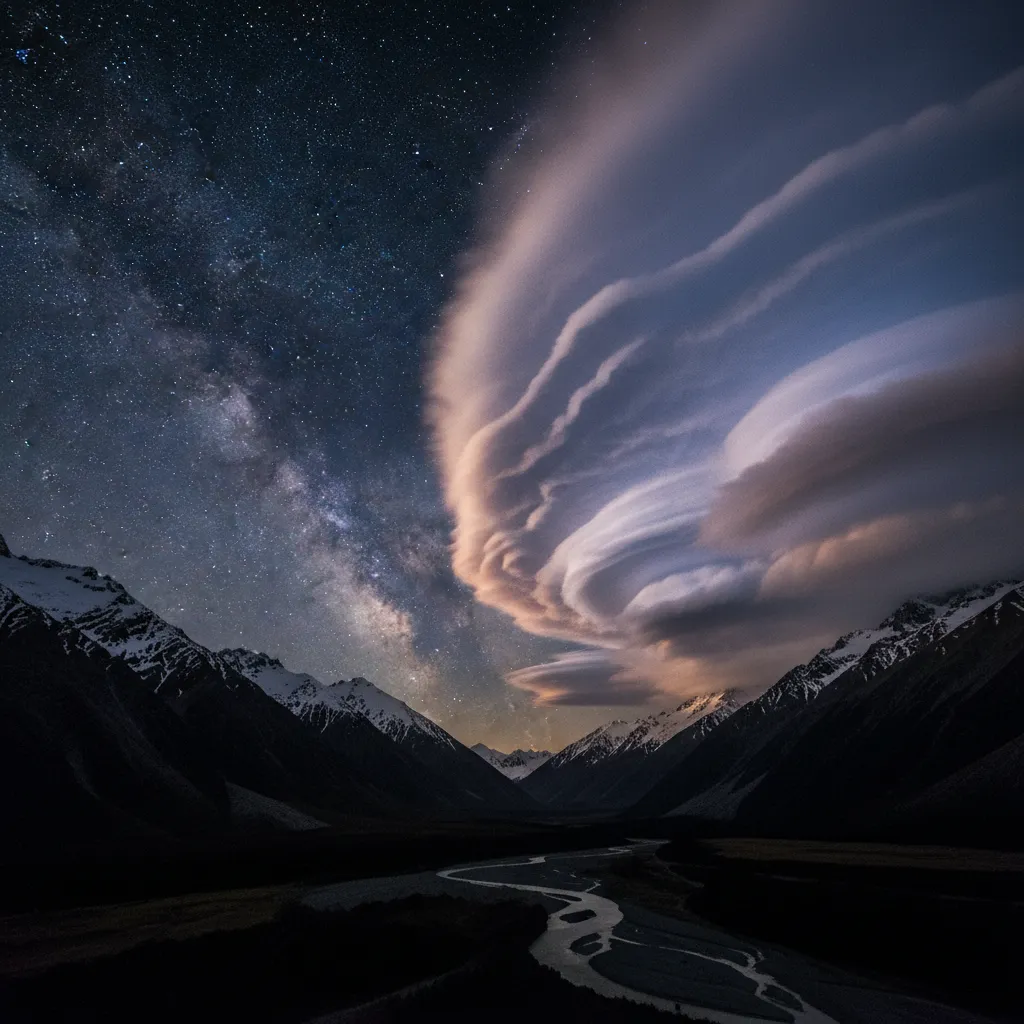
The primary adversary of any astronomer in New Zealand is the weather. The country’s long, narrow geography means weather systems move quickly across the landmass, often resulting in the colloquial “four seasons in one day.” Understanding these patterns is the first step in successful stargazing planning NZ.
What is the Best Season for Stargazing in NZ?
While stargazing is a year-round activity, the Winter months (June to August) are scientifically superior for deep-sky observation. During winter, the air is generally colder and holds less moisture, resulting in better atmospheric transparency and “seeing” conditions. Furthermore, the galactic core of the Milky Way is directly overhead, and the nights are significantly longer, providing up to 12 hours of total darkness.
However, winter brings the risk of snow and road closures. Summer (December to February) offers more comfortable temperatures, but true darkness does not fall until after 11:00 PM in the southern regions, severely limiting your viewing window.
How to Predict Cloud Cover?
Relying on standard weather apps is often insufficient for astronomy. To plan effectively, you must utilize specialized tools that monitor cloud layers (low, medium, and high) and atmospheric stability.
- MetService: The official NZ weather provider. Look specifically at the “Rural” forecast for cloud cover percentages.
- Clear Outside / Windy.com: These apps provide granular data on cloud ceilings and dew points. A low dew point depression indicates a high risk of fog or frost forming on your lens.
- The 3-Night Rule: Due to the speed of weather fronts, it is highly recommended to stay at least three nights in a Dark Sky location (such as Tekapo or Twizel). This statistically increases your chances of getting at least one perfectly clear night by over 70%.
Essential Gear for Astrotourists
The difference between a miserable night and a magical experience often comes down to equipment. You do not need a five-thousand-dollar telescope to enjoy the sky, but you do need the right clothing and support gear.
What Clothing is Required for Night Viewing?
Temperatures in the Mackenzie Basin and Central Plateau can drop well below freezing at night, even in shoulder seasons. Standing still while observing generates no body heat, making you susceptible to hypothermia.
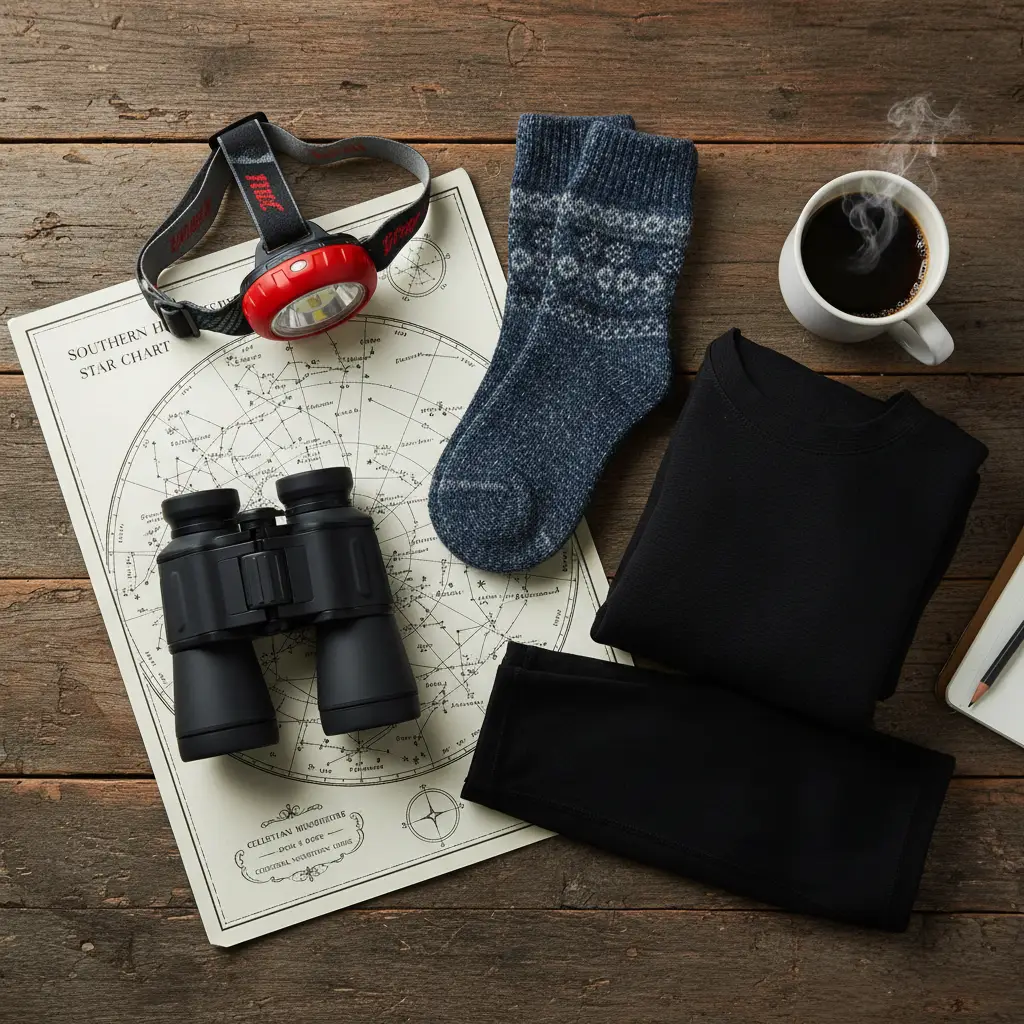
- Base Layers: Merino wool is non-negotiable in New Zealand. It wicks moisture and retains heat even when damp. Avoid cotton entirely.
- Insulation: A high-quality down jacket (puffer) is essential.
- Extremities: The ground sucks heat from your feet. Wear heavy woolen socks and insulated boots. Fingerless gloves with a mitten flap allow you to adjust camera settings without exposing your skin to the biting frost.
Binoculars vs. Telescopes: Which to Bring?
For most travelers, a telescope is too bulky to transport. Fortunately, the skies in NZ are so dark (often reaching Class 1 or 2 on the Bortle Scale) that binoculars are an incredible tool. A pair of 10×50 binoculars will reveal the Jewel Box Cluster, the Omega Centauri globular cluster, and the moons of Jupiter.
Pro Tip: Ensure you bring a Red Light Headlamp. White light destroys human night vision, which takes 20–30 minutes to adapt. A red light allows you to navigate and read star charts without resetting your eyes’ sensitivity to faint starlight.
Astrophotography Basics for the Southern Sky
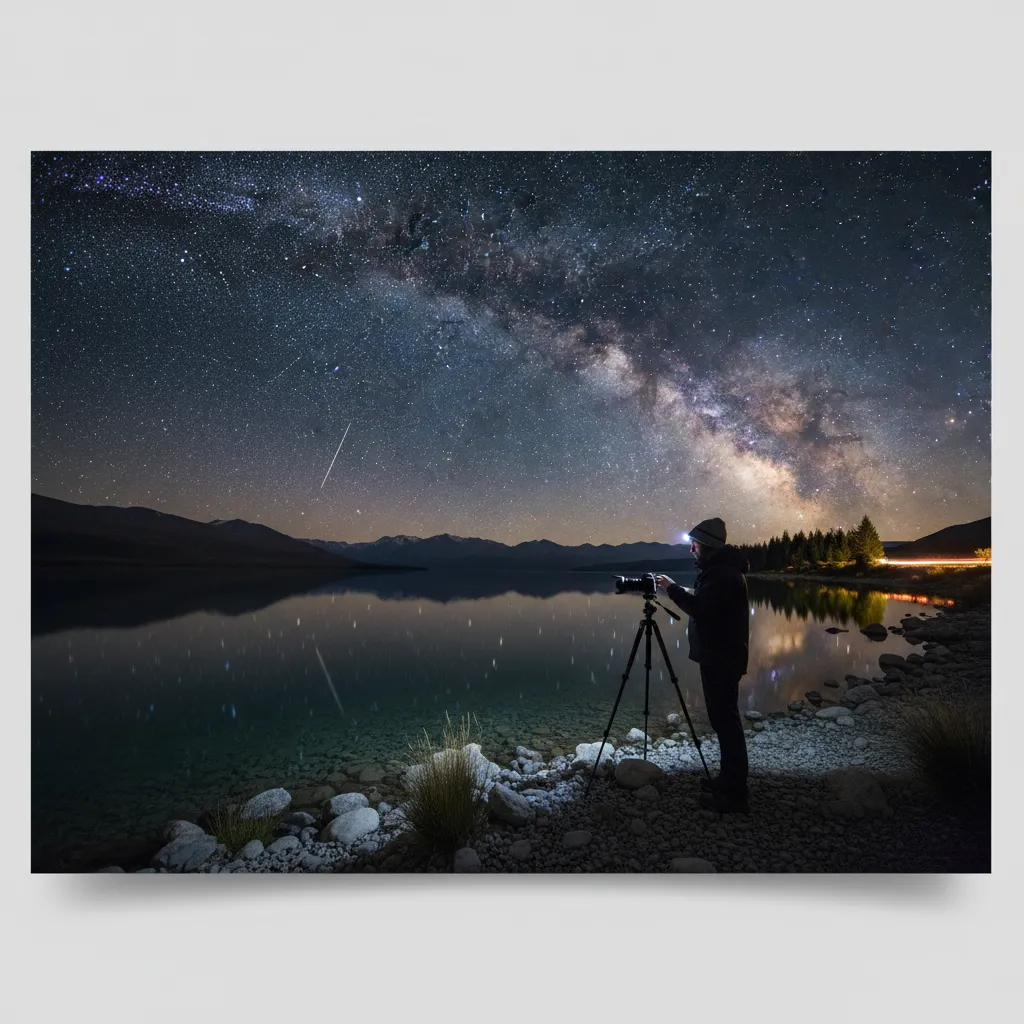
Capturing the Milky Way arching over Aoraki/Mt Cook is a bucket-list item for many photographers. The Southern Hemisphere offers targets not visible in the north, such as the Magellanic Clouds (dwarf galaxies orbiting the Milky Way).
What are the Best Camera Settings for Stars?
To photograph the stars without star trails (unless intended), you must balance exposure time with the rotation of the earth.
- Manual Mode: You must shoot in Manual (M) with focus set to Manual.
- Aperture: Open your lens as wide as possible (f/2.8 or lower is ideal).
- ISO: Start between ISO 1600 and 3200. Modern cameras can handle this well.
- Shutter Speed (The 500 Rule): To avoid trails, divide 500 by your lens focal length. For a 24mm lens, 500 / 24 = roughly 20 seconds. Do not expose longer than this.
- Format: Always shoot in RAW to capture the dynamic range required for post-processing.
Composition Tips
A photo of just stars can be boring. The secret to great NZ astrophotography is the foreground. Utilize the silhouette of the Southern Alps, the Church of the Good Shepherd, or the calm waters of Lake Wakatipu to anchor your image. Light painting—using a dim flashlight to briefly illuminate a tree or rock in the foreground—can add depth to the image.
Booking Tours and Experiences
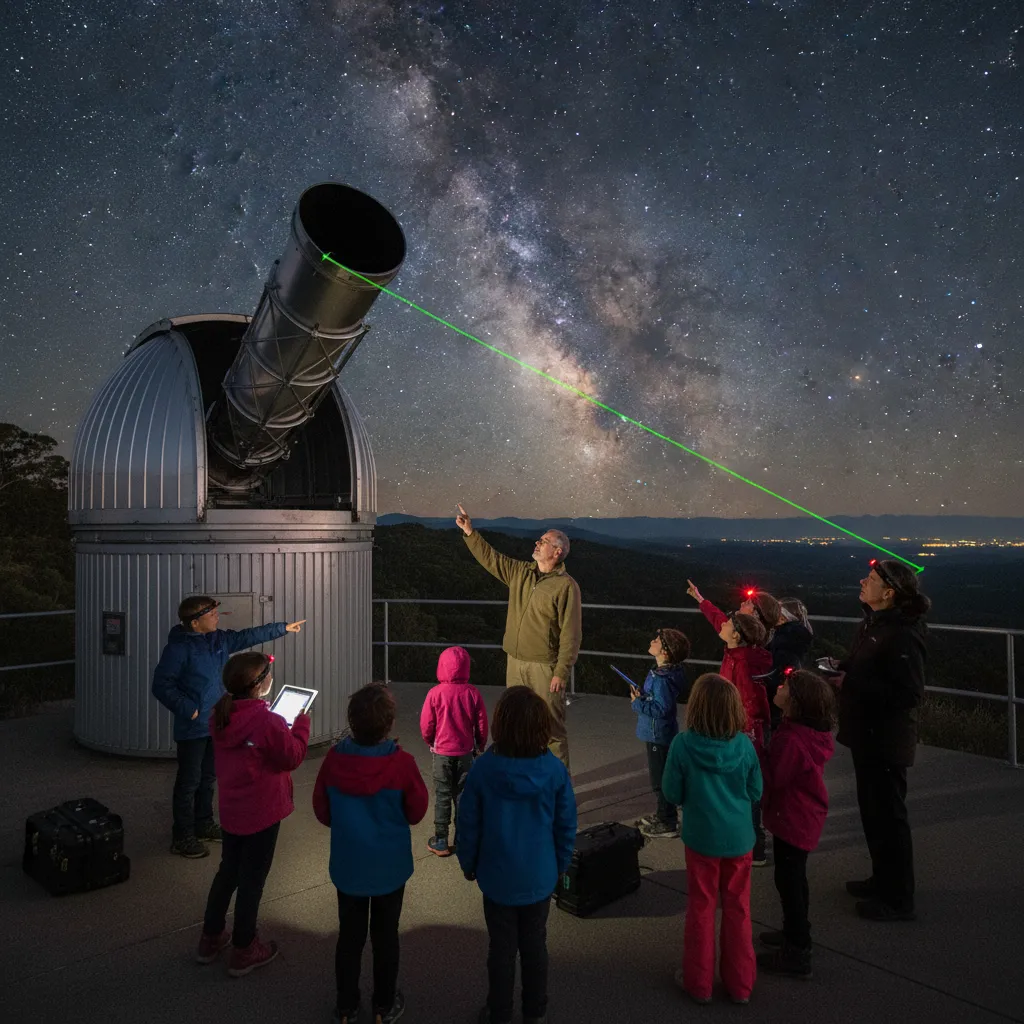
While self-guided viewing is rewarding, booking a professional tour provides access to high-powered telescopes and expert knowledge. This is particularly relevant regarding Matariki, the Māori New Year, which is marked by the rising of the Pleiades star cluster in mid-winter.
Where are the Best Dark Sky Sanctuaries?
New Zealand hosts several accredited Dark Sky places. Choosing accommodation within these zones is the cornerstone of stargazing planning NZ.
- Aoraki Mackenzie International Dark Sky Reserve: The largest in the Southern Hemisphere. Includes Lake Tekapo, Twizel, and Mt Cook. This is the heart of astrotourism.
- Aotea / Great Barrier Island: An International Dark Sky Sanctuary. Being off-grid, the light pollution is virtually non-existent.
- Rakiura / Stewart Island: The southernmost Dark Sky Sanctuary. This is your best location for spotting the Aurora Australis due to its high latitude.
- Wairarapa Dark Sky Reserve: A newer reserve accessible from Wellington, offering excellent accessibility for North Island travelers.
Understanding Matariki and Cultural Astronomy
In New Zealand, the sky is not just a scientific curiosity; it is a cultural narrative. Matariki (the Pleiades) signifies a time of remembrance, celebrating the present, and looking to the future. Many tour operators now offer specific Matariki experiences that blend astronomical science with Māori mātauranga (knowledge), explaining how celestial navigation allowed Polynesians to voyage across the Pacific to Aotearoa.
When booking, look for operators that are Qualmark Gold accredited, ensuring sustainable tourism practices that protect the very dark skies you are coming to see.
People Also Ask
When is the best time to see the Milky Way in New Zealand?
The core of the Milky Way is most visible during the New Zealand winter months (June to August). During this time, the galactic center rises early in the evening and stretches across the sky, offering the brightest and most dramatic views.
Can I see the Aurora Australis from the North Island?
While possible during intense solar storms (G4 or G5 class), it is rare. For reliable aurora viewing, you should plan your trip to the lower South Island, specifically Stewart Island (Rakiura), The Catlins, or Lake Tekapo, and travel during the equinoxes or winter.
Do I need a 4WD vehicle for stargazing in NZ?
Generally, no. Most major Dark Sky locations like Lake Tekapo and the Mt John Observatory access roads are accessible by standard vehicles. However, if you plan to venture into remote back-country areas or travel during winter snow conditions, a 4WD and snow chains are highly recommended.
What is the Bortle Scale and what is NZ’s rating?
The Bortle Scale measures the brightness of the night sky. A Class 1 is the darkest possible sky, while Class 9 is a city center. Much of the Aoraki Mackenzie Reserve is Class 1 or 2, meaning the Milky Way casts a shadow and thousands of stars are visible to the naked eye.
Is it worth booking a tour or can I go alone?
Going alone is free and flexible, but a tour offers access to 14-inch+ telescopes and expert guides who can explain what you are seeing. For beginners, a tour is recommended for at least one night to learn the southern constellations, after which you can practice on your own.
How does the moon phase affect stargazing planning?
The moon is the biggest source of natural light pollution. You should plan your trip during the New Moon phase (or 3-4 days before/after). A Full Moon washes out faint stars and the Milky Way, significantly reducing the quality of the experience.