
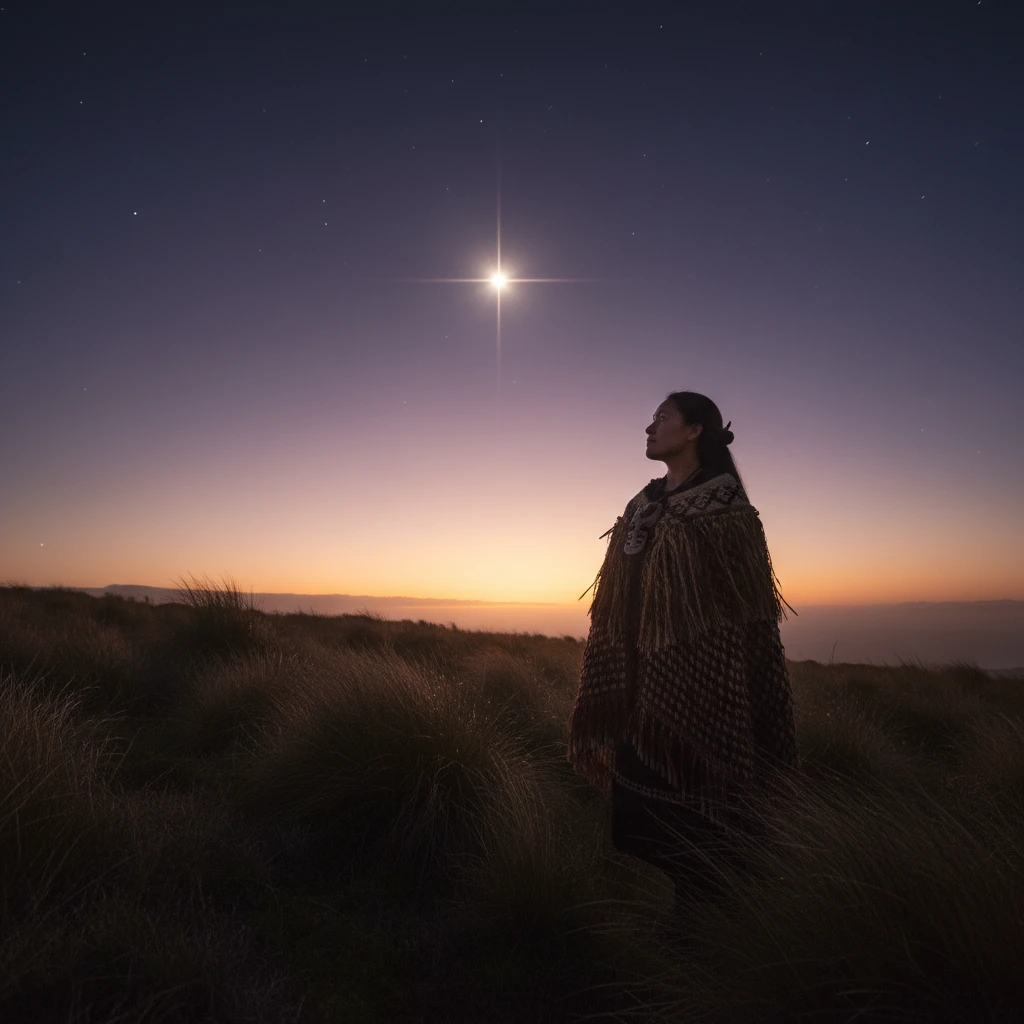
Hiwa-i-te-rangi is the youngest of the nine stars in the Matariki cluster (Pleiades) and is revered in Māori tradition as the “wishing star.” It represents the promise of a prosperous year ahead, carrying the aspirations, dreams, and desires of the people. During the Māori New Year, observers look to Hiwa-i-te-rangi to set intentions and cast their wishes into the heavens for the future.
Understanding the Matariki Cluster and Its Duality
The appearance of Matariki (the Pleiades star cluster) in the pre-dawn sky of mid-winter marks the Māori New Year. While many are familiar with the seven visible stars, modern revitalization of Māori astronomy often recognizes nine distinct stars, each holding dominion over a specific environmental or spiritual aspect of life. Within this celestial family, two stars stand in profound opposition yet maintain a necessary balance: Pōhutukawa and Hiwa-i-te-rangi.
These two stars represent the cyclical nature of time and existence. Matariki is not merely a celebration of the harvest; it is a solemn period of transition. It requires a comprehensive acknowledgment of what has been lost before one can embrace what is to gain. This duality—the relationship between death and life, the past and the future—is anchored by Pōhutukawa and the Hiwa-i-te-rangi wishing star.
To fully engage with the spirit of Matariki, one must understand that these stars are not passive lights in the sky. They are environmental indicators and spiritual conduits. The brightness, color, and clarity of these stars were historically read by tohunga (experts) to predict the fortunes of the coming year, influencing everything from crop planting schedules to social planning.

What is the Pōhutukawa Star?
Pōhutukawa is the star connected to those who have passed away. It is often the oldest sibling in the narrative of the cluster, carrying the heavy burden of memory and mourning. Its name is inextricably linked to the native Pōhutukawa tree (Metrosideros excelsa), specifically the ancient tree that clings to the cliffs at Cape Reinga (Te Rerenga Wairua).
The Connection to the Afterlife
In Māori mythology, when a person dies, their spirit travels up the country to the far north, to Te Rerenga Wairua (the leaping place of spirits). There, the spirit descends the roots of the ancient Pōhutukawa tree into the underworld to return to their ancestral homeland, Hawaiki. The star Pōhutukawa serves as the celestial guardian of this journey.
As the star of the dead, Pōhutukawa prompts the living to remember those who have died since the last appearance of Matariki. It is a vessel for our grief and a reminder of our whakapapa (genealogy). This star ensures that the memories of loved ones are preserved and honoured before their spirits are released to become stars in the sky themselves (becoming kui or koro in the heavens).
Why Remembrance Comes First
It is culturally significant that one acknowledges Pōhutukawa before turning to Hiwa-i-te-rangi. You cannot build a stable future without honoring the foundation of the past. By taking the time to weep, remember, and acknowledge the void left by those who have passed, we clear the emotional space required to welcome the new year with an open heart. Pōhutukawa teaches us that grief is a natural, necessary season of life, just as winter is to the earth.
What is the Hiwa-i-te-rangi Wishing Star?
Hiwa-i-te-rangi is the youngest star in the cluster and holds a special place in the hearts of many as the “wishing star.” The name can be translated to mean “Hiwa in the sky,” where “Hiwa” implies something that is vigorous of growth or prosperous. Unlike the other stars in the cluster that are associated with specific environmental domains—such as Waitī (fresh water), Waitā (salt water), or Tupu-ā-nuku (food from the earth)—Hiwa-i-te-rangi is associated with the abstract concepts of desire, aspiration, and the future.
The Guardian of Aspirations
Hiwa-i-te-rangi is the star to which Māori would send their wishes for the year ahead. This practice aligns with the universal human experience of looking to the heavens for hope—similar to the Western nursery rhyme “Star light, star bright.” However, in the context of Matariki, the Hiwa-i-te-rangi wishing star is deeply spiritual. It is believed that this star grants the desires of the heart that will lead to a prosperous and thriving year.
When the cluster rises, if Hiwa-i-te-rangi appears bright and clear, it is interpreted as a sign that the coming year will be productive and that goals will be achieved. If it appears hazy or dim, it suggests that the year may require extra effort and resilience to achieve one’s dreams.
Rituals for Grieving and Letting Go
Engaging with the energy of Pōhutukawa involves specific rituals designed to process grief. In modern celebrations of Matariki, these traditions provide a powerful framework for mental and emotional well-being.
The Calling of Names
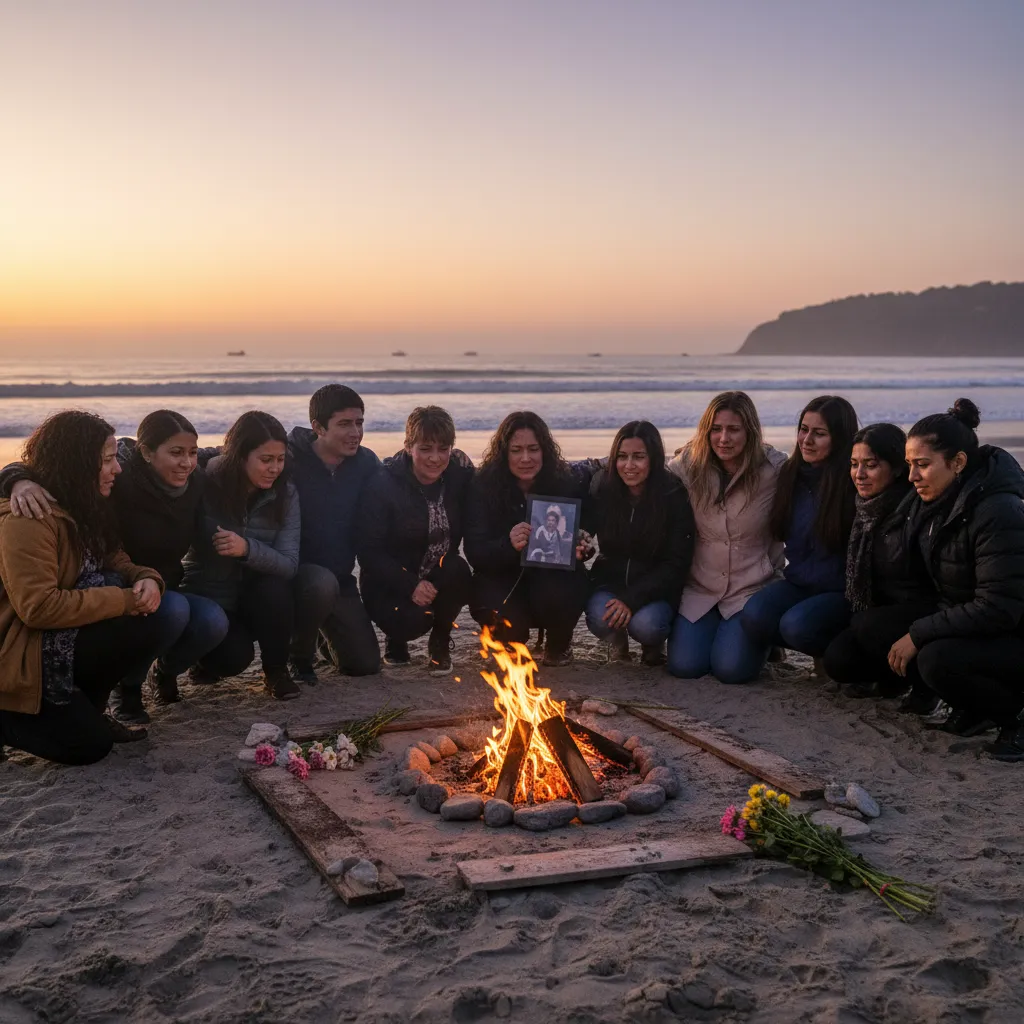
One of the most poignant rituals is the recitation of the names of those who have passed in the previous year. traditionally, this was done when the cluster was first sighted. Families gather, often on a hilltop or a place with a clear view of the horizon, and call out the names of their loved ones to the star Pōhutukawa. This act is not just about sadness; it is a formal farewell. It is a way of saying, “We remember you, we love you, and we release you to the stars.”
Te Whare Tapere (House of Entertainment)
While Pōhutukawa involves weeping (te tangi), the process of letting go also involves celebrating the lives lived. Sharing stories, songs (waiata), and memories of the deceased transforms the grief into a celebration of legacy. This shift from heavy mourning to the celebration of life helps lift the tapu (sacred restriction) of death, allowing the living to return to the state of noa (common/free).
How to Set Goals with Hiwa-i-te-rangi
Once the past has been honored through Pōhutukawa, the focus shifts to the Hiwa-i-te-rangi wishing star. Setting goals during Matariki is distinct from the Western concept of “New Year’s Resolutions.” It is less about self-correction and more about manifestation and vigorous growth.
The Practice of ‘Manako’
The Māori word for a wish or desire is manako. To send a wish to Hiwa-i-te-rangi, one must hold the desire firmly in their mind and project it towards the star. This is often done silently, but it can also be spoken aloud.
Steps to utilize the energy of Hiwa-i-te-rangi:
- Observation: Rise early before the sun (pre-dawn) during the Matariki period to view the stars. Locate Hiwa-i-te-rangi within the cluster.
- Reflection: Consider what “vigorous growth” looks like for you in the coming year. Is it health? Whānau (family) unity? Career progression? Cultural learning?
- Projection: Visualize your goal as if it has already happened. Send this thought to the star.
- Action: In Māori thought, the spiritual and physical are intertwined. A wish sent to Hiwa-i-te-rangi must be backed by earthly action (mahi).
Planting the Seeds of the Future
Just as Matariki signals the time to prepare the soil for planting crops, it is the time to prepare the “soil” of your life for new ventures. Writing down your wishes or discussing them with trusted whānau can help solidify these intentions. Some communities plant trees during Matariki, assigning a specific hope or wish to each tree, grounding their celestial aspirations in the earth.

Integrating the Lessons: From Grief to Growth
The beauty of the Matariki tradition lies in the interplay between Pōhutukawa and Hiwa-i-te-rangi. They teach us that we cannot selectively numb our emotions. To truly feel the joy and hope that Hiwa-i-te-rangi offers, we must be willing to feel the sorrow that Pōhutukawa represents.
In a modern context, this framework offers a holistic approach to mental health and personal development. Rather than rushing constantly toward the future, Matariki asks us to pause. It asks us to look back with gratitude and sadness, and then look forward with hope and determination. By balancing the memory of where we come from (Pōhutukawa) with the vision of where we are going (Hiwa-i-te-rangi), we ground ourselves in the present.
As you observe Matariki this year, take a moment for both. Cry for those you have lost, and then, with a clear heart, cast your wishes high to Hiwa-i-te-rangi. The stars are listening.
People Also Ask
What does Hiwa-i-te-rangi mean in English?
Hiwa-i-te-rangi roughly translates to “Hiwa in the sky.” The word “Hiwa” refers to vigorous growth, prosperity, and the energy of life. Therefore, the star represents the promise of a prosperous season and is the focal point for aspirations and wishes.
How do you find the Hiwa-i-te-rangi wishing star?
To find Hiwa-i-te-rangi, you must first locate the Matariki cluster in the pre-dawn sky (usually in the northeast). Hiwa-i-te-rangi is the youngest star and is typically identified as one of the fainter stars located at the top or outer edge of the cluster, distinct from the central stars like Matariki (Alcyone).
What is the difference between Pōhutukawa the star and the tree?
Pōhutukawa the star is a celestial body within the Matariki cluster associated with the dead. The Pōhutukawa tree is a physical native tree of New Zealand. They are spiritually connected; the spirit of the deceased is said to travel down the roots of the Pōhutukawa tree at Cape Reinga, and the star Pōhutukawa guides them in the afterlife.
Why is Matariki important for mental health?
Matariki encourages a cycle of reflection, release, and renewal. By providing a dedicated time to process grief (through Pōhutukawa) and a time to foster hope and set goals (through Hiwa-i-te-rangi), it supports emotional regulation, community connection, and psychological closure.
What are the 9 stars of Matariki?
The nine stars are: Matariki (the mother), Pōhutukawa (the dead), Tupu-ā-nuku (food from the earth), Tupu-ā-rangi (food from the sky), Waitī (fresh water), Waitā (salt water), Waipuna-ā-rangi (rain), Ururangi (wind), and Hiwa-i-te-rangi (wishes/growth).
How do you celebrate Matariki traditionally?
Traditional celebrations involve viewing the stars before dawn, reciting whakapapa (genealogy), mourning the dead (wehenga), sharing kai (food) to bring people back to a state of noa, and engaging in wananga (learning) and planning for the year ahead.