
To purchase a Maramataka wall planner is to invest in a time-management system based on the Māori lunar calendar, designed to align daily activities with environmental cycles. These planners feature detailed guides on moon phases, planting times, fishing conditions, and energy levels, offering a holistic approach to scheduling that integrates indigenous wisdom with modern organization.
What is a Maramataka Wall Planner?
When you decide to purchase a Maramataka wall planner, you are acquiring more than a simple grid of dates. You are engaging with an ancestral system of timekeeping that observes the movements of the moon (Marama) and stars to dictate the rhythm of life. Unlike the Gregorian calendar, which is solar-based and relatively static, the Maramataka is dynamic, shifting with the natural environment to highlight the best times for productivity, rest, and gathering resources.
For centuries, Māori have utilized this system to ensure survival and prosperity. Today, the resurgence of this knowledge allows individuals and organizations to purchase Maramataka wall planners to better align their workflow with natural energy peaks and troughs. Whether you are a gardener looking to optimize crop yield, a fisherman seeking the best catch, or a corporate team aiming to improve mental well-being by avoiding burnout during low-energy phases, these planners serve as an essential daily guide.
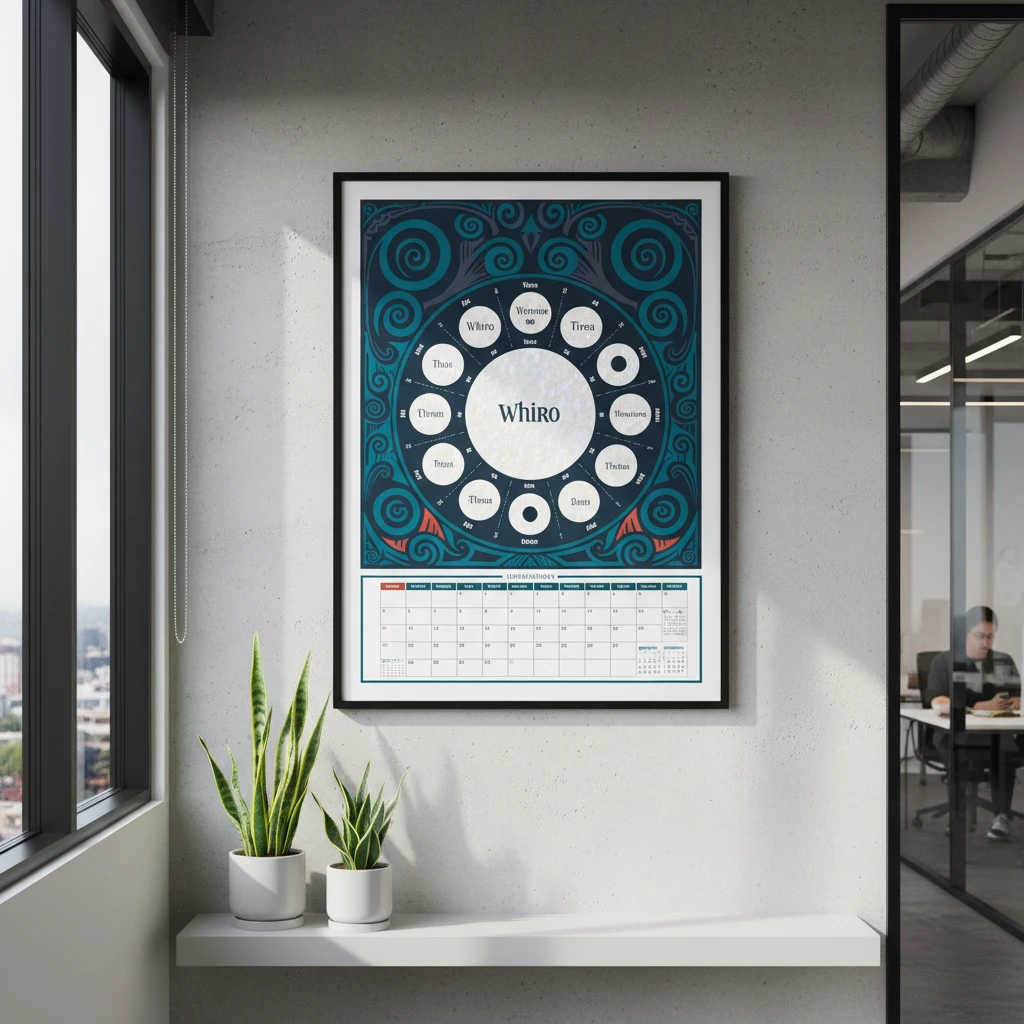
Key Features to Look For When You Purchase Maramataka Wall Planners
Not all lunar calendars are created equal. To ensure you receive the maximum value and cultural integrity from your purchase, it is crucial to identify specific features that distinguish a high-quality Maramataka wall planner from a generic decorative item.
Accurate Moon Phase Visualization
The core of the Maramataka is the moon. When you browse to purchase a planner, look for clear, distinct visual representations of the moon phases. It should not just list the phase name; it should show the shape and illumination of the moon. This visual cue is vital for quick reference. High-end planners will depict the subtle differences between phases like *Tamatea a Ngana* and *Tamatea a Hotu*, helping users learn to identify these phases in the actual night sky.
Regional Specificity (Rohe)
One of the most important aspects to consider is the tribal region, or *rohe*, the calendar is based on. The Maramataka can vary slightly between iwi (tribes) due to geographical differences in how the moon affects local tides and flora. While many planners available for purchase offer a “universal” or widely accepted version, some are tailored to specific coasts. Checking the product description for tribal affiliation or regional focus ensures the planting and fishing guides are accurate for your location.
Bilingual Text (Te Reo Māori and English)
An authentic Maramataka planner is a tool for language revitalization. The best options available for purchase prioritize Te Reo Māori names for the days, months, and phases, often providing English translations or keys in a sidebar. This dual-language approach facilitates learning and ensures that the cultural context of the words—which often contain instructions within their names—is preserved.
Understanding Lunar Phases, Planting, and Fishing Guides
The primary driver for many who purchase Maramataka wall planners is the practical guidance they offer regarding food sovereignty and resource gathering. This section of the planner is often the most detailed and provides actionable insights for every day of the lunar month.
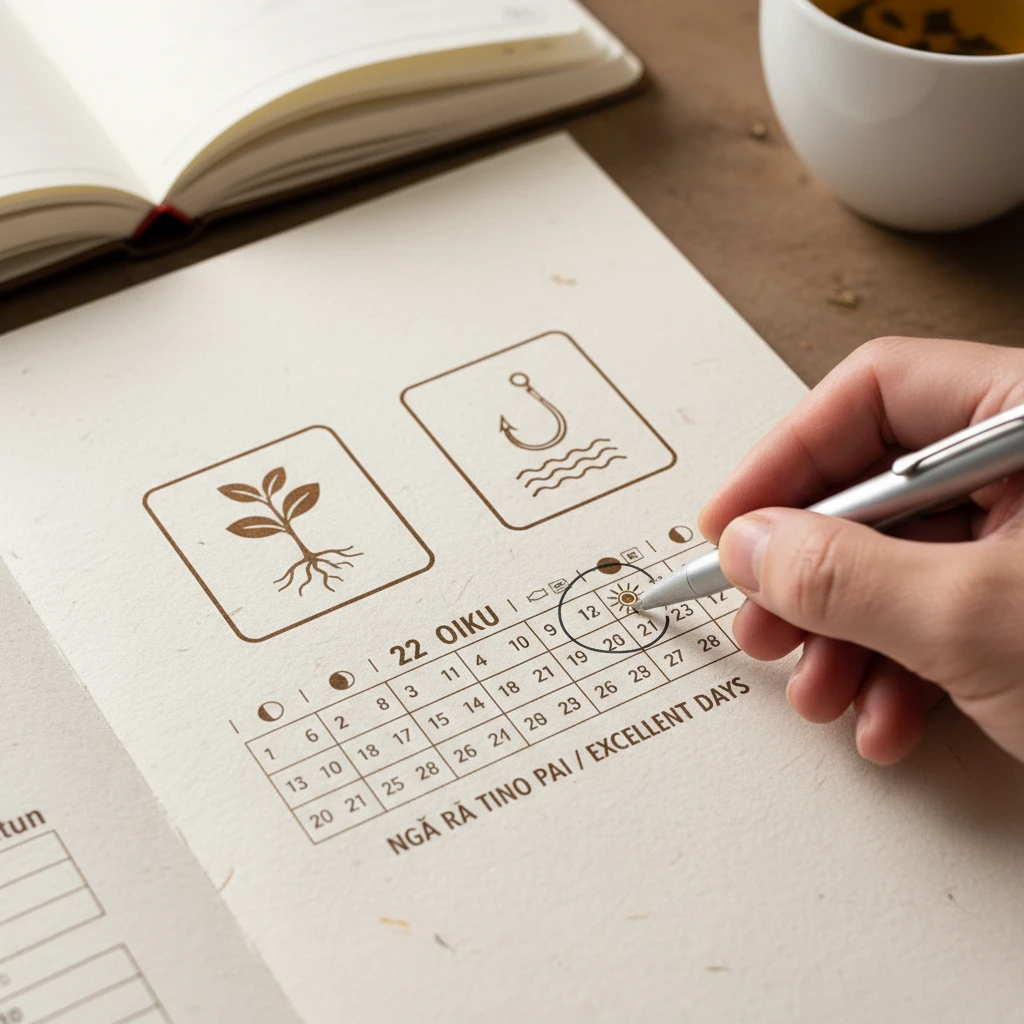
Gardening by the Moon: The Maramataka divides days into categories suitable for planting. For example, during the *Mawharu* phase, the earth is considered fruitful, making it an ideal time to plant crops that grow above the ground. Conversely, the *Korekore* days are generally seen as times to rest the soil and refrain from planting. A high-quality wall planner will use intuitive icons—such as a kumara or a leaf—to signal these days instantly. This feature is indispensable for home gardeners and permaculture enthusiasts who wish to work with nature rather than against it.
Fishing Optimization: Similar to planting, the Maramataka dictates the best times for fishing (hī ika). The gravitational pull of the moon affects tides and fish behavior. Planners often highlight days like *Tangaroa*, which are renowned for being productive fishing days. When you purchase a planner with these specific guides, you are effectively buying a forecast that helps you plan your recreational or gathering trips for maximum success.
Design Variations and Size Options
The market for Maramataka planners has expanded significantly, offering a variety of formats to suit different spaces and needs. When preparing to purchase, consider where the planner will be displayed and how it will be used.
A3 vs. A2 and Large Format Wall Planners
A3 Size: This is the standard size for most home kitchens or personal offices. It is large enough to read the text clearly but small enough to fit on a fridge or a pinboard. This is the most common volume purchase for families.
A2 and A1 Sizes: For schools, community halls, and corporate boardrooms, larger formats are recommended. These sizes allow for group viewing and often include more whitespace for writing team notes or scheduling specific events directly onto the lunar dates. If you are purchasing for a team, the A2 size ensures that the educational content regarding the moon phases remains legible from a distance.
Laminated vs. Uncoated Paper
Laminated: If you intend to use the planner in a high-traffic area, a kitchen, or a garden shed, a laminated version is a wise purchase. It allows you to use whiteboard markers to add and erase tasks as the month progresses, making the planner a reusable tool year after year if it is a perpetual design.
Uncoated/Matte: For those who prefer a tactile experience and wish to write with pencil or ink, uncoated high-GSM paper is the preferred choice. These planners often feature high-quality art prints and look more like a piece of wall art than a piece of stationery. They are popular as gifts during Matariki.
Educational Content and Cultural Safety
In the context of Aotearoa New Zealand’s growing embrace of indigenous knowledge, purchasing a Maramataka wall planner is a step toward cultural competency and safety. These planners serve as passive educational tools that normalize the use of Te Reo Māori and Māori concepts of time.
Many planners include sidebars or supplementary booklets that explain the *Atua* (deities) associated with different phases, or the connection between the *Matariki* star cluster and the New Year. For workplaces, having this visible on the wall signals a commitment to biculturalism. It prompts conversations and learning opportunities that might not otherwise occur.
Furthermore, the Maramataka introduces the concept of *He Ara Wairua* (spiritual pathways). It categorizes days not just for physical work, but for mental state. High-energy days are for action and meetings; low-energy days (like *Whiro*) are for planning, reflection, and rest. By purchasing and utilizing this tool, organizations can foster a more empathetic and sustainable work environment that respects the natural fluctuations in human energy.

Bulk Discounts for Schools and Offices
As the Matariki public holiday approaches each year, the demand for these planners spikes. Many suppliers offer tiered pricing structures for those looking to purchase Maramataka wall planners in bulk. This is particularly relevant for:
- Schools and Kura: Equipping every classroom with a planner ensures a consistent curriculum resource across the institution. Bulk purchasing often comes with accompanying teacher resource kits or lesson plans.
- Corporate Gifting: Companies are increasingly moving away from generic hampers and towards meaningful, culturally relevant gifts. Purchasing planners for clients or staff demonstrates a thoughtful engagement with New Zealand culture.
- Government Agencies: With mandates to improve cultural capability, government departments are major purchasers. Bulk orders allow for custom branding or specific educational inserts relevant to the department’s function.
When looking to buy in bulk, it is advisable to contact suppliers 3-4 months prior to Matariki (usually June/July) to secure stock, as print runs are often limited and sell out quickly.
How to Verify Authenticity Before Buying
With the commercialization of Matariki, there is a risk of cultural appropriation or low-quality imitations entering the market. To ensure you purchase a Maramataka wall planner that supports Indigenous artists and contains accurate knowledge, follow these verification steps:
Check the Creator’s Whakapapa
Authentic Maramataka planners are created by Māori artists, astronomers, or cultural experts. Look for an “About the Author” section. Legitimate sellers will proudly display their tribal affiliations (iwi/hapū) and their background in studying the Maramataka. Purchasing from Māori-owned businesses ensures the revenue supports the communities that hold this knowledge.
Review the Knowledge Source
Does the planner cite where the lunar information comes from? Whether it is based on the teachings of a specific expert (like Dr. Rangi Matamua) or a specific tribal variance, this attribution is a marker of quality and respect. Avoid generic “Moon Calendars” that do not reference specific Māori knowledge systems.
Look for “Toi Iho” or Similar Trademarks
While not present on every product, trademarks that certify indigenous authenticity can be a helpful guide. However, many reputable small Māori businesses may not have official certification but are well-regarded in the community. Checking social media reviews and community feedback is a reliable way to gauge authenticity before you purchase.
Frequently Asked Questions
What is the difference between a standard calendar and a Maramataka planner?
A standard calendar follows the solar Gregorian year (Jan-Dec) with fixed dates. A Maramataka planner follows the lunar cycles (approx. 29.5 days per month), meaning months start with the new moon, and it focuses on energy levels for planting and fishing rather than just appointments.
When should I purchase a Maramataka wall planner?
The Māori New Year (Matariki) typically occurs in June or July. Therefore, the best time to purchase is in May or June so you are ready for the new cycle. However, many planners are now designed to align with the standard academic year for ease of use.
Can I use a Maramataka planner if I don’t speak Māori?
Absolutely. Most planners available for purchase are bilingual or include English keys and explanations. They are designed as learning tools to help beginners understand the phases and their meanings.
Do Maramataka planners work for all regions in New Zealand?
Generally, yes, the major phases are visible nationwide. However, specific planting and fishing times can vary slightly by coast. It is beneficial to purchase a planner designed for your specific region if available, but a general one is still highly effective.
Are there different Maramataka for different iwi?
Yes, different tribes (iwi) may have different names for moon phases or slight variations in the order of phases based on their ancestral observations of the local environment. It is respectful to purchase one that aligns with the mana whenua of where you live, if possible.
How does a Maramataka planner help with mental health?
By highlighting low-energy days (like the Whiro/New Moon) and high-energy days (like Rakaunui/Full Moon), the planner helps you schedule demanding tasks when you are naturally most capable, and allows you to give yourself permission to rest during lower energy periods, preventing burnout.