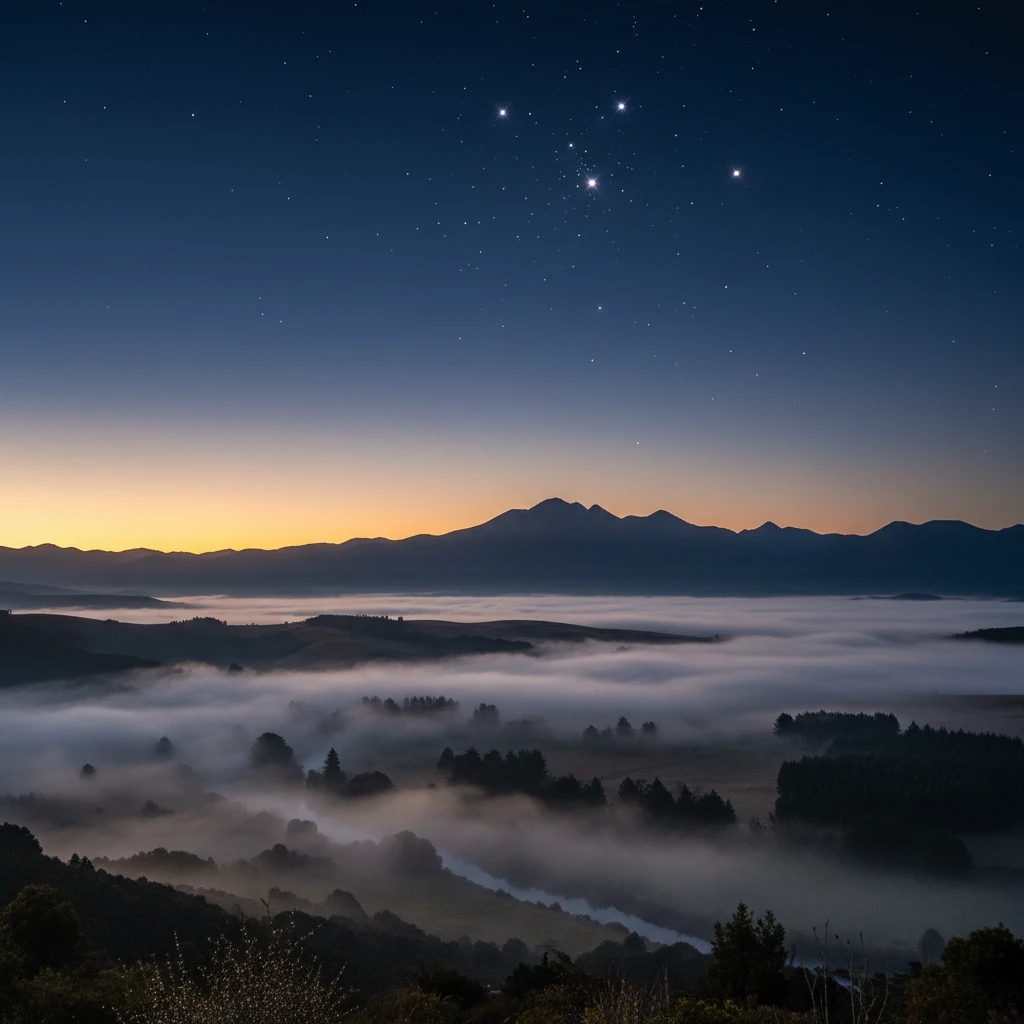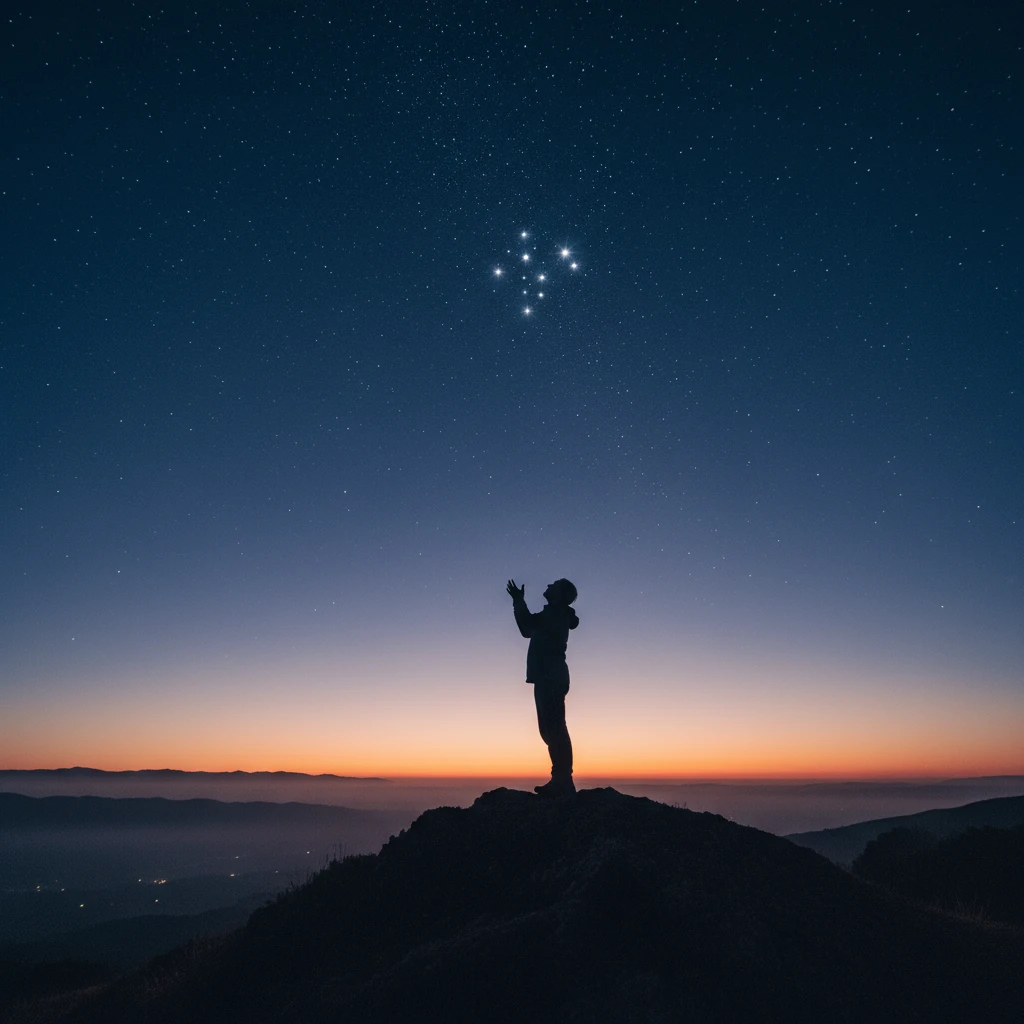
Matariki remembering the dead focuses on the star Pōhutukawa, the eldest child of the Matariki cluster, which connects the living to those who have passed since the last rising. During this sacred time, whānau gather to call out names, weep, and bid farewell (poroporoaki), allowing spirits to ascend into the heavens to become stars, marking the release of grief before the new year begins.
In Te Ao Māori (the Māori world), the rising of the Matariki star cluster signals the Māori New Year. While this is a time of celebration, abundance, and planning for the future, its foundation rests deeply in the past. Before looking forward to the aspirations of Hiwa-i-te-rangi (the wishing star), one must first acknowledge Pōhutukawa, the star connected to the dead. This duality of mourning and celebration creates a holistic cycle of renewal, where the heavy burdens of grief are lifted to make space for new life.
The Significance of Pōhutukawa and Remembering the Dead
To understand the practice of Matariki remembering the dead, one must look to the stars themselves. Using an Interactive Night Sky Map Tool: Locate Matariki Now can help you identify these celestial markers. The Matariki cluster (Pleiades) contains nine visible stars in Māori tradition, each with a distinct purpose. Pōhutukawa is the star associated with those who have died. It is often described as the star that connects Matariki to the dead and is the oldest child of the cluster.
In traditional narratives, when a person passes away, their spirit leaves their body and undertakes a journey to Te Rerenga Wairua (the leaping place of spirits) in the far north of Aotearoa. From there, they descend into the underworld and eventually ascend to the heavens. It is believed that during the rising of Matariki, the spirits of those who have died since the last appearance of the cluster are gathered up by the vast net of Taramainuku (Te Kupenga a Taramainuku) and cast into the heavens to become stars.

This cosmic event provides a definitive timeframe for mourning. It suggests that grief, while enduring, has a seasonal transition. By acknowledging Pōhutukawa, Māori formally recognize the loss, honor the legacy of the deceased, and prepare to release the heavy sadness (kawe mate) so that the new year can be welcomed with a lighter heart.
Understanding Maimai Aroha: The Expression of Grief
What is Maimai Aroha during Matariki?
Maimai aroha refers to tokens or expressions of affection, specifically in the context of grief and remembrance. During Matariki, this concept takes center stage as communities pause to reflect on the impact of those they have lost. It is not merely a passive memory but an active expression of love and sorrow.
This expression can take many forms:
- Waiata Tangi: Singing laments or songs of mourning that tell the stories of ancestors and express deep emotion.
- Kōrero: Sharing stories and memories of the deceased to keep their presence alive within the whānau (family).
- Physical Offerings: Presenting greenery or tears as a physical manifestation of internal pain.
The period of Matariki provides a culturally sanctioned space to revisit grief. In modern society, there is often pressure to “move on” quickly after a funeral. However, the cyclical nature of Matariki offers a yearly opportunity to revisit memories, ensuring that the dead are never truly forgotten. Maimai aroha validates the emotions of the living, reinforcing the bond between the physical world and the spiritual realm.
The Ceremony: Calling Out the Names of Those Passed
One of the most poignant traditions associated with Matariki remembering the dead is the ritual of calling out the names. This ceremony typically takes place in the pre-dawn hours (just before the sun rises) when the Matariki cluster rises on the horizon.
Why are names called out during Matariki?
Calling the names acts as a formal farewell (poroporoaki). It is a way of acknowledging that these individuals have completed their earthly journey and are now ready to join the stars. By speaking their names aloud into the morning air, whānau release the spirits to Pōhutukawa.
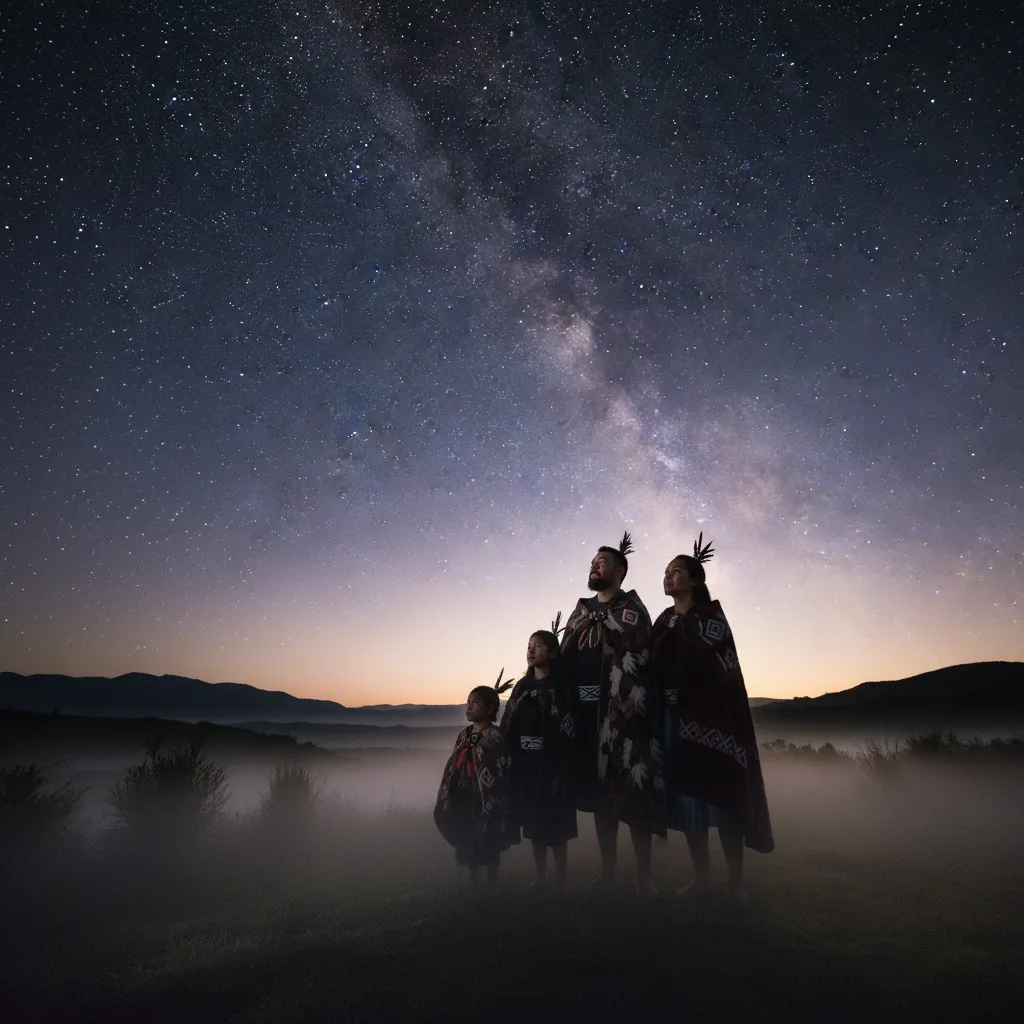
The process generally involves:
- Gathering: The family or community gathers at a vantage point where the horizon is visible.
- Observation: As the stars appear, the tohunga (expert) or head of the family identifies Pōhutukawa.
- Recitation: The names of those who have passed in the previous year are recited. As each name is called, it is common for people to weep openly, releasing their pain.
- Release: Once the names are spoken and the tears have fallen, the focus shifts. The mourning period for the event concludes, and the ceremony transitions toward the other stars in the cluster that represent food, rain, and wishes.
This ritual serves a vital psychological function. It provides closure. It marks a transition point where the spirit becomes an ancestor (tīpuna), watching over the living rather than a lost loved one who is simply “gone.”
How to Create a Remembrance Altar or Space
For many families, visiting a marae or a specific geographical location for the Hautapu ceremony isn’t always possible. Creating a remembrance space or altar at home is a powerful way to participate in Matariki remembering the dead. This creates a focal point for the family’s maimai aroha, and you can find creative inspiration in Matariki Art & Craft Ideas to make it unique.
Steps to set up a Matariki Remembrance Space
Creating this space should be done with intention and respect (tikanga). It serves as a temporary bridge between the living and the dead during the Matariki period.
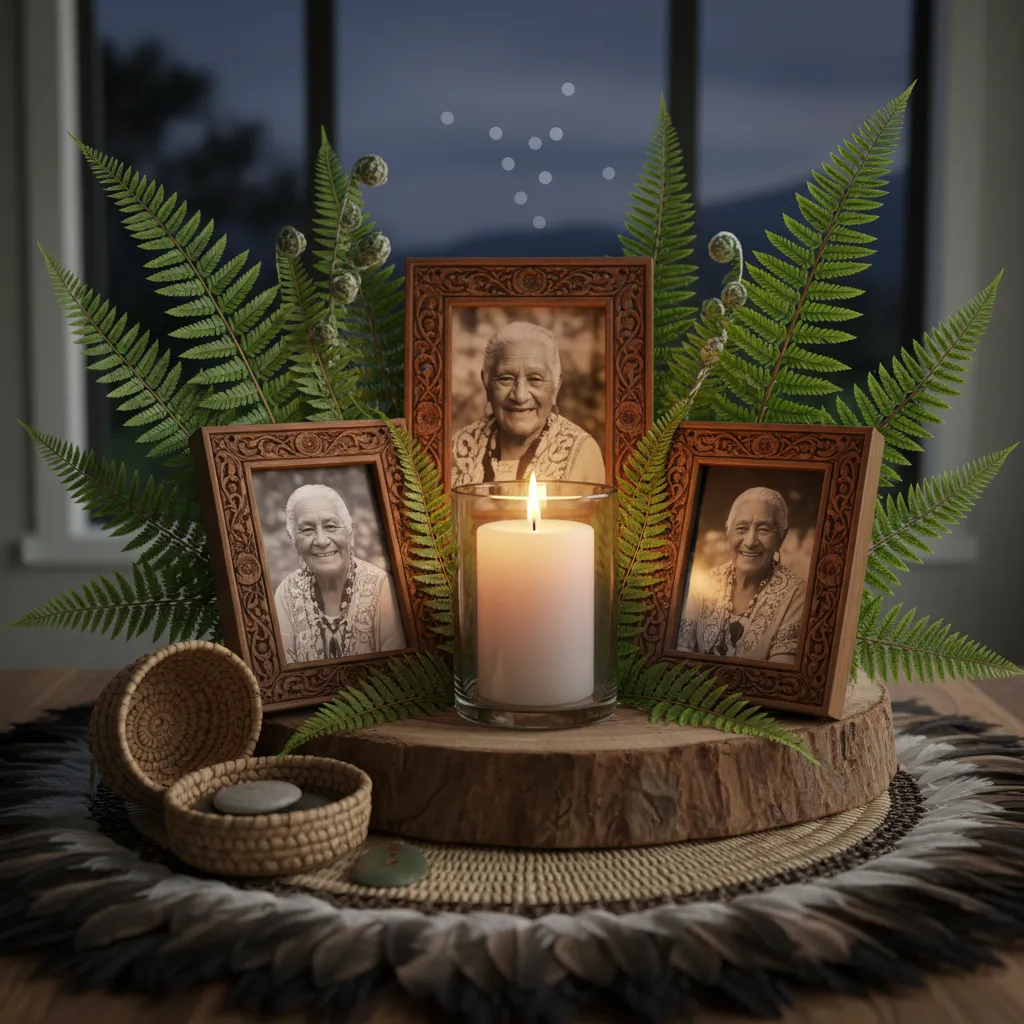
1. Choose a Location: Select a quiet, respectful place in the home, such as a mantlepiece or a designated table. Avoid high-traffic areas where the space might be disturbed.
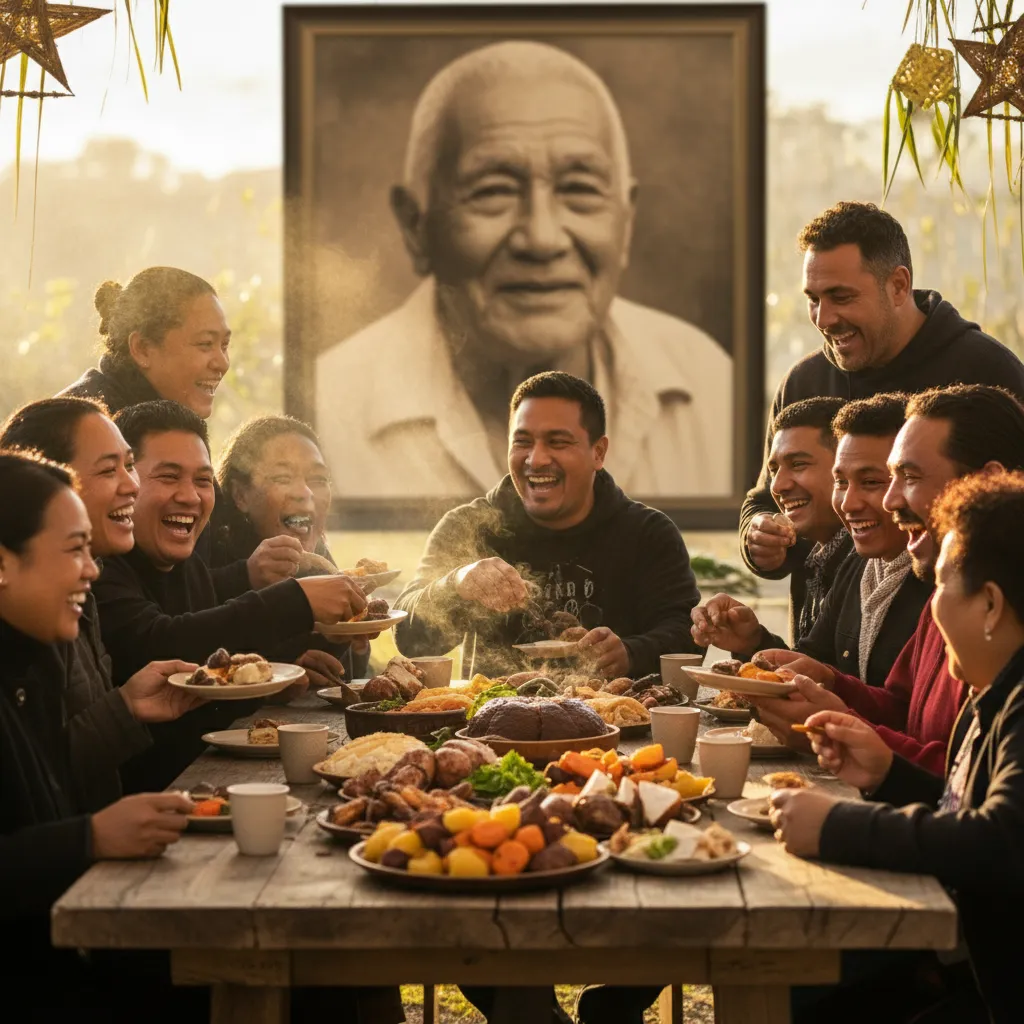
2. Gather Photos (Kawe Mate): Place photographs of your loved ones who have passed away. In Māori tradition, photos of the deceased carry the mauri (life force) of the person and are treated with high respect. Bringing them out for Matariki allows them to “participate” in the new year festivities.
3. Natural Elements: Incorporate greenery. Fern fronds, kawakawa leaves, or branches of the pōhutukawa tree (if available and appropriate) connect the altar to the natural world and the stars.
4. Light (Ahi): Use candles or small lights to represent the stars. The light signifies enlightenment and the transition of the spirit into the world of light (Te Ao Mārama).
5. Food Offerings: While the main Hautapu ceremony involves cooking food where the steam feeds the stars, on a home altar, you might place a small symbolic offering or simply share a meal near the altar, inviting the memory of those passed to join you.
Processing Grief and Moving Toward Renewal
Matariki is not solely about death; it is about the cycle of life. The inclusion of Pōhutukawa in the cluster ensures that grief is not ignored but integrated. However, once the weeping is done, the focus must shift. This is the transition from Pōhutukawa to Hiwa-i-te-rangi (the wishing star).
The Psychological Benefit of Seasonal Mourning
Psychologically, designating a specific time of year to collectively mourn helps prevent “complicated grief,” where individuals get stuck in a state of mourning. Matariki provides a container for this grief. It says, “Now is the time to cry,” but it also says, “Now is the time to wipe the tears and plan for the future.”
This transition is often marked by the phrase “Kua whetūrangitia koe” (You have become a star). It reframes death not as an end, but as a transformation into a celestial body that guides the living. This perspective can be incredibly healing, transforming the pain of loss into a sense of connection with the cosmos.
Modern Ways to Observe Remembrance During Matariki
As Matariki becomes a more prominent public holiday in New Zealand, the ways in which people remember the dead are evolving while staying true to the core values of tikanga.
Community Vigils and Lantern Festivals: Many councils and iwi organizations now host Matariki Events Wellington and other public events. These often involve lighting lanterns or candles and floating them on water or releasing them (environmentally safe methods preferred) to symbolize the release of spirits.
Digital Remembrance: In the digital age, whānau scattered across the globe use technology to connect. Online memorial pages or video calls during the rising of Matariki allow families to call out names together, even when separated by oceans.
The Empty Chair: At the Matariki feast (hākari), it is a touching gesture to leave an empty chair or place setting for those who have passed recently. This physical space honors their memory and acknowledges their continued place in the family structure.
Ultimately, Matariki remembering the dead is about balance. It teaches us that we cannot fully celebrate the new growth of the coming year without first honoring the roots that ground us. By looking to Pōhutukawa, we pay our debts to the past, ensuring we can walk into the future with clear eyes and light hearts.
People Also Ask
Which Matariki star is for the dead?
Pōhutukawa is the star within the Matariki cluster associated with the dead. It connects Matariki to those who have passed away, specifically carrying the spirits of the deceased into the heavens to become stars.
What do you say for Matariki remembrance?
During remembrance, people often say “Kua whetūrangitia koe” which means “You have become a star.” Whānau also recite the names of the deceased and share stories (kōrero) and songs (waiata) that honor their life and legacy.
How do Maori honor the dead during Matariki?
Māori honor the dead by performing a ceremony called ‘Whāngai i te Hautapu’ where the names of those who died in the past year are called out. They weep to release the pain (maimai aroha) and then celebrate to signify the spirit’s release into the sky.
What is the spiritual meaning of Matariki?
Spiritually, Matariki represents renewal, the cycle of life and death, and the connection between the earth and the cosmos. It is a time to farewell the past (the dead), celebrate the present (harvest and food), and plan for the future (wishes and goals).
Can anyone celebrate Matariki remembrance?
Yes, while Matariki is a Māori tradition, the concept of remembering loved ones is universal. Non-Māori are welcome to participate by respectfully creating their own space to remember those they have lost, reflecting on the past year, and looking forward to the new one.
When should you call out the names for Matariki?
The names are traditionally called out during the pre-dawn period when the Matariki cluster first rises on the horizon, typically in mid-winter (June or July). This is done before the sun rises, as the stars are most visible and the connection to the spiritual realm is considered strongest.