What are the best Matariki school assembly ideas?
Effective Matariki school assembly ideas combine cultural remembrance with celebration. Key elements include opening with a traditional Karakia Timatanga, performing Waiata acts like “Purea Nei,” retelling the legend of the Nine Stars through drama, and sharing speeches that honor the past (Pōhutukawa) while setting aspirations for the year ahead (Hiwa-i-te-rangi).
As Aotearoa New Zealand embraces Matariki as a public holiday, schools play a pivotal role in educating tamariki (children) about the significance of the Māori New Year. Planning an assembly for Viewing Matariki: When and Where to Look in late June or July 2025 requires a blend of cultural authenticity, educational value, and community engagement. Whether you are a primary school principal or a student leader, this guide provides structured, respectful, and engaging content to elevate your Matariki celebrations.
1. Opening Karakia (Prayer) for Schools
A Karakia Timatanga (opening prayer) is essential for settling the energy of the room and clearing the space for learning and celebration. In a school context, it is appropriate to use a karakia that focuses on unity, focus, and peace rather than specific religious doctrine, making it inclusive for all students.
For Matariki 2025, consider using a karakia that specifically acknowledges the rising of the stars and the clearing of the mind. Below is a widely accepted karakia suitable for general school use.
Whakataka Te Hau (Cease the Winds)
This karakia uses weather metaphors to describe arriving at a state of calm and readiness.
Māori:
Whakataka te hau ki te uru,
Whakataka te hau ki te tonga.
Kia mākinakina ki uta,
Kia mātaratara ki tai.
E hī ake ana te atakura.
He tio, he huka, he hau hū.
Tihei mauri ora!
English Translation:
Cease the winds from the west,
Cease the winds from the south.
Let the breeze blow over the land,
Let the breeze blow over the ocean.
Let the red-tipped dawn come with a sharpened air.
A touch of frost, a promise of a glorious day.
Behold, there is life!
Pro Tip: Have your student leaders learn this by heart. Project the words on the assembly screen so the entire school can join in the final line, “Tihei mauri ora!” which affirms the breath of life.
2. Retelling the Legend: Scripts & Plays
Visual storytelling is a powerful way to engage younger students (Year 1–6) while educating older students on the deeper nuances of the Matariki tradition. While there are regional variations in the pūrākau (legends), two main narratives are dominant: the “Eyes of the God” and the “Mother and Daughters.”
For 2025, we recommend focusing on the Nine Stars of Matariki. This aligns with modern educational resources released by Te Papa and the Ministry of Education.
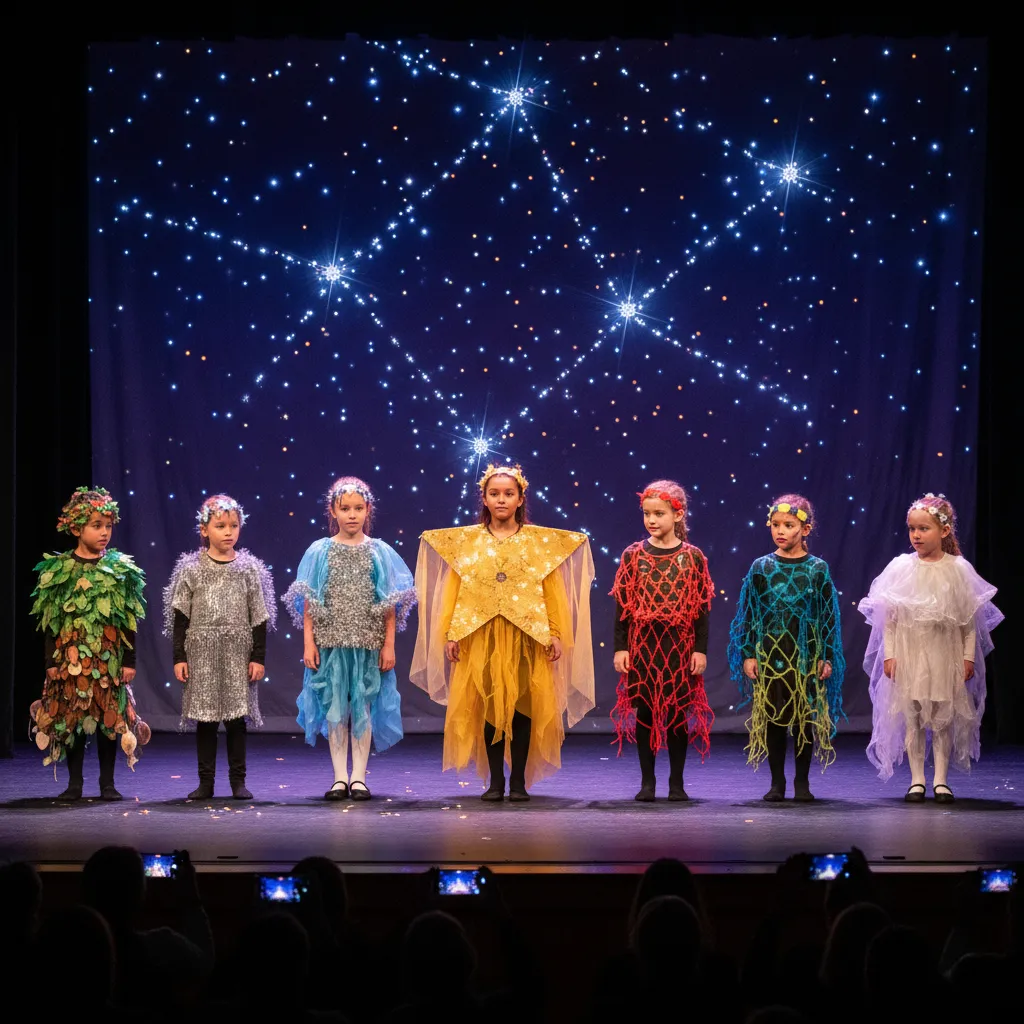
Script Concept: “The Gathering of the Stars”
Cast: 1 Narrator, 9 Students representing the stars (Matariki, Pōhutukawa, Tupuānuku, Tupuārangi, Waipuna-ā-rangi, Waitī, Waitā, Ururangi, Hiwa-i-te-rangi).
Props: Large cardboard stars painted silver/white, each holding an item representing their domain (e.g., Tupuānuku holds a kumara, Waitī holds a freshwater eel puppet).
Narrator: “Long ago, before the sun rose high, the stars were hidden. But every winter, they return to watch over Aotearoa. They are Matariki and her children. Let us meet them.”
(Enter Pōhutukawa, walking slowly, looking solemn.)
Pōhutukawa: “I am Pōhutukawa. I connect Matariki to the dead. I ask you to remember those who have passed away since the last rising. Speak their names in your heart.”
(Enter Tupuānuku and Tupuārangi together, energetic.)
Tupuānuku: “I am Tupuānuku! I look after everything that grows in the soil. The kumara, the potato, the carrots!”
Tupuārangi: “And I am Tupuārangi! I watch over the birds, the berries, and the tall trees reaching for the sky.”
(Script continues introducing remaining stars with their specific domains…)
Hiwa-i-te-rangi: “I am the youngest. I am the wishing star. Send your dreams to me, and I will help them grow in the New Year.”
3. Waiata Performance List for 2025
Music (Waiata) brings the assembly to life. It unifies the school and allows students to participate actively. When selecting waiata, ensure you have the correct lyrics and guitar chords available for your music department.
Top Recommendations for Mass Singing
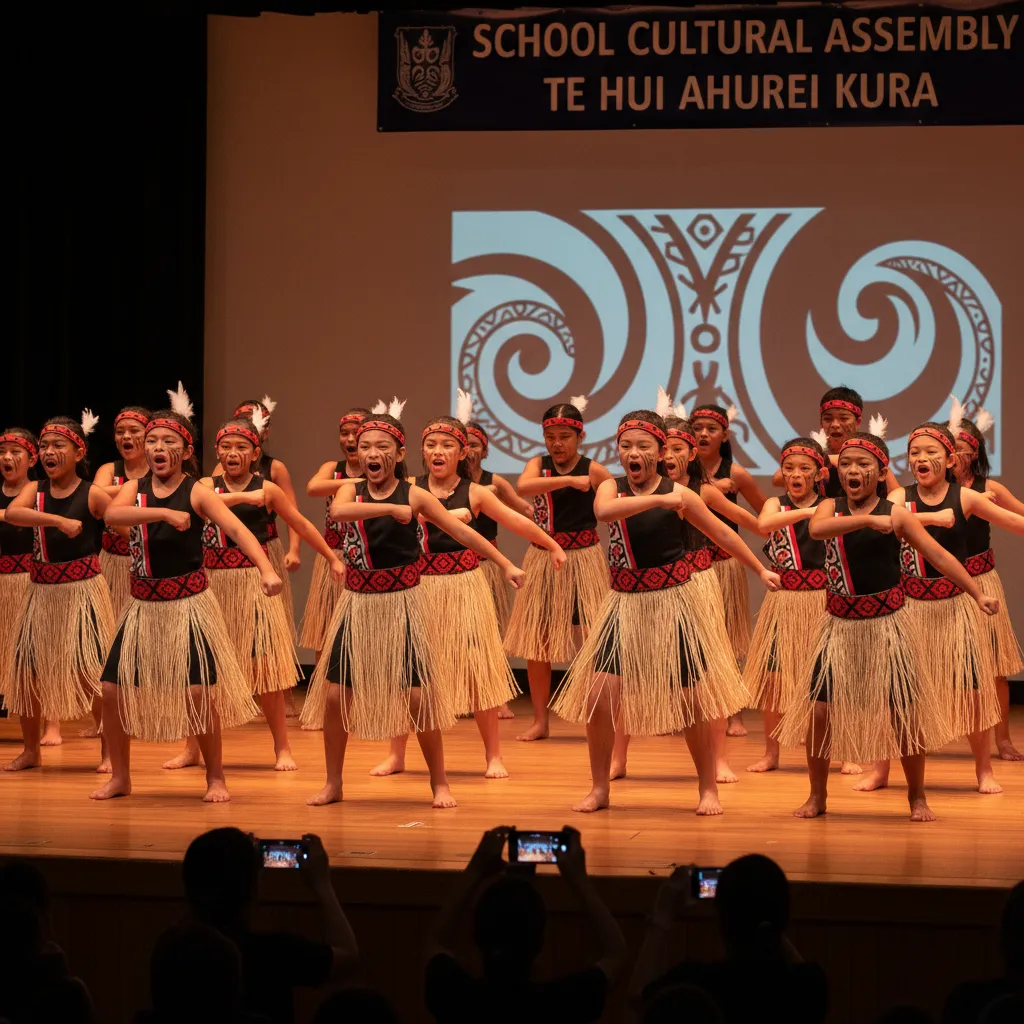
- “Purea Nei” (by Henare Mahanga): A classic waiata about cleansing and renewal. It fits the Matariki theme of washing away the old year’s troubles perfectly. The melody is gentle and easy for all ages to learn.
- “Tūtira Mai Ngā Iwi”: The ultimate song of unity. While not exclusively for Matariki, the line “tātou tātou e” (all of us together) resonates with the holiday’s theme of gathering.
- “Matariki” (by various artists): There are several specific children’s songs simply titled “Matariki.” Look for the version that lists the names of the stars to help students memorize them.
- “Te Iwi E”: An upbeat, high-energy waiata that is excellent for a Kapa Haka group to perform to uplift the audience’s mood.
4. Speech Templates for Principals & Students
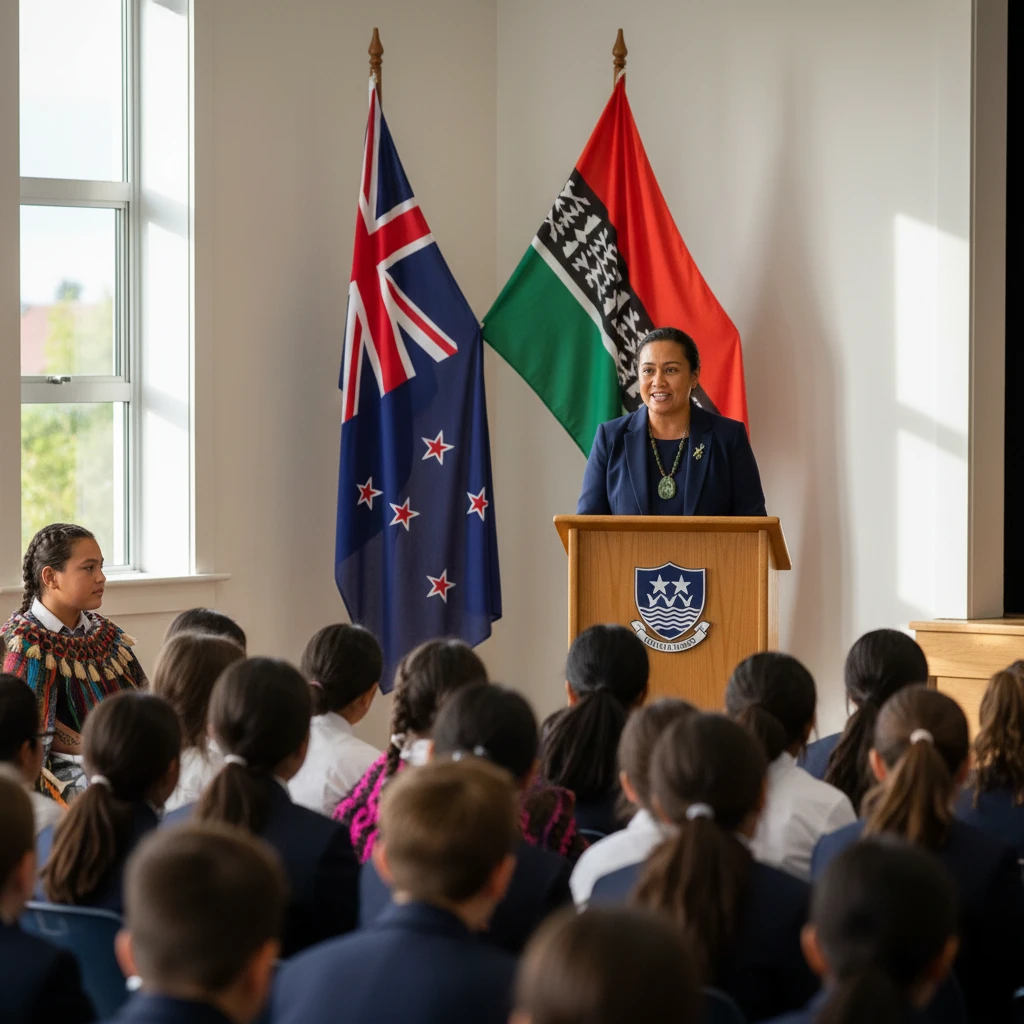
Speeches at a Matariki assembly should follow the “past, present, future” structure. They should acknowledge those who have passed, celebrate the current harvest/achievements, and set intentions for the future.
Principal’s Speech Template
Introduction: “Tēnā koutou, tēnā koutou, tēnā koutou katoa. Welcome students, staff, and whānau to our Matariki celebration.”
The Past (Pōhutukawa): “Matariki is a time of remembrance. Today, we take a moment to think of the people in our community and families who are no longer with us. We honor their legacy and the lessons they taught us.”
The Present (The Harvest): “It is also a time to celebrate our ‘harvest.’ For our school, our harvest isn’t kumara—it is your learning, your sports achievements, and the kindness you show one another. I am proud of… [Insert specific school achievement].”
The Future (Hiwa-i-te-rangi): “Finally, we look to Hiwa-i-te-rangi, the wishing star. I challenge every student here to set one goal for the rest of the year. Let us move forward together. Ngā mihi nui ki a koutou.”
Student Leader’s Speech Template
Hook: “Have you ever looked up at the stars and wondered what they mean? For our ancestors, they were a calendar, a map, and a story.”
Relevance: “Matariki is the Māori New Year. It’s like a reset button. It doesn’t matter if you had a tough start to the year; Matariki says we can start fresh right now.”
Call to Action: “This week, we are asking everyone to write a wish on the stars provided in your classrooms. Let’s fill our hall with our dreams for the future. Kia kaha, everyone!”
5. Interactive Assembly Activities
Passive listening can be difficult for younger students. Incorporating interactive elements ensures the message of Matariki is retained.
The Wall of Remembrance and Aspirations
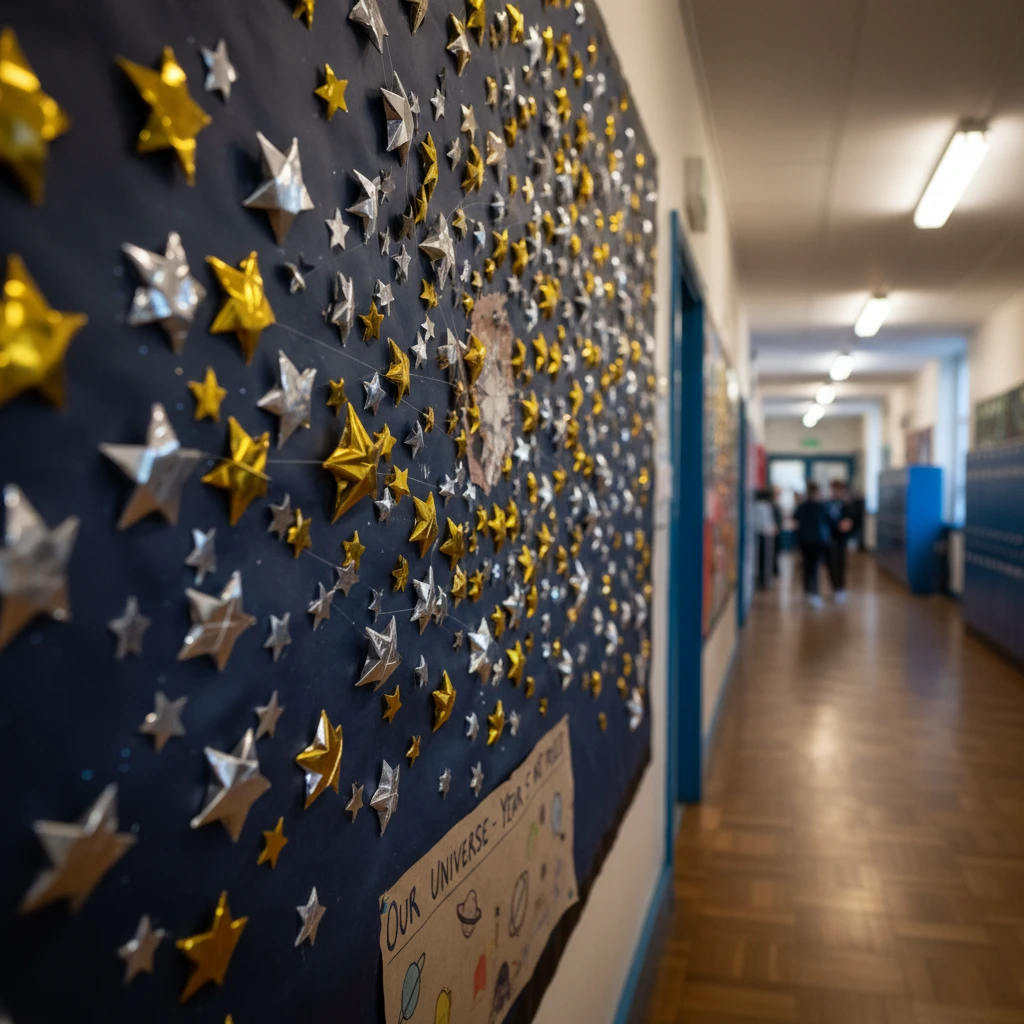
Before the assembly, have every class create paper stars. On one side, they write the name of someone they admire or miss (Past). On the other, a goal for the future (Future). During the assembly, have class representatives stick these onto a designated “Night Sky” backdrop on stage. This creates a powerful visual metaphor of the community’s collective hopes.
Visual Projection Art
If your school has a projector, dim the lights and play a high-quality time-lapse of the Interactive Night Sky Map Tool: Locate Matariki Now or the Aurora Australis while the Kapa Haka group sings a slow, choral waiata. This creates an atmosphere of awe (maioha).
6. Cultural Etiquette & Tikanga
When organizing a Matariki assembly, adherence to Tikanga Māori (customary practices) is vital to ensure the celebration is respectful. In late 2024 and 2025, awareness of cultural appropriation is higher than ever.
Do’s and Don’ts
- DO consult with your local Iwi or Mana Whenua if possible. They may be able to provide a speaker or specific guidance relevant to your region’s narratives.
- DO practice pronunciation. Mispronouncing “Matariki” or the names of the stars can be seen as disrespectful. Use online Māori dictionaries or audio guides to practice.
- DON’T treat Matariki as just another “party.” While it is a celebration, it is deeply rooted in environmental connection and remembrance. Avoid commercializing it with irrelevant merchandise. Instead, Buy Puanga Merchandise through authentic channels to support the culture.
- DON’T confuse Matariki with general Polynesian mythology (e.g., Moana). Stick to Aotearoa-specific narratives.
People Also Ask (PAA)
When is Matariki 2025 celebrated in schools?
Matariki is a public holiday in New Zealand. In 2025, the public holiday falls on Friday, June 20th. Schools typically hold assemblies in the week leading up to this date or the week immediately following.
What are the 9 stars of Matariki?
The nine stars recognized in the NZ curriculum are: Matariki (the mother), Pōhutukawa, Tupuānuku, Tupuārangi, Waipuna-ā-rangi, Waitī, Waitā, Ururangi, and Hiwa-i-te-rangi.
How do you greet someone for Matariki?
The most common greeting is “Mānawatia a Matariki,” which translates to “Celebrate Matariki” or “Welcome Matariki.” It is appropriate to use this as a formal or informal greeting.
Why is Matariki celebrated in schools?
Schools celebrate Matariki to honor New Zealand’s bicultural heritage, teach students about the Māori lunar calendar (Maramataka), foster community spirit, and encourage goal setting for the new year.
What colors represent Matariki?
Deep blues, blacks, and purples represent the night sky and the winter season. Silver, white, and gold are used to represent the stars (whetū). Some schools also use earth tones to represent the harvest stars.
Can non-Māori celebrate Matariki?
Absolutely. Matariki is a celebration for all people of Aotearoa. It is an invitation to connect with the environment, remember loved ones, and celebrate the unique place we live in, regardless of background.