
The Matariki stars meaning is deeply rooted in Māori astronomy, marking the Māori New Year through the appearance of the Pleiades cluster. While often viewed as seven stars, distinct tribal knowledge identifies nine stars: Matariki (well-being), Pōhutukawa (remembrance), Tupuānuku (cultivated food), Tupuārangi (wild food), Waitī (freshwater), Waitā (ocean), Waipuna-ā-rangi (rain), Ururangi (wind), and Hiwa-i-te-rangi (aspirations).
The Astronomical Context of Te Iwa o Matariki
Matariki is the Māori name for the star cluster known internationally as the Pleiades (Messier 45). Located in the constellation Taurus, this open star cluster is one of the nearest to Earth and most obvious to the naked eye. While Greek mythology and modern astronomy often refer to the “Seven Sisters,” Māori astronomy, revitalized by the research of scholars like Dr. Rangi Matamua, recognizes Te Iwa o Matariki—the nine stars.
The reappearance of this cluster in the pre-dawn sky during mid-winter (typically late June or July) signals the beginning of the Māori New Year. This event is not merely a calendar date; it is a cosmic environmental indicator. The visibility, brightness, and distinctness of the stars were historically used by tohunga kōkōrangi (astronomers) to predict the productivity of the coming season.

Understanding the Matariki stars meaning requires a shift from Western astronomical perspectives to a Te Ao Māori worldview, where celestial bodies are intrinsic family members that govern specific domains of the natural world.
Detailed Profiles: The Meaning of the 9 Stars
Each star within the cluster holds dominion over a specific aspect of the environment and human life. Below is a detailed breakdown of the nine stars and their significance.
1. Matariki (The Mother)
Domain: Health, Well-being, and Leadership.
Matariki is the brightest star in the cluster and is viewed as the mother of the other eight stars. Her name can be translated as “Ngā Mata o the Ariki” (The Eyes of the God) or “Mata Ariki” (Chiefly Eyes). Her function is to gather the people together.
In terms of environmental significance, Matariki is the conductor. If this star appears bright and clear, it signals a year of good fortune and health for the community. She ensures the balance of the other stars is maintained. When we speak of the Matariki stars meaning in a holistic sense, we are often referring to the unity she provides.
2. Pōhutukawa
Domain: The Dead and Remembrance.
Pōhutukawa is the star connected to those who have passed away. It carries the spirits of the deceased across the night sky. During the rising of Matariki, it is customary to call out the names of loved ones who have died since the last appearance of the cluster.
This star reminds us that the New Year is not just about the future, but about acknowledging the past. It is the reason why Matariki celebrations often involve moments of solemn reflection and weeping (tangihanga) before the festivities begin.
3. Tupuānuku
Domain: Food grown in the soil.
The name Tupuānuku can be broken down into “tupu” (to grow) and “nuku” (short for Papatūānuku, the Earth Mother). This star governs all edible plants harvested from the earth, such as kūmara (sweet potato) and rēwena (bread).
Historically, the brightness of Tupuānuku would determine the planting season. If the star was dim, it suggested a poor harvest, prompting tribes to ration food or plant later in the season. A bright Tupuānuku signaled a bountiful harvest, allowing for extensive planting.
4. Tupuārangi
Domain: Food from the sky.
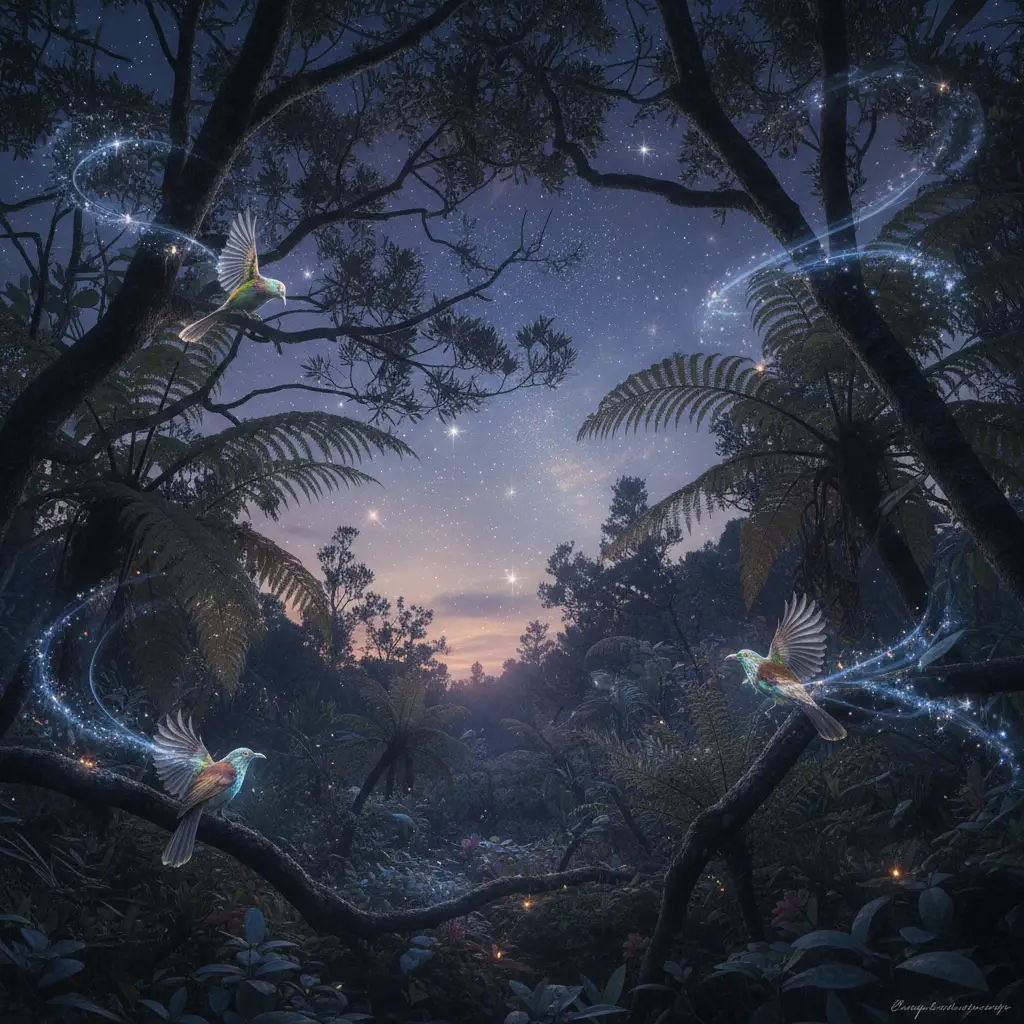
Complementing Tupuānuku, Tupuārangi (“grow in the sky”) governs food sources located above the ground. This includes birds (such as kererū), berries, and fruits found in the canopy of the forest.
In traditional times, this star was crucial for fowlers and hunters. Its visibility indicated the health of the forest ecosystems and the abundance of birdlife for the coming year. It emphasizes the Māori connection to the forest (ngahere) and the importance of sustainable harvesting.
5. Waitī
Domain: Freshwater and freshwater food.
Waitī watches over all freshwater environments: rivers, streams, lakes, and springs. It is specifically linked to the creatures that inhabit these waters, particularly the tuna (eel), kōura (crayfish), and freshwater fish.
The Matariki stars meaning here is deeply ecological; Waitī serves as an indicator of water quality. A clear appearance suggests healthy water flows and abundant aquatic life, while a hazy appearance might warn of droughts or low water levels affecting the food supply.
6. Waitā
Domain: Saltwater and ocean food.
Waitā represents the vast ocean (Te Moana-nui-a-Kiwa) and the kaimoana (seafood) harvested from it. This star is often associated with the kahawai, snapper, and shellfish.
Because the Matariki cluster rises just above the horizon in the northeast, it sits over the ocean for many iwi (tribes) on the East Coast. Waitā’s brightness predicts the tides and the behavior of fish, guiding fishermen on when to cast their nets.
7. Waipuna-ā-rangi
Domain: Rain.
Translating to “Water from the Sky,” Waipuna-ā-rangi controls the rainfall. This star is critical for the hydrological cycle that supports both Tupuānuku and Tupuārangi.
If Waipuna-ā-rangi is invisible or dim, it is a harbinger of drought. Conversely, if it is exceptionally bright, it may predict heavy flooding or excessive rainfall. Observing this star allowed ancestors to prepare drainage or water storage solutions well in advance.
8. Ururangi
Domain: The Winds.
Ururangi means “The Winds of the Sky.” This star is tied to the family of winds (Te Whānau Puhi). It determines the nature of the winds for the coming year—whether they will be gentle breezes favorable for navigation or destructive gales.
For a seafaring people, Ururangi was essential. Its reading would influence decisions regarding ocean voyages and the structural reinforcement of buildings against seasonal storms.
9. Hiwa-i-te-rangi
Domain: Aspirations and Desires.
Often the most beloved star for children, Hiwa-i-te-rangi is the “wishing star.” It is connected to the granting of wishes, the setting of goals, and the realization of aspirations for the coming year.
Unlike the other stars which predict environmental outcomes, Hiwa-i-te-rangi is interactive. It is to this star that people send their dreams. The Matariki stars meaning for Hiwa-i-te-rangi is one of hope and future planning, encouraging individuals to look forward with optimism.
Reading the Environment Through the Stars
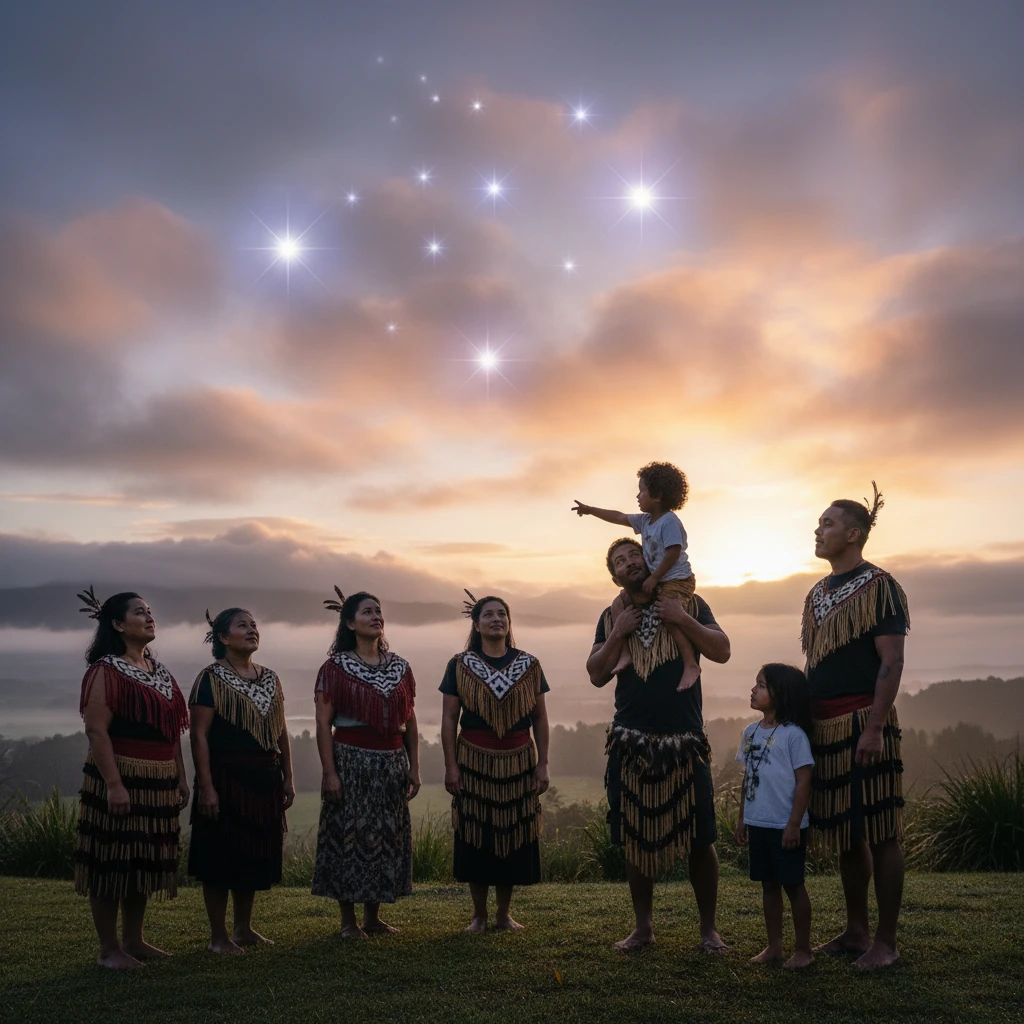
The relationship between the Matariki stars and the environment is not metaphorical; it is an ancient system of environmental science. Māori tohunga did not view the stars as distant, burning balls of gas, but as integral parts of the ecosystem that exerted physical influence over the earth.
The “reading” of the stars involved analyzing three main factors:
- Brightness: High luminosity usually indicated abundance.
- Clarity: Sharp definition against the dark sky was a positive sign.
- Distance: The apparent distance between stars (caused by atmospheric refraction) offered clues about temperature and wind density.
For example, if the stars appeared to be shimmering or “dancing” violently, it indicated turbulence in the atmosphere, predicting a windy and unsettled winter (dominion of Ururangi). If they were hazy, it suggested high humidity and potential rain (dominion of Waipuna-ā-rangi). This observational science allowed Māori to adapt their agricultural and fishing practices to align with the coming climate conditions.
Regional Variations: Matariki vs. Puanga
While the Matariki stars meaning is celebrated nationally, not all iwi (tribes) use Matariki as the primary marker for the New Year. This is largely due to the geography of Aotearoa (New Zealand).
Why Puanga?
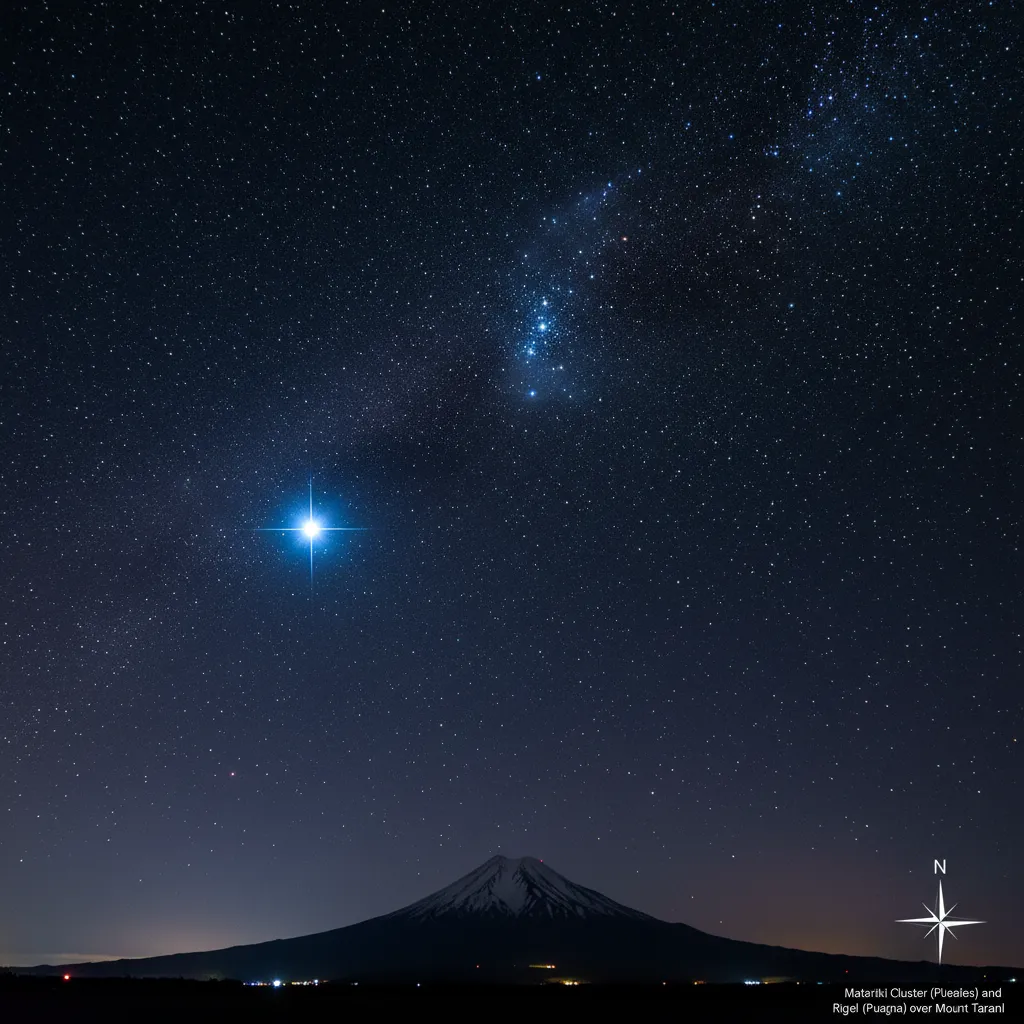
In parts of the country with high mountain ranges to the east—specifically the West Coast of the North Island (Taranaki, Whanganui) and parts of the Far North and South Island—the view of the horizon is obstructed. Matariki rises low in the northeast, meaning the Southern Alps or Mount Taranaki can block the view until the cluster is too high in the sky to be a dawn marker.
For these tribes, the star Puanga (Rigel) is the herald of the New Year. Puanga is the brightest star in the constellation Orion and rises higher and earlier than Matariki. While the specific star changes, the fundamental concept remains the same: a time of remembrance, celebration, and environmental observation.
How to Locate Matariki in the Pre-Dawn Sky
Finding the cluster requires waking up early, typically between 5:30 AM and 6:30 AM, depending on your location and the time of year (June/July).
Step-by-Step Guide
- Look East-Northeast: Find a location with a clear view of the horizon in this direction.
- Find Tautoru (Orion’s Belt): Look for the three distinctive stars in a row. This is the “Pot” handle.
- Follow the Line: Trace a line leftwards (northwards) from Tautoru.
- Pass Te Kokotā (The Hyades): You will pass a triangular cluster of stars (the face of the Bull, Taurus).
- Arrive at Matariki: Continue left until you see a small, tight cluster of twinkling lights. It looks somewhat like a miniature version of the Big Dipper or a small cloud of light.
Binoculars are highly recommended. While the cluster is visible to the naked eye, binoculars will resolve the “cloud” into distinct, diamond-like stars, allowing you to attempt to identify the individual members of Te Iwa o Matariki.
Frequently Asked Questions
Why are there sometimes 7 stars and sometimes 9 stars in Matariki?
Historically, European astronomy identified seven stars (the Seven Sisters). However, ancient Māori narratives and recent manuscript discoveries confirm that many iwi recognized nine distinct stars. The two “extra” stars, Pōhutukawa and Hiwa-i-te-rangi, are often harder to see with the naked eye but are culturally vital.
What is the best time to view Matariki?
The best time to view Matariki is in the early morning, just before the sun rises (pre-dawn), typically between late June and mid-July. You need a clear view of the north-eastern horizon.
Does Matariki predict the weather?
Yes, in traditional Māori knowledge, the brightness and clarity of the individual stars within the cluster were used to predict weather patterns, such as wind (Ururangi) and rain (Waipuna-ā-rangi) for the upcoming season.
What offerings are made to the Matariki stars?
Traditionally, a ceremonial oven (umu kohukohu) was used. Food representing the different domains (gardens, forests, water) was cooked, and the steam was allowed to rise into the sky as an offering to feed the stars.
Is Matariki a public holiday in New Zealand?
Yes, Matariki became an official public holiday in New Zealand in 2022. The date shifts every year based on the lunar calendar (Maramataka) to align with the rising of the stars.
What does it mean if the stars are blurry?
If the stars appear blurry or hazy, traditional interpretation suggests a cold, wet winter with potential crop difficulties. Clear, bright stars are interpreted as a sign of a warm, productive season.