
Matariki is the Māori name for the Pleiades star cluster, marking the Māori New Year. While Greek mythology references seven sisters, Māori astronomy identifies nine distinct stars (Te Iwa o Matariki), each governing a specific environmental domain—including fresh water, salt water, winds, rain, and crops—and collectively predicting the abundance of the year ahead.
For centuries, the rising of Matariki has signaled a time of remembrance, joy, and peace in Aotearoa New Zealand. It is a celestial compass that guided Polynesian navigators across the Pacific and continues to guide the planting and harvesting cycles of the Māori people today. Understanding the Matariki stars meaning requires looking beyond the cluster as a whole and recognizing the individual mana (power) and responsibility of each stellar body within the group.
The Difference Between Seven Sisters and Nine Stars
Globally, the Pleiades cluster is one of the most recognizable formations in the night sky. In Greek mythology, it is known as the Seven Sisters, the daughters of Atlas and Pleione. In Japan, it is Subaru; in Hawaii, Makaliʻi. However, in Aotearoa, leading Māori astronomers, such as Dr. Rangi Matamua, have revitalized the ancestral knowledge that identifies nine stars, not seven.
Why the discrepancy? From a naked-eye astronomy perspective, people with average eyesight can typically distinguish six or seven stars. However, those with exceptional vision—and the ancestors who studied the skies in pitch darkness without light pollution—could discern nine. The two stars often excluded in other cultures are Pōhutukawa and Hiwa-i-te-rangi. These stars hold profound spiritual significance regarding life, death, and aspirations, making the nine-star narrative essential to the complete Māori worldview.

Te Iwa o Matariki: The Nine Stars Explained
To fully grasp the Matariki stars meaning, one must understand the specific domain over which each star presides. The cluster is not merely a calendar; it is an environmental checklist. Each star represents a facet of the natural world, linking the celestial to the terrestrial.
1. Matariki (The Mother)
Significance: Health, Wellbeing, and Unity.
Matariki is the central and brightest star in the cluster. She is often viewed as the mother surrounded by her eight children. Her domain is the overall health and wellbeing of the people. When Matariki shines brightly and clearly, it is interpreted as a sign of good health and good fortune for the community in the coming year. She acts as the conductor, gathering the other stars to bring balance to the environment.
2. Pōhutukawa
Significance: Remembrance and the Dead.
Pōhutukawa is the star connected to those who have passed away. In Māori belief, when people die, their spirits travel up to the north of the North Island to Te Rerenga Wairua (Cape Reinga), slide down the pōhutukawa root into the underworld, and eventually ascend to the heavens to become stars. During the rising of Matariki, we look to Pōhutukawa to remember the loved ones lost since the last rising. It is a time to weep, to call out their names, and to release the grief so the new year can begin with a lighter heart.
3. Tupuānuku
Significance: Food grown in the ground.
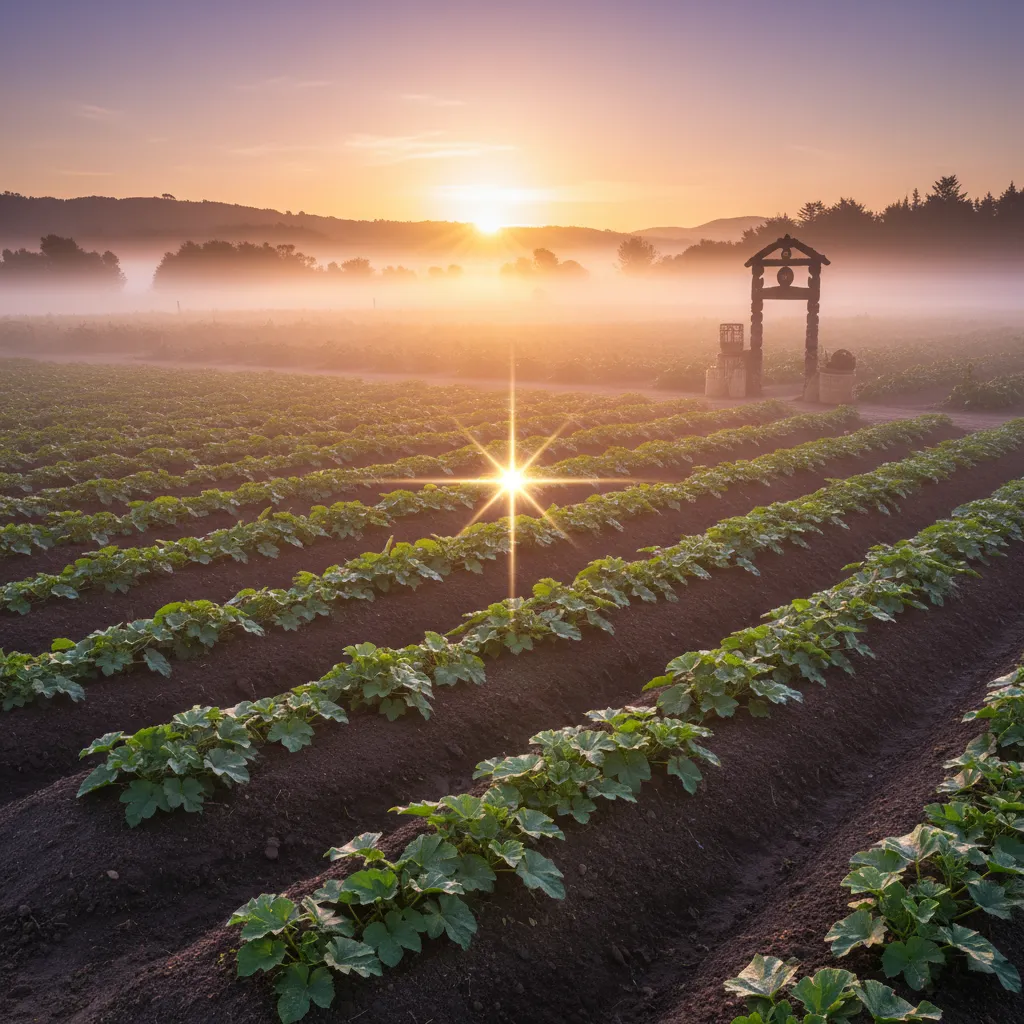
The name Tupuānuku can be translated as ‘to grow within the earth’ (tupu = to grow, nuku = earth/ground). This star governs all edible plants that are harvested from the soil, such as kūmara (sweet potato) and rīwai (potatoes). A clear appearance of Tupuānuku signals a bountiful harvest and fertile soils for the planting season ahead. It reminds us of the necessity of soil health and sustainable agriculture.
4. Tupuārangi
Significance: Food from the sky.
Contrasting with Tupuānuku, Tupuārangi (‘grow in the sky’) is associated with food sources located above the ground. This includes birds (manu), berries, and fruits found in the canopy of the forest. Historically, this star was vital for hunters and gatherers, indicating the abundance of kererū (wood pigeon) and other forest resources. It emphasizes the importance of biodiversity and forest conservation.
5. Waitī
Significance: Fresh water and its inhabitants.
Waitī watches over all freshwater bodies: lakes, rivers, streams, and springs. It is also linked to the food sources within these waters, such as tuna (eels) and kōura (crayfish). The brightness of Waitī provides insight into the water levels and the health of the hydrological cycle. If the star appears hazy or dim, it may predict droughts or poor water quality, serving as an early warning system for water conservation.
6. Waitā
Significance: Salt water and the ocean.
Waitā represents the vast ocean and the food gathered from it (kaimoana). It is unique in the cluster because it is associated with the swift energy of the ocean. This star guides fishermen and indicates the likely abundance of fish, shellfish, and other marine life. It connects Māori to the Pacific Ocean, their ancestral highway, and highlights the critical need to protect marine ecosystems from pollution and overfishing.

7. Waipuna-ā-rangi
Significance: Rain.
Waipuna-ā-rangi translates to ‘water that pools in the sky.’ This star is responsible for the rains—both the gentle showers that nourish the land and the torrential downpours that can cause flooding. Observing this star helps predict rainfall patterns for the coming winter and spring, which is vital for agricultural planning. It reminds us that water is a life-giving force that cycles between the earth and the sky.
8. Ururangi
Significance: The Winds.
Ururangi means ‘the winds of the sky.’ This star determines the nature of the winds for the year—whether they will be calm and favorable for navigation or violent and destructive. The Māori had names for hundreds of different winds, and Ururangi is the celestial guardian of them all. This star’s appearance helps predict storm activity and climatic shifts.
9. Hiwa-i-te-rangi
Significance: Aspirations and Wishes.
The final star, Hiwa-i-te-rangi, is the ‘wishing star.’ It is to this star that you send your dreams and desires for the year ahead. Similar to the Western concept of ‘wishing upon a star,’ Māori would cast their aspirations toward Hiwa-i-te-rangi in hopes that they would be realized. This star represents the future, potential, and the optimistic planning of the new year.
Significance of the Star Arrangement
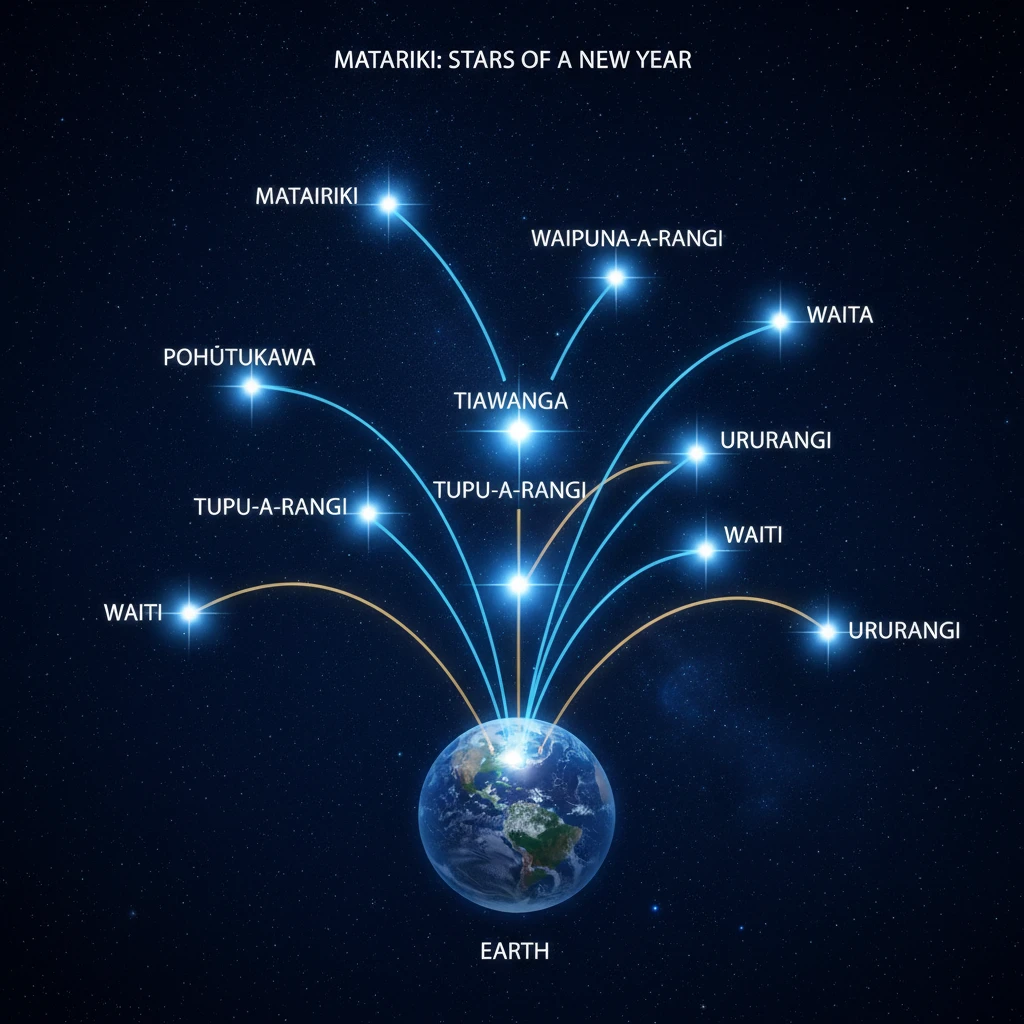
The physical arrangement of Te Iwa o Matariki in the sky is not random in Māori cosmology; it reflects the relationships between the domains they govern. For example, Waitī (fresh water) and Waitā (salt water) appear near each other, mirroring how rivers eventually flow into the sea. Tupuānuku (earth food) and Tupuārangi (sky food) are positioned to reflect the vertical relationship between the forest floor and the canopy.
Furthermore, the position of Waipuna-ā-rangi (rain) and Ururangi (wind) relative to the other stars signifies how weather patterns directly influence food production and water levels. If the wind and rain stars are turbulent, the food stars may struggle. This interconnectedness teaches a holistic view of the environment: you cannot damage one domain (like water) without affecting another (like food sources).
How the Stars Predict the Year Ahead
One of the most practical applications of the Matariki stars meaning is its function as a predictive tool. In pre-European times, tohunga kōkōrangi (expert astronomers) would go out before dawn to observe the rising of the cluster. Their observations were critical for the survival of the tribe.
Reading the Signs
The prediction is based largely on the visibility, brightness, and color of the individual stars:
- Clear and Bright: If a star appears distinct and luminous, it predicts abundance in its specific domain. For example, a bright Tupuānuku suggests a bumper crop of kūmara.
- Hazy or Dim: If a star appears blurry, shimmering excessively, or sits close to other stars, it predicts scarcity or difficulty. A hazy Waipuna-ā-rangi might foretell heavy flooding, while a dim Tupuārangi could mean a poor season for bird hunting.
- Distance Between Stars: The apparent distance between the stars (caused by atmospheric refraction) was also measured. Stars appearing closer together were often interpreted as a sign of a cold year, prompting tribes to store more firewood and food.
This ancient system of environmental monitoring aligns surprisingly well with modern meteorology. Atmospheric turbulence, which causes stars to twinkle or appear hazy, is often caused by the mixing of hot and cold air layers, which can indeed signal unsettled weather patterns approaching.
The Modern Revival of Matariki
Today, the meaning of the Matariki stars has transcended its historical utility to become a symbol of national identity in New Zealand. The establishment of Matariki as a public holiday acknowledges the depth of mātauranga Māori (Māori knowledge) and invites everyone, regardless of background, to reflect on their connection to the environment.
Celebrating Matariki involves three key phases derived from the stars’ meanings:
- Remembering the past (Pōhutukawa): Honoring those who have left us.
- Celebrating the present (The Food Stars): Gathering with whānau (family) to share food and give thanks for what we have.
- Planning for the future (Hiwa-i-te-rangi): Setting goals and intentions for the year ahead.
Frequently Asked Questions
What is the best time to see the Matariki stars?
Matariki is best viewed in the early morning, just before dawn, typically between late June and mid-July. You should look towards the north-eastern horizon. The cluster rises just before the sun, so timing is crucial.
Why do some iwi only count seven stars?
While the nine-star narrative is widely accepted now, some iwi (tribes) historically counted seven. This variation often depends on the geographical location of the tribe and their specific vantage point, or specific tribal narratives that focus on the seven children without separating the parents.
How do I find Matariki in the sky?
To find Matariki, first locate the ‘Pot’ (Orion’s Belt). Follow the line of the three stars in the belt to the left (in the Southern Hemisphere) until you find a bright orange star (Taumata-kuku/Aldebaran) in a V-shape formation (Hyades). Continue that line further left, and you will see the tight cluster of Matariki.
What does the star Hiwa-i-te-rangi signify?
Hiwa-i-te-rangi is the star of aspirations. It is the star to which you send your wishes for the new year. It represents the hope for a prosperous future and the setting of new goals.
Is Matariki the same as the Pleiades?
Yes, astronomically, Matariki is the Pleiades star cluster (Messier 45). However, culturally, Matariki refers specifically to the Māori significance, narratives, and calendar associated with the rising of this cluster in mid-winter.
What happens if the Matariki stars are not visible?
If the stars are obscured by bad weather during the specific period of observation, some tribes historically interpreted this as a sign of a difficult year ahead. However, usually, there is a window of several days where the heliacal rising can be observed.