
Telescope rental in Wellington is primarily facilitated through the Wellington Astronomical Society and specialized photography equipment hire outlets. Rental rates typically range from $40 to $150 per week, offering access to high-aperture Dobsonian and Refractor telescopes. This service allows enthusiasts to view the Matariki cluster with precision optics without the high upfront cost of purchasing gear.
As the winter chill settles over Te Whanganui-a-Tara, the pre-dawn sky becomes a canvas for one of New Zealand’s most significant cultural and astronomical events: the rise of Matariki. For Wellingtonians, witnessing the appearance of the Pleiades star cluster signals the Māori New Year, a time of remembrance, celebrating the present, and looking to the future. While the naked eye can appreciate the cluster, securing a high-quality telescope rental in Wellington transforms a faint glimmer into a breathtaking celestial jewelry box.
Whether you are planning a whānau gathering on the waterfront or a solitary vigil atop Mount Victoria, having the right optical equipment is crucial. This guide covers everything you need to know about hiring telescopes in the capital, from costs and deposits to the best technical specifications for spotting Matariki.
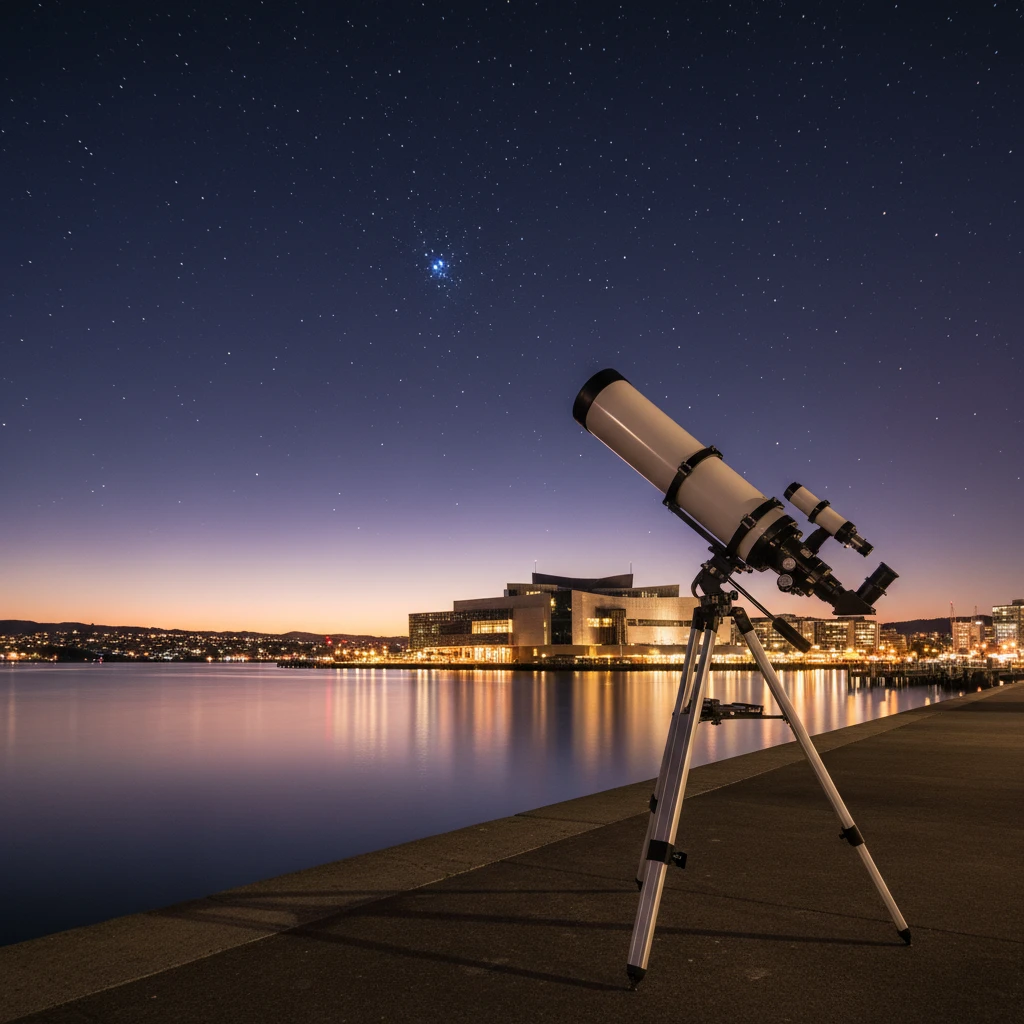
Where to Hire High-Quality Telescopes in the Capital
Finding a dedicated telescope rental shop in Wellington differs slightly from renting a car or power tools. The market is niche, often driven by community organizations and high-end photography outlets rather than general hire centers. Knowing where to look is the first step to securing your gear before the Matariki rush begins.
The Wellington Astronomical Society (WAS)
The primary and most authoritative source for telescope rentals in the region is the Wellington Astronomical Society. They operate a loan scheme specifically designed to encourage public engagement with astronomy. While often framed as a “loan” for members, short-term memberships combined with hire fees function exactly like a commercial rental.
The inventory usually includes robust 6-inch and 8-inch Dobsonian telescopes. These are “light buckets”—perfect for deep-sky objects like the Matariki cluster. The Society ensures that equipment is collimated (aligned) and maintained by experts, ensuring you don’t receive a dud instrument.
Photography and Cinema Hire Outlets
For those seeking high-end optical glass or astrophotography rigs, commercial photography rental houses in Wellington (often located near the CBD or Miramar film hub) are excellent alternatives. While they may not stock traditional Newtonian telescopes, they rent high-powered spotting scopes and telephoto lenses (e.g., 600mm f/4) compatible with DSLR cameras. This is the preferred route if your goal is to photograph Matariki rather than just observe it visually.
Peer-to-Peer Platforms
In recent years, general peer-to-peer rental platforms have gained traction in New Zealand. Local astronomy enthusiasts occasionally list their personal gear for hire during the off-season. However, when renting from private individuals, it is vital to inspect the mirrors for dust or fungus before accepting the handover.
Rental Costs, Deposits, and Insurance
Understanding the financial commitment is essential for planning your Matariki event. Telescope optics are precision instruments; consequently, rental agreements are structured to protect the glass.
Standard Rental Rates
Daily Rates: Commercial camera hire outlets typically charge between $60 and $100 per day for high-end spotting scopes or astrophotography lenses. Weekend rates are often discounted (e.g., pay for one day, keep for the weekend).
Weekly Rates: For astronomical societies or longer-term hires, you are looking at a more economical structure. A standard 8-inch Dobsonian might cost between $40 and $80 per week. This longer duration is highly recommended for Matariki viewing, as Wellington’s weather is notoriously fickle; a one-night rental is a gamble against the cloud cover.
Security Bonds and Deposits
This is where most renters are caught off guard. Because a quality telescope can cost between $1,000 and $5,000, rental providers require a significant security deposit (bond).
- Cash/Card Hold: Expect a hold on your credit card ranging from $250 to $1,000 depending on the equipment value.
- Membership Requirements: If renting through a society, you may need to pay an annual membership fee (approx. $40-$60) in lieu of a massive bond, as your membership details provide them with security.
Insurance Considerations
Check if the rental price includes insurance. Commercial hire usually offers a “damage waiver” for an extra 10-15% of the hire fee, reducing your liability in case of accidental damage. Given that you will be operating the equipment in the dark, often on uneven terrain like Red Rocks or Wright’s Hill, paying for insurance is a prudent investment.
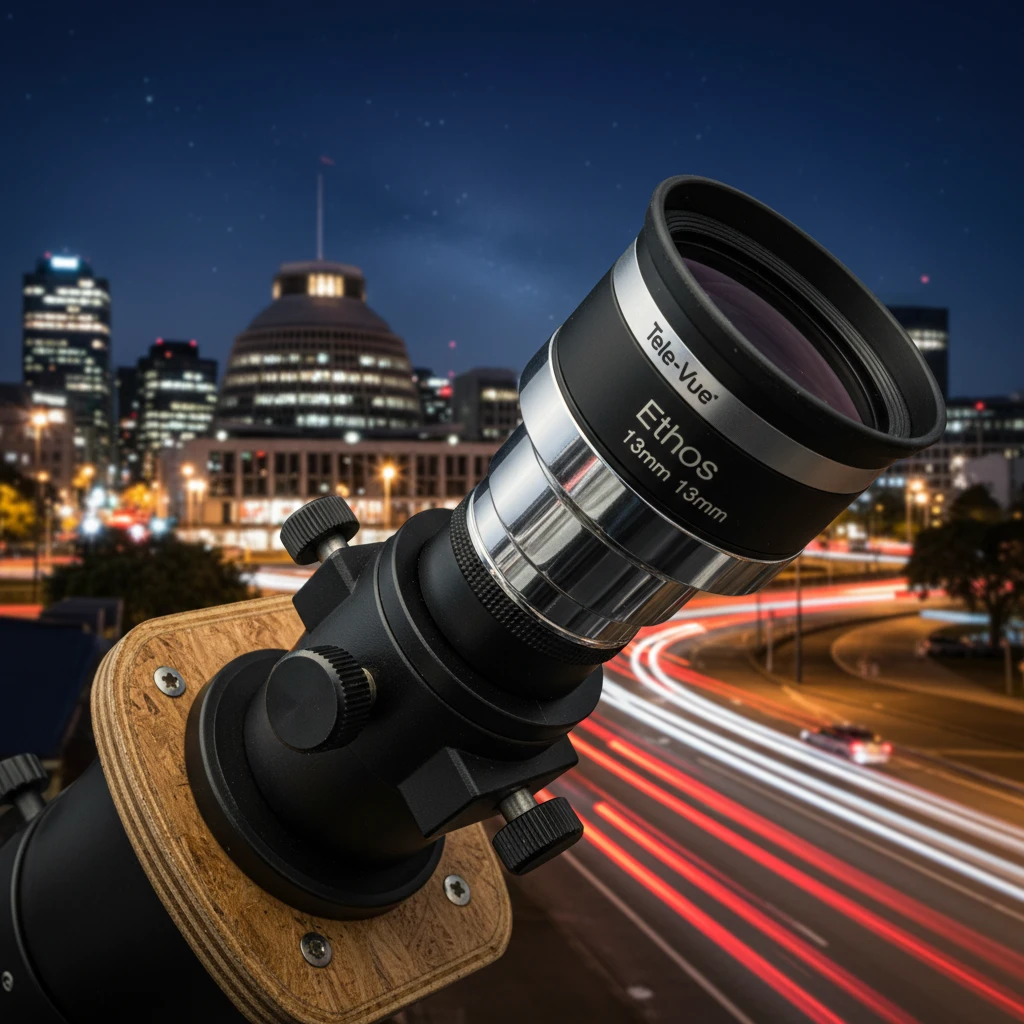
Telescopes for Beginners vs. Advanced Users
Not all telescopes are created equal. Renting a complex rig for a novice user can lead to frustration rather than awe. Here is how to match the gear to your skill level for the best Matariki experience.
For Beginners: The Dobsonian Reflector
If you have never used a telescope before, request a Dobsonian.
Why? It uses a simple “point and shoot” mount. It moves up-down and left-right (alt-azimuth), making it intuitive to aim.
Matariki Benefit: Dobsonians usually have large apertures (6 to 10 inches), which gather immense amounts of light. This makes the faint stars of the Pleiades pop against the background sky, even if there is some light pollution from the city.
For Intermediates: Refractors on EQ Mounts
A Refractor telescope uses lenses rather than mirrors. They are robust and require less maintenance. However, if it comes on an Equatorial (EQ) mount, you need to know how to polar align the scope with the South Celestial Pole.
Why? Refractors offer pin-sharp, high-contrast views.
Matariki Benefit: The stars will look like diamonds on velvet. The contrast is superior to reflectors, but the setup time is significantly longer.
For Advanced Users: GoTo Computerized Telescopes
“GoTo” telescopes have onboard computers that automatically find stars for you. While this sounds ideal for beginners, the initial alignment process requires knowledge of star names and positions. If you rent a computerized scope without prior experience, you may spend the entire pre-dawn window reading the manual with a red torch. Leave these for experienced users who want to track objects for photography.
Optimizing Your Rental for Matariki Viewing
Matariki (The Pleiades/M45) is an open star cluster. It is large and bright. This dictates specific requirements for your rental gear that differ from viewing planets like Jupiter or Saturn.
Field of View is King
Because the cluster is physically wide in the sky, you do not want high magnification. High magnification narrows your field of view, meaning you might only see one or two stars of the cluster at a time, losing the “group” effect.
Rental Tip: Ask the provider for a low-power, wide-angle eyepiece (e.g., 25mm or 32mm eyepiece). This will frame the entire cluster beautifully, allowing you to see the main stars (Matariki, Tupu-ā-nuku, Tupu-ā-rangi, etc.) simultaneously.
Pick-up and Drop-off Locations Near the Waterfront
Logistics play a huge role in telescope rental. These instruments are bulky and fragile. Most rentals in Wellington will not be located directly on the waterfront, but rather in the surrounding suburbs or CBD.
Transporting the Gear
Vehicle Required: Do not attempt to transport a rental telescope on a bus or scooter. An 8-inch Dobsonian requires the back seat of a car. The tube is roughly 1.2 meters long.
Parking for Pick-up: If renting from a CBD camera store, ensure you have access to a loading zone. Carrying a heavy optical tube down Lambton Quay is not advisable.
Returning the Gear
Most rentals operate on a strictly timed basis. If your drop-off time is 10:00 AM Monday, be punctual. Late fees in the rental industry can be steep, equivalent to a full extra day’s hire. Ensure all dust caps are replaced and the finder scope is turned off (to save batteries) before returning.
Setting Up Your Rental: A Step-by-Step Guide
You have picked up your gear, and it is 5:30 AM on a crisp Wellington morning. Here is how to ensure success.
1. Let the Optics Acclimatize
Take the telescope out of your warm car and let it sit outside for 20 minutes before viewing. If the mirror is warm and the air is cold, heat waves inside the tube will distort the image. This “cool down” period is vital for sharp views of Matariki.
2. The Finder Scope is Your Best Friend
Your rental will have a small mini-telescope attached to the side (the finder). During the day (or looking at a distant streetlight), ensure the finder is looking at the exact same spot as the main telescope. If these aren’t aligned, you will never find Matariki in the main eyepiece.
3. Finding Matariki
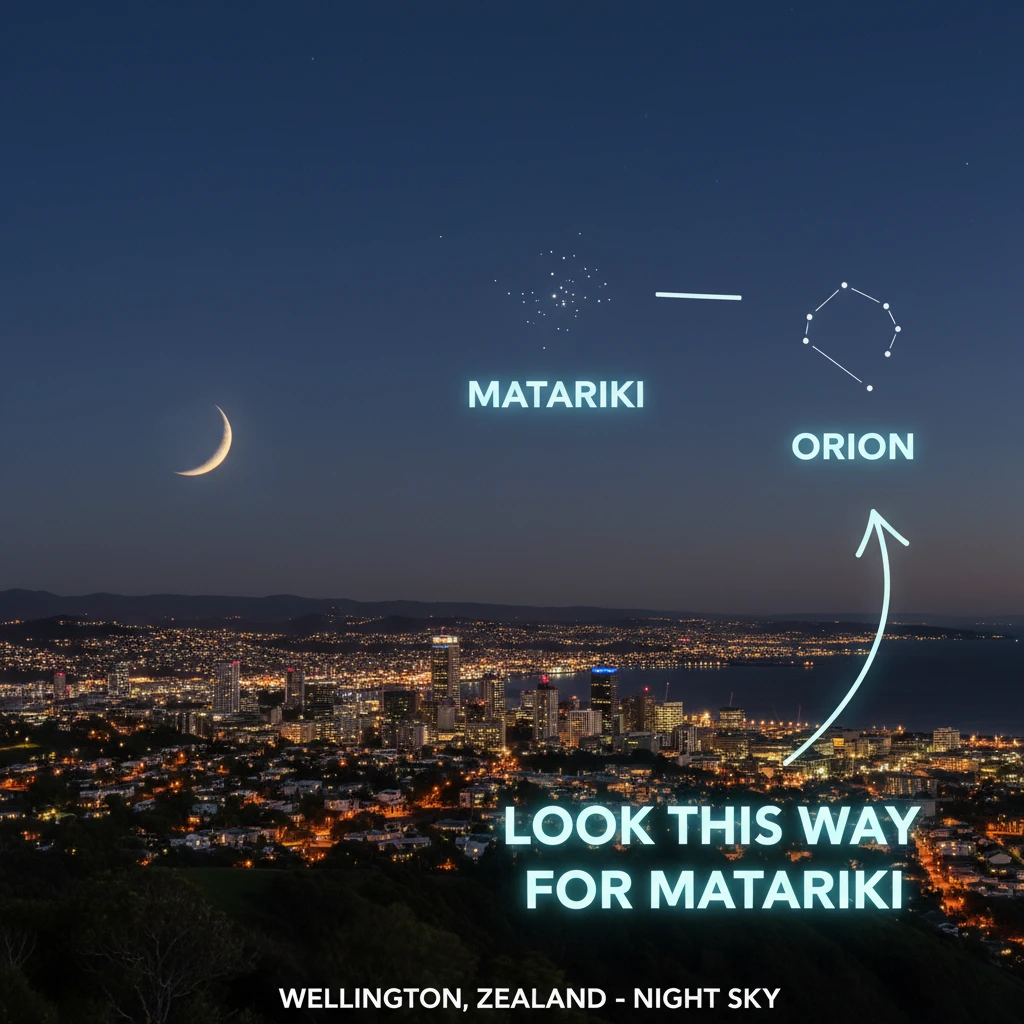
Look to the northeast horizon before sunrise. Matariki appears to the left of the reddish star Aldebaran and the constellation Orion (The Pot). Aim your telescope using the finder scope first, then switch to the main eyepiece with your lowest magnification (highest number, e.g., 25mm).
People Also Ask
How much does it cost to rent a telescope in Wellington?
Rental costs generally range from $50 to $150 per week depending on the quality of the instrument. High-end astrophotography gear from camera rental houses is charged at a daily rate, often starting around $80/day, while Astronomical Society loans are cheaper but may require a membership fee.
Can I see Matariki from Wellington city centre?
Yes, Matariki is bright enough to be seen from the city, provided you have a clear view of the northeastern horizon. However, light pollution will diminish the view. Renting a telescope helps cut through this light pollution, but moving to darker spots like the South Coast or Wright’s Hill yields better results.
What is the best type of telescope for viewing Matariki?
A Dobsonian telescope with an aperture of 6 to 8 inches is ideal. It offers a wide field of view to encompass the whole cluster and gathers enough light to reveal the fainter stars, all while being easy for beginners to set up and operate.
Do I need to pay a deposit for telescope rental?
Yes, almost all commercial and society rentals require a security bond or deposit. This covers the provider in case of damage to the delicate mirrors or lenses. Deposits can range from $200 to over $1,000 depending on the value of the rig.
When is the best time to view Matariki in Wellington?
Matariki is best viewed in the pre-dawn sky, typically between 5:30 AM and 6:30 AM, during June and July. You need to look towards the northeast horizon before the sun brightens the sky too much.
Is it difficult to transport a rental telescope?
It can be. A standard rental telescope tube is roughly the size of a golf bag but more fragile. You will need a vehicle with a clear back seat or boot. It is not recommended to transport them on public transport or by foot over long distances.