
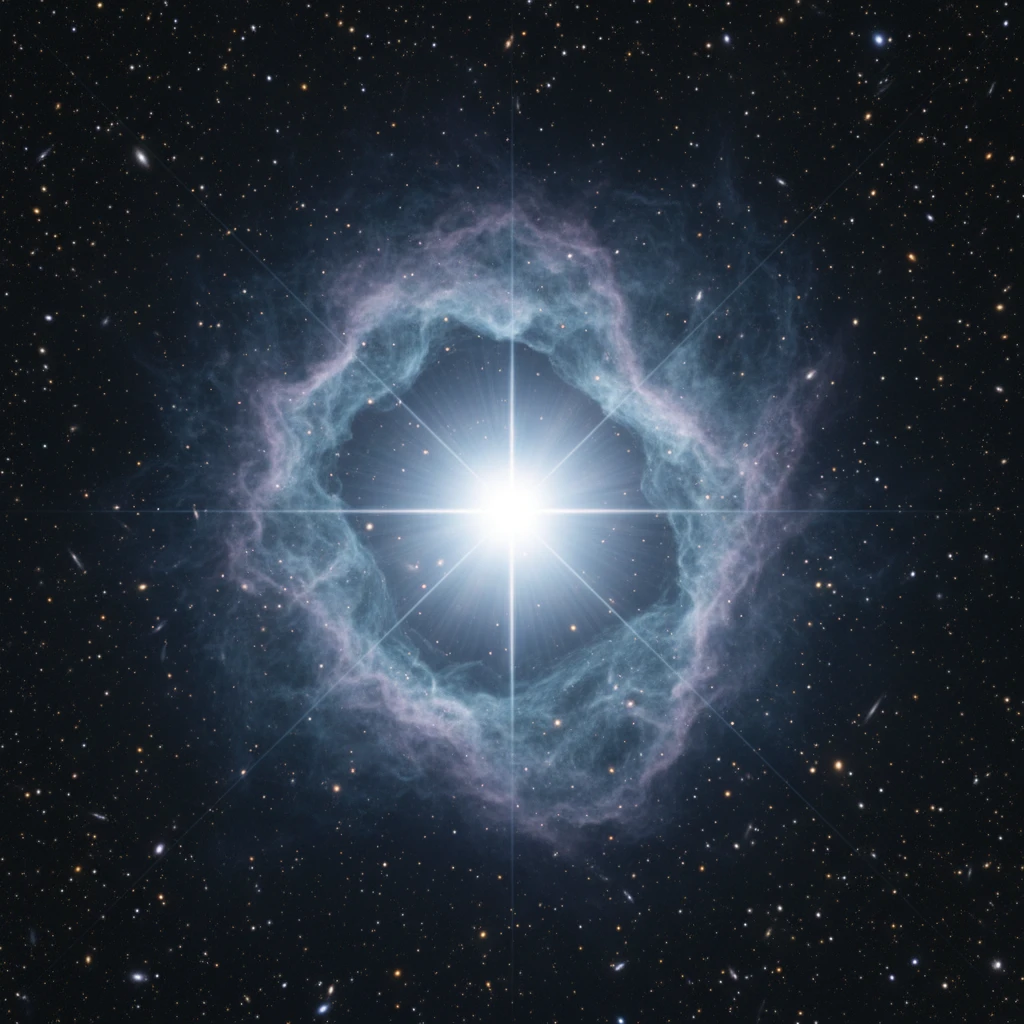
Puanga is the Māori name for Rigel (Beta Orionis), a blue-white supergiant star located in the constellation Orion. While the Matariki cluster typically signals the Māori New Year, iwi in regions like Taranaki and Whanganui look to the heliacal rising of the brighter, higher-positioned Puanga star due to local geography obscuring the horizon.
What is the Star Puanga (Rigel)?
In the context of New Zealand astronomy and culture, Puanga is the te reo Māori name for the star internationally known as Rigel. It is the brightest star in the constellation Orion and the seventh-brightest star in the entire night sky. While much of New Zealand focuses on the Pleiades cluster (Matariki) to mark the lunar New Year, Puanga holds the primary role for tribes on the West Coast of the North Island and in the Far North.
Astronomically, Puanga is a powerhouse. It is a blue supergiant, designated as Beta Orionis. Despite the “Beta” designation, it is almost always brighter than Alpha Orionis (Betelgeuse). Its intense luminosity and position in the sky make it a beacon for celestial navigation and seasonal timing. Understanding Puanga requires looking at it through two distinct lenses: the astrophysical properties that make it shine so brightly, and the cultural significance that makes it a herald of the New Year.
Locating Puanga in the Orion Constellation
To identify Puanga star astronomy patterns, one must first locate the constellation Orion, known in Māori astronomy as part of the great waka (canoe) Te Waka o Rangi. In the Southern Hemisphere, the orientation of Orion is inverted compared to the Northern Hemisphere view.
Orion is arguably the most recognizable constellation globally due to “The Pot” (Orion’s Belt and Sword). To find Puanga:
- Find the Belt: Look for the three bright stars in a straight line (Tautoru).
- Look Up: In the New Zealand winter sky, Puanga (Rigel) is the brilliant blue-white star positioned above the belt and slightly to the left.
- Contrast with Betelgeuse: Directly opposite Puanga, below the belt to the right, is the reddish star Betelgeuse (Putara). The color contrast between the icy blue of Puanga and the deep orange of Betelgeuse is striking to the naked eye.
Why Visibility Differs Across New Zealand
A common question in New Zealand astronomy is why some regions celebrate Puanga while others celebrate Matariki. The answer lies in the interaction between celestial mechanics and terrestrial geography.
Matariki (the Pleiades) is a relatively faint cluster of stars. When it rises in mid-winter (June/July), it appears very low on the northeastern horizon just before dawn. For many iwi (tribes) located in the East Coast or regions with flat horizons, Matariki is clearly visible. However, specific geographical features present challenges for other regions.
The Impact of Mountain Ranges
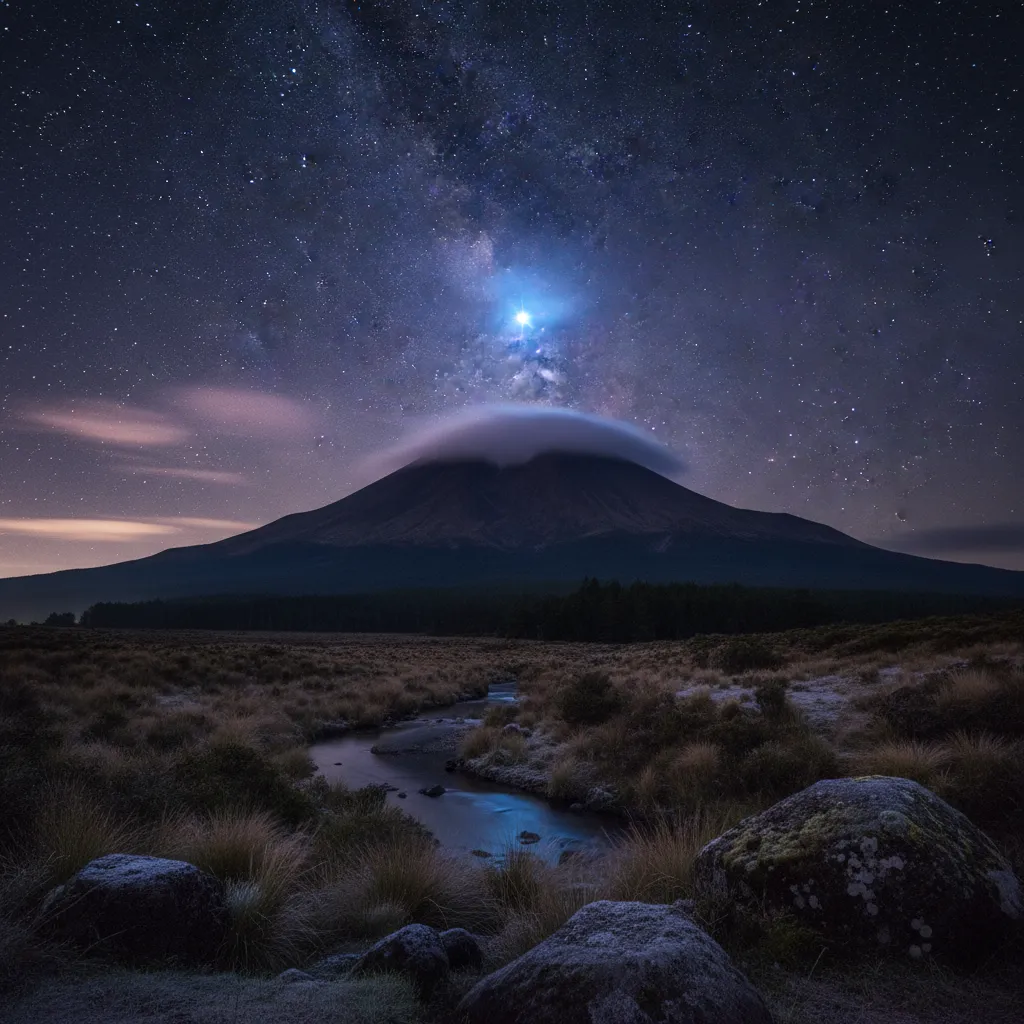
In regions such as Taranaki, the Whanganui River valley, and parts of the Far North, the landscape is dominated by high mountain ranges, rugged hill country, and dense native forests to the east. These physical barriers block the view of the low horizon where Matariki rises. Consequently, the cluster is often obscured by mountains or atmospheric haze at the critical moment of dawn.
Puanga, however, rises higher in the sky and is significantly brighter than the individual stars of Matariki. This makes it visible even over high mountain ranges like Mount Taranaki. Therefore, the ancestors of these regions utilized Puanga as their primary marker for the New Year and the changing of seasons.
The Relationship Between Puanga and Matariki
While they are distinct celestial bodies, Puanga and Matariki are intrinsically linked in the Māori astronomical calendar. They are often described as cousins or related deities in celestial lore. Their relationship is cooperative rather than competitive; they both serve the purpose of timekeeping and ecological prediction.
The rise of these stars signals the end of the harvest and the time to store food for the winter. The proverb “Puanga kai rau” (Puanga of the abundant food) refers to the stockpiling of resources during this period. When Puanga is seen, it is a signal that the seasonally available food sources are finishing and winter has truly arrived.
Cosmic Positioning
In the night sky, Puanga and Matariki rise roughly around the same time of year in the pre-dawn sky, but their positions differ. Matariki is located in the constellation Taurus, while Puanga is in Orion. If you draw a line from Orion’s Belt upwards to the left, you hit Puanga. If you draw a line from Orion’s Belt downwards to the right, you pass the bright red star Aldebaran and eventually reach the cluster of Matariki.
The Astrophysics of a Blue Supergiant
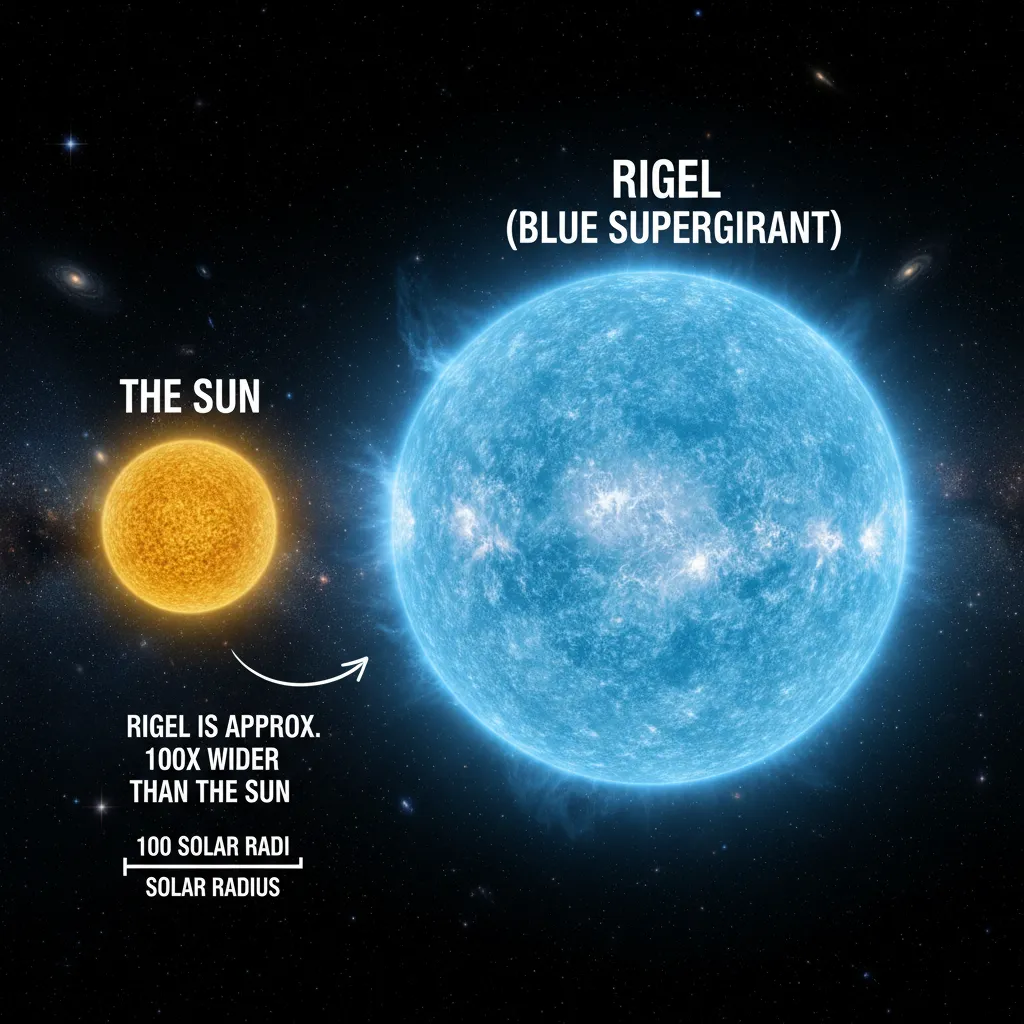
From a strictly scientific perspective, Puanga star astronomy reveals one of the most impressive objects in our local galaxy. Rigel is a spectral type B8Ia star, meaning it is a luminous blue supergiant. Its surface temperature is approximately 12,000 Kelvin, which is more than double that of our Sun.
Luminosity and Distance
Puanga is located approximately 860 light-years from Earth. Despite this immense distance, it shines at a magnitude of roughly 0.12, making it easily visible from urban areas with light pollution. Its intrinsic luminosity is staggering—it emits roughly 120,000 times more energy than the Sun. If Puanga were placed in the center of our solar system, it would extend to the orbit of Mercury, and its intense ultraviolet radiation would instantly vaporize anything on Earth.
Stellar Evolution
As a massive star (estimated at 21 times the mass of the Sun), Puanga burns through its hydrogen fuel at a voracious rate. It is destined to end its life in a spectacular supernova explosion. This astronomical violence contrasts sharply with the peaceful cultural association of the star as a herald of rest, reflection, and new beginnings.
Best Times and Techniques for Viewing
For those wishing to observe Puanga, particularly to mark the Māori New Year, timing is essential. The observation period is known as the heliacal rising—when the star becomes visible above the eastern horizon for a brief moment before the sun rises and washes out the starlight.
Seasonal Timing
The best time to view Puanga for the New Year celebration is in the lunar month of Pipiri (usually late May, June, or early July). The specific dates shift slightly each year based on the lunar calendar (maramataka).
Daily Timing
You must look for Puanga in the pre-dawn hours. Aim to be at your viewing location between 5:30 AM and 6:30 AM. Once the sun gets too close to the horizon (civil twilight), the blue light of the sky will drown out the star.
Equipment and Location
Because Puanga is so bright, no telescope is required. It is clearly visible to the naked eye. However, using a pair of binoculars can help reveal the star’s intense blue-white color and differentiate it from nearby stars.
Ideal viewing conditions include:
- East-Facing Horizon: Find a spot with a clear view to the East/North-East.
- Elevation: Getting to higher ground helps avoid low-lying fog or mist, which is common in NZ winters.
- Dark Skies: While visible in cities, travelling to a dark sky sanctuary or a rural area will provide a much more profound experience, allowing you to see the surrounding stars of Te Waka o Rangi (Orion).

Conclusion
Puanga serves as a vital astronomical and cultural anchor for New Zealand. Whether viewed through the lens of western astrophysics as the supergiant Rigel, or through the lens of mātauranga Māori as the herald of the New Year for western and northern iwi, it commands respect. Its brilliance ensures that even when the landscape obscures the Pleiades, the New Year is still marked with precision and beauty.
Is Puanga brighter than Matariki?
Yes, Puanga (Rigel) is significantly brighter than the individual stars within the Matariki (Pleiades) cluster. Puanga is the seventh-brightest star in the sky, whereas the stars of Matariki are much fainter and best seen as a group.
What constellation is Puanga in?
Puanga is located in the constellation Orion. In astronomical terms, it is the star Beta Orionis, often referred to as the left foot of Orion in Greek mythology, or positioned above the belt (Tautoru) in the Southern Hemisphere sky.
Why do Taranaki iwi celebrate Puanga instead of Matariki?
Taranaki iwi celebrate Puanga because the geography of the region, specifically the mountain ranges, blocks the view of the lower-rising Matariki cluster on the eastern horizon. Puanga rises higher and is brighter, making it a reliable marker for the New Year in that region.
What color is the star Puanga?
Puanga is a blue-white supergiant. To the naked eye, it appears as an intense, piercing blue-white point of light, which contrasts sharply with the orange-red hue of the nearby star Betelgeuse.
When can I see Puanga in New Zealand?
Puanga is visible in the early morning sky (pre-dawn) during the winter months of late May, June, and July. It rises in the East/North-East shortly before the sun.
Is Puanga a single star or a cluster?
To the naked eye, Puanga appears as a single star. However, astronomically, it is a multiple star system. The primary star, Rigel A, is the supergiant that provides the vast majority of the light, but it has smaller, fainter companion stars orbiting it.