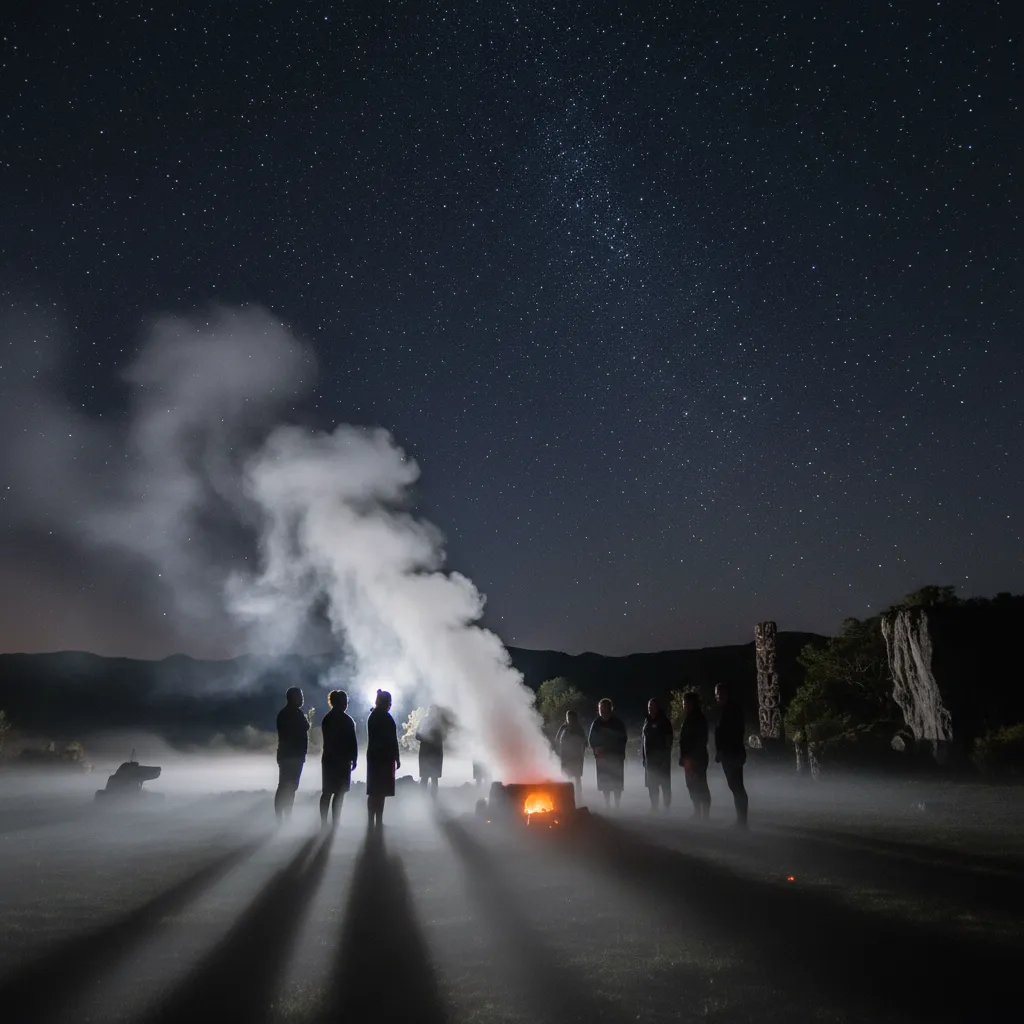
The Hautapu ceremony is a sacred Māori ritual performed during Matariki involving the spiritual offering of food to the stars. Food is cooked in a specialized earth oven (umu), and the rising steam is believed to feed the Matariki cluster. During this process, tohunga (experts) read the stars’ appearance to predict the prosperity of the coming year.
As the Matariki star cluster rises in the pre-dawn sky of midwinter, communities across Aotearoa New Zealand gather to mark the Māori New Year. Central to this observance is the Hautapu ceremony. While Matariki has recently become a recognized public holiday, the depth of its ceremonial traditions remains a subject of intense interest and cultural restoration.
The Hautapu is not merely a breakfast or a gathering; it is a sophisticated ritual of reciprocity between the earth and the sky. It serves a dual purpose: to honor those who have passed in the previous year and to ensure the community’s survival and prosperity in the year ahead through the reading of environmental signs.
What is the Meaning of the Hautapu Ceremony?
The term Hautapu can be translated to mean “sacred wind” or “sacred offering.” In the context of Matariki, it refers to the ritualistic feeding of the stars. This ancient practice was nearly lost due to colonization and the suppression of tohunga (experts) practices but has seen a massive resurgence in recent years, led by cultural experts like Dr. Rangi Mātāmua.
The ceremony is grounded in the belief that the stars of Matariki are the bringers of the year’s bounty. Therefore, to ensure a plentiful harvest, the people must first offer a portion of the land’s produce back to the celestial bodies. It is a cycle of giving and receiving—utu—that maintains the balance of the natural world.
The ceremony typically takes place before sunrise, during the phase known as Te Whitinga o te Rā (the rising of the sun), but specifically when the stars are still visible. It involves three distinct phases:
- Te Tirohanga (The Viewing): The tohunga looks to the horizon to spot the rise of Matariki.
- Taki Mōteatea (The Chanting): Lamentations are sung to farewell the dead (associated with the star Pōhutukawa).
- Te Whāngai i ngā Whetū (Feeding the Stars): The cooking and releasing of steam from the harvest offering.
The Umu Kohukohu Whetū: Cooking the Offering
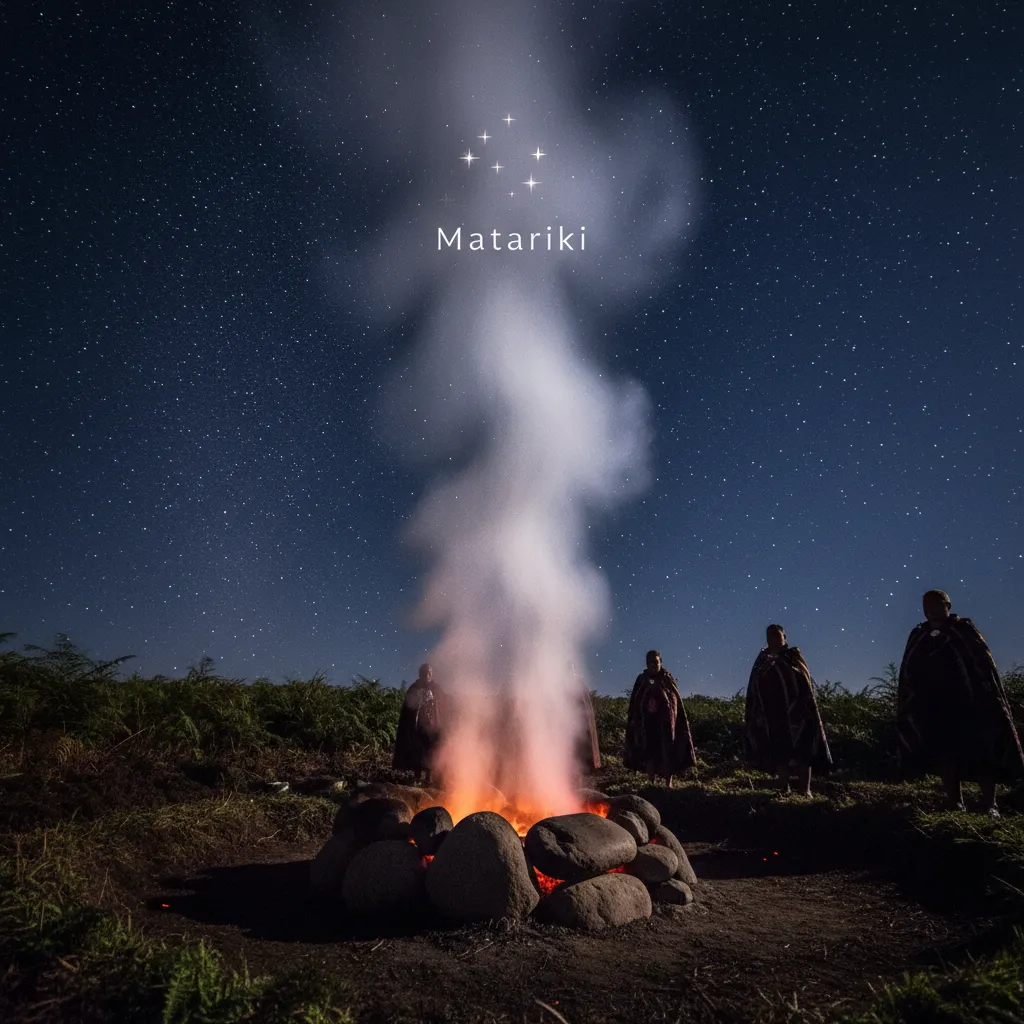
The physical heart of the Hautapu ceremony is the Umu Kohukohu Whetū, which translates to “the steaming earth oven of the stars.” Unlike a standard hāngī used for feeding people, this oven is constructed specifically for the spiritual purpose of generating steam.
The preparation requires meticulous attention to tikanga (protocol). Stones (whatu) are heated by fire until they are white-hot. These stones are then placed into a pit. However, unlike a regular hāngī where food is covered with earth to trap the steam for cooking, the Umu Kohukohu Whetū is designed to be opened at a precise moment to release the steam upwards.
The timing is critical. The food is placed on the hot stones and covered with vegetation to generate steam. Once the Matariki cluster is sighted and the appropriate karakia (incantations) have been recited, the cover is removed. This release is the climactic moment where the physical offering transforms into a spiritual one.
Why is the Steam (Auahi) Significant?
In Māori cosmology, the physical and spiritual worlds are inextricably linked. The steam, or auahi, acts as the conduit or bridge between Papatūānuku (Earth Mother) and Ranginui (Sky Father).
The food cooked in the oven represents the essence or hau of the environment. By cooking these items, their essence is released into the steam. As the steam rises, it carries the aroma and vitality of the food up to the stars. This is literally “feeding” the stars.
It is believed that if the stars accept the offering, they will shine brightly, signaling a productive year. If the smoke or steam drifts incorrectly or the stars appear dim, it may signal a lean year or the need for caution. The steam is the visible manifestation of the community’s gratitude and their request for continued sustenance.

Connecting Foods to Specific Stars
The contents of the Umu Kohukohu Whetū are not chosen at random. They must represent the four domains of the environment that provide food, each corresponding to a specific star within the Matariki cluster. A proper Hautapu must include items from each of these domains:
1. Tupuanuku (Food from the Earth)
Star: Tupuanuku
Food Offering: Kūmara (sweet potato) is the most common offering, representing all cultivated crops grown in the soil. It acknowledges the fertility of the land.
2. Tupuarangi (Food from the Sky/Forest)
Star: Tupuarangi
Food Offering: Traditionally, this would be birds (manu) such as kererū. In modern contexts, chicken or duck is often used to represent the bounty of the forests and the sky.
3. Waitī (Food from Freshwater)
Star: Waitī
Food Offering: Tuna (freshwater eels) are the standard offering here. This acknowledges the rivers, streams, and lakes that sustain the community.
4. Waitā (Food from Saltwater)
Star: Waitā
Food Offering: Ika (fish) or shellfish representing the ocean (Moana-nui-a-Kiwa). This connects the ceremony to the vast resources of the sea.
By combining these four elements in the oven, the steam that rises contains the full essence of the rohe (region), offering a complete picture of the land’s bounty back to the heavens.
How are the Stars Read During the Ceremony?
While the steam rises, the Tohunga Kōkōrangi (expert astronomer) performs the critical task of reading the stars. This is not merely looking at the sky; it is an act of environmental prediction based on centuries of observational data.
The tohunga observes the visibility, color, and distance between the stars in the cluster. These visual cues provide a forecast for the year ahead:
- Clarity and Brightness: If a specific star (e.g., Waitī) is bright and clear, it predicts a bountiful season for that food source (freshwater fish). If it is hazy or dim, food may be scarce.
- Separation: The distance between stars can indicate wind and weather patterns.
- Shimmering: Excessive shimmering can indicate heavy winds or storms in the coming season.
Following the reading, the tohunga addresses the cluster, reciting the names of those who have passed away since the last rising of Matariki. This connects the star Pōhutukawa (connected to the dead) to the ceremony. The names are called out to the sky, releasing their spirits to become stars themselves.

Watching the National Ceremony and Modern Observance
Today, the Hautapu ceremony has moved from the shadows of history into the national spotlight. Since the establishment of the Matariki public holiday, a national Hautapu ceremony is broadcast live every year, hosted by different iwi (tribes) across New Zealand.
Watching the broadcast has become a new tradition for many New Zealanders. It allows the public to witness the solemnity of the karakia (prayers), the emotional roll call of the deceased, and the joy of the rising sun. While the official ceremony is conducted by experts, communities and whānau (families) often host their own adapted versions.
How to Participate Respectfully
If you are attending a public Hautapu or watching one:
- Silence is Golden: The period before sunrise is solemn. Silence allows for reflection on those who have passed.
- Listen to the Karakia: Even if you do not speak Te Reo Māori, the rhythm and intent of the incantations carry spiritual weight.
- Celebrate the Sunrise: Once the ceremony concludes and the sun rises, the mood shifts from mourning to celebration. This is the time for kai (food) and shared festivities.
People Also Ask
What time is the Hautapu ceremony performed?
The Hautapu ceremony is performed in the pre-dawn hours, typically between 5:00 AM and 6:30 AM. It must take place when the Matariki stars are visible on the horizon but before the sun has fully risen. The ceremony concludes as the sun breaches the horizon, marking the start of the new day and year.
Can anyone perform a Hautapu ceremony?
Traditionally, a Hautapu is performed by a tohunga (expert) due to the strict tapu (sacredness) and knowledge required for the incantations and star reading. However, modern adaptations allow whānau and communities to perform symbolic versions of the ceremony to honor the stars and their ancestors, provided they approach it with respect and proper intent.
What are the 4 stars connected to food in Matariki?
The four stars connected to food sources are Waitī (freshwater and eels), Waitā (saltwater and fish), Tupuanuku (food grown in the earth, like kūmara), and Tupuarangi (food from the sky and forests, like birds and berries). These stars dictate the ingredients used in the ceremonial oven.
Why is steam used to feed the stars?
Steam (auahi) is viewed as a spiritual bridge. In Māori belief, the essence or vitality (hau) of the food is released through the steam. Because steam is weightless and rises upward, it is the only medium capable of carrying the offering from the earth to the celestial realm of Ranginui (the Sky Father).
What happens if you can’t see Matariki during the ceremony?
If the stars are obscured by clouds or bad weather during the Hautapu, it is traditionally interpreted as a sign that the coming year might be difficult or that resources could be scarce. However, the ceremony proceeds regardless, as the intent of the offering remains to appease the environment and honor the ancestors.
Is the Hautapu ceremony religious?
The Hautapu is spiritual rather than religious in the Western sense. It is a cultural practice rooted in Māori cosmology and environmental observation. It focuses on the connection between humanity, nature, and the cosmos, rather than worshiping a singular deity. It is compatible with various personal beliefs.