
A Hautapu is a sacred ceremonial offering performed during Matariki, the Māori New Year. It involves cooking specific foods in a dedicated earth oven (umu kohukohu whetū) and releasing the steam to feed the stars. Tohunga (experts) read the rising smoke to predict the fortunes of the coming year.
Matariki, the Māori New Year, is a time of renewal, remembrance, and celebration in Aotearoa New Zealand. While many associate the holiday with gathering for meals and viewing the Pleiades star cluster, the spiritual core of the observance lies in the Hautapu ceremony. This ancient ritual, revived in recent years alongside the establishment of the Matariki public holiday, serves as the primary mechanism for connecting the physical realm with the spiritual domain of the stars.
Understanding the Hautapu is essential for anyone wishing to grasp the true depth of Matariki. It is not merely a performance; it is a sophisticated system of environmental observation and spiritual gratitude that dictates how the coming year is approached.
What is the Meaning of Hautapu?
The term Hautapu carries deep linguistic and cultural significance. Etymologically, it can be broken down into ‘hau’ (vitality, breath, or essence) and ‘tapu’ (sacred or restricted). In the context of Matariki, it is often translated as a “sacred offering” or “feeding the stars.”
In pre-colonial times, the Hautapu was a critical ritual conducted by tohunga (priestly experts) to ensure the community’s survival. The core belief is that the stars of Matariki are the bringers of the year’s bounty. By offering the essence of the food back to the stars, the people show gratitude for the harvest passed and request prosperity for the harvest to come.
This reciprocity is central to Māori cosmology. Humans are not separate from the environment; they are kin to it. The Hautapu acknowledges this relationship by returning a portion of the earth’s bounty to the celestial bodies that govern the seasons.
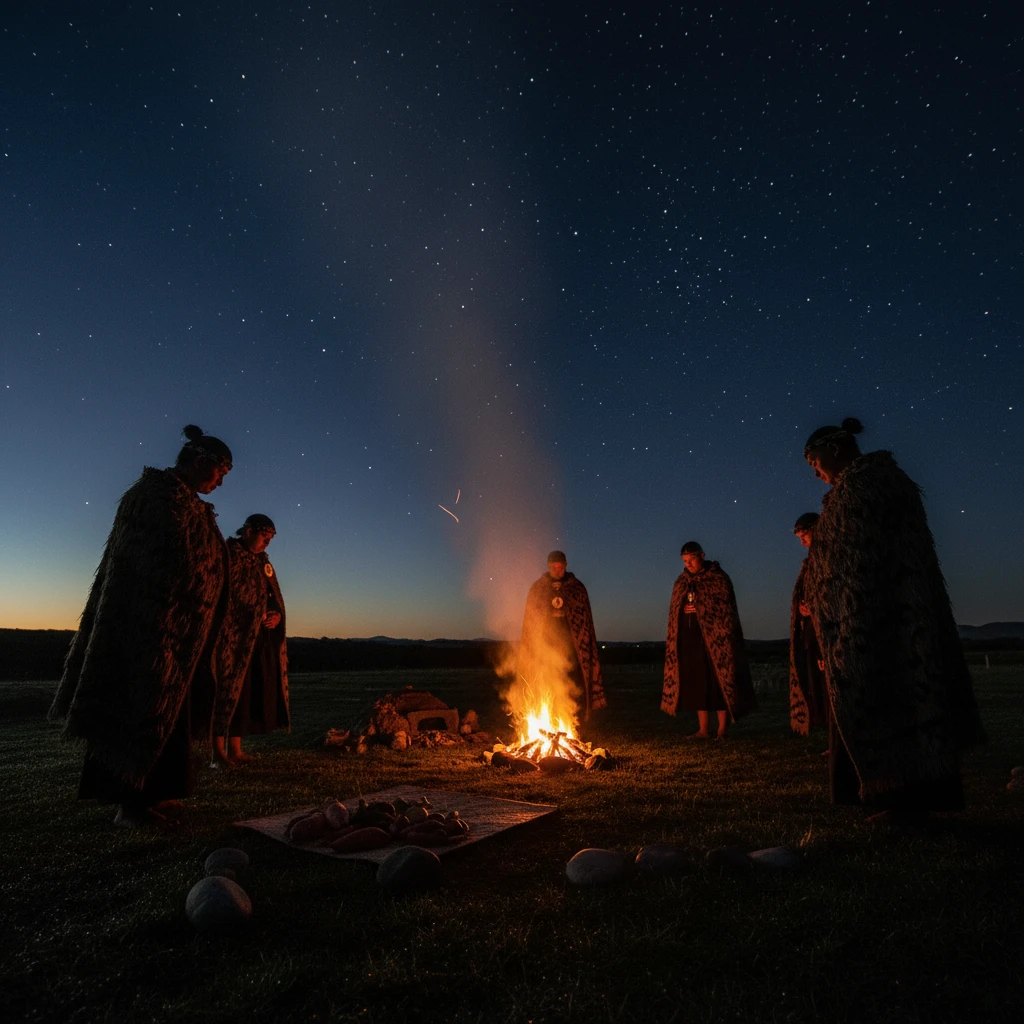
The Umu Kohukohu Whetū: The Oven of the Stars
The vessel for this offering is not a standard cooking fire, but a specialized earth oven known as Te Umu Kohukohu Whetū—the steaming earth oven of the stars. Unlike a regular hāngī used to feed people, the purpose of this umu is to generate steam.
The construction of the umu is precise. It is dug into the earth and heated with stones, much like a traditional hāngī, but the covering is managed differently. The goal is to trap the essence of the food within the steam, so that when the oven is uncovered, a concentrated pillar of ‘kai’ (food) rises directly into the sky to be consumed by Matariki.
The Four Sacred Foods
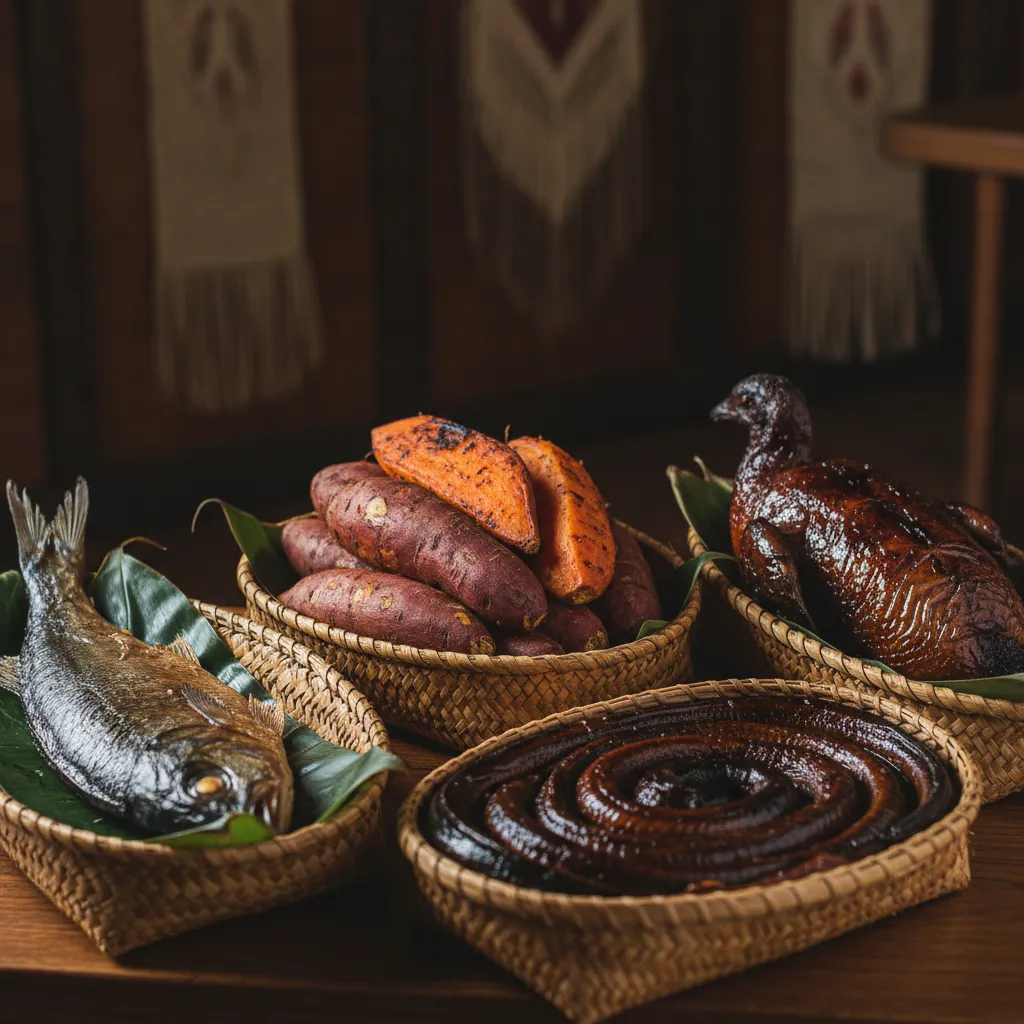
The contents of the Umu Kohukohu Whetū are strictly prescribed. They are not chosen at random but are selected to correspond with specific stars in the Matariki cluster that govern different domains of the environment. For the offering to be complete, it must contain items from the four main food sources.
1. Tupuanuku (Food from the Earth)
This star is connected to food grown in the ground. Consequently, kūmara (sweet potato) is almost always included in the Hautapu. It represents the gardens and the soil’s fertility.
2. Tupuarangi (Food from the Sky)
Connected to birds and fruits from trees, this star requires an offering of the forest. Traditionally, this would be a forest bird like a kererū. In modern ceremonies, chicken is frequently used as the substitute to represent the winged creatures of the sky.
3. Waitī (Food from Fresh Water)
This star watches over lakes, rivers, and streams. The offering for Waitī is typically tuna (freshwater eel) or freshwater fish. This acknowledges the health of the waterways.
4. Waitā (Food from Salt Water)
Governing the oceans, Waitā requires kaimoana (seafood). This could be snapper, mussels, or other saltwater catch, acknowledging the bounty of the great ocean of Kiwa.
Reading the Smoke Signals
Perhaps the most mysterious and fascinating aspect of the Hautapu is the reading of the smoke. Once the food is cooked, the covering of the umu is removed. This moment is the climax of the ritual.
The steam that escapes is not just water vapor; it is the spiritual essence of the offering. The tohunga watches how the steam rises and interacts with the atmosphere. This practice is known as reading the tanda.
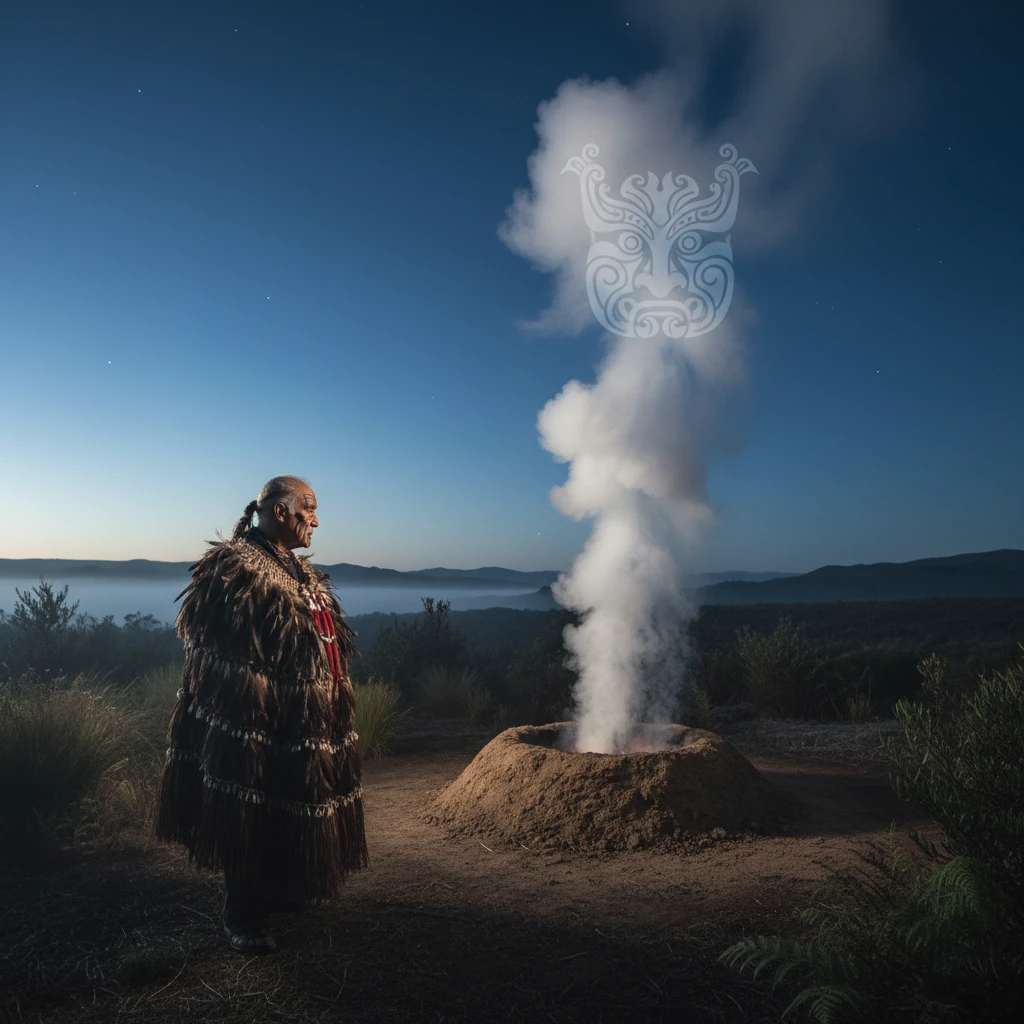
There are several elements the experts look for:
- The Rise: Does the smoke rise straight up, or does it waver? A straight pillar often indicates stability and calm weather.
- The Drift: The direction the smoke blows indicates prevailing winds for the year.
- The Thickness: Thick, lingering smoke suggests a bountiful year, while thin, wispy smoke might suggest scarcity or the need for careful rationing.
If the smoke rises directly towards the Matariki cluster, it is viewed as a sign that the offering has been accepted by the stars.
The Ceremony Process: From Darkness to Light
The Hautapu is not a daytime event. It follows a strict temporal progression moving from Te Pō (the darkness) into Te Ao Mārama (the world of light).
1. Te Tirohanga (The Viewing)
Before the ceremony begins, usually around 5:00 AM or 6:00 AM, the tohunga and whānau (family) gather to view the stars. They look for the visibility of Matariki. If the stars are bright and clear, it is a good omen. If they are hazy or shimmering, it predicts a cold and wet winter.
2. Taki Mōteatea (Chanting)
As the ceremony begins, karakia (prayers) and mōteatea (laments) are chanted. This is the time to call out the names of those who have passed away since the last rising of Matariki. It is a solemn time of weeping and releasing grief, sending the spirits of the deceased to become stars in the sky.
3. Te Whāngai i ngā Whetū (Feeding the Stars)
This is the opening of the Umu Kohukohu Whetū. As described above, the steam is released. The officiant recites karakia dedicating the food to the cluster, listing the stars and their domains.
4. Te Whakau (The Lifting of Tapu)
Once the stars have been fed and the sun begins to rise, the ceremony transitions. The cooked kai is removed from the oven. While the essence has gone to the stars, the physical sustenance remains. This food is now used to lift the tapu (sacred restriction) from the participants. By eating the food, the people transition back from the spiritual realm to the common realm (noa).
How to Watch the National Broadcast
Since Matariki became an official public holiday in New Zealand, the Hautapu ceremony has been broadcast nationally. This allows all New Zealanders, regardless of their location, to participate in this unique cultural heritage.
The national broadcast typically rotates to different iwi (tribes) and locations each year, showcasing the regional variations of the ceremony. For example, some tribes may look for the star Puanga (Rigel) rather than Matariki if their geography blocks the view of the Pleiades.

Tips for participating from home:
- Wake up early: The broadcast usually begins pre-dawn (around 6:00 AM NZT).
- Step outside: During the viewing portion of the broadcast, step out of your home to look for the stars yourself.
- Share kai: Prepare a breakfast to eat once the ceremony concludes, mirroring the lifting of the tapu.
The Hautapu is more than a ritual; it is a moment of national identity. It invites us to slow down, remember our loved ones, respect the environment, and look forward with hope.
What foods are in a Hautapu?
A Hautapu must contain four specific types of food: Kūmara (representing earth/Tupuanuku), Fish or Eel (representing water/Waitī and Waitā), and Birds or Chicken (representing the sky/Tupuarangi).
What time is the Hautapu ceremony?
The ceremony takes place in the pre-dawn hours, known as ‘te ata pō’. It usually begins around 5:00 AM or 6:00 AM and concludes as the sun rises.
Who performs the Hautapu?
The ceremony is led by Tohunga (cultural experts/priests) who are trained in the specific karakia (prayers) and the art of reading the stars and smoke signals.
Can anyone attend a Hautapu?
Traditionally, these were restricted ceremonies. However, major national Hautapu events are now public or broadcast on television for everyone to witness. Local marae may hold their own ceremonies which may be open to the community upon invitation.
What is the difference between Hāngī and Hautapu?
A Hāngī is an earth oven used primarily to cook food for people to eat. A Hautapu involves a specific oven (Umu Kohukohu Whetū) where the primary purpose is to generate steam to feed the stars, though the food is eaten afterward to lift the tapu.
Why do Māori feed the stars?
Feeding the stars is an act of reciprocity. It acknowledges that the stars (environment) provide the food for the people, so the people return the essence of that food to the stars to ensure a bountiful harvest in the coming year.