
What is the Hautapu ceremony during Matariki?
The Hautapu ceremony is a sacred Māori ritual performed during Matariki to feed the stars. It involves cooking specific foods in a specialized earth oven called an umu kohukohu whetū. The steam rising from the oven carries the essence of these offerings to the heavens, signifying gratitude for the past year, remembering those who have passed, and requesting prosperity for the year ahead.
As the cluster of stars known as Matariki (the Pleiades) rises in the pre-dawn sky of mid-winter, Aotearoa New Zealand pauses to mark the Māori New Year. While Matariki is a time of celebration, feasting, and environmental awareness, its spiritual pinnacle is undoubtedly the Hautapu ceremony. This ancient rite, revived and brought to the forefront of national consciousness with the establishment of the Matariki public holiday, serves as the bridge between the physical realm of the earth and the spiritual domain of the stars.
The Hautapu is not merely a symbolic gesture; it is a profound energetic exchange. It is a moment where the veil between the past and the future thins, allowing the living to honor their ancestors (tīpuna) and secure the fertility of the environment for the coming season. Understanding the Hautapu requires delving into the intricate relationship Māori have with the environment, astronomy, and the cycles of life and death.
In this comprehensive guide, we explore the depths of the Hautapu ceremony, from the construction of the sacred earth oven to the reading of the smoke signals that predict the nation’s future.

The Umu Kohukohu Whetū: The Earth Oven
Central to the Hautapu ceremony is the umu kohukohu whetū. While it shares similarities with the traditional hāngī used for cooking large feasts, the umu kohukohu whetū is distinct in its purpose and construction. It is not designed to cook food for human consumption in the ordinary sense, but rather to transform physical food into a spiritual offering through the medium of steam and smoke.
The Construction of the Umu
The term kohukohu refers to the steam or smoke, and whetū means stars. Therefore, this is an “earth oven of steam for the stars.” The construction begins well before dawn. Stones, known as taowaru, are heated in a fire until they are white-hot. These stones hold the heat required to generate the intense steam necessary for the ritual.
Unlike a hāngī intended for a village feast, which is buried for hours to slow-cook meat and vegetables, the umu kohukohu whetū is a more immediate vessel. The heated stones are placed in a shallow pit, and the offerings are placed on top. However, the critical difference lies in the covering. While a food hāngī is sealed tight to trap steam, the umu kohukohu whetū is designed to be opened at a precise moment to release the essence (hau) of the food upwards.
The Significance of the Stones
The stones used in the umu are often sourced from local rivers, carrying the mauri (life force) of the local landscape. When heated by fire (representing Tahu-wera or Mahuika), they effect a transformation. They turn the water content within the food and the vegetation used for packing into steam. This state change—from solid/liquid to gas—is the mechanism by which the offering travels from Papatūānuku (Earth Mother) to Ranginui (Sky Father) and the stars of Matariki.
Offerings to the Stars: The Four Elements
The food placed within the umu kohukohu whetū is not chosen at random. It is meticulously selected to represent the different domains of the environment over which the stars of Matariki preside. Each food item corresponds to a specific star in the cluster, acknowledging the source of that food and asking for its continued bounty.
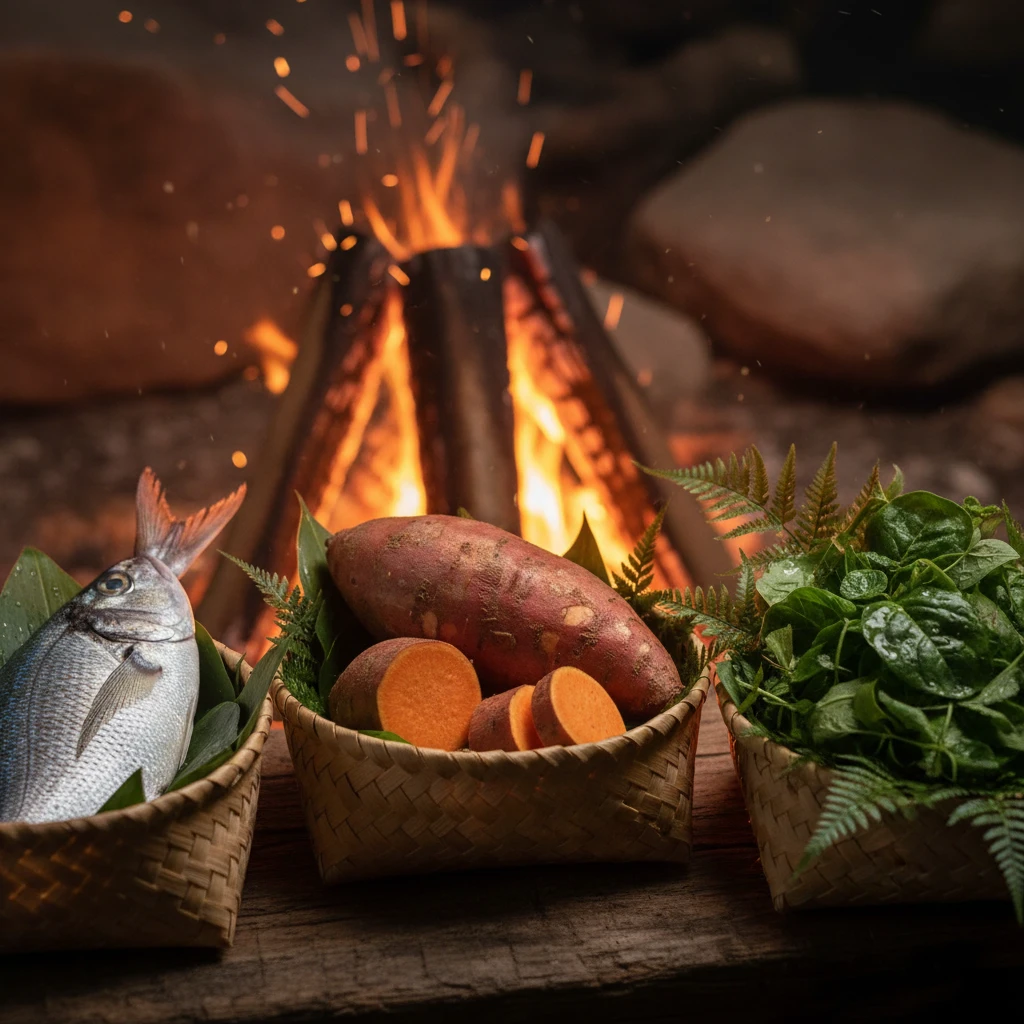
1. Tupuānuku: Food from the Earth
Star: Tupuānuku is the star connected to food that grows within the soil.
Offering: Kūmara (sweet potato) is the most common offering here. It represents the gardens and the crops that are harvested before winter. Offering kūmara is a gesture of thanks for the harvest stored in the pātaka (storehouse) and a plea for fertile soil in the coming planting season.
2. Tupuārangi: Food from the Sky
Star: Tupuārangi is associated with food that comes from the sky and the trees.
Offering: Historically, this would be birds like kererū. In modern ceremonies, chicken is often used as a substitute to represent the avian world. This offering acknowledges the forests, the berries, and the birds, ensuring the ecosystem remains vibrant and productive.
3. Waitī: Food from Fresh Water
Star: Waitī watches over freshwater environments—lakes, rivers, and streams.
Offering: Tuna (freshwater eel) is the standard offering. Eels are a taonga (treasure) species for Māori, representing the health of the waterways. By offering tuna, the ceremony acknowledges the life-giving properties of fresh water.
4. Waitā: Food from Salt Water
Star: Waitā is the twin of Waitī and presides over the ocean (Moana-nui-a-Kiwa).
Offering: Ika (fish), such as snapper or kahawai. This acknowledges the vast resources of the ocean and the reliance of the people on the sea for sustenance.
Reading the Smoke: Interpreting the Signs
The climax of the Hautapu occurs when the oven is uncovered. This is known as te whāngai i ngā whetū (feeding the stars). This moment is charged with anticipation and is led by a Tohunga (expert priest or practitioner).
The Release of the Hau
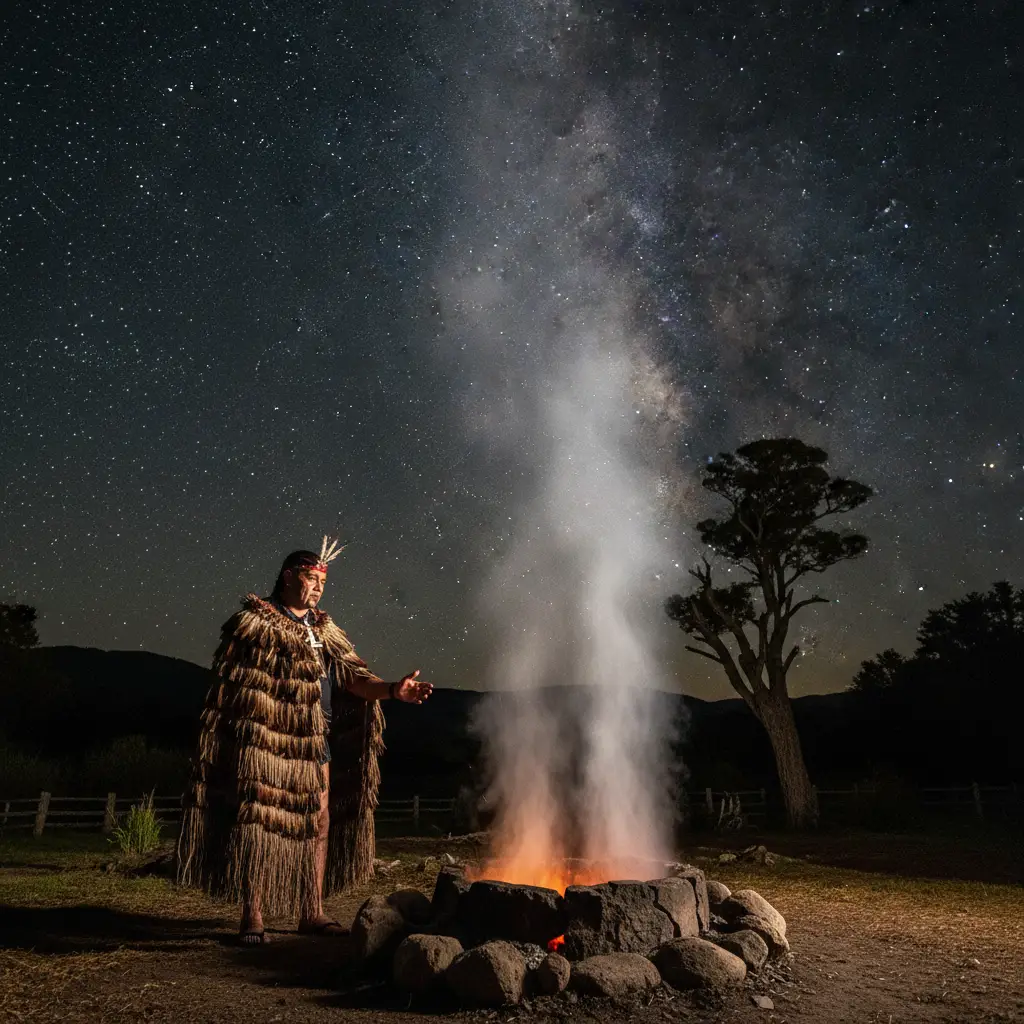
As the covering is removed, the steam (containing the essence or ‘hau’ of the food) rises into the cold, pre-dawn air. It is believed that the stars of Matariki descend to dine on this essence. This is the act of reciprocity: the people feed the stars, and in return, the stars provide the energy for the new year.
Interpreting the Tohu (Signs)
The behavior of the smoke and steam is read as an omen for the coming year. This divination aspect is crucial to the ceremony.
- Straight and Clear: If the smoke rises straight up and the stars are clear and bright, it signals a warm, productive season ahead. It indicates that the offerings have been accepted and the favor of the stars is granted.
- Turbulent or Dispersed: If the smoke is blown sideways by wind or hangs low and heavy, it can indicate a challenging year. This might predict harsh weather, poor harvests, or social unrest.
The Tohunga observes these signs and communicates them to the people, allowing the community to prepare for what lies ahead. For example, a prediction of a cold winter might prompt better rationing of stored food.
The Ceremonial Process Step-by-Step
While the Hautapu is a complex ritual, it generally follows a structured progression known as the whāngai i te hautapu. This structure ensures that all spiritual obligations are met.
Step 1: Te Tirohanga (The Viewing)
Before any cooking begins, the Tohunga observes the stars. They look for the visibility of Matariki. If the stars are obscured by clouds, the ceremony may be adjusted. They read the brightness and distinctness of each individual star in the cluster to forecast the productivity of the specific domain that star represents (e.g., if Waitī is dim, the river levels may be low).
Step 2: Te Taki Mōteatea (The Chanting)
As the fire is lit and the oven prepared, sacred chants (mōteatea) and karakia (prayers) are recited. These incantations serve to wake the environment, clear the spiritual space, and call upon the attention of the celestial bodies.
Step 3: Te Whakamahara (The Remembrance)
A vital part of Matariki is remembering the dead (the star Pōhutukawa connects Matariki to the dead). During the ceremony, the names of those who have passed away since the last rising of Matariki are called out. This is a final farewell, sending their spirits into the sky to become stars themselves (Kahui Whetū).
Step 4: Te Whāngai (The Feeding)
This is the opening of the umu described above. The steam is released, and the connection is made.
How to Watch the National Broadcast
Since the reinstatement of Matariki as a public holiday in New Zealand, the government and iwi (tribes) have collaborated to host a national Hautapu ceremony. This event rotates locations annually to honor different tribal regions (rohe).
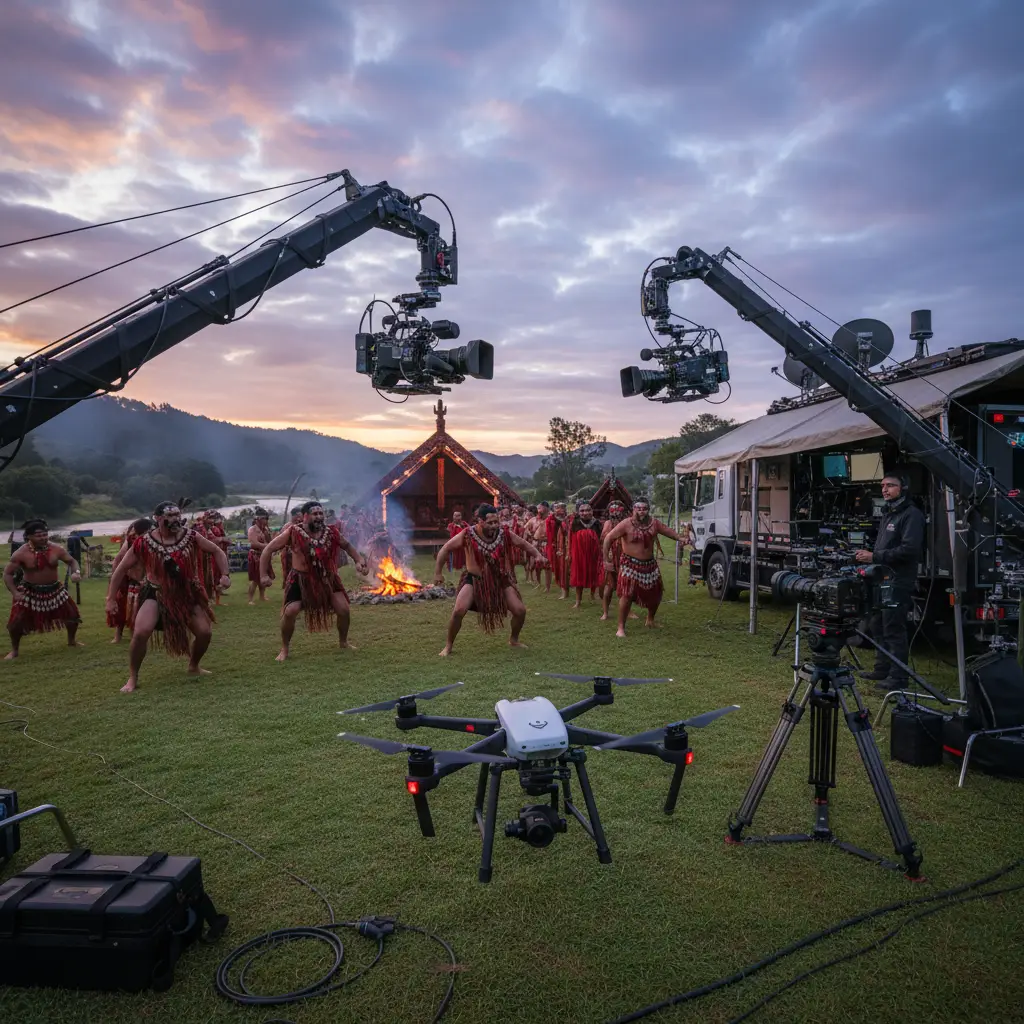
For those who cannot attend a local ceremony, watching the national broadcast is a powerful way to participate. It typically begins very early in the morning, often around 6:00 AM NZT, to align with the pre-dawn rising of the stars.
Where to Watch
- Television: The ceremony is broadcast live on major New Zealand networks, including TVNZ 1, Three, and Whakaata Māori (Māori Television).
- Online Streaming: Live streams are available on the respective websites of the TV networks and usually on the official Matariki.com website or government social media channels.
- Radio: RNZ (Radio New Zealand) and Iwi Radio stations often provide live audio commentary, explaining the karakia and proceedings in real-time.
Watching the broadcast provides educational commentary that helps decipher the te reo Māori (Māori language) spoken during the ritual, making the deep cultural concepts accessible to all New Zealanders and global viewers.
Conclusion: A Tradition Reclaimed
The Hautapu ceremony is more than a ritual; it is a statement of cultural resilience and a recalibration of time. By aligning our lives with the environment—looking to the stars for guidance and offering the fruits of the earth in gratitude—we ground ourselves in the present while respecting the past. Whether you participate by lighting a fire, cooking a meal for whānau, or watching the national broadcast, the essence of Hautapu invites everyone to pause, reflect, and look upward.
People Also Ask
What time is the Hautapu ceremony performed?
The Hautapu ceremony is performed in the pre-dawn hours, known as the wehenga o te pō me te ao (the separation of night and day). This is usually between 5:00 AM and 6:30 AM, just before the sun rises, which is the only time the Matariki cluster is visible during this time of year.
Can anyone perform a Hautapu ceremony?
While the formal Hautapu involves sacred knowledge and is traditionally led by a Tohunga, families and communities can perform their own adapted versions. This might involve a shared breakfast, lighting a candle, or simply taking time to remember loved ones and express gratitude to the environment.
What happens to the food after the Hautapu?
The food used in the umu kohukohu whetū is considered tapu (sacred) because it has been offered to the stars. Traditionally, it is not eaten by the participants. However, a second oven (umu) is often prepared simultaneously with food for the people (noa), which is eaten in a feast called the hakari to conclude the ceremony.
Why is Matariki called the Māori New Year?
Matariki marks the reset of the lunar calendar for Māori. The rising of the Pleiades cluster in mid-winter signals the end of the harvest year and the beginning of the new cycle. It is a time when the sun begins its return journey, bringing longer days and the promise of spring.
What are the 9 stars of Matariki?
The nine stars recognized in the cluster are Matariki (the mother), and her children: Pōhutukawa, Tupuānuku, Tupuārangi, Waitī, Waitā, Waipuna-ā-rangi, Ururangi, and Hiwa-i-te-rangi. Each star governs a specific environmental domain or aspect of well-being.
Is the Hautapu ceremony religious?
The Hautapu is spiritual rather than religious in a western dogmatic sense. It is based on the Māori worldview (Te Ao Māori) which sees no separation between the physical and spiritual worlds. It focuses on the connection between humanity, the ancestors, and the natural environment.