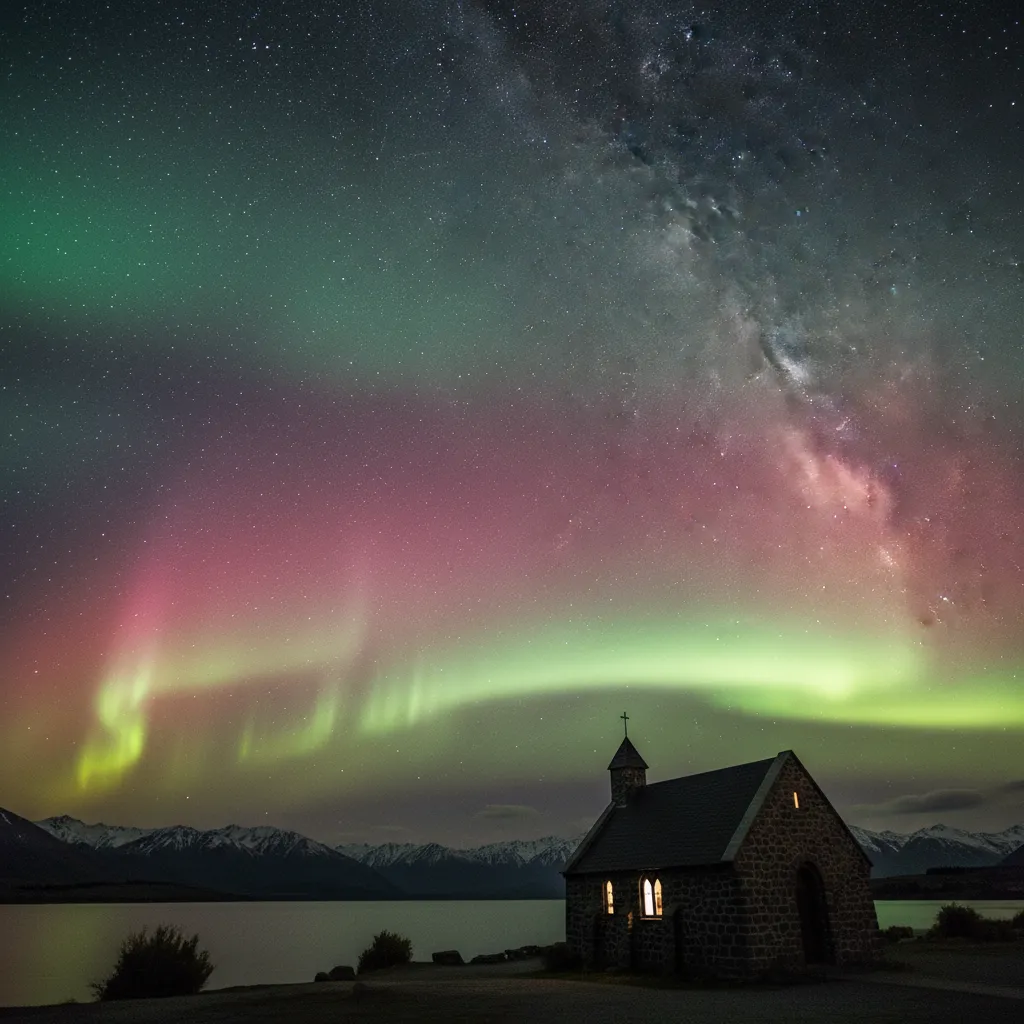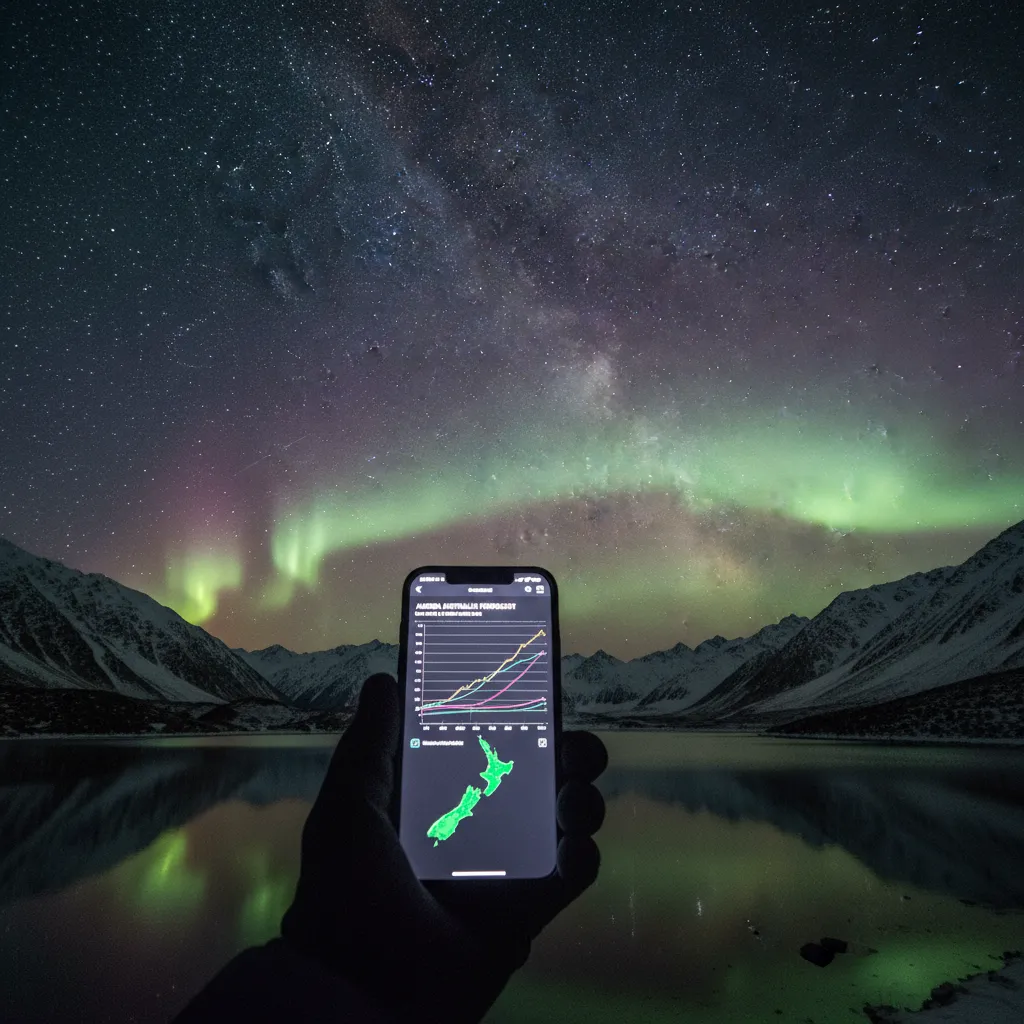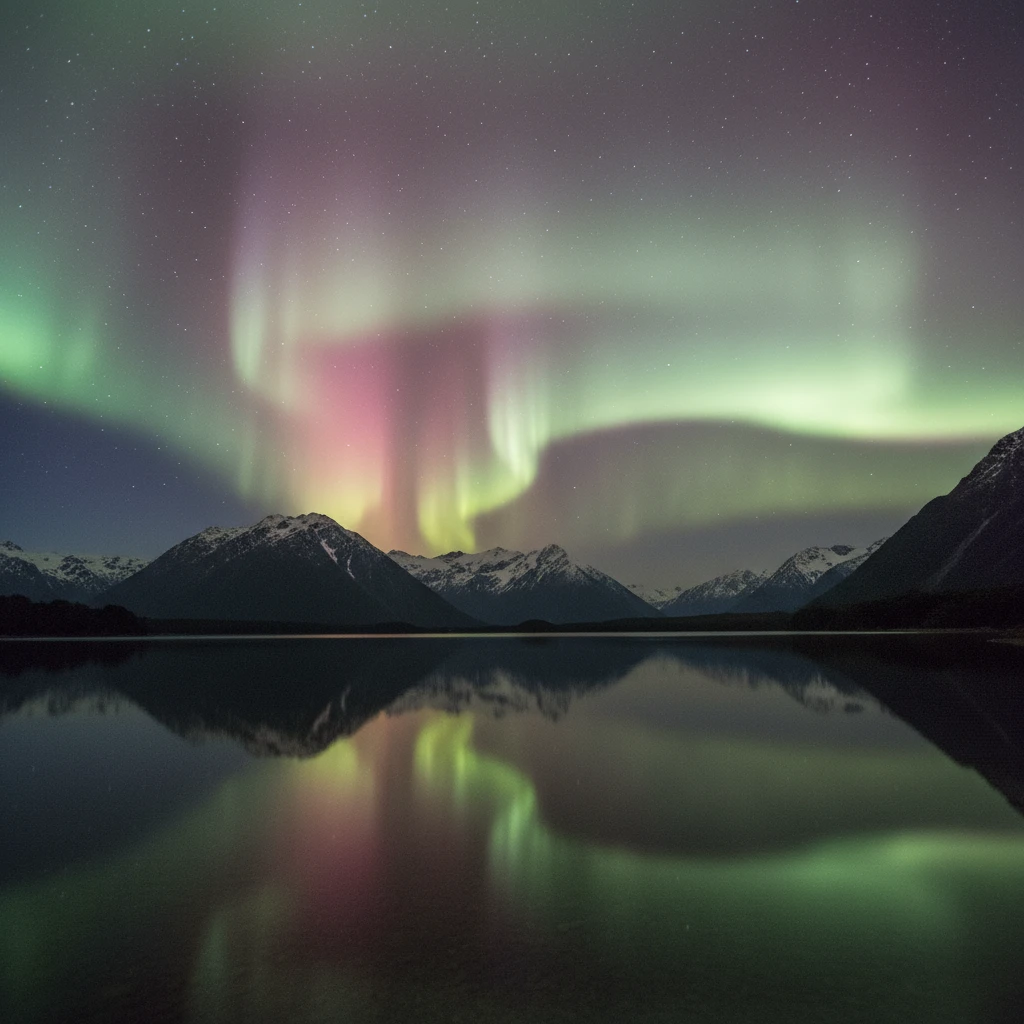
The best aurora spots in Dunedin include Hoopers Inlet and Sandfly Bay on the Otago Peninsula, which offer unobstructed southern horizons and minimal light pollution. Other prime locations are Tunnel Beach for coastal foregrounds, Mount Cargill for panoramic elevation, and Blackhead Quarry, all providing the dark skies essential for capturing the Aurora Australis.
Introduction to Southern Lights Hunting
New Zealand is rapidly gaining international recognition as one of the premier destinations for astrophotography and dark sky tourism. While the Aurora Borealis (Northern Lights) often dominates global headlines, the Aurora Australis (Southern Lights) offers an equally spectacular, albeit more elusive, celestial display. For enthusiasts and photographers, finding the right location is the single most critical factor in witnessing this phenomenon.
Among the top locations in the country, the aurora spots in Dunedin stand out due to the city’s unique geography. Situated on the southeast coast of the South Island, Dunedin offers a rare combination of accessible urban amenities and rapidly reachable dark sky locations with clear views to the south—the direction from which the aurora rises. Unlike inland locations where mountains may block the horizon, Dunedin’s coastal vantage points allow viewers to see the aurora even during weaker geomagnetic storms.
This guide provides an authoritative breakdown of the best viewing locations, prioritizing the Dunedin region before exploring other key New Zealand hotspots.
Dunedin and Otago Peninsula Spots
When searching for “aurora spots Dunedin,” the Otago Peninsula is invariably the gold standard. Its geographical orientation juts out into the Pacific Ocean, distancing viewers from the city’s light dome and providing a clear line of sight toward Antarctica. Here are the specific locations favored by local astronomers and photographers.
Hoopers Inlet
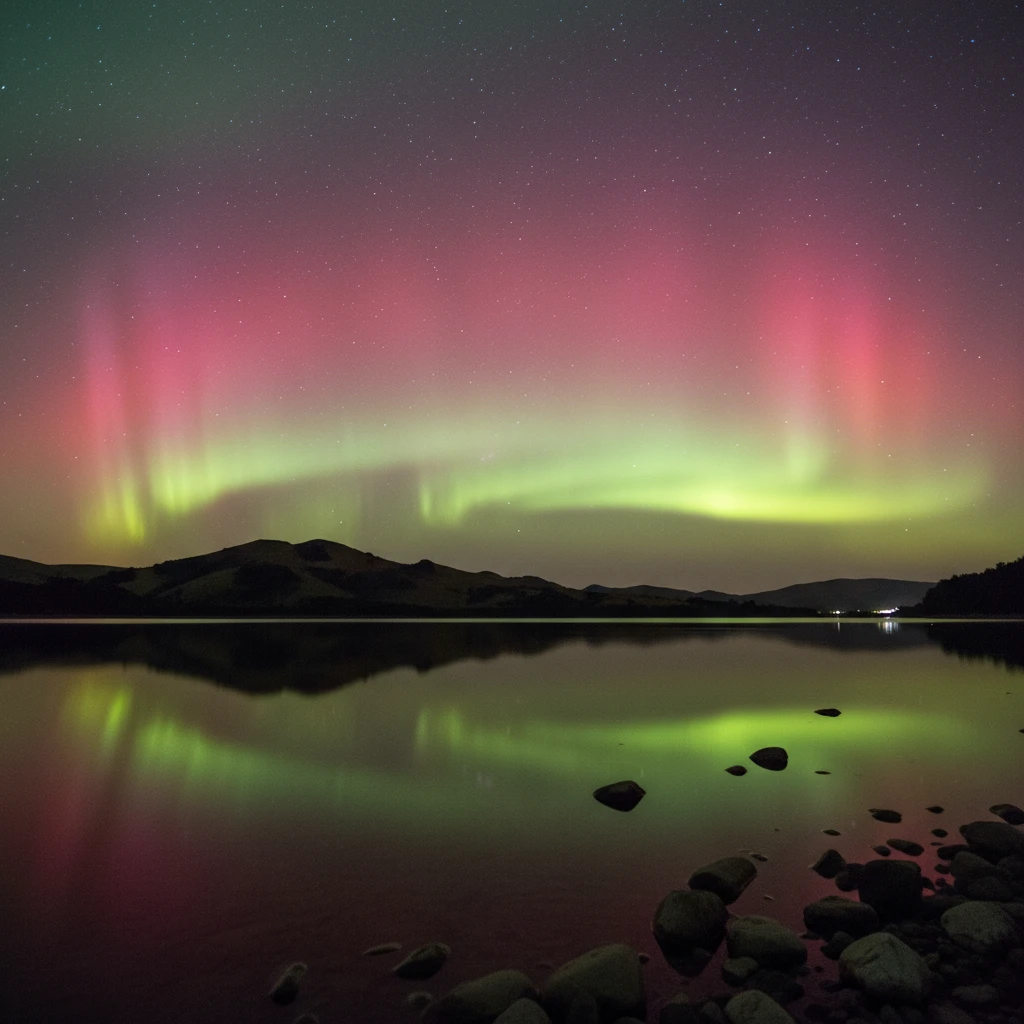
Hoopers Inlet is arguably the most popular location for aurora chasers in Dunedin. It is a shallow inlet located on the ocean side of the Otago Peninsula. The water here is often calm, especially during low tide, which allows for spectacular reflections of the aurora beams on the water’s surface.
Why it works: The surrounding hills block much of the light pollution from Dunedin city (to the west/northwest), while the southern horizon remains open. Accessible via a sealed road that turns into gravel, it offers plenty of space for tripod setups.
Sandfly Bay
Located near Hoopers Inlet, Sandfly Bay offers a wilder, more dramatic landscape. It features massive sand dunes and the distinctive Lion’s Head Rock. While the descent to the beach is steep and requires physical effort (especially the climb back up), the viewing platform near the car park offers a fantastic elevated view if you prefer not to hike down in the dark.
Why it works: It is one of the darkest spots on the peninsula. The lack of streetlights ensures that your eyes can fully dark-adapt, increasing your chances of seeing the aurora with the naked eye during strong storms.
Tunnel Beach
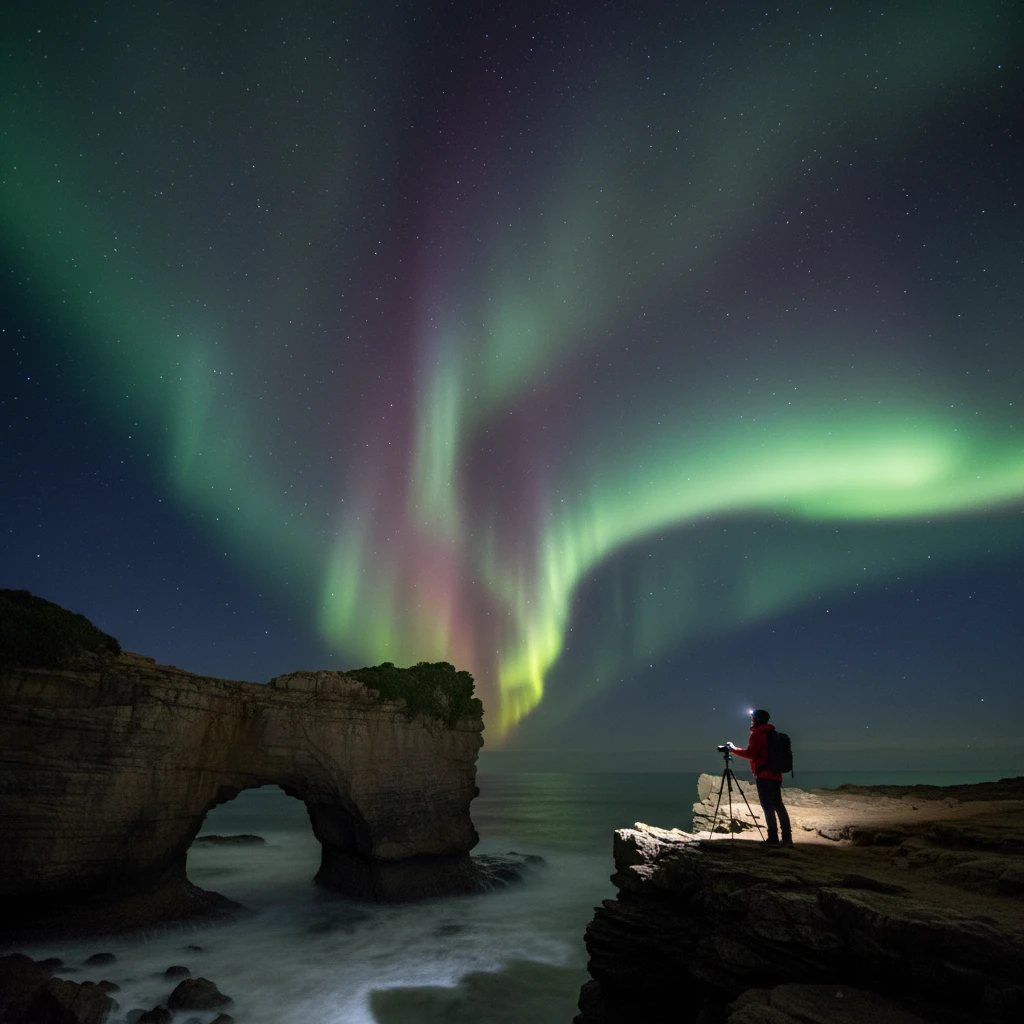
For those seeking a dramatic foreground, Tunnel Beach is unmatched. Located just south of the main city, the sandstone sea arches and cliffs provide a stunning architectural element to astrophotography compositions.
Why it works: The horizon looks directly south over the ocean. However, caution is advised; the cliffs are dangerous at night, and this location is best suited for experienced photographers who have scouted the area during daylight hours.
Mount Cargill
If you prefer elevation over coastal views, Mount Cargill offers a panoramic vista of the entire Dunedin area. At over 600 meters high, you are often above low-lying mist or fog that might obscure views at sea level.
Why it works: The 360-degree view allows you to see the extent of the auroral arc. While you will contend with some city glow to the north, the southern view remains largely unpolluted.
Queenstown and Southern Lakes
While Dunedin offers coastal clarity, the Queenstown and Southern Lakes region offers alpine drama. The juxtaposition of jagged mountain peaks against the southern glow creates some of the most iconic images of New Zealand astrophotography.
Moke Lake
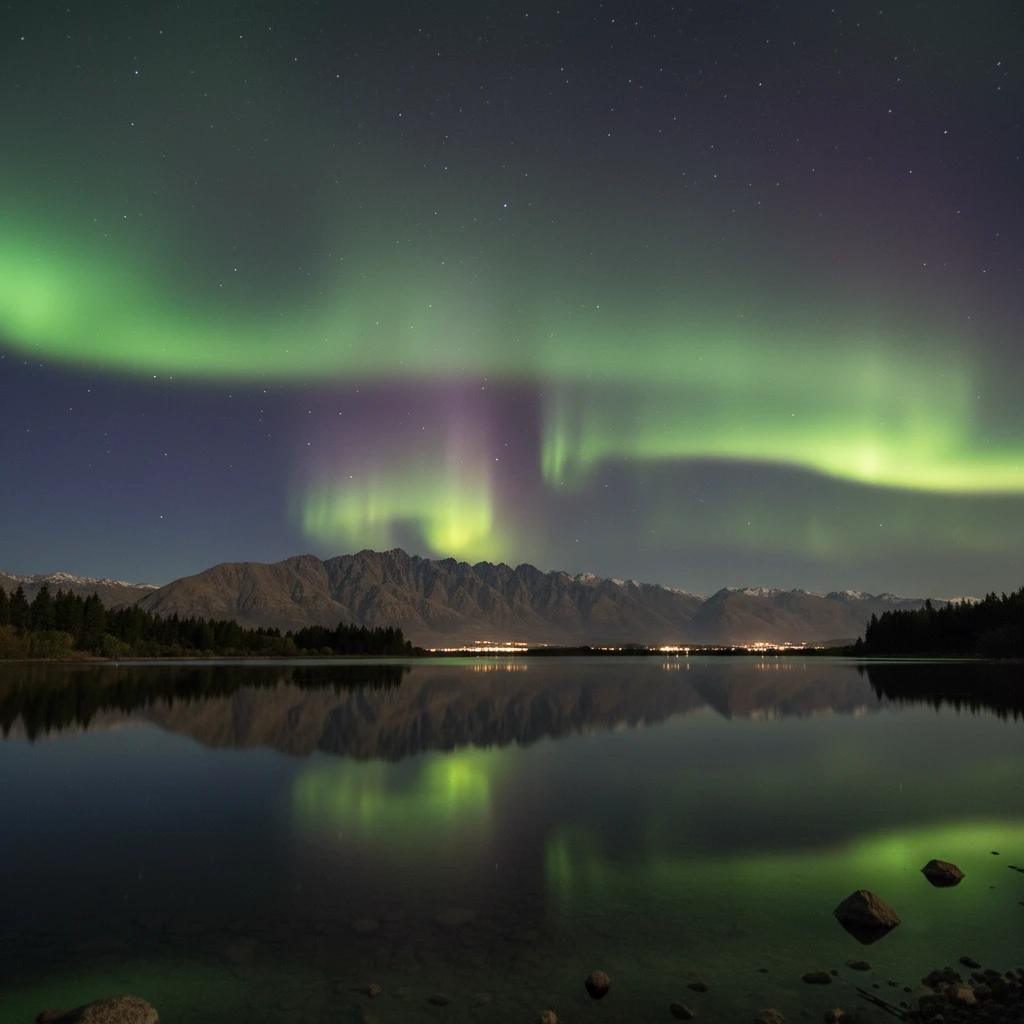
Just a 20-minute drive from Queenstown, Moke Lake is a horseshoe-shaped lake nestled between mountains. It is a favorite for its reflective waters and isolation from the bright lights of the Queenstown CBD.
Viewing Strategy: Because Moke Lake is surrounded by peaks, the aurora needs to be relatively high in the sky (a stronger Kp index) to be visible above the mountains. However, when the beams shoot high, the framing is world-class.
The Crown Range
The Crown Range Road, connecting Queenstown and Wanaka, is the highest main road in New Zealand. Pulling over safely at the summit or the designated lookouts provides a high-altitude vantage point.
Viewing Strategy: The altitude helps escape atmospheric haze. Look for laybys that face south towards The Remarkables; the silhouette of the mountains with the aurora behind is a classic composition.
Lake Hayes
For a more accessible option, Lake Hayes offers beautiful reflections. While it suffers from slightly more light pollution due to nearby residential developments, it remains a strong candidate for casual viewing without venturing onto gravel backroads.
Wellington South Coast Locations
North Islanders do not always need to travel south to see the lights. During strong geomagnetic storms (Kp 5 or higher), the Wellington South Coast becomes a prime viewing area.
Red Rocks (Pariwhero)
Located beyond Owhiro Bay, the Red Rocks track offers a rugged coastline facing directly into the Cook Strait and towards the South Island. The lack of residential lighting in the immediate vicinity makes it the capital’s best dark sky spot.
Breaker Bay
Situated on the Miramar Peninsula, Breaker Bay faces east-southeast. While not directly south, the curvature of the coast allows for good views of the expanding auroral oval. It is easily accessible by car, making it a popular spot when alerts go out.
Stewart Island/Rakiura Dark Skies
For the ultimate experience, one must travel further south to Stewart Island, also known as Rakiura—”The Land of Glowing Skies.” In 2019, it was designated as an International Dark Sky Sanctuary, a testament to the pristine quality of its night sky.
Observation Rock
Located in Oban, Observation Rock is a short walk from the town center and offers a 270-degree view, including a perfect line of sight to the south. Because the island has minimal street lighting and a very small population, the light pollution is negligible.
The Rakiura Advantage: Being further south (47°S latitude) means you are geographically closer to the auroral oval. Aurora displays that appear as a faint glow in Wellington or Christchurch can appear as overhead coronas on Stewart Island.
Understanding the Aurora Australis
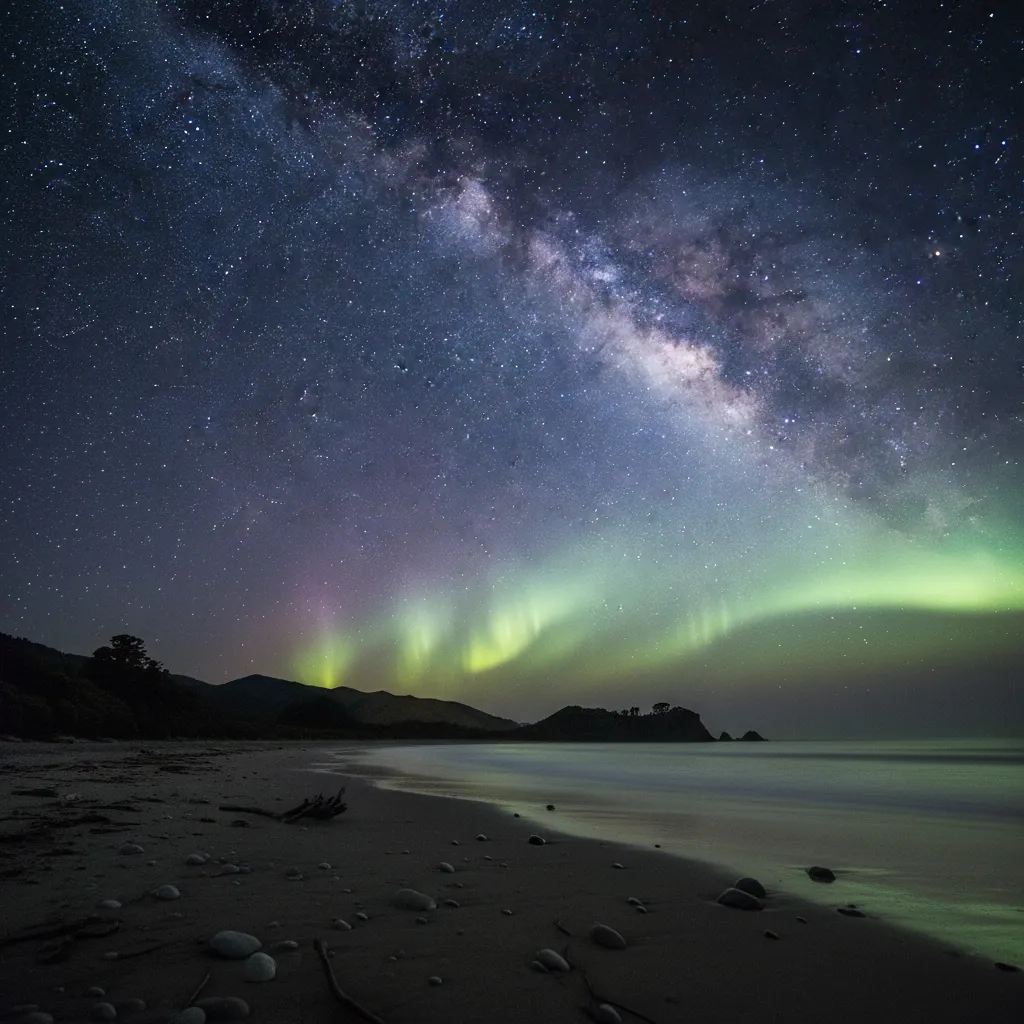
To successfully hunt the aurora, it helps to understand the science behind the spectacle. The Aurora Australis is caused by charged particles from the sun (solar wind) interacting with the Earth’s magnetic field. These particles are funneled toward the poles, where they collide with gases in the atmosphere, emitting light.
The Kp Index
The Kp index measures geomagnetic activity on a scale of 0 to 9.
- Kp 1-3: Usually visible only from Antarctica or Stewart Island/Southland with sensitive cameras.
- Kp 4-5: Visible to the naked eye in Dunedin and Queenstown; photographic in Wellington.
- Kp 6-9: Major storm. Visible across most of New Zealand.
Colors of the Aurora
The colors depend on the type of gas involved and the altitude of the collision:
- Green: Oxygen molecules at lower altitudes (up to 240km). This is the most common color.
- Red: High-altitude oxygen (above 240km). Often seen during intense storms.
- Purple/Pink: Nitrogen molecules. These are often seen at the lower edge of the aurora curtains.
Astrophotography Tips for Success
Capturing the aurora requires manual camera settings. Automatic modes will rarely work because the camera cannot “see” the light well enough to focus or expose correctly.
Essential Gear
- Tripod: Essential for long exposures. Handholding will result in blurry images.
- Fast Wide-Angle Lens: A lens with an aperture of f/2.8 or lower (e.g., f/1.8 or f/1.4) is ideal to let in maximum light.
- Remote Shutter: To prevent camera shake when pressing the button.
Recommended Settings
Start with these settings and adjust based on conditions:
- Focus: Manual focus set to infinity. (Tip: Zoom in on a bright star in Live View to ensure sharpness).
- Aperture: The widest possible (lowest f-number, e.g., f/2.8).
- ISO: 1600 to 3200. Higher ISO increases brightness but introduces noise (grain).
- Shutter Speed: 10 to 20 seconds. Exposures longer than 20 seconds may result in star trails (stars appearing as lines rather than dots) due to the Earth’s rotation.
People Also Ask
What is the best time of year to see the Aurora in Dunedin?
The Aurora Australis can occur at any time of the year, but the best time to view it is during the winter months (March to September). This is simply because the nights are longer, providing a larger window of darkness. The equinoxes (March and September) are also known to have higher geomagnetic activity due to the Russell-McPherron effect.
Can you see the Southern Lights with the naked eye in Dunedin?
Yes, but it depends on the intensity of the storm. During a moderate to strong storm (Kp 5+), the aurora appears as dynamic, moving beams of white or grey light to the naked eye. The vibrant colors seen in photos are often not visible to the human eye unless the storm is exceptionally powerful (Kp 7+), as cameras are more sensitive to light and color than human retinas in the dark.
Is Hoopers Inlet safe for night photography?
Generally, yes. Hoopers Inlet is a safe, quiet rural area. However, the roads are narrow and can be winding. There is limited cell phone reception in some parts of the Otago Peninsula. It is always recommended to visit with a buddy, bring a torch, and park well off the road to avoid obstructing local traffic.
How do I know when the Aurora is happening?
There are several forecasting tools available. The “Glendale App” is a popular local resource for real-time alerts. Additionally, websites like NOAA’s Space Weather Prediction Center and Facebook groups such as “Aurora Australis (NZ)” provide up-to-date information and real-time sightings from other chasers.
Why do my aurora photos look better than what I see?
Camera sensors can accumulate light over a period of time (long exposure), whereas human eyes see in real-time. This allows cameras to capture more photons, revealing colors and details that are too faint for the human eye to detect in low-light conditions.
Are there guided aurora tours in Dunedin?
Yes, there are specialized photography and nature tours in Dunedin that operate at night. Horizon Tours is one such operator that offers “Southern Skies” tours, taking visitors to prime dark sky locations on the Otago Peninsula and providing storytelling about Māori astronomy (Tātai Arorangi).
Conclusion
Witnessing the Aurora Australis is a bucket-list experience, and knowing the right aurora spots in Dunedin significantly increases your chances of success. Whether you choose the calm waters of Hoopers Inlet, the dramatic cliffs of Tunnel Beach, or venture further afield to the Southern Lakes or Stewart Island, patience and preparation are key. Monitor the forecasts, prepare your gear, and embrace the cold—the reward of seeing the southern skies dance is well worth the effort.