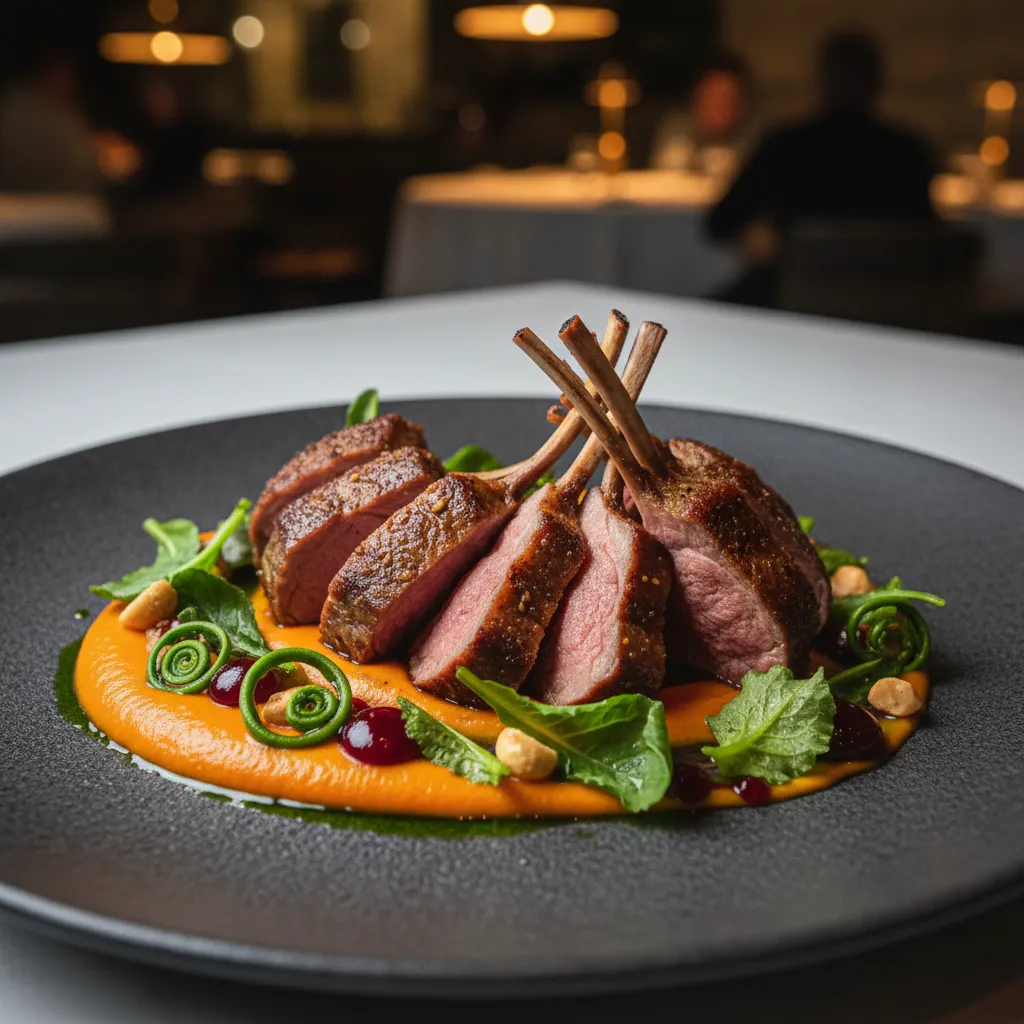
To make a traditional hāngī, dig a pit and heat volcanic stones with a large timber fire until white-hot. Place baskets of meat and root vegetables on the stones, cover with wet cloth and earth to trap steam, and cook for three to four hours. This Māori earth oven creates a unique smoky, steamed flavor.
The hāngī is the centerpiece of traditional Māori cooking and community life in New Zealand. It is more than a method of food preparation; it is a cultural event that embodies Manaakitanga (hospitality) and Whanaungatanga (connection). While modern appliances have simplified cooking, the authentic earth oven remains the gold standard for feeding large gatherings, offering a distinct flavor profile that cannot be replicated in a kitchen.
Mastering this technique requires preparation, specific geological knowledge regarding stones, and careful timing. This guide provides a professional, step-by-step approach to constructing and executing a successful hāngī.
Phase 1: Excavation and Heating the Stones
The success of a hāngī is determined long before the food touches the heat. It begins with the engineering of the pit and the selection of materials. If the stones are incorrect or the wood is wet, the hāngī will fail to reach the necessary temperature for food safety.
How do you select the right stones?
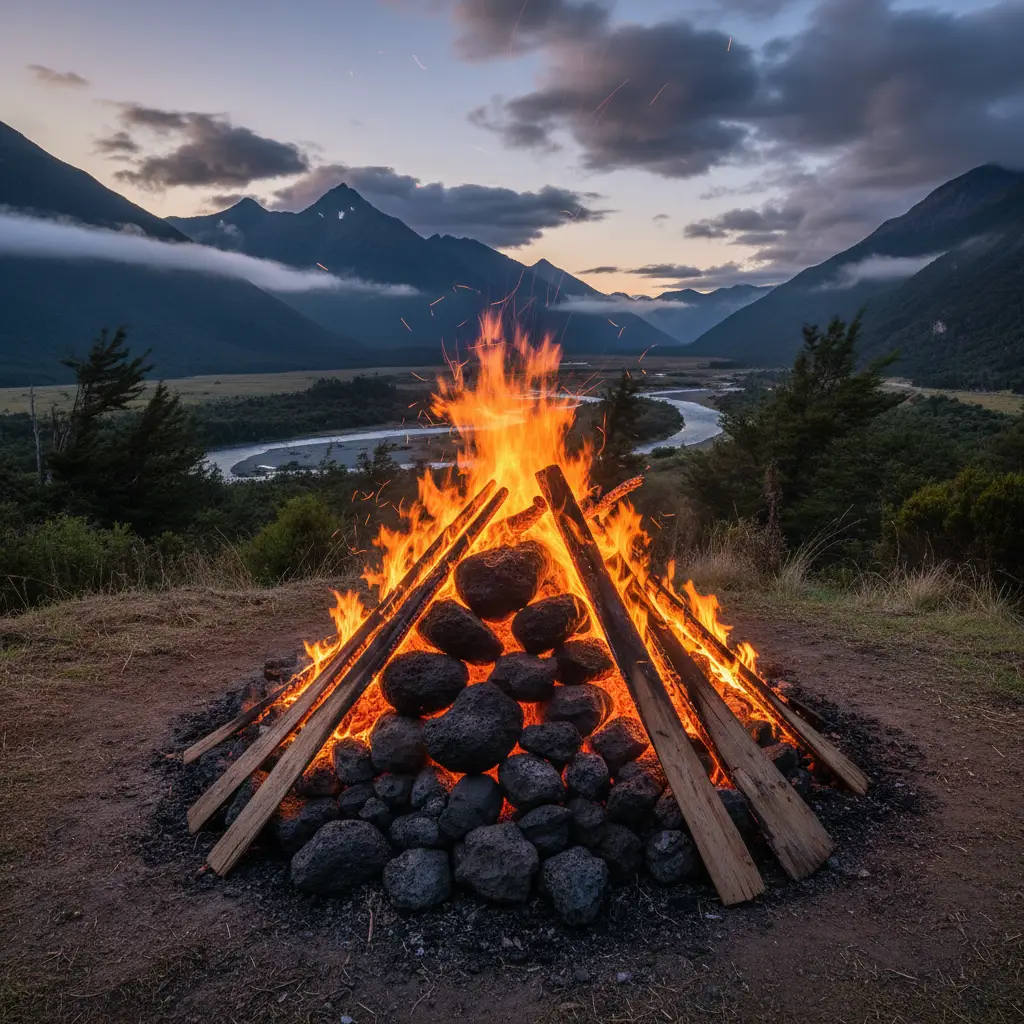
The most critical safety element in making a hāngī is stone selection. You must use volcanic rock, typically basalt or andesite. These stones are dense and can withstand intense thermal shock without fracturing.
Warning: Never use river stones or sedimentary rocks. Water trapped inside river stones expands when heated, causing the rocks to explode like grenades, which poses a severe risk to anyone standing nearby. If you are unsure, consult a local landscape supplier or a cultural advisor.
Digging the Pit
The dimensions of your pit depend on the number of baskets (kai) you intend to cook. For a standard family-sized hāngī (feeding 20–30 people), a pit measuring 1.5 meters by 1.5 meters, with a depth of roughly 60cm to 80cm, is standard.
- Soil Quality: Ensure the soil is relatively dry. If the ground is waterlogged, the water table may rise into your pit, cooling the stones and ruining the food.
- The Stack: Build a lattice framework of timber (Manuka is preferred for its high heat output and flavor) inside the pit or directly beside it, depending on your method. Place your volcanic stones on top of the wood stack.
Lighting the Fire
Light the fire and allow it to burn down completely. This process generally takes between 2 to 4 hours. The goal is to have the timber burn away to ash, leaving the stones white-hot and glowing at the bottom of the pit. If the stones are not hot enough (glowing red/white), they will not sustain the heat required for the 3-hour cook time.
Phase 2: Preparing the Kai (Food)
While the fire burns, the preparation of the food, known as the “kai,” takes place. Traditional hāngī food is hearty, consisting of meats and root vegetables that benefit from slow, steam-based cooking.
What meats and vegetables work best?
The classic hāngī combination includes:
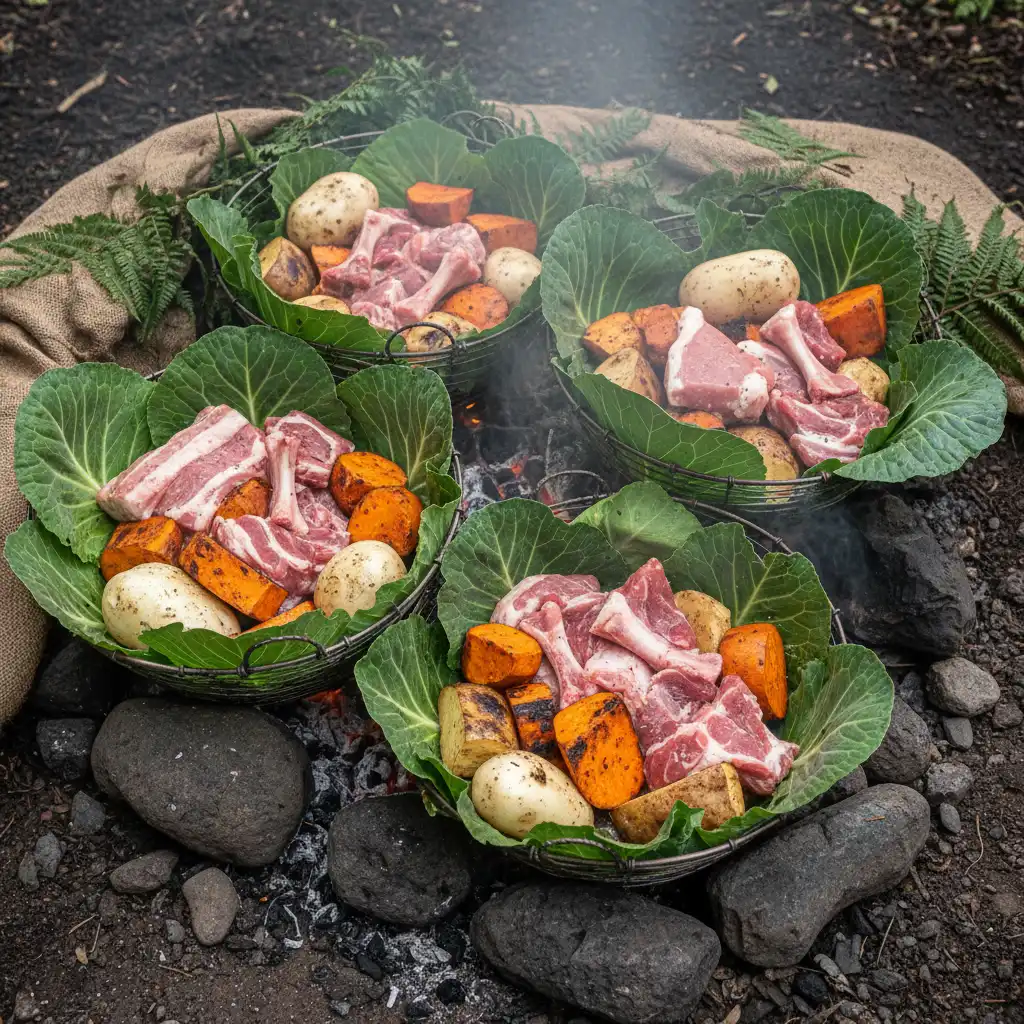
- Meats: Pork, mutton, lamb, and chicken. Large cuts are preferred as they remain moist. Season generously with salt and herbs.
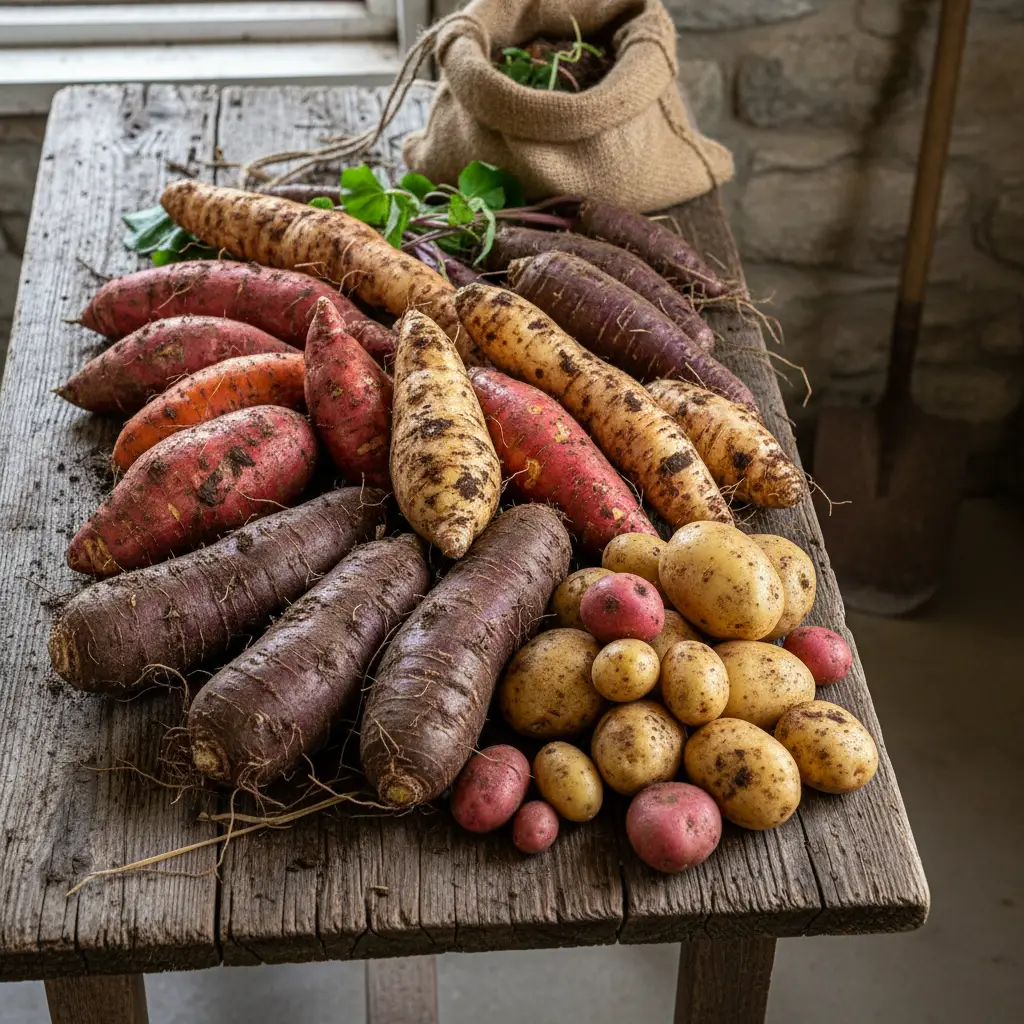
- Vegetables: Kumara (sweet potato), potato, pumpkin, carrots, and cabbage.
- Stuffing: A traditional bread stuffing is often included to absorb the savory steam.
Basket Preparation
Modern hāngī utilize stainless steel wire baskets, which are durable and easy to lift. However, the lining is where tradition meets function.
- Lining: Line the wire baskets with fresh cabbage leaves or watercress. This prevents the food from sticking to the wire and adds moisture. Aluminum foil is frequently used today for hygiene and convenience, but purists prefer leaves for flavor.
- Layering: Place heavier meats (pork/mutton) at the bottom of the basket where the heat is most intense. Place chicken and vegetables on top.
- Covering: Cover the top of the food with more cabbage leaves and a final layer of clean, wet mutton cloth or muslin.
Phase 3: The Cook – Covering and Timing
Once the fire has collapsed and the stones are white-hot, you must move quickly. Speed is essential to conserve heat.
How do you lay the Hāngī?
First, remove any unburnt timber embers; leaving them can give the food a charred, acrid taste rather than a smoky one. Level the stones at the bottom of the pit.
Some experts recommend splashing water on the stones immediately before placing the baskets to generate the initial burst of steam, while others rely on the moisture from the wet sacks and vegetation.
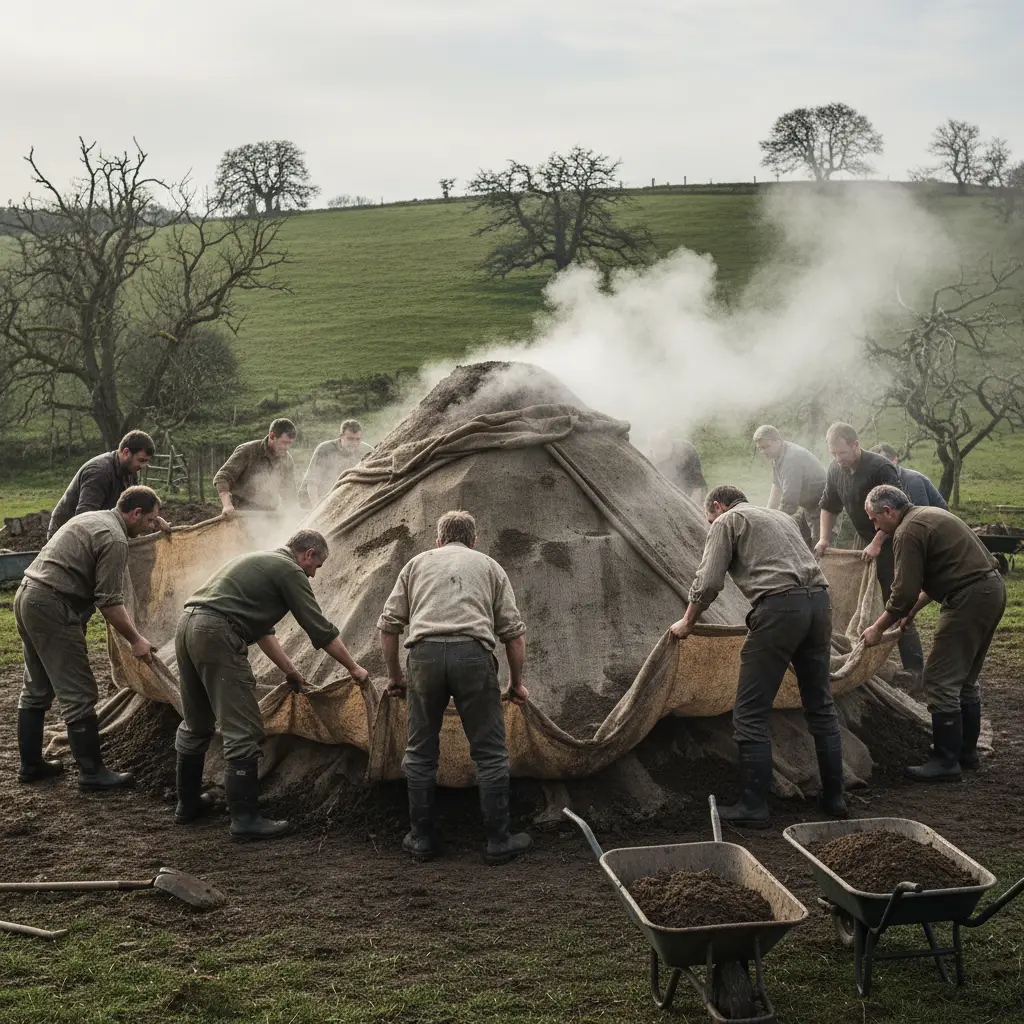
The Sealing Process
This is the most technical part of the operation. If steam escapes, the food will not cook.
- Placement: Lower the food baskets onto the hot stones.
- Wet Cloths: Immediately cover the baskets with soaking wet sheets, mutton cloth, or hessian sacks. These must be made of natural fibers (cotton/jute), not synthetic materials which will melt.
- The Earth Seal: Rapidly shovel the earth back into the pit over the wet sacks. The soil traps the steam. You must look for “steam leaks” extemdash wisps of white smoke escaping the mound. If you see steam escaping, shovel more dirt onto that spot immediately to plug the leak.
How long does a Hāngī take to cook?
A standard hāngī requires 3 to 4 hours underground. Do not be tempted to check it. The heat is finite; once you open the pit, the cooking process ends.
Phase 4: Lifting the Hāngī
After the allotted time, it is time to “lift” the hāngī. This requires care to prevent dirt from falling into the food baskets.
Carefully scrape away the soil mound until you reach the wet sacks. Peel back the sacks gently, ensuring no loose grit falls onto the kai. The smell released at this moment extemdash a mix of earth, smoke, pork, and sweet kumara extemdash is distinct and signals the start of the feast.
Modern Alternatives
Not every location or occasion permits digging a large pit and lighting a bonfire. Modern technology has adapted the hāngī principle for urban environments.
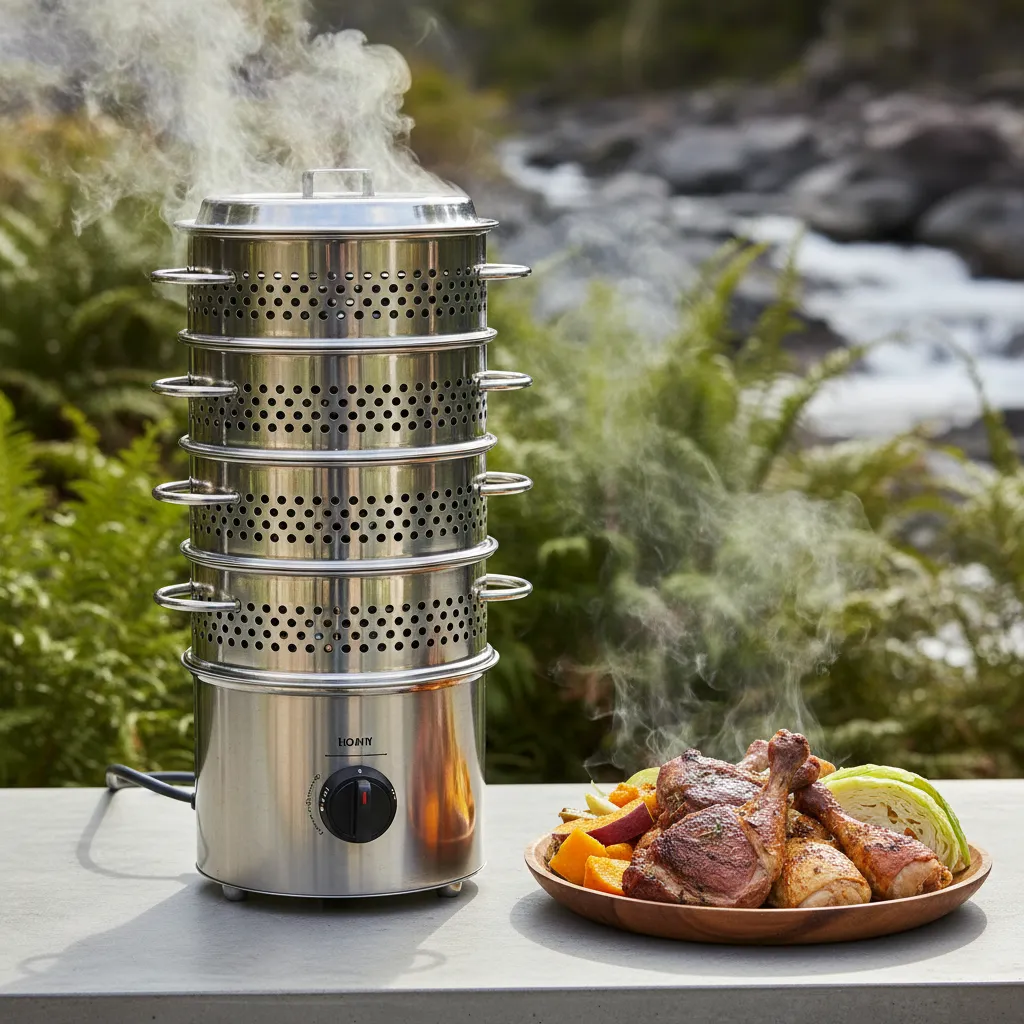
Hāngī Steamers and Cookers
Stainless steel “Hāngī Steamers” (often gas-powered) are popular for commercial catering and urban marae. While they replicate the steaming process efficiently, they often lack the authentic earth and wood-smoke flavor. To compensate, many chefs place Manuka wood chips in the base of the steamer to reintroduce that signature smoky profile.
The “Keg” Hāngī
A popular DIY alternative involves using a modified stainless steel beer keg with a gas burner. This creates a portable pressure-cooker environment that mimics the heat intensity of the earth oven, though again, the flavor profile differs slightly from the traditional pit method.
Safety and Cultural Protocol
Operating a hāngī involves significant hazards and cultural considerations.
- Food Safety: Ensure meat is fully thawed before cooking. Frozen meat may not reach the required internal temperature to kill bacteria within the 3-4 hour window.
- Burn Hazards: The stones retain massive amounts of heat. Use long-handled shovels and wear protective boots.
- Cultural Respect: In Māori culture, food is generally considered noa (common/free from tapu). It is respectful not to step over the food or sit on surfaces used for food preparation. The hāngī pit itself should be treated with respect, and often a prayer (karakia) is said before the earth is broken and before the food is consumed.
People Also Ask
How long does a Hāngī take to cook?
Once the food is covered with earth, a traditional hāngī takes between 3 to 4 hours to cook. However, the preparation extemdash including digging the pit and heating the stones extemdash can take an additional 4 to 5 hours beforehand.
What are the best stones for Hāngī?
Volcanic rocks such as basalt or andesite are required. They are dense and hold heat well. Never use river stones or sedimentary rocks, as they can contain trapped moisture and explode when heated.
What food is best for Hāngī?
Root vegetables (Kumara, potato, pumpkin, carrot) and fatty meats (pork, lamb, mutton) are best. The fat renders down during the steaming process, keeping the food moist and flavorful.
Why does Hāngī food taste smoky?
The smoky flavor comes from the Manuka timber used to heat the stones and the steam interacting with the earth. While the fire is largely burnt out before cooking, the stones and the pit retain the essence of the wood smoke.
Can you use river stones for a Hāngī?
No. River stones are extremely dangerous. Over time, water seeps into the microscopic cracks of the stone. When heated rapidly in a fire, this water turns to steam and expands, causing the rock to shatter explosively.
What is the difference between Hāngī and Umu?
Both are earth ovens using hot stones. “Hāngī” is the Māori term used in New Zealand, while “Umu” is the term used in Samoa and Tonga. The construction techniques and covering materials (banana leaves vs. wet sacks) can vary slightly between cultures.