
Umu Kohukohu Whetū is a specialized form of earth oven cooking used ceremonially during Matariki (the Māori New Year) to offer food to the stars. Unlike a standard hāngī designed for feasting, this ritual involves cooking specific foods representing the earth, sky, and water to generate steam (hautapu), which rises as a spiritual offering to the Matariki cluster.
The revitalization of Matariki as a public holiday in Aotearoa New Zealand has brought with it a resurgence of ancient traditions. Among the most sacred is the Umu Kohukohu Whetū, or the “oven of the misting stars.” While many are familiar with the hāngī as a method of feeding large crowds, the Umu Kohukohu Whetū serves a higher purpose: feeding the stars themselves. This guide explores the intricate details of this earth oven cooking method, its cultural significance, and the practical steps involved in performing the Hautapu ceremony.
What is Umu Kohukohu Whetū?
The term Umu Kohukohu Whetū translates loosely to “earth oven of the misting stars.” It is the central component of the Hautapu ceremony, a ritual performed before dawn during the rising of Matariki. In the context of traditional Māori society, earth oven cooking was the primary method for preparing food, but it was also a medium for spiritual transaction.
This specific type of earth oven is not designed to cook food for human consumption in the immediate sense. Instead, it is a vessel for transformation. The heat of the stones and the moisture of the earth combine to transform physical food items into steam. In the Māori worldview, steam and smoke are often viewed as vehicles that can traverse the gap between the physical realm (Te Ao Mārama) and the spiritual realm. By sending the essence of the food upward, the community gives thanks for the harvest of the past year and petitions the stars for a bountiful season ahead.

The ceremony is deeply rooted in the concept of reciprocity. The stars of Matariki are associated with various environmental domains—fresh water, salt water, gardens, and forests. By returning a portion of the bounty from these domains to the stars, the cycle of sustainability is spiritually acknowledged and maintained.
The Difference Between Hāngī and Umu Kohukohu Whetū
While both methods utilize the principles of earth oven cooking, confusing a Hāngī with an Umu Kohukohu Whetū is a significant cultural misunderstanding. They differ in purpose, scale, and protocol.
1. Purpose: Sustenance vs. Sanctity
A Hāngī is noa (common/free from restriction). Its primary function is manaakitanga—hospitality. It is used to feed the living, often in large quantities at gatherings, weddings, or tangihanga (funerals). The goal is perfectly cooked, smoky, tender food for people to eat.
An Umu Kohukohu Whetū is tapu (sacred/restricted). Its function is spiritual offering. The food cooked within it is known as the whāngai i te hautapu (feeding the sacred offering). While the food is cooked, the primary output desired is the aromatic steam that is released when the oven is opened.
2. The Composition of the Kai (Food)
In a commercial or family hāngī, you might find pork, mutton, stuffing, and pumpkin—foods introduced by Europeans or chosen for taste. In an Umu Kohukohu Whetū, the ingredients are strictly prescribed by tradition. They must align with the specific stars of Matariki that govern food sources (more on this in the next section).
3. The Timing
Hāngī can be put down at any time of day to suit the mealtime of the guests. The Umu Kohukohu Whetū has a strict celestial deadline. It must be prepared in the dark and uncovered specifically when the Matariki cluster becomes visible on the horizon, usually in the pre-dawn hours of the Māori lunar month of Pipiri.
The Four Elements: Selecting Food for the Offering
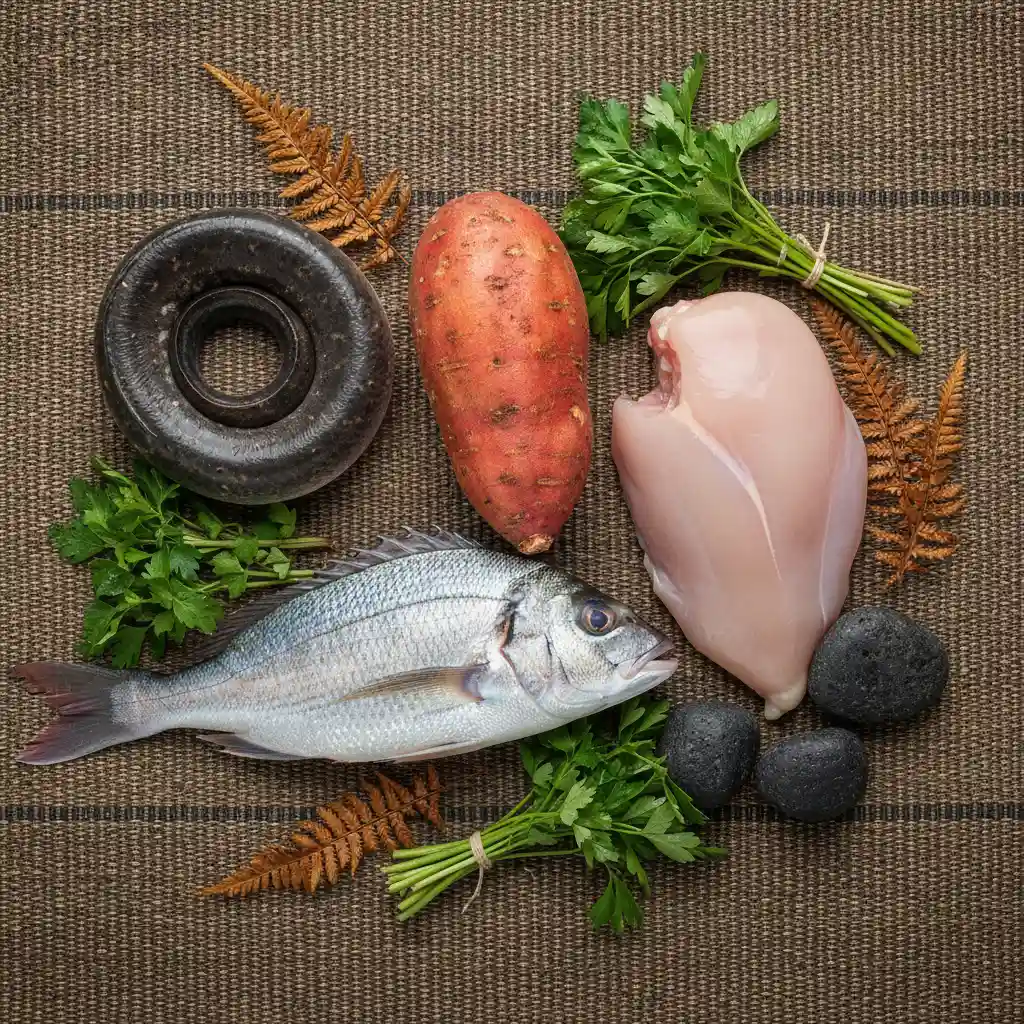
To perform the ritual correctly, the earth oven cooking process must include foods that correspond to the four stars of Matariki connected to sustenance, including Waitī & Waitā: Guardians of the Water. This ensures that every domain of the environment is acknowledged.
Tupu-ā-nuku (Food from the Earth)
This star is connected to food that is grown in the ground. For the oven, Kūmara (sweet potato) is the standard offering. It represents the gardens and the soil. Other root vegetables like yams or potatoes can be used, but kūmara holds the highest mana in this context.
Tupu-ā-rangi (Food from the Sky)
This star is connected to food that comes from the sky, specifically birds and berries. Historically, preserved birds like kererū or tītī might have been used. In modern contexts, where conservation laws protect native birds, Chicken is the accepted substitute. It represents the forests and the canopy.
Waitī (Food from Fresh Water)
Waitī watches over freshwater environments—lakes, rivers, and streams. The offering for this star is typically Tuna (freshwater eel) or occasionally freshwater crayfish (kōura). This acknowledges the health of the waterways.
Waitā (Food from Salt Water)
Waitā watches over the ocean. The offering here is Ika (fish) such as snapper, kahawai, or shellfish. This represents the bounty of the sea (Moana-nui-a-Kiwa).
By combining these four elements in the earth oven, the steam released contains the essence of the entire environment, offering a holistic report back to the stars.
How to Build a Small Earth Oven for Matariki
Building an Umu Kohukohu Whetū follows the same mechanical principles as a small hāngī, but with greater attention to detail and intent. Here is a step-by-step guide to the construction.
Step 1: The Pit (Te Rua)
Dig a shallow pit in the earth. For a ceremonial offering, this does not need to be large—perhaps 60cm in diameter and 30cm deep. The size should be sufficient to hold the hot stones and the small amount of offering food.
Step 2: The Stones (Ngā Whatu)
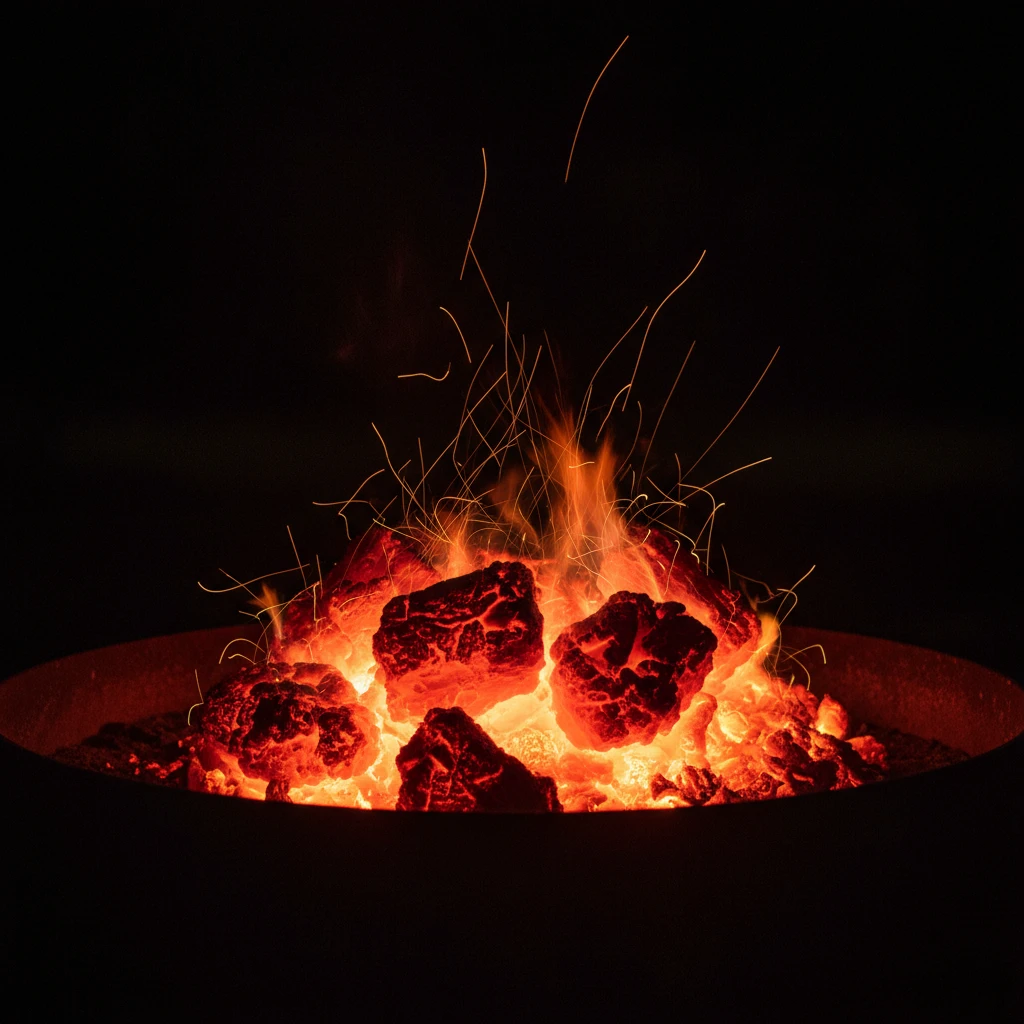
Select your stones carefully. You require volcanic rocks (andesite or basalt) that can withstand intense heat without exploding. River stones are often used, but they must be tested. Heat the stones in a large fire nearby until they are white-hot. In traditional earth oven cooking, the fire is built directly over the pit, or the stones are heated alongside and transferred.
Step 3: Arrangement and Steam Generation
Once the stones are hot and in the pit, they are traditionally sprinkled with water or covered with wet vegetation to generate the initial burst of steam. Manuka brush is often used for its aromatic properties.
Step 4: Placing the Offering
The food (Kūmara, Fish, Eel, Chicken) is placed on top of the stones/vegetation. In modern settings, these are often placed in foil trays or wire baskets to ensure they don’t burn on direct contact with the rocks, although traditional leaves (cabbage tree or flax) are preferred for authenticity.
Step 5: Covering (Te Tāpuke)
The oven is then covered with wet cloth (hessian sacks are traditional in modern hāngī, but wet muslin works for smaller ceremonial ovens) and then buried with earth. The goal is to trap every wisp of steam inside. The earth acts as an insulator, allowing the residual heat from the stones to cook the food and build up pressure.
The Ritual Aspect of the Steam Rising
The defining moment of the Umu Kohukohu Whetū is not the cooking, but the uncovering. This is the climax of the Hautapu ceremony.
As the stars of Matariki rise and become visible (usually viewed from a vantage point looking towards the north-east horizon; see Puanga Star Maps & Charts), the Tohunga (expert or leader) will begin the karakia (incantations). The ceremony involves calling out the names of those who have passed away since the last rising of Matariki, sending their spirits to become stars.
Following this, the earth oven is opened. The earth is scraped away, and the wet cloths are peeled back.
The Release of the Essence:
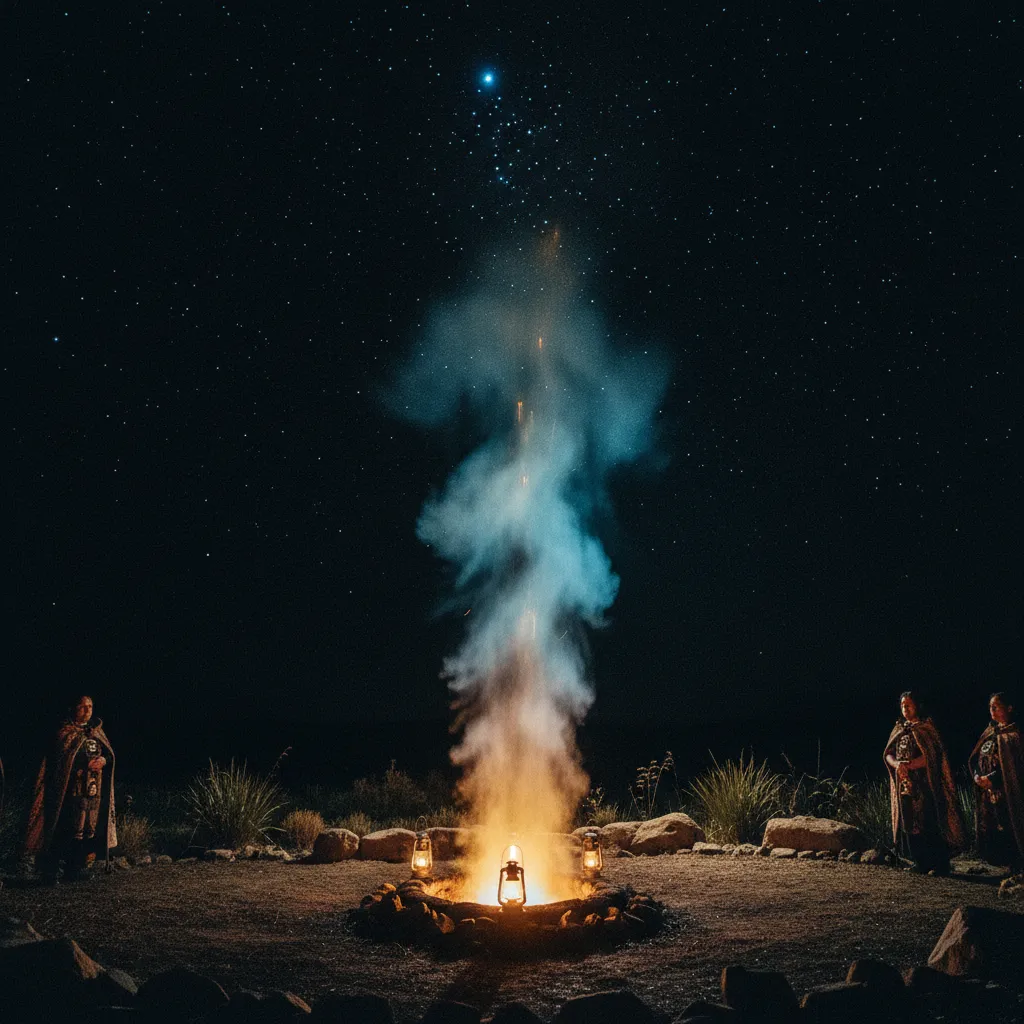
As the cloths are removed, a column of steam will rise rapidly into the cold pre-dawn air. This steam is the Hautapu. The gathered participants watch as the steam ascends toward the stars. It is believed that the stars “feed” on this essence. If the steam rises straight and true, it is seen as a good omen for the year. The aroma of the cooked food—earthy kumara, sweet eel, salty fish—mingles to form a perfume for the Atua (gods).
Safety Tips for Fire and Heat
While the spiritual aspect is paramount, the physical reality of earth oven cooking involves extreme heat and potential hazards. Ensure you follow these safety protocols:
- Rock Selection: Never use sandstone, sedimentary rock, or stones that have been submerged in seawater recently (unless tested). Moisture trapped inside these rocks can turn to superheated steam and cause the rocks to explode like shrapnel.
- Footwear: Always wear heavy boots when working around the pit. The stones retain enough heat to melt synthetic sneaker soles or cause third-degree burns instantly.
- Steam Burns: When uncovering the umu, steam is invisible near the source and extremely hot. Open the covering cloths away from you (like a shield) to direct the steam away from your face and arms.
- Fire Permits: Even for ceremonial purposes, you must check with your local council regarding fire bans or permit requirements, especially if the Matariki season falls during a dry spell (though it is typically winter in NZ).
- Food Handling: While the food is an offering, if any portion is to be consumed by the living (which varies by iwi tradition—sometimes the food is left, sometimes the ‘essence’ is taken by the stars and the physical food is eaten to remove tapu), ensure it is cooked thoroughly. Chicken needs to reach an internal temperature of 74°C.
Frequently Asked Questions
What foods go into an Umu Kohukohu Whetū?
The oven must contain four specific types of food representing the domains of Matariki: Kūmara (earth/Tupu-ā-nuku), Fish (salt water/Waitā), Eel (fresh water/Waitī), and Bird/Chicken (sky/Tupu-ā-rangi).
Can you eat the food from an Umu Kohukohu Whetū?
Traditionally, the food in the ceremonial oven was solely for the stars. However, tikanga (protocol) varies between Iwi. In some modern adaptations, the steam is the offering, and the food is then consumed to bring the ritual back to noa (neutrality), but it is distinct from the main feasting hāngī.
What time is the ceremony performed?
The ceremony is performed in the pre-dawn hours (around 5:00 AM to 6:30 AM) when the Matariki star cluster is visible on the horizon, before the sun rises. Use our Interactive Night Sky Map Tool: Locate Matariki Now for help.
Why is steam important in Matariki rituals?
Steam (hautapu) is viewed as a spiritual vehicle. It carries the essence and aroma of the food offerings from the physical world up to the celestial realm, feeding the stars and connecting the people to the Atua.
What wood is best for earth oven cooking?
Mānuka and Kānuka are the best woods for heating the stones. They burn hot and produce a heavy, dense heat that transfers well to the rocks, and they impart a traditional smoke flavor.
Is Umu Kohukohu Whetū the same as Hāngī?
No. A Hāngī is for feeding people (social/noa), while an Umu Kohukohu Whetū is a ritual oven for feeding the stars (sacred/tapu). The construction is similar, but the intent and protocols are completely different.