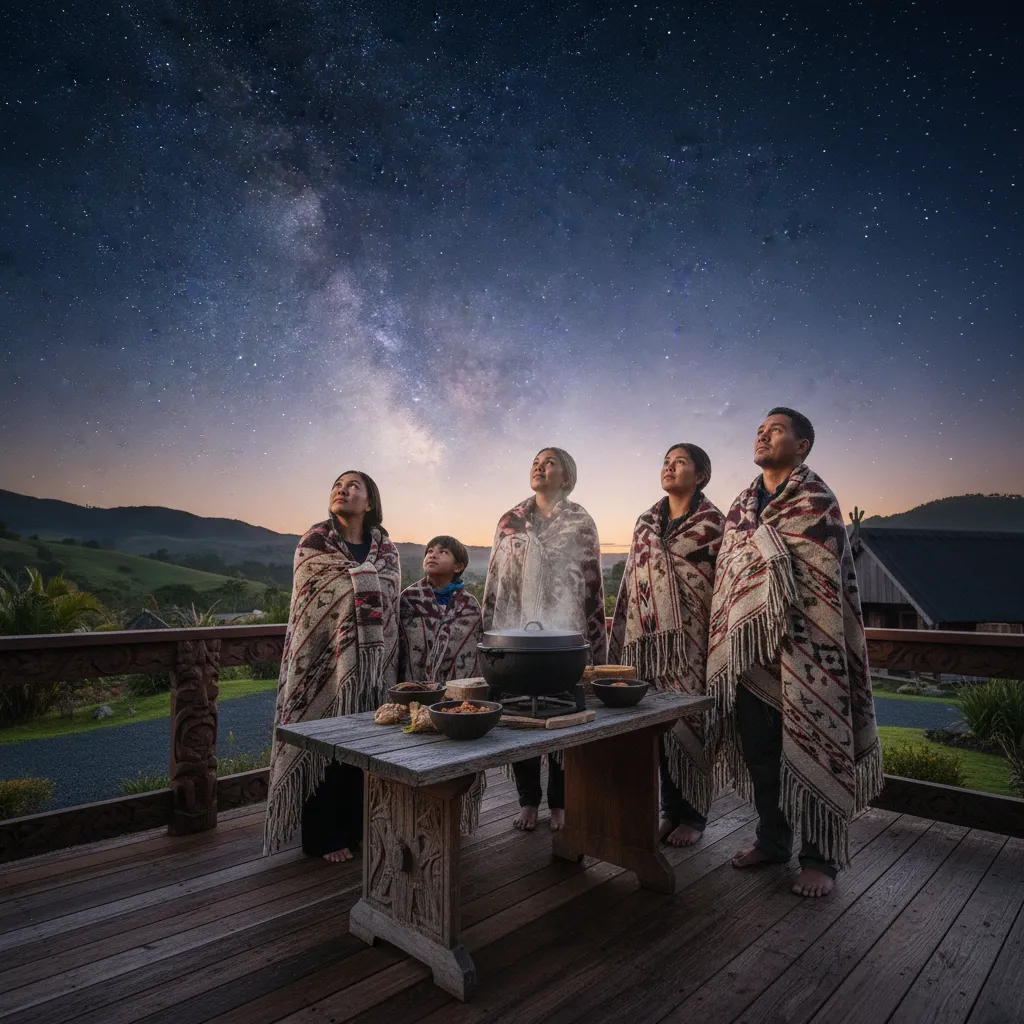
The Hautapu ceremony is a sacred Māori ritual performed during Matariki involving the offering of food to the stars. Food is cooked in a specialized earth oven called an umu kohukohu whetū, and the resulting steam is released into the sky to feed the stars, honoring the past and securing a bountiful year ahead.
Matariki, the Māori New Year, is a time of renewal, remembrance, and celebration in Aotearoa New Zealand. While many are familiar with the rising of the star cluster, the deep spiritual practices that accompany this celestial event are equally profound. Central to these observances is the Hautapu, a ceremony that bridges the physical and spiritual worlds through the medium of steam and sustenance. Understanding what is Hautapu requires looking beyond the surface of a celebration and into the ancient tikanga (customs) that guided Māori ancestors in their relationship with the environment and the cosmos.
The Deep Meaning of Hautapu
To truly answer the question “what is Hautapu,” we must analyze the etymology of the word itself. In Te Reo Māori, hau can refer to the vitality, essence, or wind, while tapu translates to sacred or restricted. Together, Hautapu signifies a sacred offering—a ritualistic presentation of the essence of food to the spiritual realm. It is a reciprocal act; by feeding the stars, the people ask the stars to feed them in return during the coming year.
This ceremony is deeply rooted in the concept of utu (reciprocity). In the Māori worldview, the environment is not merely a resource to be used but a family member to be respected. The stars of Matariki (the Pleiades) are seen as the bringers of the year’s bounty. When they rise in mid-winter, they are often exhausted from their journey. The Hautapu is performed to replenish their energy, ensuring that they have the strength to bring forth the crops, fish, and birds for the year ahead.
The Umu Kohukohu Whetū: Cooking the Offering
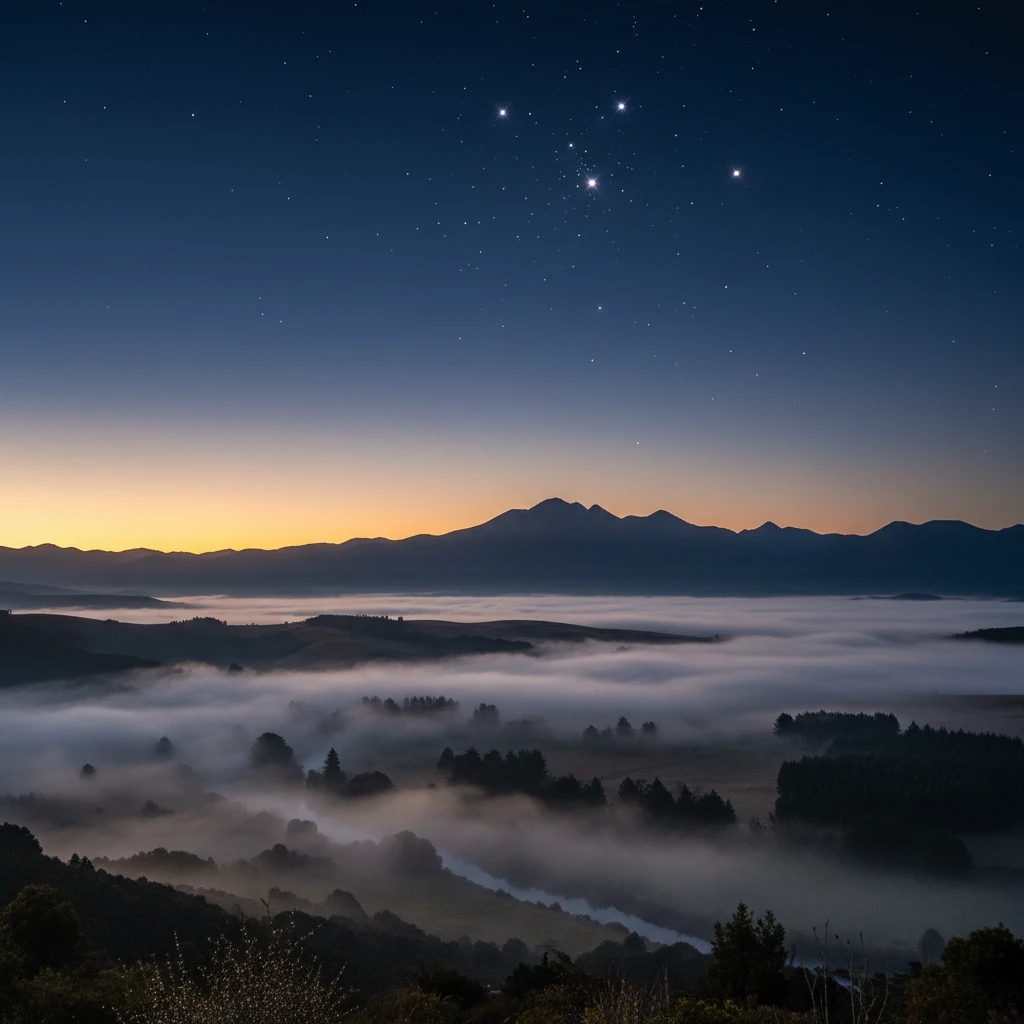
The vessel for this sacred transaction is the umu kohukohu whetū, which translates to “steaming earth oven of the stars.” While it shares similarities with the traditional hāngī used for feeding people, the umu kohukohu whetū is distinct in its purpose and construction. It is not designed to cook food for a feast in the ordinary sense, but to generate a specific type of steam that rises directly to the heavens.
How is the Umu Constructed?
The construction of this oven is precise. Stones are heated in a fire until they are white-hot. These stones are then placed into a pit, and the specific foods chosen for the offering are placed on top. Unlike a standard hāngī, which is covered with earth to trap the heat and steam, the umu kohukohu whetū is managed differently during the release phase. The critical moment occurs when the covering is removed, allowing the concentrated steam—infused with the essence (hau) of the food—to ascend rapidly toward the Matariki cluster.
This steam is believed to carry the mana (spiritual power) of the land and the people up to the stars. It is a visual and olfactory prayer, a physical manifestation of gratitude and hope.
The Three Sacred Parts of the Ceremony
The Hautapu is not a singular event but a progression of three distinct phases. Each phase serves a specific spiritual function, moving the participants from the realm of remembrance to the realm of renewal.
1. Te Tirohanga (The Viewing)
The ceremony begins well before dawn. The tohunga (experts or priests) and the community gather to watch for the rising of Matariki, often aided by tools like an Interactive Night Sky Map Tool: Locate Matariki Now. This is known as Te Tirohanga. This is not merely passive observation; it is a critical reading of the signs. The tohunga carefully observe the brightness, distinctness, and color of each individual star in the cluster.
If the stars are clear and bright, it predicts a warm and productive year. If they are hazy or shimmering erratically, it may signal a cold winter or poor harvest. This reading determines the planning for the community’s agricultural and fishing activities for the coming season.
2. Taki Mōteatea (Remembrance of the Dead)
Once the stars have been sighted and read, the ceremony moves to Taki Mōteatea. Matariki is the time when the spirits of those who have passed away during the previous year are released into the sky to become stars (specifically, to be gathered by the star Hiwa-i-te-rangi). During this phase, the names of the dead are called out. It is a solemn time of weeping, chanting, and farewell.
This emotional release allows the living to process their grief, honor their ancestors, and prepare to move forward into the new year unburdened by the weight of the past. It is a cleansing of the heart before the feeding of the stars.
3. Te Whāngai i te Hautapu (Feeding the Stars)
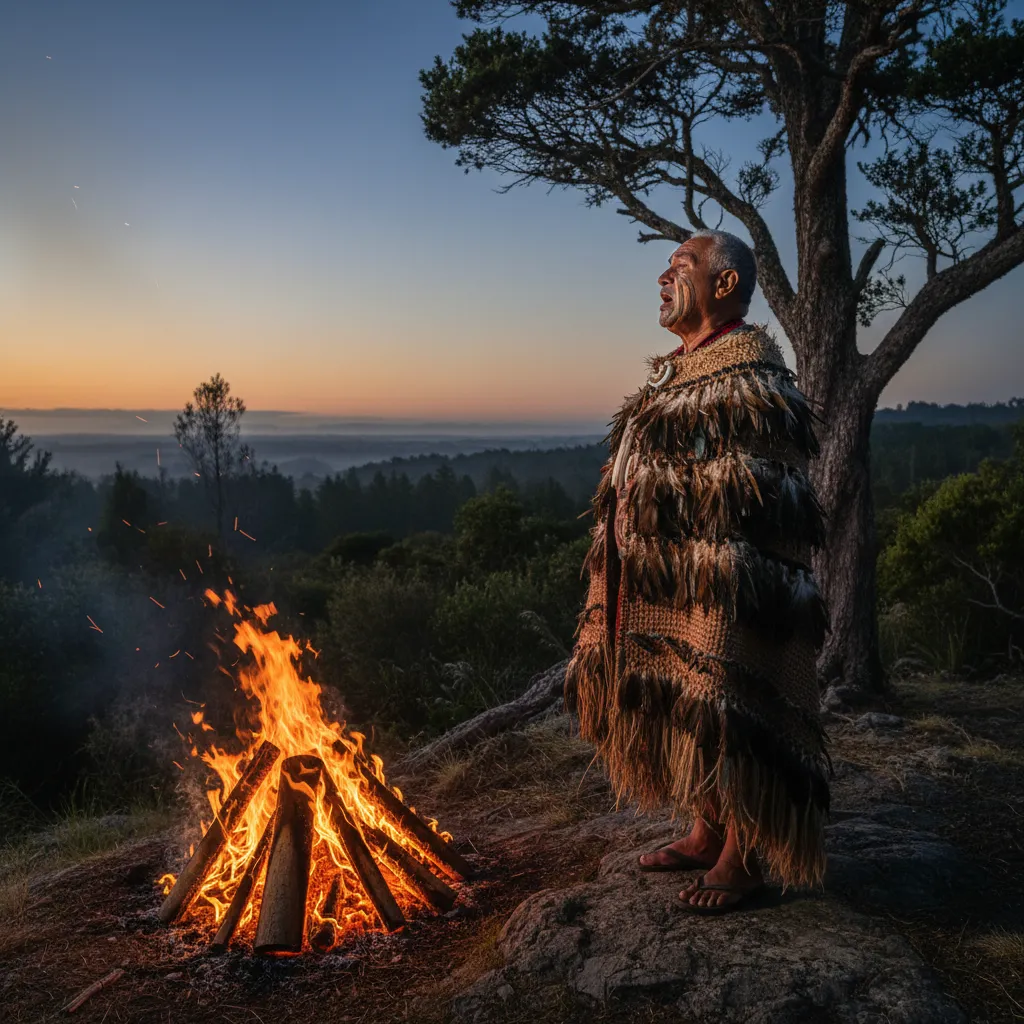
The final and defining stage is Te Whāngai i te Hautapu. This is when the earth oven is uncovered. The tohunga performs karakia (incantations) as the steam rises. The aroma of the food is the offering. As the steam ascends, it is believed to nourish the stars, replenishing their energy.
Following the release of the steam, the cooked food is removed. In accordance with tikanga, this food is now noa (free from tapu) and is shared among the community. This act of eating together completes the ritual, grounding the participants back in the physical world and cementing the bonds of the community.
The Four Foods of the Stars
The food placed in the umu kohukohu whetū is not chosen at random. Each item corresponds to a specific star within the Matariki cluster that governs a particular domain of the environment. By including foods from each domain, the Hautapu acknowledges the totality of the natural world.
What foods are cooked in the Hautapu?
Typically, four distinct types of food are included in the steam offering:
- Tupu-ā-nuku (Food from the earth): Usually represented by kūmara (sweet potato). This honors the star Tupu-ā-nuku, which watches over gardens and crops grown in the soil.
- Tupu-ā-rangi (Food from the sky): Represented by birds (manu). In modern times, chicken is often used. This honors the star Tupu-ā-rangi, which connects to berries, fruits, and birds.
- Waitī (Food from fresh water): Represented by freshwater fish like eels (tuna). This honors the star Waitī, guardian of lakes, rivers, and freshwater creatures.
- Waitā (Food from salt water): Represented by saltwater fish or shellfish (ika). This honors the star Waitā, which represents the ocean and marine life.

How to Participate Respectfully
As Matariki becomes a public holiday and a moment of national identity in New Zealand, more public Hautapu ceremonies are being held, including Events: Christchurch & South Island. If you are invited to attend or wish to observe a public ceremony, understanding the etiquette is crucial to showing respect for the culture and the occasion.
Silence and Focus
The pre-dawn period is a time of high tapu. Silence is generally expected unless you are part of the chanting or karakia. This is not a time for casual conversation. The focus should be on the stars and the memory of those who have passed.
Clothing and Warmth
These ceremonies take place in the middle of winter, usually before 6:00 AM. Dress warmly. However, be mindful that you are entering a sacred space. If the ceremony is on a Marae, formal attire may be expected, or at minimum, tidy, respectful clothing.
No Food or Drink
Do not bring food or water into the ceremonial area during the ritual. Food is noa (common) and can disrupt the tapu (sacredness) of the ritual before the appropriate time. You will be fed after the ceremony concludes.
Wait for the Karakia to Finish
Do not move around or leave while the karakia are being recited. The lifting of the steam is the climax of the event; giving it your full attention is the greatest sign of respect.
The Revitalization of Ancient Customs
For many years, the practice of Hautapu was suppressed or lost due to colonization and the Tohunga Suppression Act of 1907. However, the Māori Renaissance and the recent establishment of Matariki as an official public holiday have seen a powerful resurgence of this tradition. Today, Hautapu ceremonies are broadcast nationally, and communities across Aotearoa are relearning the art of the umu kohukohu whetū.
This revitalization is more than just a cultural performance; it is an assertion of indigenous knowledge (supported by Academic & Cultural Texts on Matariki) and a commitment to environmental stewardship. By performing Hautapu, New Zealanders are reconnecting with the maramataka (Māori lunar calendar) and acknowledging their dependence on the natural world.
Conclusion
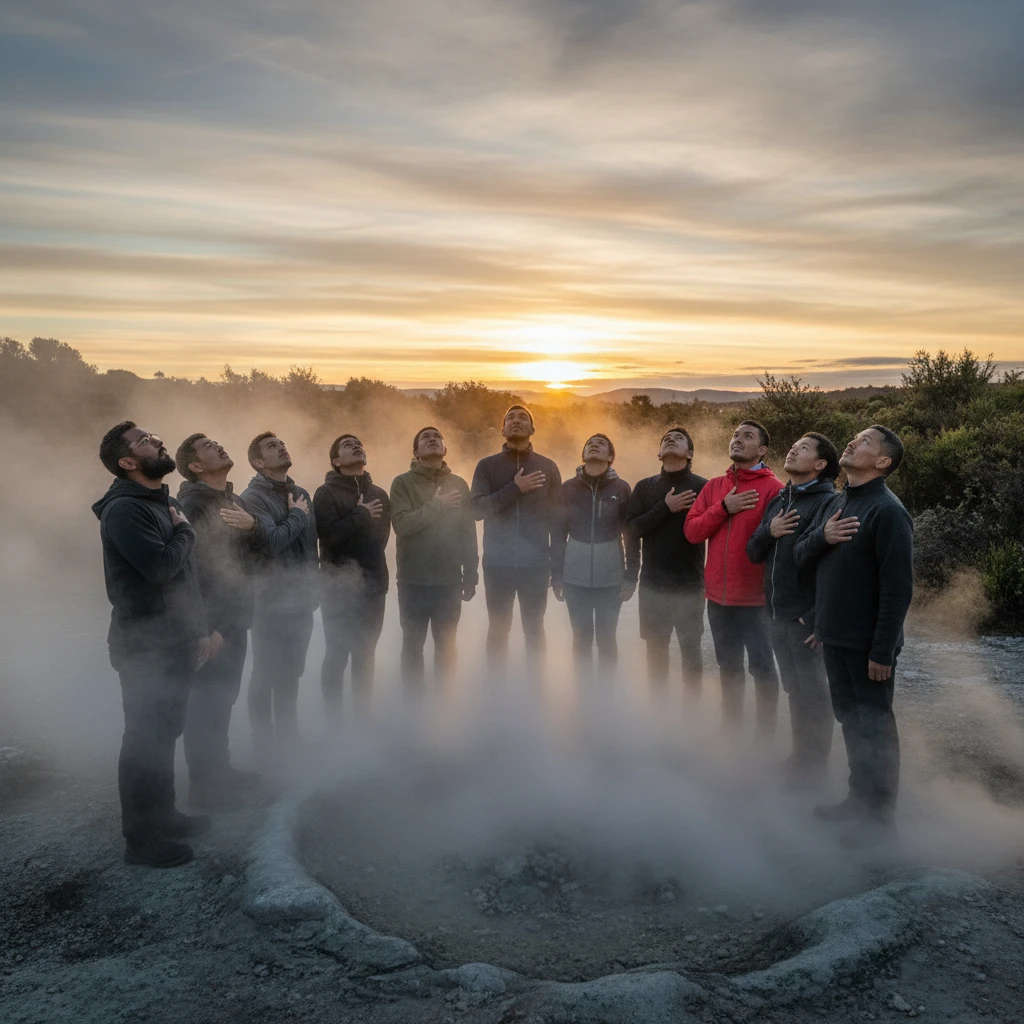
The Hautapu ceremony is the beating heart of the Matariki celebration. It is a ritual that encompasses the full spectrum of the human experience: the grief of loss, the gratitude for sustenance, and the hope for the future. By cooking the foods of the land, sky, and water, and offering their essence to the stars, the Hautapu reminds us of the delicate balance between humanity and nature.
Whether you are observing the steam rise from a local marae or simply taking a moment of quiet reflection before dawn, understanding the meaning of Hautapu enriches the experience of the Māori New Year. It transforms Matariki from a simple holiday into a profound moment of connection with the cosmos and the community.
People Also Ask
What time is the Hautapu ceremony performed?
The Hautapu ceremony is performed in the pre-dawn hours, known as the “wehenga o te pō” (the parting of the night). It must take place when the Matariki star cluster is visible on the horizon but before the sun rises.
Can anyone attend a Hautapu ceremony?
Many Hautapu ceremonies, especially civic ones organized by councils or public trusts, are open to the public. However, ceremonies held on private Marae or by specific iwi (tribes) may be by invitation only. Always check local listings and protocols before attending.
What is the difference between Hāngī and Hautapu?
A Hāngī is an earth oven used primarily to cook large amounts of food for feasting. A Hautapu involves a specialized oven called an umu kohukohu whetū, designed specifically to generate steam as a sacrificial offering to the stars, though the food is also eaten afterwards.
Why is steam important in the Hautapu ceremony?
Steam is viewed as the medium of transfer between the physical and spiritual realms. It carries the essence (hau) and aroma of the food up to the sky, “feeding” the stars and delivering the prayers of the people.
What happens if the stars are not visible during Hautapu?
If the stars are obscured by clouds, the ceremony still proceeds, but the reading of the stars (Te Tirohanga) cannot take place. The karakia and the offering of steam are still performed to honor the time and the season.
Who leads the Hautapu ceremony?
The ceremony is traditionally led by a tohunga (expert/priest) or a kaumātua (elder) who possesses the knowledge of the appropriate karakia (incantations) and the tikanga (protocols) regarding the stars and the offering.