
The Matariki Advisory Committee, also known as Te Kāhui o Matariki, is a group of recognized experts in mātauranga Māori and astronomy appointed to determine the dates for the Matariki public holiday. They utilize the maramataka (Māori lunar calendar) to predict when the Matariki star cluster will rise, ensuring the holiday aligns with specific lunar phases and environmental indicators rather than the Gregorian solar calendar.
The Role of the Matariki Advisory Committee
In Aotearoa New Zealand, the establishment of Matariki as a public holiday marked a watershed moment in the nation’s history. It became the first public holiday to recognize Te Ao Māori (the Māori world) and the first to be determined by the lunar calendar rather than the fixed solar Gregorian calendar. However, because the lunar cycle does not align perfectly with the standard 365-day year, the date of Matariki shifts annually. This necessitated the formation of a specialized governing body: the Matariki Advisory Committee.
Officially known as Te Kāhui o Matariki, this committee was established to provide the government with authoritative advice on when the holiday should be observed. Their mandate is not merely logistical; it is deeply cultural and spiritual. The committee serves as the bridge between ancient indigenous knowledge systems and modern legislative frameworks.
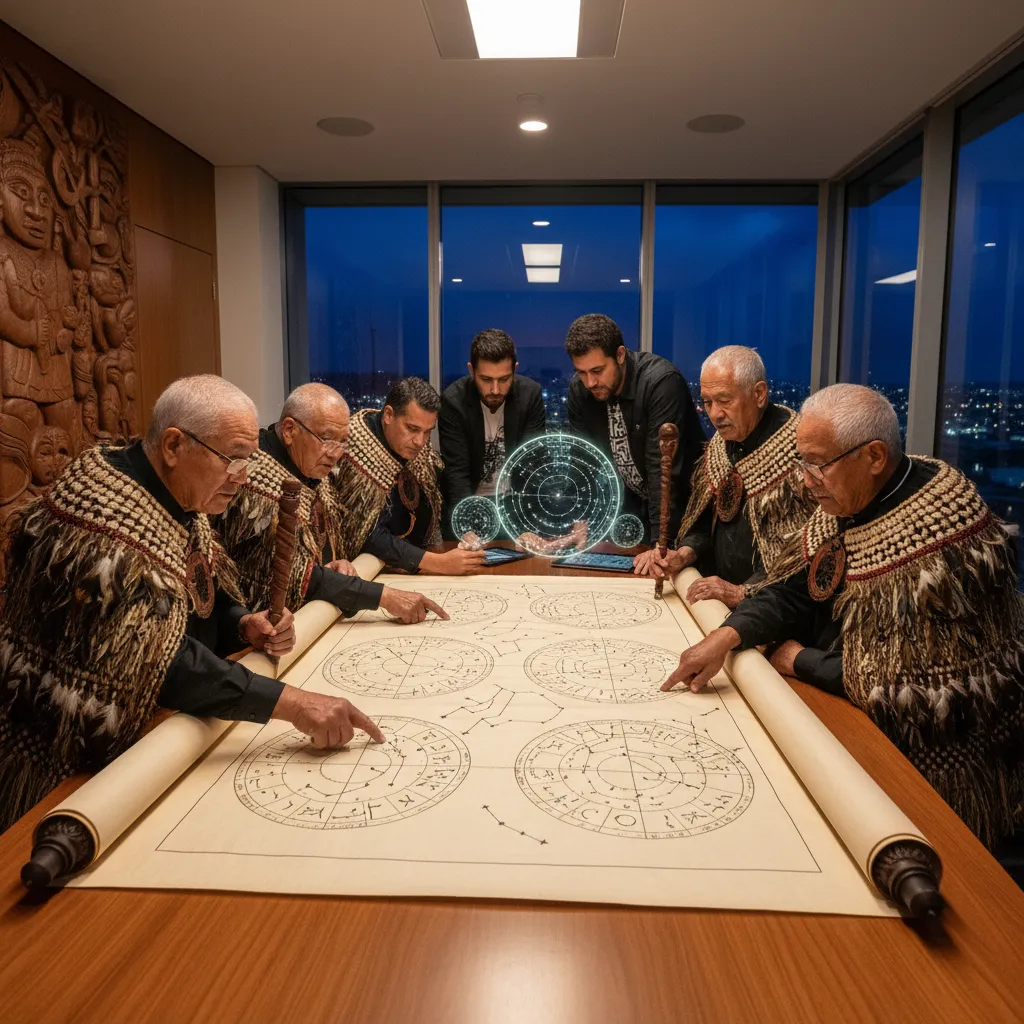
The primary responsibility of the committee is to determine the dates for the public holiday for decades in advance. Unlike Easter, which follows a somewhat obscure ecclesiastical calculation, Matariki follows precise astronomical and environmental cues that have been observed by Māori for centuries. The committee ensures that the commercialization or secularization of the holiday does not detach it from its origins: the rising of the star cluster Pleiades (Matariki) during the lunar month of Pipiri.
The Legislative Mandate
Under the Te Kāhui o Matariki Public Holiday Act 2022, the committee’s advice is legally significant. The Ministers responsible for the holiday rely on this group to ensure that the chosen dates are culturally authentic. If the dates were chosen arbitrarily by politicians, the holiday would lose its integrity. Therefore, the committee acts as the guardians of the holiday’s mauri (life force), ensuring that as the nation celebrates, it does so in rhythm with the environment.
Key Members and Experts
The credibility of the Matariki Advisory Committee rests entirely on the mana and expertise of its members. These are not generalist bureaucrats; they are tohunga (experts) in astronomy, history, and education. They represent a cross-section of iwi (tribes) and waka (canoes), ensuring a pan-Māori approach to a holiday that has regional variations.
Professor Dr. Rangi Matamua
Perhaps the most visible figure associated with the revitalization of Matariki is Professor Dr. Rangi Matamua. As the Chair of the Matariki Advisory Committee, Dr. Matamua has been instrumental in educating the nation about Māori astronomy. His research, largely based on the manuscripts of his ancestor Rāwiri Te Kōkau, challenged previous misconceptions and re-established the correct timing for the New Year celebrations.
Dr. Matamua’s role goes beyond selecting a date; he acts as the primary communicator, explaining the why and how to the New Zealand public. His work ensures that the decision-making process is transparent and rooted in verifiable scholarship.
A Collective of Tohunga
While Dr. Matamua is the Chair, the committee consists of other heavyweights in the world of Māori culture. Members have included experts like Hoturoa Barclay-Kerr, a master navigator known for his work with waka hourua (double-hulled voyaging canoes), and Rereata Makiha, a renowned authority on the maramataka and environmental indicators.
Bringing together these experts ensures that the committee considers various tribal dialects and traditions. For example, some iwi look to the star Puanga (Rigel) rather than Matariki to signal the New Year because Matariki is not visible in their region due to geography. The committee had to navigate these regional differences to create a unified national holiday date that respects all variations.
The Science Behind the Selection
The process of selecting the Matariki holiday date is a rigorous exercise in mātauranga Māori (Māori knowledge) combined with positional astronomy. It is not a matter of simply picking a Friday in June or July. The committee uses a sophisticated methodology involving three key components: the solar year, the lunar month, and the position of the stars.
The Maramataka (Lunar Calendar)
The Western world operates on a solar calendar, where a year is defined by the earth’s orbit around the sun. However, Māori ancestors utilized the maramataka, a lunar calendar that tracks the cycles of the moon. A lunar month is roughly 29.5 days long. Consequently, a standard lunar year is about 11 days shorter than a solar year. This is why the date of Matariki drifts across the Gregorian calendar, similar to how Chinese New Year or Ramadan shifts annually.
The Tangaroa Phase
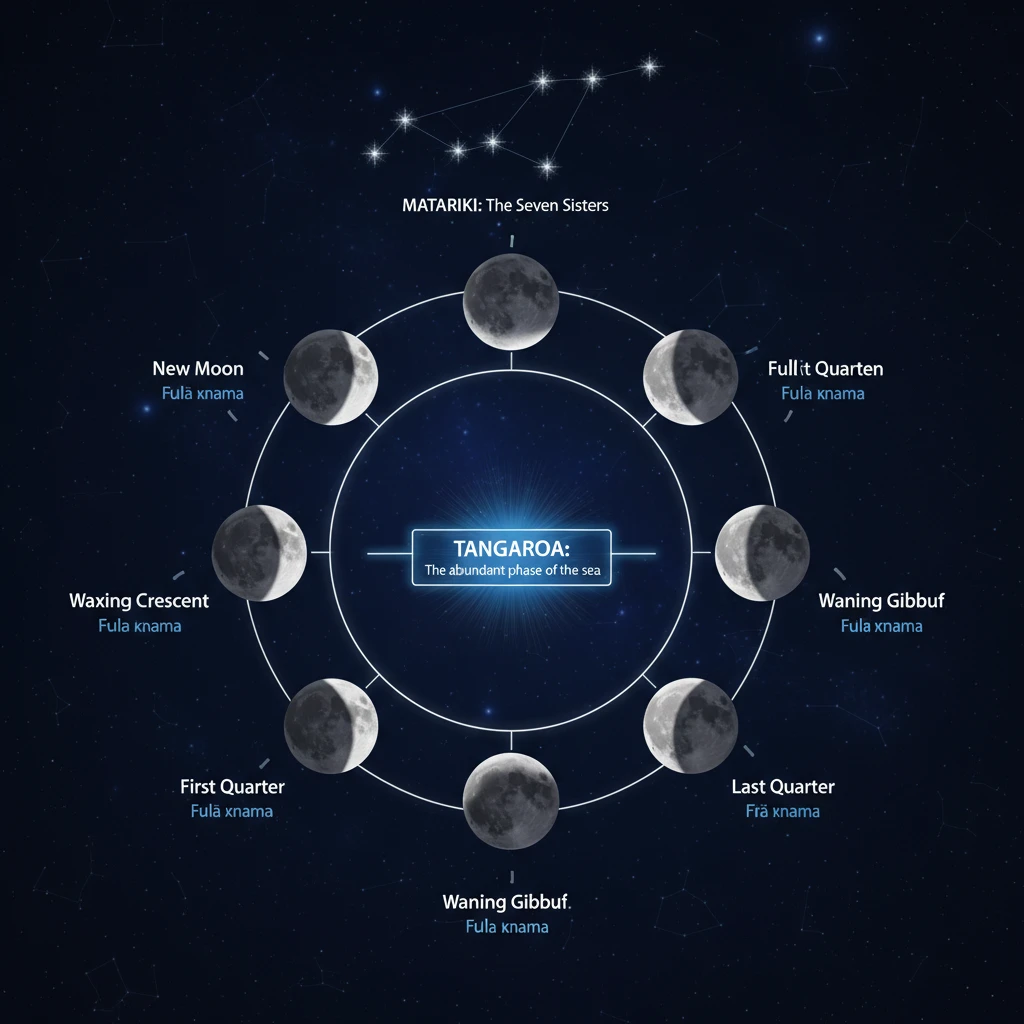
The Matariki Advisory Committee has established a specific rule for the public holiday: it must fall on a Friday closest to the Tangaroa lunar phase during the lunar month of Pipiri (usually June/July).
The Tangaroa nights occur in the last quarter of the moon cycle (the waning crescent). In traditional belief, the Tangaroa period is a time of high energy and abundance, making it ideal for celebration and reflection. By anchoring the holiday to the Tangaroa phase, the committee ensures the holiday coincides with the optimal time for viewing the stars just before sunrise, consistent with ancestral practices.
Visibility and Heliacal Rising
The “heliacal rising” refers to the time when a star or cluster becomes visible above the eastern horizon for the briefest moment before the sun rises and washes out the light. The committee calculates exactly when Matariki will reappear in the dawn sky. The holiday is generally set for the period after the cluster has risen and become visible, allowing the nation to view the stars and perform the hautapu ceremony (offering of food to the stars).
Balancing Tradition with Modern Logistics
One of the most challenging aspects of the Matariki Advisory Committee’s work is reconciling the fluid nature of a lunar calendar with the rigid requirements of a modern economy. Businesses, schools, and international travel agents require certainty. They cannot wait until the moon rises to know if they have a day off work.
The 30-Year List
To solve the issue of uncertainty, the Committee did not just release the date for the coming year; they calculated the dates for the next 30 years (up to 2052). This monumental task involved forecasting the lunar phases decades into the future and aligning them with the Gregorian calendar.
This long-term forecasting allows:
- Employers to plan payroll and shifts.
- Schools to organize term breaks.
- The Tourism Industry to build winter festivals around the long weekend.
Why Always a Friday?
Strictly speaking, the traditional observance of Matariki could happen on any day of the week depending on the moon. However, the government, advised by the committee, decided to “Monday-ise” or, in this case, “Friday-ise” the holiday.
The decision to make Matariki a Friday public holiday was a pragmatic compromise. It creates a guaranteed three-day weekend, encouraging travel and domestic tourism, which aligns with the harvest festival nature of Matariki (feasting and gathering). The Committee agreed that celebrating on the Friday closest to the Tangaroa phase satisfied both the cultural requirement of the lunar timing and the modern desire for a long weekend.

Looking Ahead: Future Dates
Thanks to the work of the Matariki Advisory Committee, New Zealanders can plan well ahead. The dates chosen reflect the variation inherent in the lunar cycle. For example, in some years Matariki falls in late June, while in others it pushes into mid-July.
This variation serves as an annual reminder of the environment’s rhythms. It forces a modern society, usually governed by the clock, to pause and acknowledge the moon and stars. The Committee’s work has successfully embedded indigenous science into the statutory framework of a nation, a global first that sets a precedent for how indigenous knowledge can shape modern public policy.
Frequently Asked Questions
Who appoints the members of the Matariki Advisory Committee?
The members are appointed by the Minister for Māori Development and the Minister for Workplace Relations and Safety, based on their expertise in Te Ao Māori and astronomy.
Why does the Matariki date change every year?
The date changes because it is determined by the Māori lunar calendar (maramataka), which is 11 days shorter than the solar Gregorian calendar, causing the date to shift annually.
What is the ‘Tangaroa’ phase of the moon?
The Tangaroa phase is a period in the waning lunar cycle associated with productivity and abundance. The Matariki holiday is set for the Friday closest to these lunar days.
Is Matariki the same day for all Māori tribes?
Traditionally, no. Different iwi celebrated at different times based on local star visibility (some watching for Puanga). However, the Committee set a unified national date to allow for a collective public holiday.
How far in advance has the Committee set the dates?
The Matariki Advisory Committee has calculated and published the dates for the Matariki public holiday for the next 30 years, up to the year 2052.
Can the Matariki Advisory Committee change future dates?
While the dates are legislated, the Committee maintains an advisory role. If significant astronomical or cultural evidence suggested a change was necessary, they could advise the government, though the 30-year list is intended to be fixed for stability.