
Matariki gardening tips focus on aligning horticultural practices with the Māori New Year, a period of reflection and renewal in Aotearoa. This mid-winter phase prioritizes resting the soil, applying heavy mulch to protect the earth, planting cold-hardy crops like garlic and brassicas, and utilizing the Maramataka lunar calendar to plan for spring abundance.
In Aotearoa New Zealand, the rise of the Matariki star cluster (the Pleiades) signals the Māori New Year (How to Find the Cluster). Occurring in mid-winter, usually late June or July, it is a time when the natural world slows down. However, for the astute gardener, this is not a time of idleness but of critical preparation. Integrating cultural heritage with practical horticulture allows us to work in harmony with the environment, ensuring a bountiful harvest when the sun returns.
The Significance of Matariki in the Garden
Matariki is historically a time to acknowledge the harvest that has passed (often involving a What is the Hautapu Ceremony?) and to plan for the planting season ahead. In traditional Māori society, the brightness of the stars was used to predict the productivity of the coming season. If the stars were clear and bright, a warm and productive season was expected; if hazy, it signaled a cold winter and the need for careful crop management. Many now use an Interactive Night Sky Map Tool: Locate Matariki Now to help track these movements.
Modern gardeners in Aotearoa can use this time to reconnect with the whenua (land). It is a period for clearing away the old to make space for the new, reflecting on what grew well in the previous summer, and setting intentions for the garden’s future. This aligns perfectly with the biological dormancy of winter, where energy is stored in roots and soil, waiting for the signal to rise.
Preparing the Soil: Restoring Papatūānuku
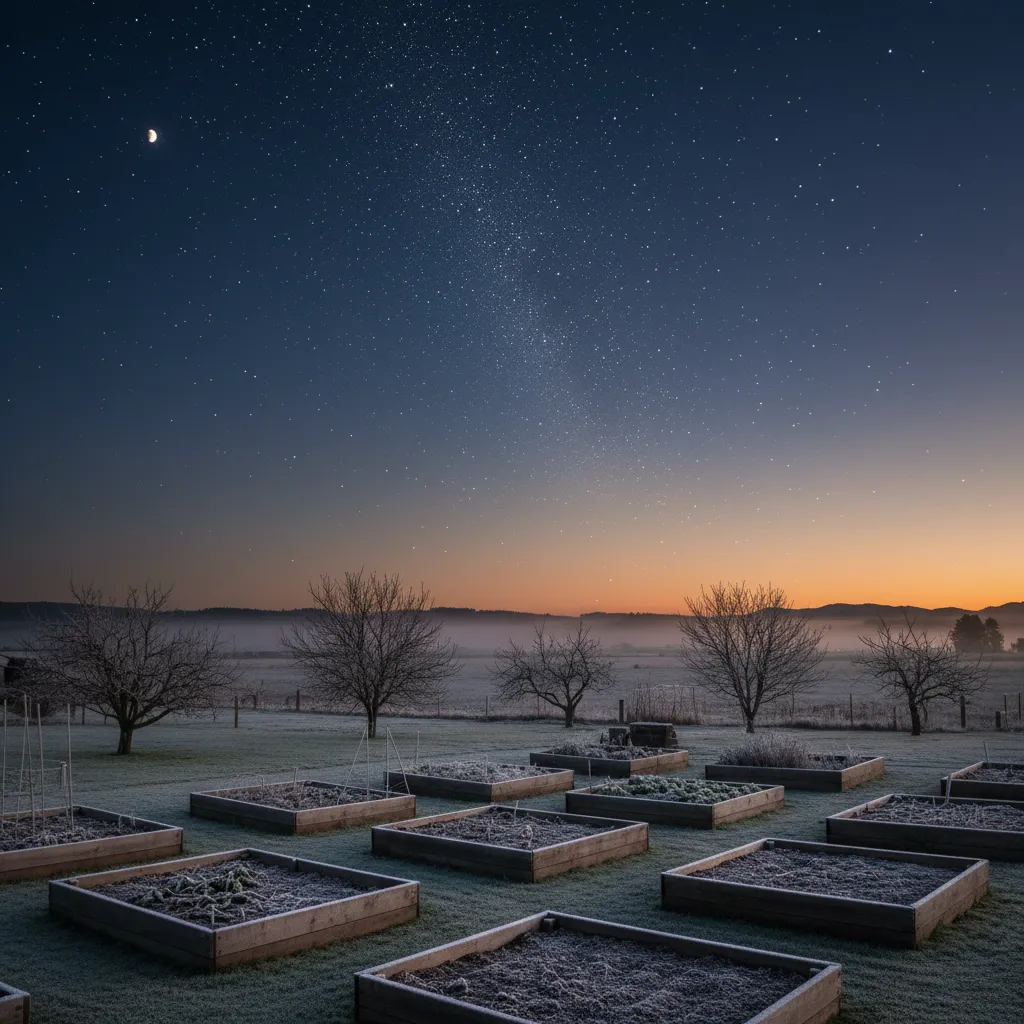
Winter is the ideal time to focus on soil health. In Māori tradition, this is seen as caring for Papatūānuku (Earth Mother) while she rests. You should not be vigorously digging over the soil during the depths of winter, as this disturbs the soil structure and beneficial fungal networks that are establishing themselves.
Testing and Amending
Before adding amendments, observe your soil. Is it clay-heavy and waterlogged, or sandy and dry? Matariki is a good time to add lime or gypsum if required, as these take time to break down and alter the soil chemistry before spring planting.
Green Manure Crops
If you have empty garden beds, do not leave the soil bare. Bare soil leaks carbon and nutrients. Sow a green manure crop such as mustard, lupin, or oats. These plants protect the soil surface from heavy winter rains, suppress weeds, and, when cut down in early spring, return massive amounts of nitrogen and organic matter to the earth.
What to Plant: Garlic, Brassicas, and Winter Crops
While growth slows significantly in June and July, specific crops thrive in the cooler temperatures. The most iconic of these is garlic, traditionally planted on the shortest day of the year (Winter Solstice), which often aligns closely with the rising of Matariki.
Planting Garlic
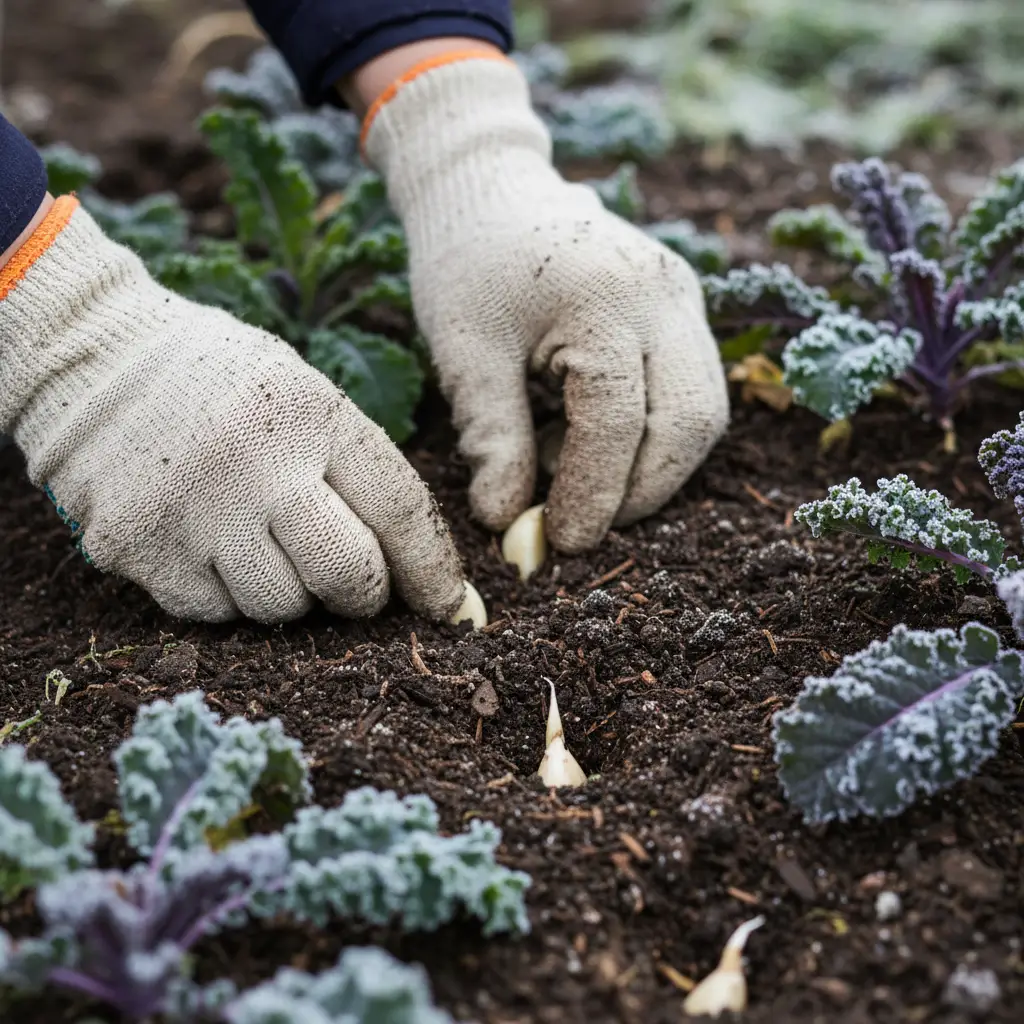
Garlic requires a period of cold (vernalization) to split into cloves. If planted too late, you may end up with a single round bulb rather than a head of cloves.
- Selection: Choose high-quality seed garlic from a garden center rather than supermarket garlic, which may carry diseases or be treated to prevent sprouting.
- Spacing: Plant cloves with the pointed end up, roughly 10-15cm apart.
- Depth: The tip of the clove should be just below the soil surface.
Brassicas and Leafy Greens
Winter is the season for brassicas. While it is best to get these established in autumn, you can still plant seedlings during Matariki if the ground isn’t frozen.
- Kale and Cavolo Nero: These become sweeter after a frost as the plant converts starches to sugars to protect its cells.
- Broad Beans: A staple winter crop that is hardy and fixes nitrogen in the soil.
- Silverbeet and Spinach: These provide continuous greens throughout the winter months.
Composting and Mulching Techniques
One of the most vital Matariki gardening tips is to “feed the soil, not the plant.” During winter, composting and mulching serve as a blanket for the earth, keeping it warm and active.
The Art of Mulching
Mulching mimics the forest floor. By covering your garden beds with a thick layer of organic material, you suppress weeds, retain moisture, and regulate soil temperature. In Aotearoa, excellent winter mulches include:
- Pea Straw: High in nitrogen and breaks down to feed the soil.
- Autumn Leaves: Gather fallen leaves and pile them on beds. They are rich in carbon and trace minerals.
- Seaweed: If you have access to coastal areas, washed seaweed is a powerhouse of nutrients and helps protect plants from frost.
Hot Composting in Winter
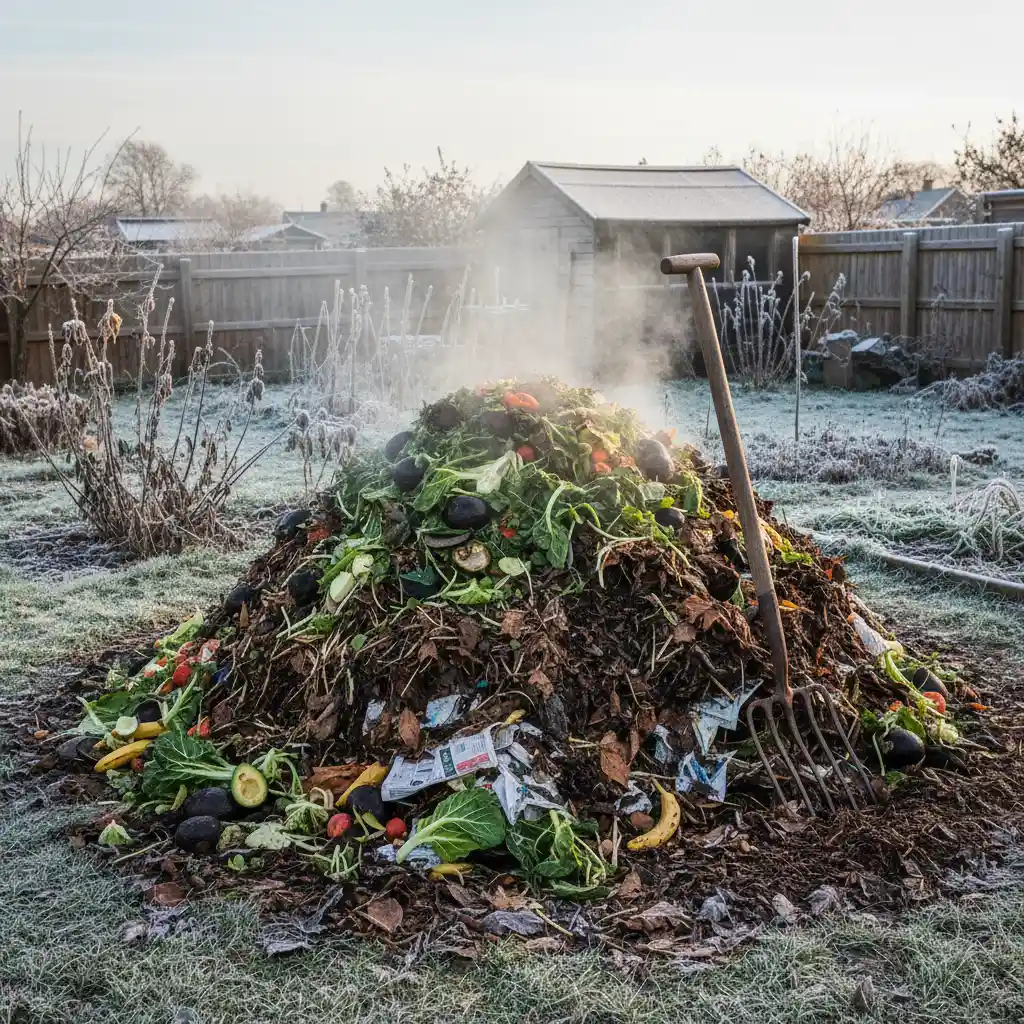
Compost piles slow down in cold weather. To keep your compost active during Matariki, you need to ensure the pile is large enough (at least 1 cubic meter) to retain heat. Insulate the heap with old carpet or a tarp. Focus on maintaining a balance of “greens” (kitchen scraps, fresh clippings) and “browns” (dried leaves, cardboard) to fuel the microbial activity that generates heat.
Essential Tools for Winter Gardening
Matariki is a time of reset, making it the perfect opportunity to maintain your tools. When the weather is too wet or cold to be outside, spend time in the shed.
Tool Care Checklist
- Clean and Sharpen: Remove rust from spades, hoes, and secateurs using wire wool. Sharpen the edges with a file or whetstone. Sharp tools make cleaner cuts, which heal faster and prevent disease in plants.
- Oil Wooden Handles: Rub linseed oil into wooden handles to prevent them from drying out and splintering.
- Sterilize Trays: Wash seed-raising trays and pots to ensure they are free from pathogens before the spring sowing rush.
Frost Protection Tools
Investing in frost cloth or building simple cloches is essential for winter gardening in cooler parts of NZ. A cloche acts as a mini-greenhouse, raising the temperature around the plant by a few degrees, which can be the difference between survival and death for tender seedlings.
Using the Maramataka (Lunar Calendar)
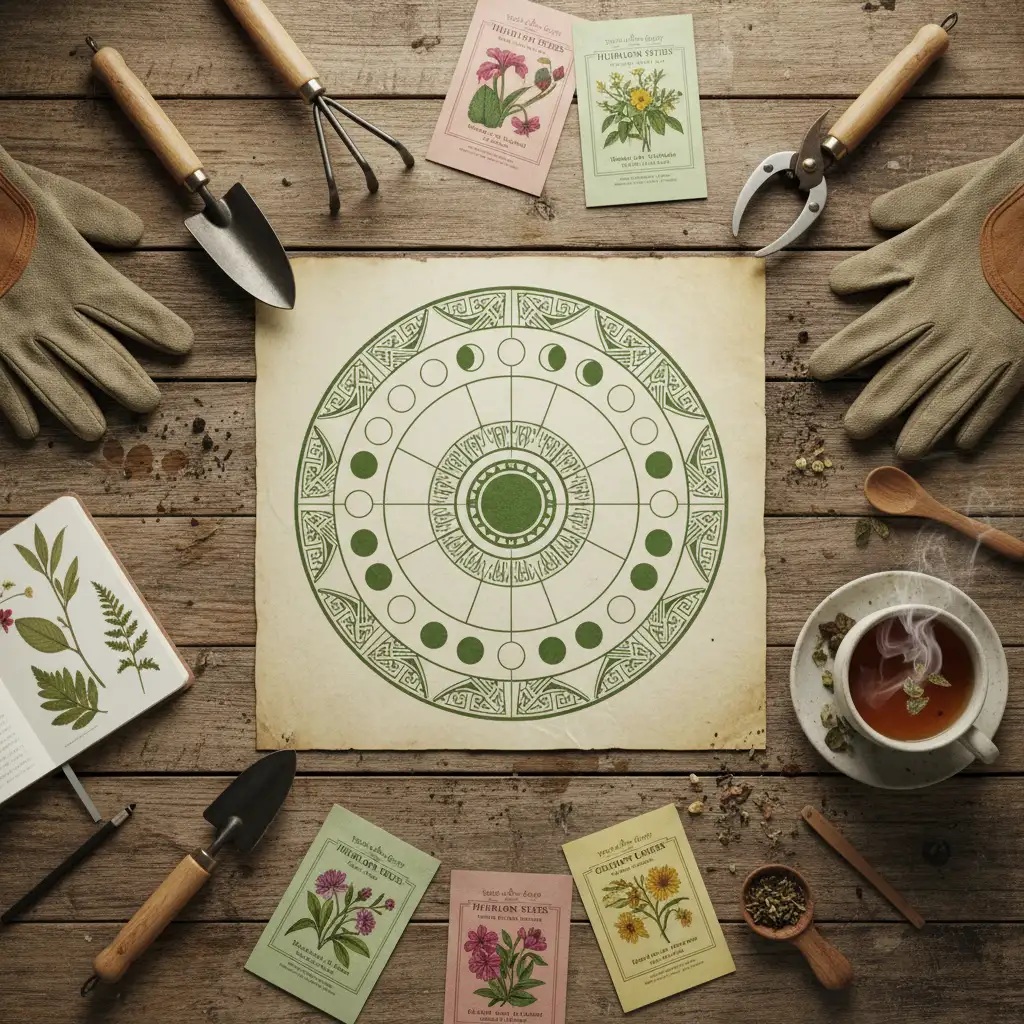
To truly embrace Matariki gardening tips, one should look to the Maramataka. This is the Māori lunar calendar which guides when to plant and when to fish based on the phases of the moon.
Gardening by the moon is not unique to Māori culture, but it is deeply embedded in it. The gravitational pull of the moon affects moisture levels in the soil and sap flow in plants.
- Whiro (New Moon): Energy is low. A time for rest or weeding, not planting.
- Tamatea (Quarter Moon): Weather can be unpredictable. Caution is advised.
- Rakaunui (Full Moon): High energy. Sap flow is strong. A good time for planting root crops as the energy begins to draw down, or for harvesting.
- Tangaroa Phases: Generally productive days for fishing and planting.
By observing these phases, you align your gardening efforts with the natural rhythms of the environment, leading to stronger plants and better yields.
People Also Ask
What vegetables should I plant during Matariki?
Matariki (June/July) is the prime time to plant garlic, shallots, and onions. It is also suitable for planting broad beans, spinach, silverbeet, and hardy brassicas like kale and cabbage. In warmer northern regions of Aotearoa, you can also plant carrots and beetroot.
Is Matariki a good time for gardening?
Yes, but the focus shifts from active growth to preparation. Matariki is the best time for soil maintenance, composting, tool repair, and planting specific cold-hardy crops. It is culturally significant as a time to plan the garden for the year ahead.
How does the Maramataka affect gardening?
The Maramataka (Māori lunar calendar) suggests the best days for planting and harvesting based on the moon’s influence on soil moisture and plant energy. For example, planting during high-energy phases encourages vigorous growth, while resting during low-energy phases aligns with natural dormancy.
When is the best time to plant garlic in NZ?
Tradition dictates planting garlic on the shortest day of the year (Winter Solstice), which occurs in late June, around the time of Matariki. Garlic should be harvested on the longest day of the year in December.
What is the best mulch for NZ winter gardens?
Pea straw and lucerne hay are excellent choices as they insulate the soil and add nitrogen. Fallen autumn leaves (leaf mould) are also highly effective and free. Seaweed is beneficial for adding trace minerals and protecting against frost in coastal areas.
How do I protect plants from frost in Aotearoa?
Use frost cloth (floating row covers) to drape over sensitive plants. Cloches or cold frames provide sturdier protection. Heavy mulching protects root systems from freezing. Watering the soil (not the leaves) before a frost can also help, as moist soil holds heat better than dry soil.


