Matariki events near me typically include traditional Hautapu dawn ceremonies, community festivals featuring kapa haka and light displays, and educational workshops at local museums and observatories. To find the closest celebrations, check your local city council website, the official Matariki.com calendar, or local Marae listings for specific regional schedules and registration requirements.
What are Matariki Events and Why Attend?
Matariki, the Māori New Year, is a time of renewal, remembrance, and celebration in Aotearoa New Zealand. Marked by the rising of the Pleiades star cluster (Matariki) in mid-winter, it signals a shift in the seasons and provides a profound opportunity for communities to come together. Searching for “Matariki events near me” yields a diverse array of activities, ranging from solemn, spiritual observances to vibrant, family-friendly street festivals.
Since the establishment of Matariki as a public holiday, the scale and accessibility of these events have grown exponentially. The events serve three primary purposes, aligning with the core principles of Matariki:
- Matariki Hunga Nui (Remembrance): Honoring those who have passed away since the last rising of the star cluster.
- Matariki Ahunga Nui (Celebrating the Present): Gathering with whānau (family) and friends to share kai (food), music, and culture.
- Matariki Manako Nui (Looking to the Future): Setting intentions, planting aspirations, and planning for the year ahead.
Whether you are looking to witness the sacred Hautapu ceremony or simply want to enjoy light installations with your children, understanding the variety of events available is key to planning your holiday.

Calendar of Major Public Hautapu Ceremonies
The Hautapu is the most traditional and spiritually significant event during the Matariki period. Historically, this ceremony involves the cooking of kai in an umu kohukohu (steaming earth oven). The steam released from the oven is an offering to the stars, feeding them and ensuring a bountiful year ahead. While many Hautapu are private events held on local Marae, an increasing number of public ceremonies are now organized to allow the wider community to participate in this unique cultural heritage.
What happens at a Hautapu?
If you plan to attend a Hautapu, expect an early start—usually well before dawn (around 4:00 AM to 6:00 AM). The ceremony typically includes:
- Te Tirohanga (The Viewing): Identifying the stars and reading the signs of the year.
- Taki Mōteatea (Chanting): Traditional chants acknowledging the stars and the dead.
- Te Whāngai i ngā Whetū (Feeding the Stars): Opening the umu so the steam rises to the sky.
Finding a Hautapu Near You
Because these ceremonies rely on the visibility of stars, they are weather-dependent. Major centers often host broadcasted national events, but local councils facilitate community gatherings. Key locations to watch for include:
- Waitangi Treaty Grounds: Often the site of televised national broadcasts.
- Mt. Ngongotahā (Rotorua): Known for high-elevation viewing ceremonies.
- Local Maunga (Mountains): In Auckland, maunga such as Maungakiekie (One Tree Hill) or Maungawhau (Mt Eden) are traditional viewing spots, though access may be restricted to pedestrians to protect the site.
Community Festivals in Auckland (Tāmaki Makaurau)
Auckland, with its large population and diverse cultures, hosts the extensive Matariki Festival. This region-wide celebration typically runs for several weeks, encompassing the public holiday. The events here are designed to be accessible to all, blending traditional Māori knowledge with contemporary entertainment.
The Viaduct and Waterfront Light Shows
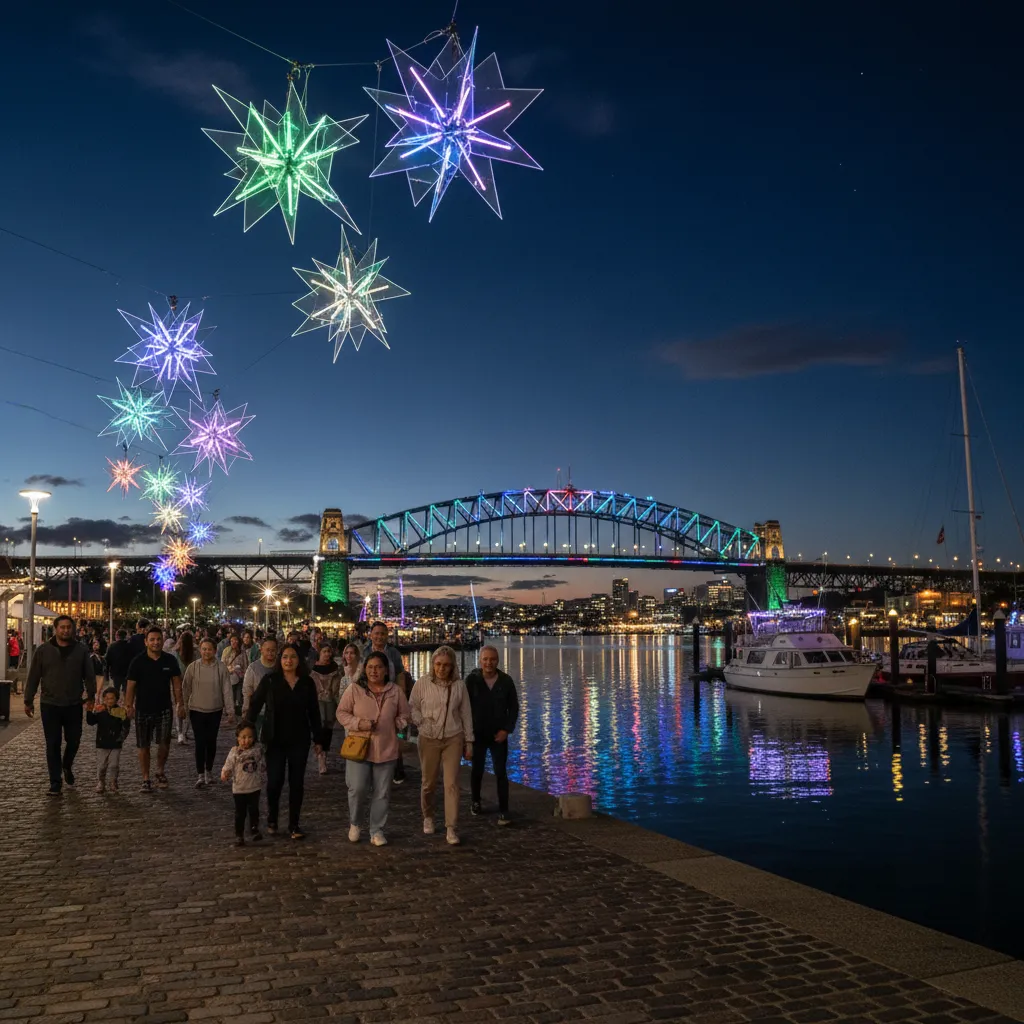
One of the most popular searches for “Matariki events near me” in Auckland leads to the waterfront. The Viaduct Harbour and Silo Park are transformed into illuminated wonderlands. Light installations often depict the nine stars of Matariki (Matariki, Pōhutukawa, Tupuānuku, Tupuārangi, Waipuna-ā-rangi, Waitī, Waitā, Ururangi, and Hiwa-i-te-rangi), accompanied by soundscapes telling their stories.
Manu Aute Kite Days
Connecting heaven and earth, kites (manu aute) are a traditional way to communicate with the spiritual realm. Auckland Council organizes massive kite-flying days at locations like:
- Winstone Park (Mt Roskill)
- Glover Park (St Heliers)
- Pukewiwi / Winstone Park
These are high-energy, family-centric events where the sky is filled with both traditional Māori kites and modern designs.
Matariki Ahi Kā: Wellington (Te Whanganui-a-Tara)
The capital city offers a distinctively immersive experience known as Matariki Ahi Kā. Wellington utilizes its compact waterfront to create a walking journey of fire, food, and whānau. The concept of “Ahi Kā” refers to the burning fires of occupation, symbolizing the continuous presence of people on the land.
Waterfront Projections and Fire
Starting from Te Papa Tongarewa and stretching along the lagoon, the Wellington waterfront hosts large-scale projections on buildings and water screens. Fire pits are often set up to provide warmth and a focal point for storytelling. This is a “transactional” event in the sense that while it is often free, food trucks and pop-up stalls selling Māori kai (like hāngī pies and fry bread) are central to the experience.
Te Papa Tongarewa Events
As the national museum, Te Papa is a hub for educational Matariki events. They host:
- Kapa Haka Performances: Showcasing the best regional groups.
- Lectures and Wānanga: Experts discussing the astronomy and anthropology of Matariki.
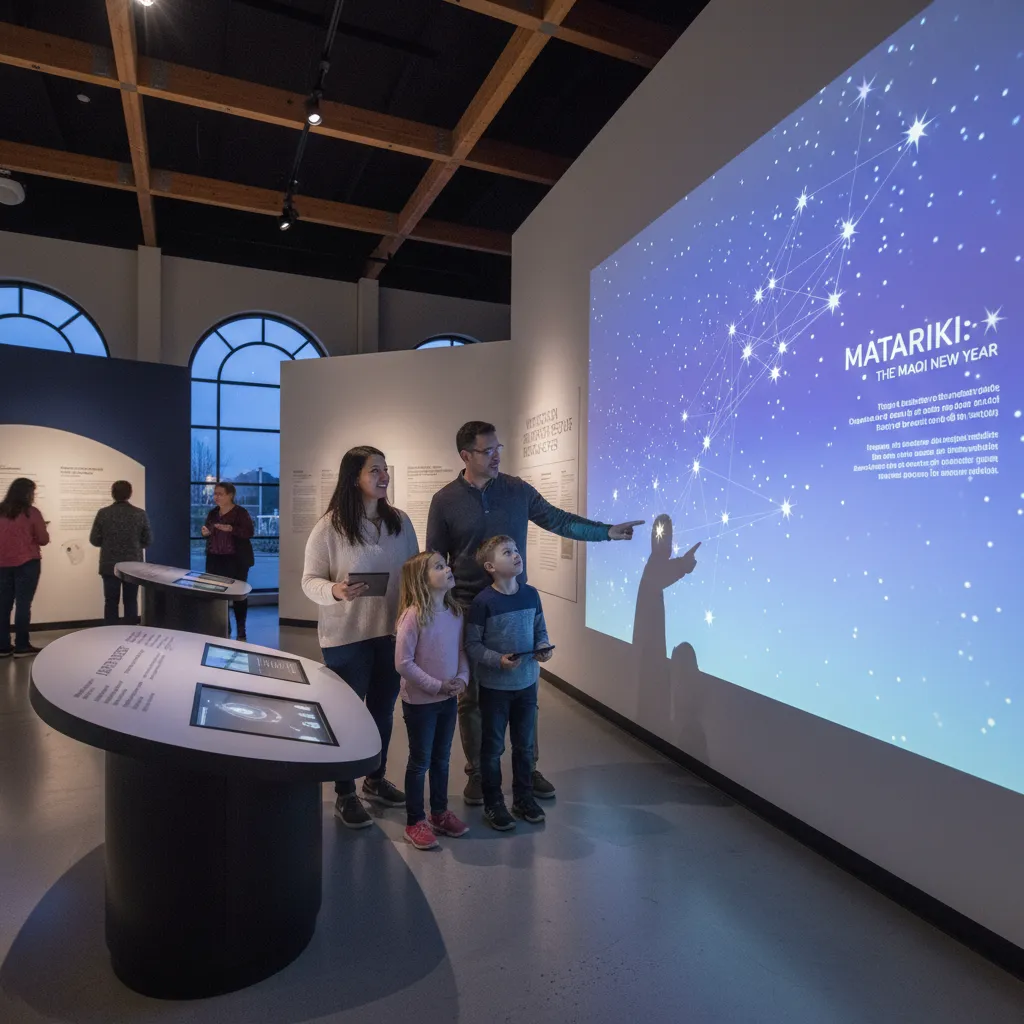
- Interactive Exhibits: Geared towards children learning about the environment and the stars.
Tīrama Mai: Christchurch (Ōtautahi)
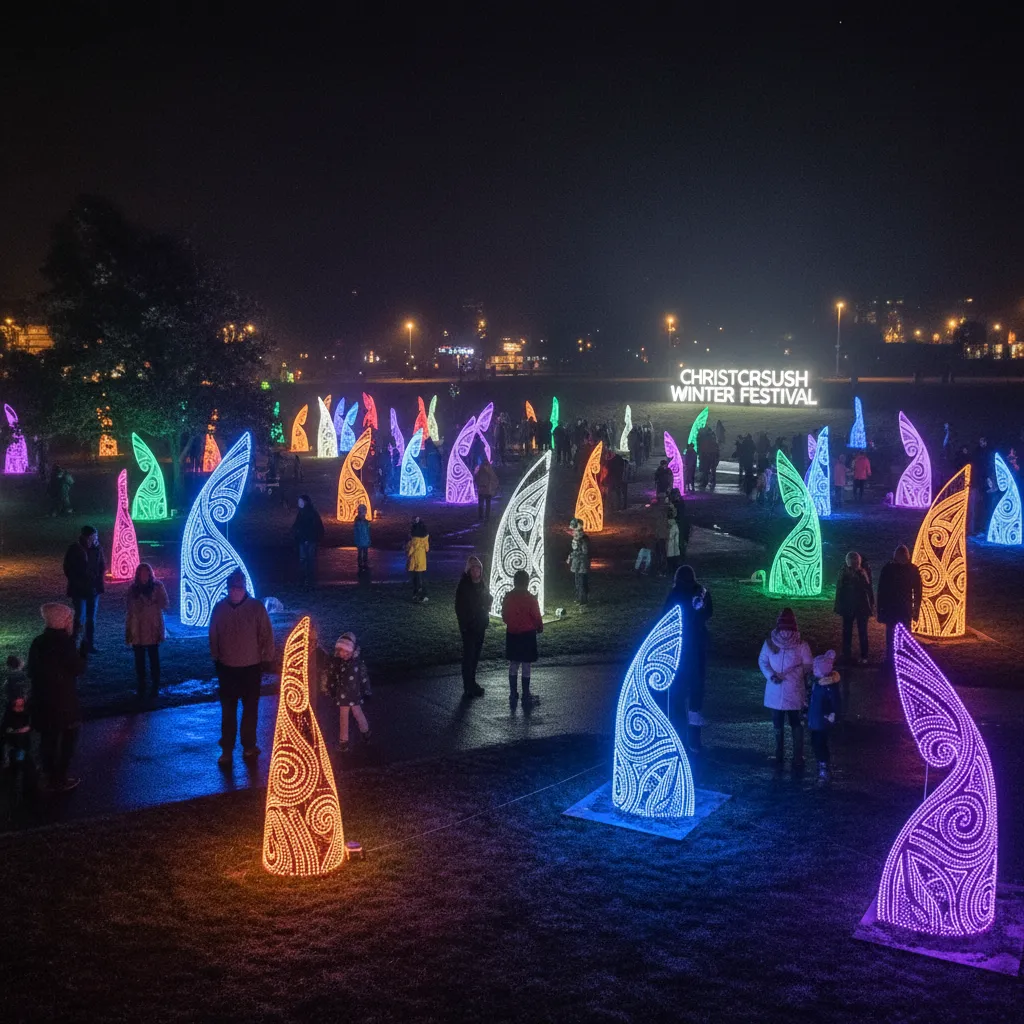
In the South Island, the celebration often coincides with the coldest part of winter, and Christchurch embraces this with Tīrama Mai (Bring the Light). This lighting festival is the city’s premier winter event.
The Arts Centre and Victoria Square
Tīrama Mai features stunning light trails. Unlike the more traditional Hautapu, this is a festival of artistic expression celebrating the light returning after the long winter nights. Installations are often set up in the Arts Centre of Christchurch and Victoria Square, creating a magical atmosphere that encourages night-time commerce and community gathering.
Events in Ōtautahi also strongly feature the star Waitī (associated with fresh water) and Waitā (salt water), given the region’s strong connection to the Avon River and the ocean.
Museum and Observatory Events: Educational Opportunities
For those seeking a deeper understanding of the astronomy behind the holiday, searching for events at local observatories is highly recommended. These venues offer a scientific perspective that complements the cultural narratives.
Stardome Observatory & Planetarium (Auckland)
Stardome usually runs a special Matariki schedule. Their planetarium shows are tailored to explain how to find the cluster in the dawn sky and the specific navigation history associated with it. These are ticketed events and often sell out weeks in advance.
Space Place at Carter Observatory (Wellington)
Located at the top of the Cable Car, Space Place offers telescope viewings (weather permitting) and immersive dome shows recounting the legends of the stars. It is an excellent option for families wanting to combine education with celebration.
Regional Museums
Don’t overlook smaller regional museums (e.g., Waikato Museum, Otago Museum). They often curate special exhibitions displaying artifacts related to harvesting and planting, which are activities governed by the Matariki cycle (specifically the stars Tupuānuku and Tupuārangi).
How to Register for Local Dawn Ceremonies
While many festivals are open to the public, specific dawn ceremonies (Hautapu) and workshops often require registration due to capacity limits or cultural protocols. Here is a step-by-step guide to ensuring you can attend.
1. Identify the Host
Determine who is hosting the event. Is it the City Council, a local Iwi/Marae, or a community trust?
- Council Events: Usually listed on the city’s official “What’s On” page.
- Marae Events: Check the Marae’s Facebook page or website. Note that some Marae events are for hapū members only, while others welcome the public.
2. Check Ticket Requirements
Even free events may require a ticket for crowd control. Platforms like Eventfinda or Humanitix are commonly used in New Zealand for these registrations. Search “Matariki [Your City]” on these platforms at least a month prior to the holiday.
3. Understand the Tikanga (Protocol)
If you register for a Marae-based event, you may be required to participate in a pōwhiri (welcome ceremony). This involves:
- Dress Code: Wear tidy, warm clothing. Black is often respectful for dawn ceremonies.
- Koha (Donation): It is customary to bring a small koha (gold coin or cash) to support the Marae.
- Silence: During the karakia (prayers) and reading of the stars, silence is mandatory. Photography is often prohibited during the sacred parts of the ceremony—always ask permission before taking photos.
4. Prepare for the Conditions
Matariki occurs in mid-winter. Dawn ceremonies are cold. Registration details will often advise you to bring warm layers, a blanket, and appropriate footwear for standing on grass or sand.
Conclusion
Finding Matariki events near you is about more than just filling a calendar; it is about connecting with the rhythms of the natural world and the indigenous culture of Aotearoa. Whether you choose to rise before dawn for a Hautapu, attend a vibrant light festival in the city, or learn about the stars at an observatory, you are participating in a unique national identity.
Remember to plan ahead. Popular events in major hubs like Auckland, Wellington, and Christchurch fill up quickly. Check your local council websites, respect the cultural protocols of the events you attend, and take the time to reflect, celebrate, and look forward to the new year.
People Also Ask
When is the best time to see the Matariki stars?
The best time to view Matariki is early in the morning, just before dawn (between 5:30 AM and 6:30 AM), looking towards the northeast horizon. The cluster is most visible during mid-winter, specifically in June and July.
Is Matariki a public holiday in New Zealand?
Yes, Matariki is an official public holiday in New Zealand. The date shifts each year based on the lunar calendar (Maramataka) but generally falls on a Friday in June or July to create a long weekend.
What are the 9 stars of Matariki?
The nine stars are Matariki (the mother), Pōhutukawa, Tupuānuku, Tupuārangi, Waipuna-ā-rangi, Waitī, Waitā, Ururangi, and Hiwa-i-te-rangi. Each star holds dominion over a specific environmental domain, such as fresh water, salt water, wind, or food grown in the earth.
Are Matariki events free to attend?
Most community Matariki festivals, light shows, and public dawn ceremonies are free to attend. However, specific workshops, planetarium shows, or gala dinners may require purchased tickets.
What food is traditionally eaten during Matariki?
Traditional kai includes foods harvested or preserved around winter. This often includes kūmara (sweet potato), fish, eel, and birds. Modern celebrations often feature hāngī (earth oven cooking) and fried bread.
Can I take photos at a Matariki dawn ceremony?
It depends on the specific event. Generally, photography is discouraged or forbidden during the solemn karakia (prayers) and the reading of the names of the dead. It is usually acceptable during the social time afterwards, but always check with event organizers first.